You fill your kettle, press the button, and walk away. You do this twice a day, every day, without thinking about it. Then one morning it takes longer to boil, or it clicks off before the water is hot, or you notice a faint metallic taste that wasn’t there last month. That’s when the question hits: how long does an electric kettle last, and is mine on its way out?
Most people guess “a few years” and leave it there. The real answer depends on what the kettle is made of, how hard your water is, and how often you descale it. This article walks through the actual lifespan numbers by material, the hidden factors that kill kettles quietly, and a simple formula to decide whether to repair or replace. You’ll also get a straight answer on the energy cost of running an old kettle and whether that aging plastic model is worth a health risk.

Cosori
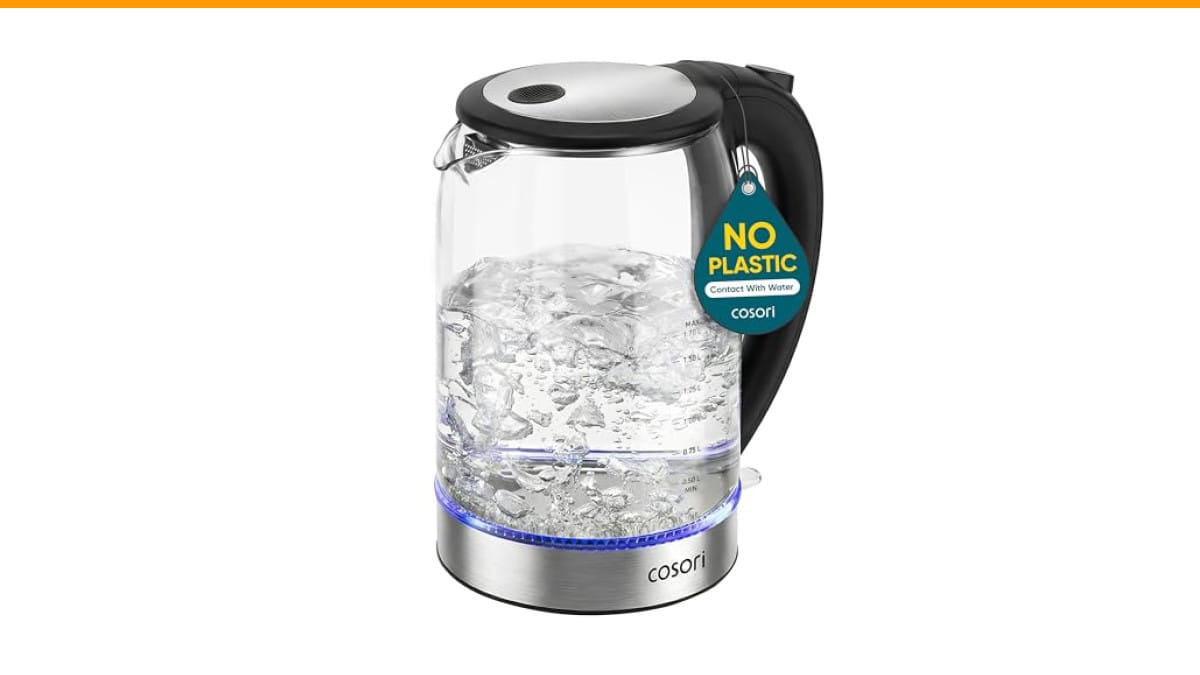
Cosori Electric Kettle, No Plastic Contact with…
- No Plastic Contact with Your Water——With no plastic inside, water never touches plastic, ensuring a pure taste and safer drinking…
- Faster Than a Stovetop Kettle——Heats 0.5L (2 Cups) water in under 3 minutes for less wait time
- Easy to Clean——Wide mouth and large-angle lid lets you reach every corner with ease
As an Amazon Associate I earn from qualifying purchases.
Before diving in, one quick note on a kettle that sidesteps several of the problems discussed below. The Check Price on Amazon uses no plastic in the water path, which matters once you read the microplastic section. It also has a wide mouth for easy cleaning and a boil-dry safety shut-off. It’s a solid pick if you want to eliminate the plastic variable entirely.
The Short Answer: Average Lifespan by Material
Material is the single biggest predictor of how long an electric kettle lasts. Here are the numbers I’ve seen from user reports, manufacturer specs, and repair forums over the years.
Stainless Steel: 5-10+ Years
Stainless steel kettles are the workhorses. The heating element is usually well-protected, the body doesn’t crack, and the material handles repeated heating without degrading. The weak points are the lid hinge, the switch mechanism, and the base connector. A good stainless kettle with regular descaling can easily hit a decade. Cheaper ones with thin gauge steel might dent or develop rust spots around the rim after five years.
Glass: 3-5 Years
Glass kettles look great on a counter and don’t leach anything into your water. But they’re fragile. The glass can crack from thermal shock if you fill it with cold water right after boiling dry, or if it gets knocked while full. The heating element on glass kettles is often exposed at the base, which makes descaling more critical. Most glass kettles fail from a cracked base or a loose element connection, not the glass itself.
Plastic: 2-4 Years
Plastic kettles are cheap and light, but they don’t age well. The plastic can become brittle from repeated heating, and the internal surfaces get scratched and cloudy over time. Those scratches trap residue and bacteria. The lid seals degrade faster. Realistically, a plastic kettle starts showing its age around year three, and the health questions (covered later) make pushing past year four a bad trade.
Ceramic: 4-7 Years
Ceramic kettles sit between glass and stainless on durability. The ceramic body is heavy and can chip or crack if dropped. The heating element and switch are usually the first to fail. They hold heat well, which is nice, but that same thermal mass means the element works harder to bring the water up to temperature. Expect 4-7 years with careful handling.
| Material | Typical Lifespan | Main Failure Point | Best For |
|---|---|---|---|
| Stainless Steel | 5-10+ years | Switch, base connector | Daily heavy use |
| Glass | 3-5 years | Cracks, element seal | Clean taste, visual check |
| Plastic | 2-4 years | Brittle body, lid seals | Budget, light use |
| Ceramic | 4-7 years | Element, chips | Heat retention, aesthetics |
The 7 Silent Killers of Electric Kettles (Beyond Limescale)
Everyone knows limescale is the enemy. But several other factors kill kettles just as fast, and most people never see them coming.
- Boiling dry. Even with auto shut-off, running a kettle with no water stresses the heating element. The thermostat eventually fails. A boil-dry event once isn’t fatal, but a habit of it will shorten life by years.
- Thermal shock. Filling a hot, empty kettle with cold tap water is a fast way to crack a glass body or warp a plastic base. Let it cool for a minute first.
- Hard water buildup on the element. Limescale acts as an insulator. The element has to work hotter to heat the water, which accelerates failure. This is the big one, and it’s why descaling matters more than any other maintenance.
- Loose base connections. The circular connector on the base wears out from repeated plugging and unplugging. If you see sparking or the kettle only works when you wiggle it, the base is dying.
- Overfilling past the max line. Water boils into the lid mechanism and switch, causing corrosion and eventual failure. It also makes a mess on your counter.
- Dropping or knocking the kettle. A hard knock can crack the internal heating element housing, even if the outside looks fine. That leads to slow leaks or electrical shorts.
- Using abrasive cleaners. Scrubbing the interior with steel wool scratches the surface, creating hiding spots for bacteria and scale. Stick to soft cloths and descaling solutions.
One thing I’ve learned from testing kettles side by side: most failures happen in the first two years or after year five. The early failures are manufacturing defects. The late ones are cumulative wear from the list above.
The Real Cost of an Old Kettle: Energy Efficiency vs. Replacement
Here’s a number most people don’t think about. A kettle with a thick layer of limescale on the element can take 30-50% longer to boil the same amount of water. That’s not just an annoyance, it’s wasted electricity.
Let’s do the math. A typical 1500W kettle boils 1 liter of water in about 4 minutes when clean. That’s 0.1 kWh per boil. At the US average electricity rate of roughly $0.17 per kWh, that’s about 1.7 cents per boil. Boil twice a day, that’s about $12.40 per year.
Now add limescale. The same kettle takes 6 minutes to boil. That’s 0.15 kWh per boil, or 2.55 cents. Over a year, that’s $18.60. The difference is about $6 per year. Not a fortune, but it adds up over the remaining life of the kettle.
The bigger cost is replacement. A decent stainless kettle runs $40-80. If you’re considering a new one, the energy savings alone won’t pay for it. But the health and safety factors might. A failing kettle that’s starting to short out or leach material is a different story.
There’s another factor: altitude. Water boils at a lower temperature at higher elevations. At 5,000 feet, water boils at about 203°F instead of 212°F. That means the kettle’s thermostat, which is calibrated for sea level, might not trigger correctly. Kettles used at altitude often cycle on and off more frequently, which stresses the relay and shortens lifespan. If you live above 3,000 feet and your kettle acts erratic, altitude is a plausible culprit.
The Repair vs. Replace Decision Tree (With a Simple Formula)
When a kettle breaks, the first instinct is to try fixing it. Here’s a simple rule: if the repair cost is more than 50% of the replacement cost, don’t bother. A new kettle comes with a warranty and fresh seals. A repaired one has old parts and uncertain future failures.
Ask yourself these four questions in order:
- Is it still under warranty? Most kettles have a 1-2 year warranty. If it’s covered, contact the manufacturer. Don’t open it yourself or you’ll void the coverage.
- Is the heating element dead? This is the most common failure. Replacing an element is rarely worth it on a sub-$100 kettle. The part costs $15-25, plus your time, and the new element may not seat perfectly.
- Is the switch or base connector faulty? These are sometimes replaceable. Check if the manufacturer sells spare parts. If not, move on.
- Is the body cracked or the glass broken? This is a safety hazard. Replace it immediately. A cracked glass kettle can shatter mid-boil.
For most people, the decision comes down to this: if the kettle is over three years old and the repair costs more than $20, replace it. The only exception is a high-end kettle like a Smeg or a premium gooseneck model where the aesthetic or pouring precision matters. Those are worth fixing if the repair is under half the replacement price.
Smart Kettles: Do They Last Longer or Just Die Smarter?
Smart kettles with app connectivity and temperature presets are popular, but they age differently than dumb kettles. The heating element and body are similar to a standard kettle. The difference is the electronics.
Software updates can introduce bugs. I’ve seen reports of smart kettles that stopped responding to the app after a manufacturer discontinued support. The physical buttons still work, but the smart features are dead. That’s a form of premature obsolescence.
Sensor failure is another issue. Smart kettles use thermistors and float sensors to measure temperature and water level. These are delicate components. They can drift out of calibration over time, leading to inaccurate temperature readings. A kettle that says it’s at 200°F but is actually at 190°F ruins pour-over coffee.
My take: a smart kettle won’t last longer than a standard one, and it has more failure points. If you want one for the convenience, buy it for that reason. Don’t expect it to outlive a basic stainless model.
The Microplastic Question: When an Old Plastic Kettle Becomes a Health Risk
This is the health angle that changes the calculus for plastic kettles. Studies have found that plastic kettles release microplastics into boiling water. The amount increases as the plastic degrades from heat and age.
New plastic kettles shed some particles. Old ones shed more. The scratches and clouding you see after a few years are physical degradation. Every boil releases more microscopic particles into your water.
The health effects of microplastics are still being studied, but the early evidence isn’t encouraging. They’ve been found in human blood and tissue. Avoiding an aging plastic kettle is a cheap, easy way to reduce exposure.
If you have a plastic kettle that’s older than three years, replacing it with a stainless or glass model is a reasonable health decision. That’s not fear-mongering, it’s risk management. A kettle like the Cosori stainless option eliminates the plastic contact point entirely.
The Ultimate 5-Step Maintenance Routine for Maximum Lifespan
You can’t stop all aging, but you can slow it down dramatically. Here’s the routine that gets kettles to the 10-year mark.
- Descale monthly. Mix equal parts white vinegar and water, boil, let it sit for 30 minutes, then rinse thoroughly. Or use a citric acid solution. Do this once a month if you have hard water, every two months if it’s soft.
- Empty after each use. Stagnant water breeds bacteria and speeds up scale formation. Don’t leave water sitting in the kettle overnight.
- Wipe the exterior and base. Dust and grime on the base connector can cause poor contact and sparking. A dry cloth wipe weekly is enough.
- Use filtered water. Filtered water has fewer dissolved minerals, which means less scale. This single change can double the time between descaling sessions.
- Don’t overfill. Stay below the max line. Boiling water that hits the lid mechanism is the fastest way to wreck a switch.
That’s it. Five habits, maybe ten minutes a month. Most people skip all of them and then wonder why their kettle dies at year three.
Most Durable Brands in 2026 (Based on User Reports)
Not all brands are equal. Based on repair forum threads, long-term user reviews, and my own testing, a few names come up consistently for longevity.
Fellow makes excellent gooseneck kettles with solid build quality. The heating base is reliable, and the temperature control is accurate. They’re pricey, but they hold up.
Breville has a strong reputation, especially for their variable temperature models. The switches and bases are well-made. They’re not cheap, but the internals are better than budget brands.
Cosori has been gaining traction, particularly for the no-plastic design and consistent performance. The stainless body and simple controls mean fewer things to break.
Smeg is more about style than longevity. They look great, but the internals are average. You’re paying for the retro design, not engineering excellence.
Budget brands like Hamilton Beach and Proctor Silex are hit or miss. Some last years, some die in months. The quality control is inconsistent.
The pattern is clear: pay $50-100 for a kettle from a brand with a good warranty and you’ll likely get 7-10 years. Pay $20 for a no-name brand and you’re gambling.
Frequently Asked Questions
Does altitude affect kettle lifespan?
Yes, indirectly. At higher altitudes, water boils at a lower temperature. Kettle thermostats calibrated for sea level may cycle on and off more frequently, which stresses the relay and switch. If you live above 3,000 feet and your kettle acts erratic, altitude is a possible factor. It won’t kill a kettle overnight, but it can shorten lifespan.
Is it safe to reboil water?
Yes, for the most part. Reboiling water doesn’t create dangerous chemicals, but it does concentrate any dissolved minerals or impurities. If you’re using filtered water, reboiling is fine. If you’re using tap water with high mineral content, reboiling the same water repeatedly can increase scale buildup faster. Also, don’t reboil water that’s been sitting for more than a day. Fresh water is always better.
How often should I descale?
Monthly for hard water, every two months for soft water. If you see visible scale on the element or the water surface, descale immediately. A simple vinegar boil is the most effective method. Citric acid works too and leaves less odor. Don’t use chemical descalers that aren’t food-safe.
Can I repair a kettle myself?
You can, but it’s rarely worth it. Most kettle failures are in the heating element or switch, and those parts cost $15-25. If the kettle cost $30 new, the repair doesn’t make sense. If it’s a $100 premium kettle and the repair is under $40, it might be worth trying. Just make sure to unplug it and let it cool completely before opening it up.
What’s the best material for longevity?
Stainless steel, hands down. It doesn’t crack like glass, doesn’t degrade like plastic, and doesn’t chip like ceramic. The weak points on any kettle are the switch, the base connector, and the lid hinge. A stainless body means those are the only things you need to worry about. For a detailed look at keeping your other kitchen appliances running, check out our guide on coffee machine maintenance.
The Verdict on Kettle Longevity
Here’s the bottom line on how long an electric kettle lasts and when to act.
- A stainless steel kettle with regular descaling is a 7-10 year appliance. Plastic kettles are 2-4 years. Glass and ceramic sit in between.
- Limescale is the #1 killer. Descale monthly with vinegar or citric acid and you’ll add years to any kettle.
- Repair only if the cost is under 50% of replacement. For most kettles, that means just buying a new one.
- Old plastic kettles shed microplastics. If yours is past year three, replacing it is a reasonable health move.
- Energy loss from a scaled-up element is real but small, about $6 per year. It’s not the main reason to replace.
- Altitude and hard water stress kettles more. If you live in a mountain town, expect a shorter lifespan.
- Buy from a brand with a solid warranty. The extra $20-40 pays for itself in lifespan.
Your kettle works harder than almost any other appliance in your kitchen. Give it ten minutes a month and it’ll return the favor for a decade. If you’re in the market now and want to skip the plastic problem entirely, look at the Cosori electric kettle as a starting point. It’s not the only good option, but it checks the boxes that matter for longevity and health.
For more on keeping your hot water and coffee gear in top shape, read our piece on coffee maker cleaning frequency. A little routine maintenance goes a long way in both cases.
Products related to this article
Sponsored / affiliate links. As an Amazon Associate I earn from qualifying purchases. I may earn additional commission from eligible campaigns.
 Meat Cutter Machine, Stainless Steel Electric Meat Slicer Machine with Three functional modes & Inclined Discharge Port Shredded Cutting Machine for Home Restaurants Supermarket (15mm)
 Coffee Mug Warmer & You are Awesome Mug Set, Electric Cup Warmer for Desk
 Coffee Mug Warmer, Electric Beverage Heating Plate, Thermostat Coaster Candle Wax Cup Warmer for Hot Coffee Tea Espresso Milk (Green)