You bought a sleeve of Vertuo pods, got busy, and forgot about them. Three months later, you find them in the back of a cabinet. The question hits you: are these still good to brew, or should they go straight in the trash?
This guide answers that question with specifics. You will learn the actual shelf life of a Vertuo pod, what happens to the coffee inside over time, and how to tell if a pod is still worth brewing. We will also cover the best storage methods and a buying strategy that stops you from wasting money on coffee that goes stale.

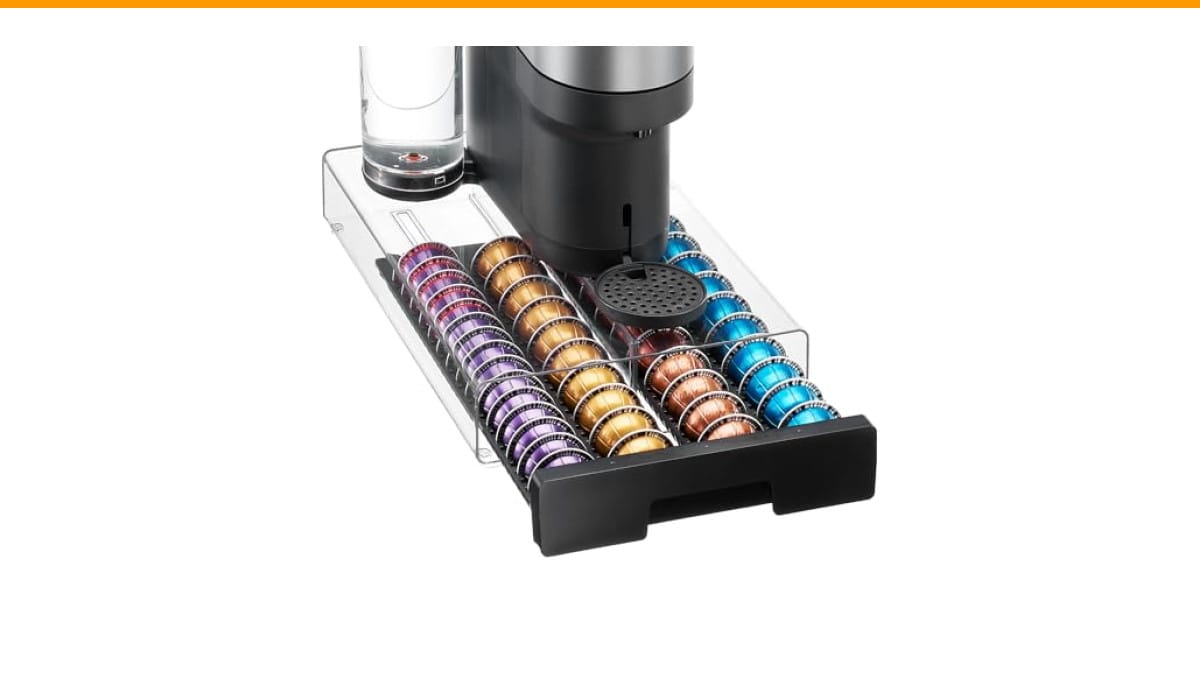
Vtopmart
Vtopmart Coffee Pod Drawer Organizer for Nespresso…
- Large Capacity: Stores up to 40 large or 60 small Vertuo capsules, easily fitting most standard 3-box sleeve sets with extra space…
- Smooth Sliding: Precision-engineered drawer system with independent slots and anti-slip base ensures a smooth, quiet pull-out. No…
- Durable & Strong: Made from high-density PET+ABS for enhanced durability and structural stability. Shatter-resistant and built to…
As an Amazon Associate I earn from qualifying purchases.
The goal here is waste reduction. Both the waste of money on pods you throw away, and the environmental waste of tossing aluminum into a landfill. Let’s get into it.
If you own more than a couple of sleeves, a simple drawer organizer makes a real difference. The Vtopmart Coffee Pod Drawer Organizer for Nespresso Vertuo Pods holds up to 40 large or 60 small capsules. It keeps flavors visible and stops you from buying duplicates because you forgot what you already had. That alone cuts down on stale pods sitting around.
The Short Answer: How Long Do They Actually Last?
Nespresso prints a best-before date on the box and on the foil of each pod. That date is typically 12 months from the roasting date. So a fresh pod is good for about a year.
But that date is about quality, not safety. Coffee does not become dangerous to drink after that date. It just tastes worse. A pod brewed 14 months after roasting will be noticeably flatter than one brewed at 6 months. A pod brewed at 24 months will taste like cardboard water with a hint of coffee.
The practical window for a good cup is about 12 to 15 months from production. After 18 months, you are drinking a shadow of what the coffee was. After two years, you are better off buying a fresh sleeve.
So the short answer: you have about a year of good quality, and maybe another six months of drinkable-but-boring coffee. After that, toss it.
The Science of Stale: Why Vertuo Pods Degrade
Three things ruin coffee: oxygen, light, and heat. The Vertuo pod is designed to keep all three out, but it is not a perfect barrier.
Oxygen is the biggest enemy. When roasted coffee hits oxygen, it starts oxidizing. This kills the volatile aromatic compounds that give coffee its flavor. The coffee does not spoil like milk; it just goes flat and dull.
Light speeds up that oxidation process. UV rays break down the organic compounds in coffee faster than darkness does. A pod sitting on a sunny counter will degrade quicker than one in a dark cabinet.
Heat accelerates everything. A warm kitchen cabinet near the oven will age your pods faster than a cool pantry. The rule of thumb: every 10 degrees Celsius (18 degrees Fahrenheit) of extra heat roughly doubles the rate of chemical reactions, including staling.
So the enemy is a warm, bright, oxygen-rich environment. Your job is to keep pods cool, dark, and sealed.
The Role of the Aluminum Foil Seal
The aluminum foil on top of each Vertuo pod is the primary defense against oxygen. It is a thin metal barrier that keeps the coffee inside in a near-vacuum state. As long as that foil is intact and undamaged, the coffee stays fresher for longer.
Damage to that seal is the single biggest factor in premature staling. A pod with a tiny pinhole or a crease that breaks the foil will lose its freshness in weeks, not months. The coffee inside will go stale at the same rate as a bag of ground coffee left open on the counter.
Check your pods before you store them. If you see a puncture, a tear, or a foil that feels loose, brew that pod immediately. Do not store it. Damaged pods are a use-it-now situation.
Why You Should Never Refrigerate or Freeze Pods
You might think cold storage extends shelf life. For coffee beans, freezing can work if done right. For Vertuo pods, it is a bad idea.
Here is why: condensation. When you take a cold pod out of the fridge, moisture condenses on the foil and on the pod walls. That moisture can seep into the coffee through the foil seal or through the plastic rim. Moisture is the one thing that actually ruins coffee, making it taste stale and musty.
Freezing is worse. The temperature change causes the aluminum to expand and contract, which can weaken the seal. You might not see the damage, but the coffee will taste it.
Room temperature storage in a dark, dry place is the correct answer. Your pantry, a cabinet, or a drawer. Not the fridge, not the freezer, not the windowsill.
Best Before vs. Expired: The Safety vs. Quality Difference
There is a legal difference between a use-by date and a best-before date. Coffee uses the best-before format. That means the manufacturer guarantees quality until that date, not safety.
Food safety agencies across the US and EU treat coffee as a shelf-stable product. It cannot grow harmful bacteria because it is dry and roasted. The worst thing a stale pod can do is taste bad. It will not make you sick.
So an expired pod is not a health risk. It is a quality risk. The oils have oxidized, the aromatics have evaporated, and the flavor is flat. You can brew it without fear, but you will likely pour it down the sink after one sip.
This distinction matters if you are the type to hoard pods. You are not wasting food by throwing away a two-year-old pod. You are wasting money by not drinking it within its quality window.
How to Tell If Your Vertuo Pod Has Gone Bad
You cannot always trust the date on the box. Storage conditions matter more than the calendar. Here is a three-point test to judge a pod before you brew it.
The Visual Check
Look at the foil. Is it bulging? A swollen foil top means gas is building up inside, which can happen if the coffee is fermenting or if the seal is compromised. A flat, tight foil is a good sign.
Look for rust or corrosion on the aluminum. That indicates moisture got in. If you see any green or white spots on the coffee inside when you peel the foil, that is mold. Do not brew that pod.
Check the plastic rim for cracks. A cracked rim means the seal is broken and the coffee is already stale.
The Aroma Test
Peel the foil and smell the coffee grounds. Fresh coffee smells sweet, fruity, or nutty, depending on the roast. Stale coffee smells like dust, old paper, or nothing at all.
If the smell is sour or fermented, the coffee has gone bad. If it smells like a musty basement, moisture got in. Trust your nose on this one.
The Crema Test
Brew the pod and watch the pour. Fresh Vertuo pods produce a thick, golden crema that sits on top of the coffee for a minute or more. Stale pods produce a thin, watery crema that dissipates in seconds.
The crema is the visual proof of freshness. It is made of CO2 and oils that escape from the coffee during the centrifusion process. Old coffee has already lost those gases, so the crema simply does not form.
If your pour looks like brown water with a few bubbles, the pod was past its prime.
The Vertuo Machine Factor: Will It Brew Old Pods?
The Vertuo machine reads a barcode on the rim of each pod. That barcode tells the machine the brew size, temperature, and spin speed. It does not check the date or the quality of the coffee.
So yes, the machine will happily brew a three-year-old pod. It will spin it, heat it, and pour it. The barcode does not care about freshness. If the foil is intact and the barcode is readable, the machine will do its job.
The only failure point is a damaged barcode. If the rim is bent or scratched, the machine may not read it. You will see a blinking red light or the machine will refuse to brew. That is a mechanical issue, not a freshness issue.
If you have a machine that is acting up with old pods, check the barcode first. But if you are having water flow issues, that is a separate problem unrelated to pod age.
Storage Hacks: The Optimal Drawer, Cabinet, and Container Setup
Good storage slows down the staling process. You cannot stop it, but you can buy yourself extra months of decent coffee.
First rule: keep pods in their original box until you are ready to brew. The box blocks light and adds a layer of protection. Do not dump all your pods into a big open bowl on the counter. That is the fastest way to stale coffee.
Second rule: store them in a cool, dark place. A pantry or a cabinet away from the stove and dishwasher is ideal. Avoid any spot that gets direct sunlight or heat from appliances.
Third rule: use an airtight container if you have loose pods. A glass jar with a rubber seal or a dedicated coffee storage bin works well. The less air that touches the pods, the longer they stay fresh.
A drawer organizer like the Vtopmart coffee pod drawer serves double duty. It keeps pods organized and out of light, and it makes it easy to see what you have. You avoid buying duplicates, which means fewer pods sitting around long enough to go stale.
One caveat: do not store pods near your coffee machine. The machine generates heat when it brews, and that heat radiates outward. Keep your pod storage at least a couple of feet away from the machine’s body.
Buying Strategy: Bulk vs. Small Batches to Prevent Waste
Bulk buying saves money per pod, but it creates a waste problem if you do not drink fast enough. Here is the math.
A standard Vertuo sleeve has 10 pods. If you drink one cup a day, a sleeve lasts 10 days. A box of 5 sleeves (50 pods) lasts about 7 weeks. That is well within the freshness window.
But if you drink one cup a week, a 50-pod bulk order will last nearly a year. Many of those pods will be past their best-before date by the time you open them. You saved money per pod, but you wasted the coffee’s quality.
The smarter move is to match your purchase size to your consumption rate. Heavy drinkers can buy in bulk safely. Occasional drinkers should buy one or two sleeves at a time.
Here is a quick cost comparison to illustrate the trade-off:
| Drinking Habit | Pods per Week | Safe Bulk Size | Waste Risk |
|---|---|---|---|
| Daily (1 cup/day) | 7 | 50-100 pods | Low |
| Few times a week | 3-4 | 20-40 pods | Medium |
| Occasional (1-2/week) | 1-2 | 10-20 pods | High |
The cost per cup is lower in bulk, but the cost per wasted cup is higher. A stale pod you throw away costs you the same as a fresh one you enjoyed. Buying less, more often, is the waste-reduction play.
If you want to keep your machine running well while you figure out your pod buying rhythm, regular maintenance helps. Check our guide on coffee machine maintenance to avoid breakdowns that interrupt your routine.
The Recycling Exception: What to Do with Expired or Damaged Pods
Nespresso has a recycling program that accepts used pods. But there is a rule about damaged pods: they need to be handled differently.
Expired pods that are still sealed can be brewed and recycled normally. The coffee inside is not hazardous. Brew it, let it cool, and put it in the recycling bag.
Damaged pods with exposed coffee grounds are a different story. If the foil is torn and the grounds are loose, they can make a mess in the recycling bag. The grounds can also mold if they stay wet for a long time. For these, empty the grounds into your compost or trash, then recycle the empty aluminum shell.
You can also use the Nespresso store drop-off or mail-back bags. The program is free and the aluminum gets recycled into new products. It is worth the effort to keep aluminum out of the landfill.
One honest caveat: the recycling program is not perfect. Some municipalities do not accept the bags, and the mail-back option takes time. But it is still better than tossing pods in the regular trash.
Frequently Asked Questions
Can you get sick from drinking an expired Nespresso pod?
No. Coffee is a dry, roasted product that does not support bacterial growth. The worst you will experience is a flat, unpleasant taste. Mold is the only exception, and you will see or smell it before you brew.
Does the Vertuo machine know if a pod is expired?
No. The barcode on the pod only tells the machine the brew size and parameters. It has no way to detect the age or quality of the coffee inside.
Is it okay to use pods that are a year past the best-before date?
You can brew them, but the taste will be significantly degraded. Expect a dull, flat cup with almost no crema. If you are desperate for caffeine, it will do the job. If you care about flavor, buy fresh.
Do Vertuo pods go bad faster once the box is opened?
No, not if the individual pods are still sealed. Each pod has its own aluminum seal, so opening the outer box does not expose the coffee to air. The pods stay fresh until you peel the foil.
Can I reuse a Vertuo pod to save money?
You can, but it is not worth it. Refilling a used pod requires a new foil seal, which you have to buy separately. The cost of the seal plus the coffee grounds is close to the cost of a new pod, and the quality is worse. The centrifusion system also works best with the original packing. Skip it.
What This Means for Your Coffee Routine
Here is the practical summary of everything above.
- Vertuo pods are good for about 12 months from production, with a usable tail of another 6 months.
- Store pods in a cool, dark, dry place. Never refrigerate or freeze them.
- Check the foil seal for damage before storing. Damaged pods go stale in weeks.
- Trust your senses: flat aroma, no crema, and dull taste mean the pod is past its prime.
- The machine will brew any pod with a readable barcode, regardless of age.
- Match your purchase size to your drinking speed. Occasional drinkers should not buy bulk.
- Recycle used pods through the Nespresso program. Separate damaged pods and empty the grounds first.
You do not need to obsess over dates. You need to store pods properly and buy only what you will drink in a reasonable window. Do that, and you will never pour a stale cup again.
Products related to this article
Sponsored / affiliate links. As an Amazon Associate I earn from qualifying purchases. I may earn additional commission from eligible campaigns.
 SpaceAid 21-Piece Bamboo Drawer Organizer Storage Boxes Set, Wood Tray Junk Drawer Organizers Multi-Use Divider Bins for Kitchen, Bathroom, Office Desk and Makeup Organization (21 Pack, Natural)
 8 Pcs Wooden Coffee Spoon, Long Handle Wwood Spoons for Eating
 Quick Heating Cup Warmer, Three Temperature Settings, Splashproof and Portable, for Coffee, Milk, Lightweight ABS Material