You fill your electric gooseneck kettle, hit the switch, and wait for the pour. Then you see it: floating white flakes in your water. Or you notice the pour sputters instead of streaming. That’s limescale, and it’s not just ugly—it insulates the heating element, making your kettle slower and louder while it boils.
Descaling isn’t complicated, but doing it wrong can leave a vinegar taste for weeks or, worse, damage the heating element. This guide walks you through the actual process, the two best descaling agents, and the mistakes that ruin kettles. You’ll know exactly what to do and what to avoid.

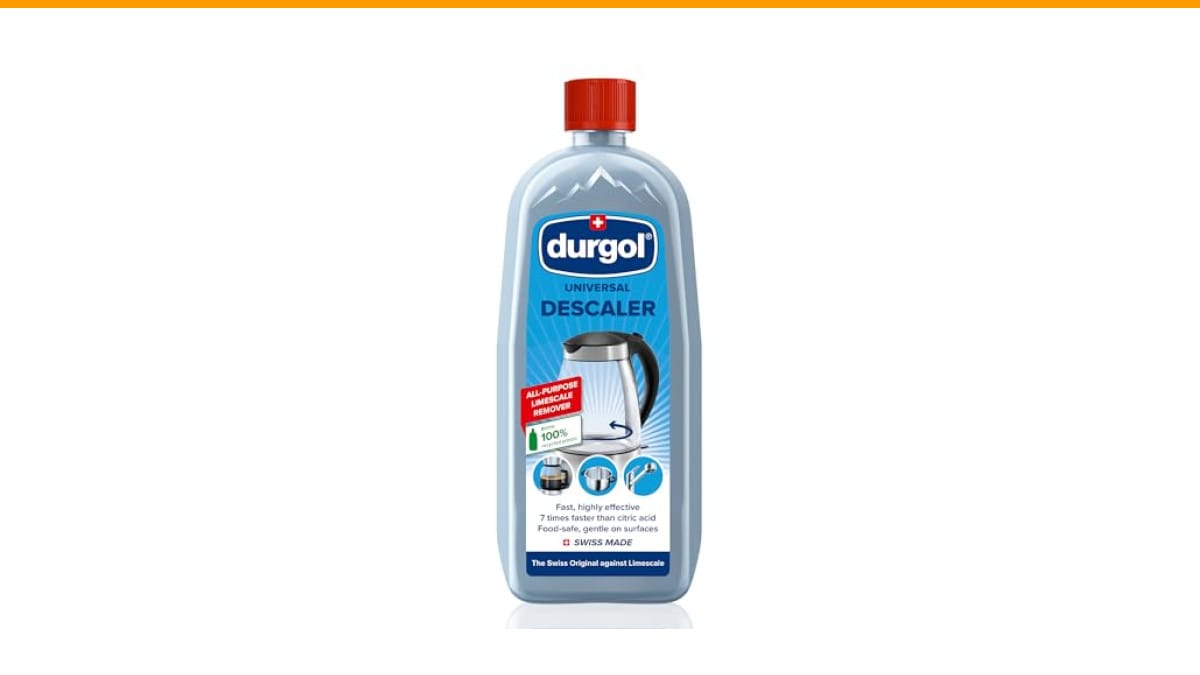
Durgol
Durgol Universal Multipurpose Descaler/Decalcifier for Kitchen and…
- DESCALING SOLUTION: This professional grade cleaner will remove limescale and calcium buildup.
- LIMESCALE REMOVER: Use on household items as a solution for your toughest kitchen maintenance.
- EASY TO USE: To descale a household appliance, read instructions in the appliance operating manual.
As an Amazon Associate I earn from qualifying purchases.
For tough buildup, a dedicated descaling solution works faster than pantry items. Durgol Universal Descaler is a Swiss-made liquid that dissolves heavy limescale in one pass, and it’s safe for plastic, glass, and stainless steel interiors. It’s not the cheapest option, but it saves time when your kettle looks like a cave floor.
Why Your Gooseneck Kettle Needs Regular Descaling
Hard water leaves calcium and magnesium deposits every time you boil. These minerals stick to the heating element and the interior walls. Over a few months, that buildup acts like a blanket, trapping heat and making the kettle work harder.
You’ll notice three things when scale builds up:
- Longer boil times—sometimes double the normal time
- A rattling or popping noise during heating
- White flakes floating in your coffee or tea
None of this is dangerous, but it degrades your brew. Clean water matters more than any grinder setting, and a scaled kettle compromises that. If you’re already dealing with mineral buildup in your coffee machine, your kettle has the same problem—it just shows it faster.
How often you descale depends on your water. Soft water areas can go three months between cleanings. Hard water areas need it every four to six weeks. If you see flakes, don’t wait—descale immediately.
What You Need Before You Start
Gather these items before touching the kettle. Running halfway through and improvising leads to mistakes.
- White vinegar (5% acidity) or citric acid powder
- Fresh water for rinsing
- A soft sponge or cloth—never steel wool
- A descaling solution like Durgol Universal Descaler for heavy buildup
Vinegar is the default choice because it’s cheap and everywhere. Citric acid works faster and leaves no smell. Both are safe for stainless steel and glass. Avoid bleach, ammonia, or any abrasive cleaner—they’ll corrode the interior and ruin the taste of your water.
Check your kettle’s manual first. Some manufacturers, especially Japanese brands like Hario or Kalita, specify a particular descaling method. If you lost the manual, a 1:1 vinegar-to-water ratio is safe for nearly every electric gooseneck kettle on the market.
Step-by-Step: How to Descale an Electric Gooseneck Kettle
This process works for vinegar and citric acid. The ratio changes, the steps don’t.
Step 1: Fill the Kettle Halfway
Fill the kettle to about 50% capacity. You don’t need a full kettle—the solution only needs to cover the heating element and the area where scale collects. For most gooseneck kettles, that’s the bottom third.
Step 2: Add Your Descaling Agent
For vinegar, use a 1:1 ratio with water. For a standard 1-liter kettle, that’s 500ml water and 500ml white vinegar. For citric acid, dissolve one to two tablespoons in a full kettle of water.
If you’re using a commercial descaler like Durgol, follow the dilution instructions on the bottle. These products are more concentrated than vinegar, so you’ll use less.
Step 3: Boil the Solution
Turn the kettle on and let it boil. The heat accelerates the chemical reaction, loosening the scale. Let it sit for 15 to 30 minutes after boiling. Don’t leave it longer than an hour—prolonged exposure can dull the interior finish.
Step 4: Pour Out and Rinse
Pour the solution down the sink. Rinse the kettle thoroughly with fresh water. Fill it completely, boil, and dump. Repeat this twice. The vinegar smell should be gone after two full boils. If it lingers, do a third rinse cycle.
Step 5: Wipe Down the Interior
Use a soft sponge to wipe the interior walls. Some scale may have loosened but not fully dissolved. A gentle wipe removes the residue. Don’t scrub hard—you’re not trying to polish it, just remove the film.
Step 6: Dry and Inspect
Empty the kettle completely and leave the lid open to air dry. Inspect the heating element. If you still see white patches, repeat the process with a stronger solution. One pass usually handles light to moderate scale. Heavy buildup may need two rounds.
For stubborn cases, the Durgol Universal Descaler works in a single soak without boiling. You just fill, wait, and rinse. It’s a good backup if vinegar fails.
Vinegar vs. Citric Acid vs. Commercial Descaler
All three work. They differ in speed, smell, and cost. Here’s how they compare in practice.
| Method | Time Required | Smell | Cost per Use | Best For |
|---|---|---|---|---|
| White vinegar (1:1 with water) | 30-45 minutes | Strong, lingers | Pennies | Light to moderate scale |
| Citric acid powder (1-2 tbsp per liter) | 20-30 minutes | None | ~$0.25 | Moderate scale, odor-sensitive users |
| Commercial descaler (Durgol, etc.) | 10-15 minutes | Mild chemical | ~$1-2 | Heavy buildup, fast results |
Vinegar is the slowest but the most forgiving. Citric acid is faster and leaves no taste. Commercial solutions are the most effective but cost more per cleaning. For most home users, citric acid is the sweet spot—cheap, fast, and odorless.
One note on vinegar: never use it in a kettle with an aluminum interior. The acid reacts with aluminum and can pit the surface. Stainless steel and glass are fine.
Three Mistakes That Ruin Kettles
People screw up descaling in predictable ways. Avoid these three and your kettle will last years.
Mistake 1: Using Too Much Solution
More isn’t better. A 1:1 vinegar ratio is plenty. Full-strength vinegar can eat away at rubber gaskets and plastic components around the lid. Stick to the recommended ratios.
Mistake 2: Skipping the Rinse Cycle
One rinse isn’t enough. Residual vinegar will taint your next cup of coffee. Boil and dump at least twice with fresh water. Three times if you’re sensitive to the smell. This is the step most people rush, and it’s why their water tastes like salad dressing.
Mistake 3: Scrubbing with Abrasive Pads
Steel wool and scouring pads scratch the interior. Those scratches become collection points for future scale and bacteria. Use a soft sponge or a cloth. If scale doesn’t come off with a gentle wipe, it needs another soak, not more elbow grease.
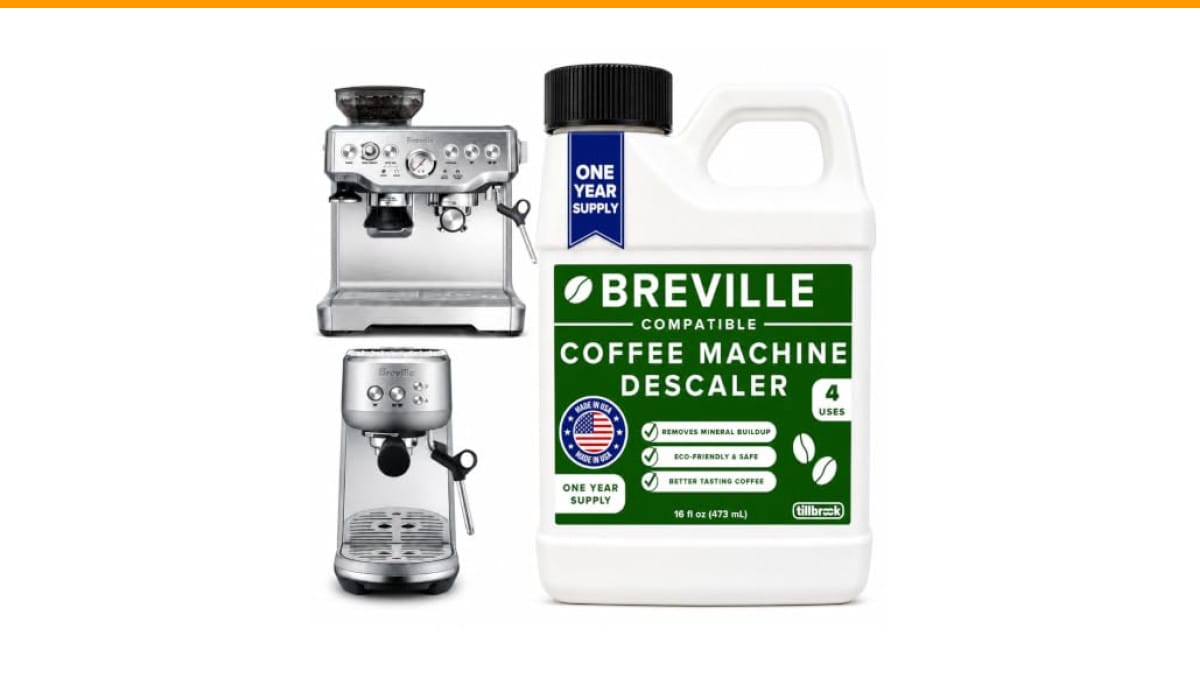
If you’re also dealing with scale in your espresso machine, the same principles apply. Check our guide on Breville descale light issues for machine-specific troubleshooting.
Frequently Asked Questions
How often should I descale my electric gooseneck kettle?
Every four to six weeks in hard water areas, every two to three months in soft water areas. If you see flakes or notice longer boil times, descale immediately regardless of schedule.
Can I use lemon juice instead of vinegar?
Yes, but it’s weaker. Lemon juice has about 5% citric acid, similar to vinegar’s acetic acid. It works but costs more and leaves a citrus residue that can be hard to rinse away completely. Stick with vinegar or citric acid powder.
Is it safe to use baking soda to descale?
No. Baking soda is alkaline, not acidic. It doesn’t dissolve limescale—it just scrubs it. You’d need a lot of elbow grease, and you risk scratching the surface. Use an acid: vinegar, citric acid, or a commercial descaler.
What if my kettle has a plastic interior?
Plastic interiors are less common on gooseneck kettles, but they exist. Vinegar and citric acid are safe for food-grade plastic. Avoid commercial descalers with strong solvents unless the label explicitly says they’re safe for plastic. Check your manual first.
Can I descale without boiling the solution?
Yes, but it takes longer. Cold vinegar will dissolve light scale in a few hours. Boiling speeds up the reaction dramatically, cutting the time from hours to minutes. For heavy buildup, boiling is the practical choice.
If you’re cleaning multiple appliances, the same solution can handle your coffee maker and steam wand. Just don’t reuse the solution after it’s picked up scale—it loses effectiveness.
What to Remember When Descaling
- Use a 1:1 vinegar-to-water ratio or 1-2 tablespoons of citric acid per liter
- Boil the solution, then let it sit for 15-30 minutes—don’t rush the soak
- Rinse twice minimum with fresh water, boiling each time to remove all residue
- Never use abrasive pads or aluminum-safe cleaners on the interior
- Descale every 4-6 weeks if you have hard water, longer if you don’t
- Commercial descalers like Durgol work faster and handle heavy buildup in one pass
- If your kettle still sputters after descaling, the heating element may be damaged—time for a replacement
Descaling is a 30-minute chore that keeps your kettle brewing clean and fast. It’s not glamorous, but it’s the difference between a kettle that lasts five years and one that dies in eighteen months. Set a reminder on your phone and make it part of your monthly routine.
For more kettle and coffee gear maintenance tips, check our guide on cleaning a steam wand—another neglected piece of equipment that affects your brew quality.
Products related to this article
Sponsored / affiliate links. As an Amazon Associate I earn from qualifying purchases. I may earn additional commission from eligible campaigns.
 SOLUSTRE Electric USB Coffee Cup Warmer with Temperature Settings Portable Milk and Beverage Heating Coaster for Office Desk Small Lightweight Design Easy to Clean Surface Multi Functional
 VOBAGA Coffee Mug Warmer with 15oz Mug Set, Electric Coffee Cup Warmer
 6 lb Citric Acid Powder Food Grade, Citric Acid Crystals, 100% Pure