You bought the machine, you read the manual, you installed that little charcoal puck. Then you forgot about it. Three months later the coffee tastes flat, and you’re wondering if the filter is the culprit.
Most manufacturers say replace every 30 to 60 days. That’s a safe average, but it’s also vague. The real answer depends on how much coffee you brew, what’s in your tap water, and which type of filter your machine uses. This guide gives you a way to calculate a precise lifespan for your specific setup, not just a generic rule.
You’ll walk away knowing exactly when to swap the filter, how to tell it’s dead before the indicator light says so, and what it costs you to ignore it.
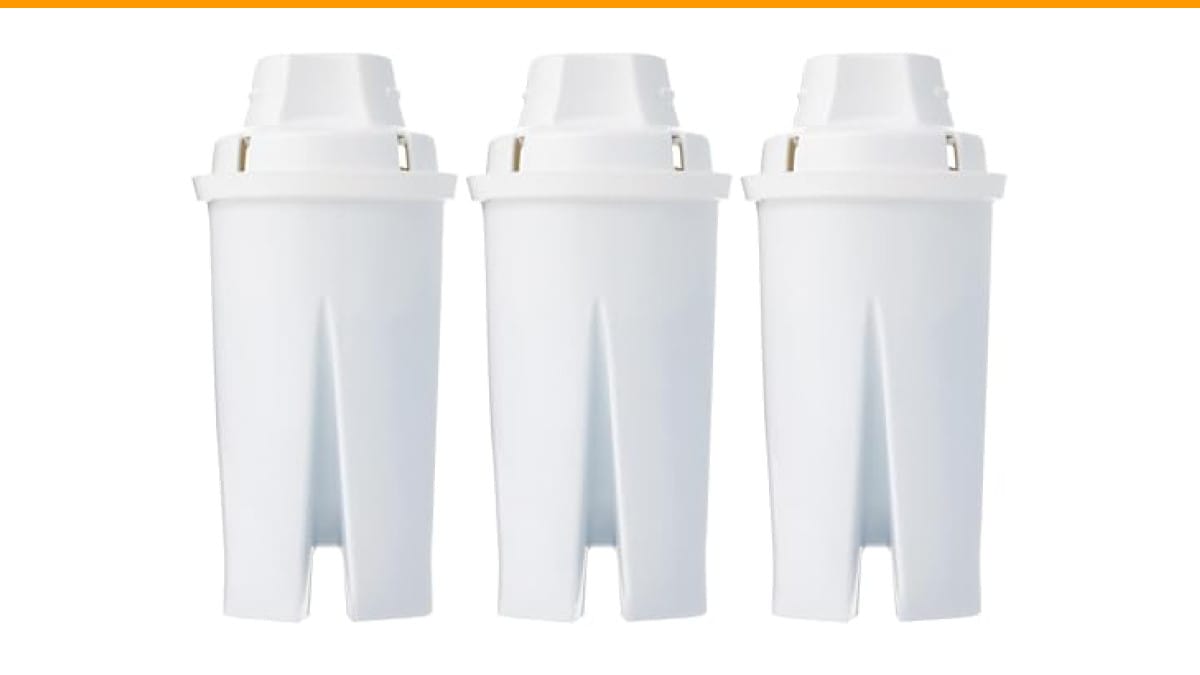
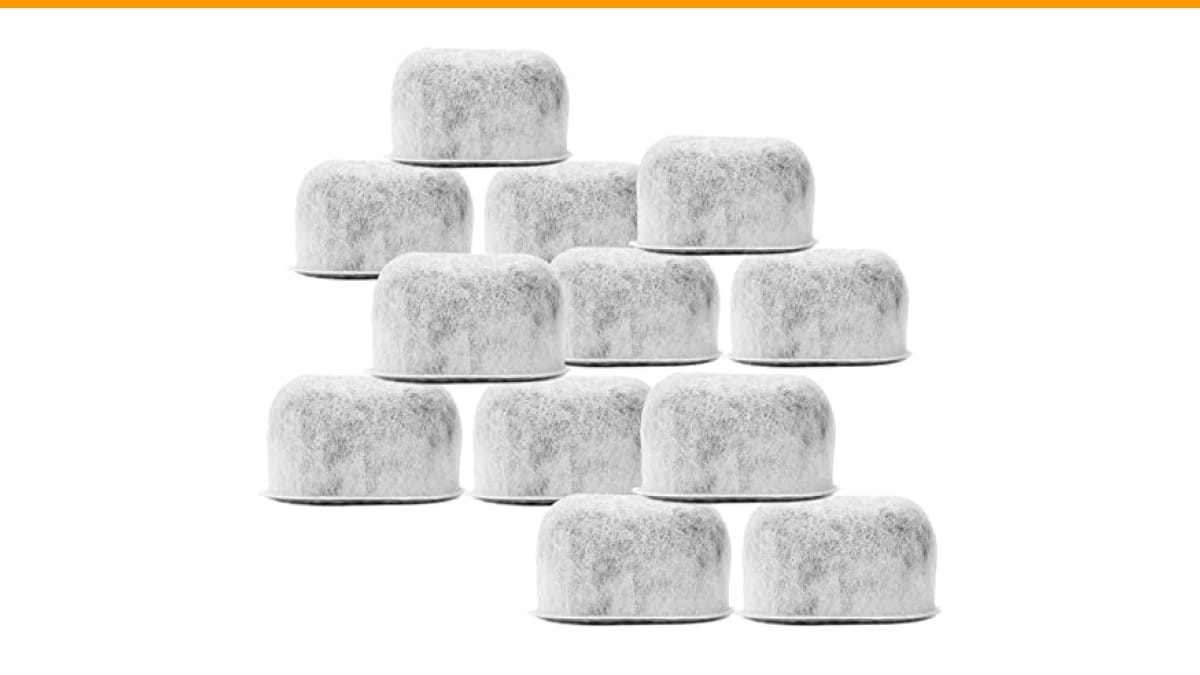
If you own a Cuisinart, the BRENSTEN 12-pack charcoal water filters are a solid drop-in replacement. They fit all Cuisinart models that require a filter, remove chlorine and odors, and cost a fraction of the branded refills. Worth keeping a pack in the cupboard.
The Short Answer: How Long Do Coffee Machine Water Filters Last?
Plan on 30 days for heavy use with hard water, 60 days for average use with municipal water, and up to 90 days if you brew lightly and have soft water. That’s the honest range.
But months are a lousy metric. The filter doesn’t care about the calendar. It cares about how many gallons of water have passed through it. A single person brewing one pot a day processes far less water than a household that runs two pots daily.
Here’s a better way to think about it: most coffee machine filters are rated for 60 to 90 gallons of water. If you brew a 12-cup pot daily, that’s roughly 1.5 gallons per day. At that rate, a 60-gallon filter lasts about 40 days. If you brew every other day, it stretches to nearly three months.
So the real answer is: replace the filter every 40 to 60 days for typical home use, and adjust based on your brewing frequency and water quality.
Why Filter Lifespan Varies: 4 Key Factors
Four things determine how fast your filter wears out. Ignore any of them and you’ll either waste money on early replacements or drink bad coffee for weeks.
1. Water Hardness
Hard water is the filter’s enemy. Calcium and magnesium ions clog the carbon pores and exhaust the ion exchange resin faster than soft water does. If your water measures above 180 ppm total dissolved solids, cut the filter life by a third.
You can check hardness with a cheap test strip or a TDS meter. It’s a five-minute test that tells you more than any manufacturer guideline.
2. Brewing Volume
Every pot you brew pulls more water through the filter. A household that brews twice a day will exhaust a filter twice as fast as one that brews every other day. Track your actual pots per week, not what you think you brew.
3. Filter Type: Carbon Block vs. GAC vs. Ion Exchange
Most drip machines use a simple activated carbon filter. It’s a small puck with granulated carbon (GAC) that removes chlorine and taste issues. These last 30 to 60 days.
Some machines, especially higher-end espresso units, use a carbon block filter. The block has more surface area and a tighter pore structure, so it lasts longer and filters finer particles. Expect 60 to 90 days from a carbon block.
Ion exchange filters add resin beads that swap calcium and magnesium for sodium. They’re better at preventing scale buildup but they exhaust faster because the resin saturates quickly. These need replacing at the 30-day mark if you have hard water.
4. Your Water Source: City vs. Well vs. Bottled
City water is treated with chlorine or chloramine. Chlorine evaporates quickly and is easy for carbon to grab. Chloramine is more stable and requires a longer contact time with the carbon, which means it exhausts the filter faster. If your city uses chloramine, assume a 20% shorter filter life.
Well water brings sediment, iron, and sometimes manganese. These particles physically clog the filter pores. A pre-filter or regular backflushing helps, but you’ll still replace the main filter on the short end of the range.
Bottled water is the wildcard. If you’re using bottled water, you don’t need the filter at all. The filter is only there to fix your tap water. Running bottled water through it just wastes the filter and adds unnecessary cost.
The Definitive Replacement Chart (By Filter Type and Usage)
This chart gives you a realistic schedule based on your water hardness and how often you brew. Use it as a starting point, then adjust based on taste and the warning signs below.
| Water Hardness | Brews Per Day | Filter Type | Expected Lifespan |
|---|---|---|---|
| Soft (under 60 ppm) | 1 pot | GAC carbon puck | 60-75 days |
| Soft (under 60 ppm) | 2+ pots | GAC carbon puck | 45-60 days |
| Medium (60-120 ppm) | 1 pot | GAC carbon puck | 50-60 days |
| Medium (60-120 ppm) | 2+ pots | GAC carbon puck | 35-45 days |
| Hard (over 120 ppm) | 1 pot | GAC carbon puck | 30-40 days |
| Hard (over 120 ppm) | 2+ pots | GAC carbon puck | 20-30 days |
| Any hardness | Any volume | Carbon block | 60-90 days |
| Hard (over 120 ppm) | Any volume | Ion exchange resin | 30 days max |
The numbers assume you’re using tap water. If you’re on well water, subtract 10 days from every estimate. If you use a pre-filter or whole-house softener, add 10 days.
7 Warning Signs Your Filter is Exhausted (Beyond the Indicator Light)
The filter indicator light on your machine is a timer, not a sensor. It counts days, not actual filter load. It can’t tell you that you brewed 40 pots in a week or that your water is unusually hard. So it lies.
Here’s how to know the filter is actually done:
- Chlorine smell in the brew. If the coffee smells like a swimming pool, the carbon is saturated.
- Dull, flat taste. A fresh filter removes the compounds that make coffee taste bitter or metallic. When it stops working, those flavors come back.
- Visible scale flecks in the carafe. White specks floating in your coffee mean the filter isn’t catching calcium anymore.
- Slower brew time. A clogged filter restricts water flow. If your machine takes noticeably longer to brew a pot, the filter is packed.
- Cloudy brew. Sediment or fines getting through the filter makes the coffee look hazy.
- Your TDS meter reads close to your unfiltered tap water. Measure the filtered water. If the TDS is within 20% of what comes out of the tap, the filter is exhausted.
- It’s been more than 90 days. Even if the coffee tastes fine, the filter is a breeding ground for bacteria after three months. Swap it.
Don’t rely on the indicator light alone. It’s a reminder, not a diagnostic tool.
What Happens When You Don’t Change It? (Taste, Scale, and Machine Death)
An exhausted filter doesn’t just make bad coffee. It actively damages your machine.
First, the taste goes. The carbon stops adsorbing chlorine and organic compounds, so those flavors end up in your cup. Your coffee tastes bitter, metallic, or just flat. You’ll compensate by using more grounds, which costs you money and still tastes bad.
Second, scale buildup accelerates. Without the ion exchange resin to grab calcium, those minerals deposit on the heating element and internal tubing. Scale acts as an insulator, so the machine has to work harder to heat the water. That means higher energy consumption and slower brew cycles.
Third, the machine dies. A thick layer of scale on the heating element causes it to overheat and burn out. That’s a repair that costs $80 to $150, or a new machine that costs $100 to $300. A pack of filters costs a fraction of that.
The math is simple: a $5 filter protects a $200 machine. Skipping it is false economy.
Regular descaling helps, but it doesn’t replace the filter. The filter stops scale from forming; descaling removes scale that’s already there. You need both. Here’s a guide on how to descale coffee machine properly.
How to Change Your Filter: A Step-by-Step Guide
It takes two minutes. Here’s the routine.
Priming the New Filter
Take the new filter out of its packaging. Rinse it under running cold water for 10 to 15 seconds. This washes off loose carbon dust that would otherwise end up in your coffee.
Drop the filter into the water reservoir’s filter holder. Make sure it sits flat and clicks into place. If it floats, push it down until it’s fully seated.
Resetting the Indicator Light
Most machines have a filter reset button. Press and hold it for about 3 seconds until the light stops blinking. If yours doesn’t have a button, unplug the machine for 30 seconds and plug it back in.
Run a full brew cycle with just water, no coffee grounds. This primes the filter and flushes any remaining carbon dust. Discard that water, then brew normally.
For a deeper clean while you’re at it, check out this deep cleaning guide — it pairs well with a fresh filter.
Extending Filter Life: Pre-Filtration and Maintenance Hacks
You can stretch a filter’s lifespan, but only if you attack the problem upstream.
Install a whole-house or under-sink water filter. If your tap water is hard, a sediment pre-filter and a carbon block under the sink will remove the bulk of the contaminants before the water hits your coffee machine. Your machine’s tiny filter then only has to polish the water, not treat it. This can double or triple its lifespan.
Use a water softener. Softening the water before it reaches the machine reduces the load on the ion exchange resin. That’s the single biggest factor in filter longevity.
Store spare filters properly. Keep them in their sealed packaging in a cool, dry place. Don’t leave them in a hot garage or a damp cabinet. Moisture activates the carbon, which means the filter starts working (and exhausting) before you even install it. A sealed pack in a kitchen drawer is ideal.
Don’t run hot water through the filter. Always fill the reservoir with cold water. Hot water degrades the carbon and speeds up resin exhaustion.
The Cost of Neglect vs. The Cost of Replacement
Let’s put real numbers on this.
A 12-pack of third-party filters costs roughly $15 to $20. That’s about $1.50 per filter. At 60-day intervals, that’s $9 to $12 a year.
Now look at the cost of neglect. A new heating element costs $80 to $150 plus labor. A new drip coffee maker costs $100 to $300. Wasted coffee from bad-tasting brews adds up too — if you throw away one pot a week because it tastes off, that’s 52 pots a year of wasted grounds and water.
The comparison is stark:
| Scenario | Annual Cost | Result |
|---|---|---|
| Replacing filter every 60 days | $12 | Good coffee, no scale, machine lasts 5+ years |
| Replacing filter every 90 days | $8 | Slightly worse coffee, minor scale, machine lasts 4 years |
| Never replacing filter | $0 | Bad coffee, scale buildup, machine dies in 2-3 years |
| Never replacing filter + buying new machine | $150-$300 once | You paid the price anyway, just all at once |
There’s no scenario where skipping the filter saves you money. It just delays the cost and makes it bigger.
Frequently Asked Questions
Can I clean and reuse a water filter?
No. Once the carbon is saturated, rinsing it does nothing. The contaminants are adsorbed into the pore structure, not sitting on the surface. You can’t wash them out. Attempting to reuse a filter just means you’re brewing with a dirty, bacteria-laden puck. Throw it away and install a new one.
Do I need a filter if I use bottled water?
No. The filter exists to remove chlorine, odors, and minerals from tap water. Bottled water is already treated and filtered. Running it through the machine’s filter adds no benefit and actually wastes the filter’s capacity. If you exclusively use bottled water, you can leave the filter out entirely. Just make sure you’re using a brand with low mineral content, or you’ll still get scale.
Will a third-party filter void my warranty?
In the US, the Magnuson-Moss Warranty Act says a manufacturer can’t void a warranty just because you used a third-party part. They have to prove the part caused the damage. A charcoal filter that meets the same specifications as the OEM part won’t void your warranty. That said, some manufacturers include a clause about using only approved accessories. Read your warranty carefully. In practice, the risk is low, and the savings are significant.
How do I know if my machine has a filter?
Check the water reservoir. If there’s a small cylindrical or rectangular holder in the bottom or a slot in the lid, it takes a filter. Most Cuisinart, Mr. Coffee, and Breville drip machines have one. Many espresso machines have a filter in the water tank too. If you’re not sure, look up your model number online — the manual will say.
What’s the difference between a water filter and descaling?
A water filter removes impurities before they enter the machine. Descaling removes mineral deposits that have already formed on the heating element and internal parts. They’re complementary. The filter reduces scale buildup, but it doesn’t eliminate it. You still need to descale every 3 to 6 months depending on water hardness. Here’s a guide on removing limescale if you need it.
Final Verdict: Don’t Guess, Schedule It
Here’s what you should actually do:
- Set a recurring reminder on your phone for every 60 days. That’s your baseline.
- Adjust to 30 days if you have hard water (over 120 ppm) or brew more than two pots a day.
- Adjust to 90 days if you have soft water and brew less than one pot a day.
- Test your water hardness once with a TDS meter — it’s a $10 tool that removes all the guesswork.
- Trust your taste buds. If the coffee goes flat, bitter, or smells like chlorine, change the filter immediately, regardless of the date.
- Buy filters in bulk. A 12-pack costs the same as two single packs and you’ll never be caught without one.
- Store spares in a sealed bag in a cool, dry place. Don’t let them sit in a hot garage.
The filter is the cheapest insurance your coffee machine has. A $1.50 puck every two months keeps a $200 machine running for years and makes sure every cup tastes the way it should. That’s a trade worth making.
For more on keeping your machine healthy, check out our guide on coffee machine maintenance to round out your routine.
Products related to this article
Sponsored / affiliate links. As an Amazon Associate I earn from qualifying purchases. I may earn additional commission from eligible campaigns.
 Coffee Espresso Machine Handle Replacement Parts, Cafe Bracket Handle for Lidl Silvercrest CM4621 CM4218 KF5002 KF500S Barista (for 51mm Portafilter Basket - Not included)
 HomeBeyond Espresso Coffee Maker 12 Cups, Classic Stovetop Espresso Maker, 600ml / 20oz Coffeemaker for Gas & Ceramic Stovetops (Silver)
 KARHDIR 15" Walk Behind Floor Scrubber Machine, 23" Squeegee