You pull a shot, steam the milk, and pour a latte that looks great. Then you walk away. The milk film dries on the wand, coffee oils coat the group head, and scale builds up inside the boiler. Three weeks later, your shots run bitter and the frother sputters. That’s not a machine failure. That’s a maintenance failure.
This guide covers the full routine for keeping an espresso machine with a milk frother in working order. You’ll learn what to do after every use, what needs a weekly check, and how to descale without damaging the internals. I’ll also cover the three mistakes that shorten machine life more than anything else.
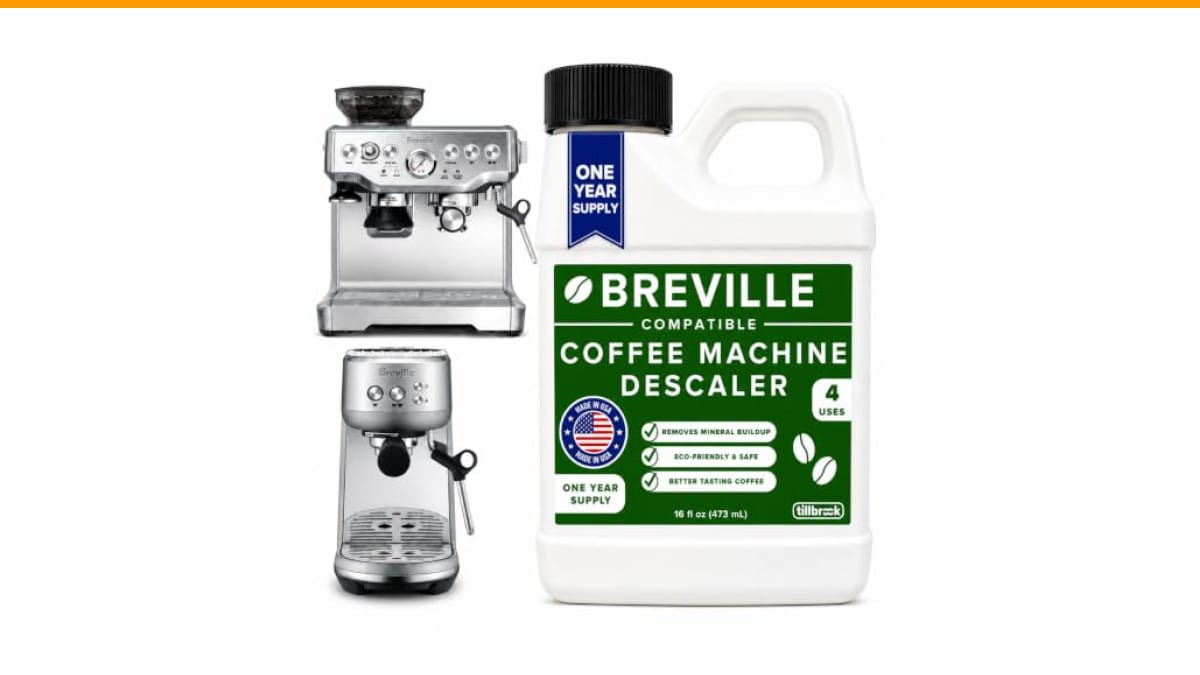
If you own a Breville or similar home machine, the descaling step matters more than most people think. A product like Tillbrook's Breville-compatible descaler handles the mineral buildup that plain water rinsing can’t touch. It’s a 16-ounce bottle that does four cleanings, which works out to about a year of normal use.
The Daily Routine: Five Minutes That Save You Hundreds
Every single day you use the machine, do these five things. It takes less time than waiting for the boiler to heat up.
- Purge the steam wand immediately. Right after you finish frothing, place the wand over the drip tray and open the steam valve for two seconds. This blows out any milk that got sucked back up into the tip.
- Wipe the wand with a damp cloth. Milk protein bonds to metal fast. A dry crust forms in under an hour. Wipe the entire wand, including the tip, while it’s still warm.
- Knock out the portafilter and rinse it. Tap the spent puck into the knock box, then run hot water over the basket and the portafilter body. Don’t use soap. Soap leaves a residue that ruins crema.
- Run a blank shot. Lock in the empty portafilter and run water through it for five seconds. This flushes coffee oils out of the group head and preheats your cup.
- Empty and rinse the drip tray. The tray collects a mix of water and coffee sludge. If it sits overnight, it grows mold. Dump it, rinse it, dry it.
Pro tip: keep a dedicated microfiber cloth next to the machine. Using the same towel you dry dishes with transfers grease and bacteria to your wand.
That’s the daily part. It’s not glamorous, but it prevents 80% of the problems I see in home machines. If you skip this routine, you’ll be doing deep cleans every month instead of every three.
Weekly Deep Clean: Group Head, Basket, and Steam Tip
Once a week, go a step further. Remove the shower screen if your machine allows it. Breville models have a single screw holding the screen in place. Take it off and soak it in a small bowl of hot water with a drop of dish soap. Scrub it with a soft brush, rinse thoroughly, and reinstall.
The steam wand tip needs the same treatment. Unscrew the tip and check the tiny holes. Milk residue clogs them over time, which makes the wand sound like a jet engine and produces weak foam. Soak the tip in the same soapy water, then use a pin to clear any blocked holes.
While the parts soak, backflush the group head. This requires a blind basket — a basket with no holes. Put it in the portafilter, add a tiny amount of espresso machine cleaner (about half a gram), lock it in, and run the brew cycle for ten seconds. Stop, wait five seconds, run it again. Repeat three times. This pushes the cleaning solution through the group head and dislodges coffee oil that rinsing can’t remove.
If you don’t have a blind basket, you can use a rubber stopper that fits the group head. Most home machines in the $300–$800 range come with one in the box. Check your accessories drawer before buying anything.
This weekly routine takes about fifteen minutes. It’s the difference between a machine that lasts five years and one that lasts fifteen.
Descaling: The Step Most People Skip (and Regret)
Here’s the hard truth: water alone doesn’t clean your machine. Every time the boiler heats water, minerals in the water precipitate out and form scale on the heating element. That scale acts as an insulator. The machine has to work harder to reach temperature, which uses more energy and stresses the thermostat.
You should descale every three to four months, depending on your water hardness. If you live somewhere with hard water, move that to every two months. If you use filtered water, you can stretch it to four or five.
Here’s the step-by-step for descaling a typical home espresso machine:
- Empty the water tank. Remove any water filter inside the tank and set it aside.
- Add the descaler. For a concentrated solution like Tillbrook’s, use about 4 ounces per full tank. Check your machine’s manual for the exact ratio, since some machines require a specific dilution.
- Run the descaling cycle. Most machines have a dedicated descale mode. If yours doesn’t, run a brewing cycle, then a steam cycle, then a hot water cycle. This forces the solution through all three pathways.
- Let it sit. After the cycle finishes, leave the solution in the boiler for 15–20 minutes. This gives the acid time to dissolve scale that’s already formed.
- Rinse twice. Empty the tank, fill it with fresh water, and run two full cycles. This flushes all descaler residue out of the system. Skipping this step leaves a chemical aftertaste in your coffee.
Choose a descaler that’s formulated for espresso machines. Some all-purpose descalers are too aggressive and can eat the rubber seals inside the boiler. The descaling guide on this site covers the differences between citric acid, acetic acid, and commercial formulas in more detail.
One thing I’ll say plainly: don’t use vinegar. It’s a common hack, but vinegar leaves a lingering smell and can degrade the silicone gaskets over time. A dedicated descaler costs a few dollars per use and does the job without side effects.
Milk Frother Care: The Part Everyone Forgets
The steam wand is the most neglected part of any espresso machine. People rinse it, but they don’t actually clean it. Milk contains fat and protein that dry into a tough film. That film traps bacteria and flavors your next latte with yesterday’s milk.
For machines with an automatic milk frother (the kind with a hose that sucks milk from a jug), the cleaning process is different. You need to run a cleaning cycle with the hose submerged in warm soapy water, then again in clean water. This flushes the internal milk path.
For manual steam wands, the routine is simpler but just as important:
- After every use, purge the wand and wipe it down.
- Once a week, remove the tip and soak it in hot soapy water.
- Once a month, use a steam wand cleaning brush to scrub the inside of the wand shaft.
If your wand has a rubber sleeve or a silicone cover, remove it and wash it separately. Milk gets trapped between the sleeve and the metal, and that’s where the sour smell comes from.
If you’re dealing with a machine that’s already showing signs of neglect, like weak steam pressure or a clogged wand, check the deep cleaning guide for troubleshooting steps. Some clogs require soaking the wand in a descaling solution for an hour to break down the dried milk.
Comparison: Descaling Frequency by Water Type
| Water Type | Descale Frequency | Daily Rinse Enough? | Best Approach |
|---|---|---|---|
| Soft water (filtered or RO) | Every 4–5 months | Yes | Standard descaling solution, full cycle |
| Moderate hardness (tap water) | Every 3 months | Yes | Descaling solution, full cycle + extra rinse |
| Hard water (well water or high-mineral tap) | Every 1–2 months | No, need weekly backflush | Descaling solution + consider a water softener filter |
| Bottled spring water | Every 3–4 months | Yes | Standard descaling, check for mineral content |
The table above assumes you’re using the machine daily. If you only pull shots on weekends, you can stretch the intervals by about 30%. The scale still builds, just slower.
Three Mistakes That Kill Espresso Machines
I’ve seen these three mistakes ruin more machines than anything else. Avoid them and your machine will outlive your countertop.
Mistake 1: Letting the steam wand sit dirty overnight. Milk dries into a cement-like substance. Once it hardens, it’s nearly impossible to remove without disassembling the wand. The fix is simple: wipe it after every use. Don’t wait until the end of the day.
Mistake 2: Using the wrong cleaning chemicals. Dish soap is fine for the portafilter and drip tray, but it’s terrible for the boiler. Soap creates foam that can damage the pump. Bleach and oven cleaner are worse. Stick to products made for espresso machines.
Mistake 3: Ignoring the water filter. If your machine has a built-in water filter, it needs replacing every two to three months. A clogged filter reduces water flow and makes the machine work harder. Most people forget it exists until the machine stops working.
If you’re already dealing with a machine that’s making unusual noises or leaking, the noise troubleshooting guide and the leak repair guide cover those specific symptoms in detail.
Frequently Asked Questions
How often should I clean the steam wand?
Wipe it after every use. Deep clean the tip once a week. If you notice weak steam pressure or a burning smell, clean it immediately — those are signs of a clog.
Can I use vinegar to descale my espresso machine?
You can, but I wouldn’t. Vinegar is acetic acid, which works on scale but also attacks rubber gaskets and leaves a smell that lingers for weeks. A dedicated descaler costs about $1 per use and doesn’t have those problems. If you’re in a pinch, white vinegar diluted 50/50 works, but rinse the machine four times instead of two.
What’s the difference between cleaning and descaling?
Cleaning removes coffee oils and milk residue — the organic stuff. Descaling removes mineral scale — the inorganic stuff. You need both. Cleaning happens daily and weekly. Descaling happens every few months. One doesn’t replace the other.
How do I know if my machine needs descaling?
Watch for slower extraction times, louder pump noise, or a drop in steam pressure. Some machines have a descale indicator light. If your shots used to take 25 seconds and now take 40, that’s scale buildup slowing the water flow.
Is it safe to leave water in the tank overnight?
Yes, but only if the water is fresh. Stagnant water grows bacteria, especially if the machine is in a warm kitchen. Empty the tank if you won’t use the machine for more than two days. For daily use, refill with fresh water each morning and dump the leftover at night.
What to Remember When You Walk Away
- Wipe the steam wand after every use — this one habit prevents most milk-related issues.
- Run a blank shot daily to flush coffee oils from the group head.
- Backflush weekly with a blind basket and espresso cleaner.
- Descale every 3–4 months with a proper descaler, not vinegar.
- Replace the water filter every 2–3 months if your machine has one.
- Clean the drip tray daily to prevent mold and odors.
- Buy a concentrated descaler that does multiple cleanings per bottle — it’s cheaper per use and you’ll actually do it.
Maintenance isn’t complicated. It’s just consistent. Set a reminder on your phone for the weekly clean and a separate one for descaling. Your machine will reward you with consistent shots and a full lifespan.
Products related to this article
Sponsored / affiliate links. As an Amazon Associate I earn from qualifying purchases. I may earn additional commission from eligible campaigns.
 Coffee Espresso Machine Handle Replacement Parts, Cafe Bracket Handle for Lidl Silvercrest CM4621 CM4218 KF5002 KF500S Barista (for 51mm Portafilter Basket - Not included)
 Quick Heating Cup Warmer, Three Temperature Settings, Splashproof and Portable, for Coffee, Milk, Lightweight ABS Material
 Linnkyfloa Coffee Espresso Maker Handle Replacement for Stovetop Moka Pot or Percolator, Black Plastic for Spare Part Compatible with Italian(9-12 Cup)