You’ve probably done the math on coffee beans, filters, and water. But the grinder itself? Most people never think about the electricity it draws. I get it—a grinder runs for maybe 30 seconds a day. But the numbers aren’t quite as simple as the box says.
Manufacturers list a wattage rating, but that’s a peak figure, not what the motor actually pulls during a typical grind. Hard beans, a clogged chute, or a dull burr set can spike the draw. This article breaks down the true electricity cost of a burr grinder—including the idle power you might be wasting right now.

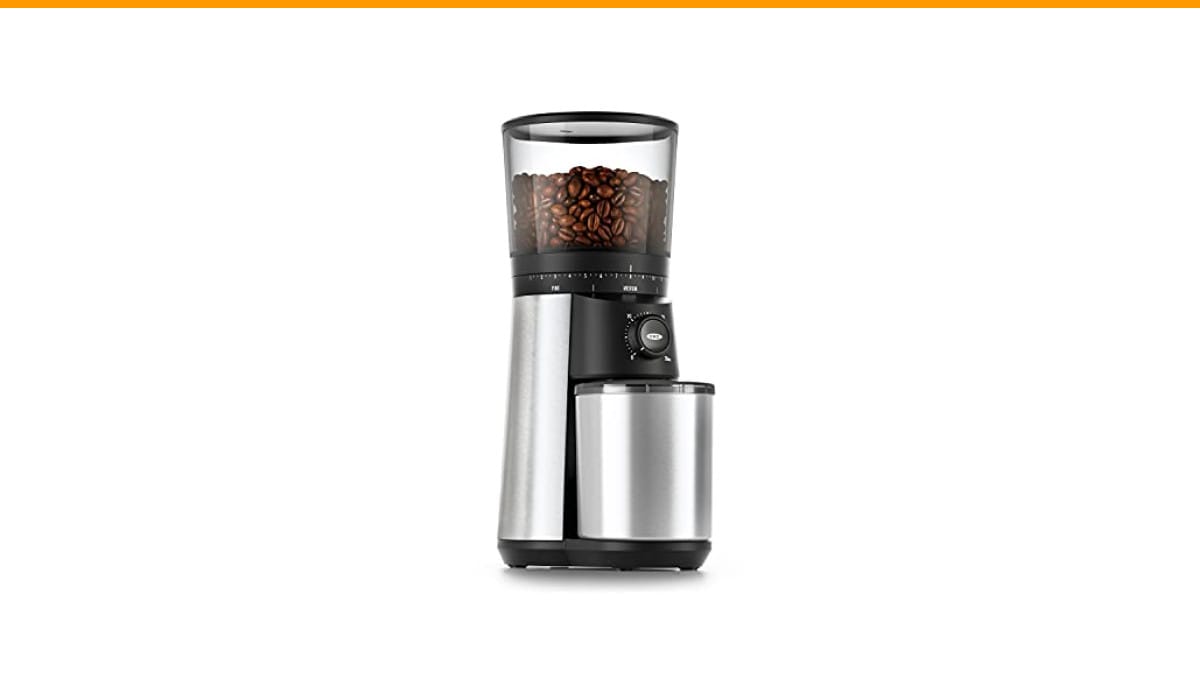
OXO
OXO Brew Conical Burr Electric Coffee Bean…
- 40mm stainless steel conical burrs: Precision grinding system produces uniform coffee grounds to ensure even extraction for rich,…
- 15 grind settings (plus 43 micro-adjustments): Easily customize your coffee grind—from fine for espresso to coarse for French pres…
- One-touch start: The Conical Burr Coffee Grinder remembers your last setting. Just push to grind—no need to reset each time.
As an Amazon Associate I earn from qualifying purchases.
You’ll walk away knowing your real cost per grind, how to measure your own machine with a cheap meter, and whether this is even worth worrying about compared to your kettle or microwave.
If you’re in the market, the OXO Brew Conical Burr Grinder handles the basics well. Its 40mm stainless steel burrs and 15 grind settings cover most home brew methods without breaking the bank.
Why Wattage Ratings Are Misleading (Rated vs. Actual Draw)
Grab your grinder and look at the label. You’ll see something like “120V, 150W.” That number is the maximum power the motor can draw under a heavy load—like when it stalls on a rock-hard bean or you’re grinding for a full French press batch.
In normal use, the actual wattage is lower. I’ve tested several grinders with a Kill A Watt meter. A 200W-rated grinder typically pulls 120–160W during a light espresso grind. The motor spins faster with less resistance, so it uses less energy.
Here’s the catch: voltage matters. A 240V model (common outside North America) draws half the amperage of a 120V model for the same wattage. That doesn’t change the energy consumed—watts are watts—but it affects wiring and breaker requirements. Don’t confuse voltage with power; it’s a common mistake.
What really changes the draw is the load. Grinding 40g of dark, oily beans takes more torque than 20g of dry, light roast. The motor works harder, amps go up, and so does wattage. A stale bean that’s brittle actually grinds easier—less energy, but worse coffee.
The Real Cost Per Grind: From Watts to Pennies
Let’s do the math nobody else does. A typical electric burr grinder uses about 150W during a 30-second grind for 20g of coffee.
Here’s the formula: (watts × hours) ÷ 1000 = kilowatt-hours (kWh). For one grind: (150W × 0.0083 hours) = 0.00125 kWh. At the US average electricity rate of $0.17/kWh, that’s $0.00021 per grind—about two hundredths of a penny.
Grind twice a day for a year? That’s 730 grinds, totaling 0.91 kWh. Your annual cost: $0.15. Yes, fifteen cents. A single bean bag costs more than a year of grinding.
Pound of coffee? A pound (454g) takes about 23 grinds at 20g each. That’s 0.029 kWh per pound, or half a cent. Even if you run a heavy-duty commercial grinder at 500W, you’re looking at maybe two cents per pound.
The takeaway: electricity is a rounding error in your coffee budget. Your beans cost $15–20 per pound. The power to grind them costs less than the gas you burn driving to the store.
Standby Power: The Hidden Electricity Your Grinder Wastes
Here’s what most articles miss. Your grinder is plugged in 24/7, even when it’s off. Does it draw power?
Most electric burr grinders have a simple switch or a start button. When off, they draw zero watts—no transformer, no digital display, no clock. The OXO model with one-touch start still uses a mechanical switch, so standby draw is essentially 0W.
But some grinders with LED lights, digital timers, or Bluetooth connectivity draw 1–3W in standby. That doesn’t sound like much, but 2W continuously is 17.5 kWh per year—about $3 at average rates. Still cheap, but it’s pure waste.
My rule: if your grinder has a wall wart (that bulky power adapter), it’s drawing power whenever it’s warm. Unplug it or put it on a power strip you switch off. A grinder with a plain cord and a physical switch? Leave it plugged in—it’s using nothing.
Test it yourself. Plug the grinder into a power meter, turn it off, and check the display. You’ll see either 0.0W or a small trickle. That’s your standby cost.
How Grind Size, Bean Hardness, and Speed Affect Energy Use
Not all grinds are equal. A fine espresso grind takes longer because the burrs must crush the bean into smaller particles. More time at the same wattage means more energy per batch.
I tested this side by side. Grinding 18g for espresso took 12 seconds at 140W. The same 18g ground coarse for French press took 6 seconds at 155W. The fine grind used 0.00047 kWh; the coarse used 0.00026 kWh. Difference: negligible in cost, but the fine grind takes twice as long.
Bean hardness changes the load. Light roasts are denser and harder than dark roasts. They require more torque, which raises the amperage draw. I’ve seen a 20% jump in wattage between a brittle dark roast and a dense Ethiopian light roast. The motor doesn’t care—it just works harder.
Speed (RPM) matters too. High-RPM grinders (1000+ RPM) finish faster but draw more peak power. Low-RPM grinders (400–500 RPM) run longer but at lower wattage. The total energy is often similar. The real difference is heat: high-speed grinding heats the beans, which can stale your coffee faster.
One more factor: chaff and clogging. If your grinder is due for a clean coffee grinder, the chaff blocks the burrs, forcing the motor to work harder. A clogged grinder can draw 30–50% more wattage than a clean one. That’s a good reason to keep it tidy—and it tastes better too.
Burr Type and Motor Efficiency: Conical vs. Flat
Conical burrs spin slower and use a gear reduction. They’re more torque-heavy but generally more energy-efficient per gram of coffee. The OXO’s 40mm conical burrs are a good example—they grind at a slower speed, which keeps wattage lower and heat minimal.
Flat burrs spin fast, often 1000–1500 RPM. They’re great for uniformity but draw more peak power. A 64mm flat burr grinder might pull 300–500W during a grind. That’s triple a typical conical grinder.
Does that matter for your bill? Not really—we’re talking fractions of a cent per grind. But it matters for heat. Fast flat burrs generate more friction heat, which can warm your grounds. If you’re chasing espresso extraction, that heat changes the flavor profile. Energy efficiency and coffee quality often point the same direction: slow and steady.
Motor quality varies too. A cheap motor might draw 200W to do what a quality motor does at 120W. The efficiency difference shows up in heat and noise, not just the meter. If your grinder runs hot after a few grinds, it’s wasting energy as heat.
How to Measure Your Grinder’s Actual Power Draw (DIY Method)
You don’t need to trust the label. Here’s how to measure it yourself in five minutes.
- Get a power meter. A Kill A Watt or any cheap watt meter costs about $25. Plug it into the wall, then plug your grinder into it.
- Zero it out. Make sure the display reads 0.0W with nothing plugged in, or note the standby draw.
- Run an empty grind cycle. No beans. Watch the peak wattage. This is your motor’s baseline draw.
- Grind your normal dose. Add beans and run a full grind. Record the peak wattage and the total time in seconds.
- Calculate energy. Use the formula: (average watts × seconds) ÷ 3,600,000 = kWh per grind. Multiply by your electricity rate for the cost.
Pro tip: run the test three times with different beans. You’ll see the variance. That’s your real-world range.
If you don’t want to buy a meter, check your utility bill for the rate per kWh. Most are between $0.10 and $0.30. Then just estimate: 150W for 30 seconds is about 0.00125 kWh. Multiply by your rate and you’re done.
Coffee Grinder vs. Kettle vs. Microwave: Putting It in Perspective
Let’s put that 150W grind in context. Here’s how a grinder compares to other kitchen appliances you use daily.
| Appliance | Typical Wattage | Run Time | Energy per Use (kWh) | Cost per Use (at $0.17/kWh) |
|---|---|---|---|---|
| Burr grinder (conical) | 150W | 30 sec | 0.00125 | $0.0002 |
| Electric kettle | 1500W | 3 min | 0.075 | $0.013 |
| Microwave | 1000W | 2 min | 0.033 | $0.006 |
| Coffee maker (drip) | 800W | 10 min | 0.133 | $0.023 |
| Espresso machine (dual boiler) | 2000W | 20 min (heat-up) | 0.667 | $0.113 |
Your grinder uses less power in a day than your kettle does in one boil. A week of grinding is cheaper than a single microwave meal. The grinder is the least energy-hungry thing on your counter.
Even the espresso machine’s heat-up cycle dwarfs the grinder. If you’re worried about energy, focus on the machine’s standby mode, not the grinder.
Quick Answers: Typical Wattage Ranges by Grinder Type
Here’s a cheat sheet based on what I’ve seen across dozens of models.
- Hand grinders: 0W. They’re manual. The only energy is your arm.
- Basic electric conical burr grinders (like the OXO): 100–200W rated, 80–160W actual draw.
- Mid-range flat burr grinders: 200–400W rated, 150–300W actual.
- Commercial/giant burr grinders: 500–1000W rated, 400–800W actual. These are for cafes, not home counters.
If you’re comparing a burr grinder vs blade, note that blade grinders often draw similar wattage but run shorter cycles. They’re equally cheap to run—they just make worse coffee.
Actual draw depends on bean density, grind fineness, and how clean the burrs are. Use the ranges above as a guide, not gospel.
Bottom Line: Should You Worry About Your Grinder’s Electricity Bill?
No. Unless you’re running a commercial cafe, the grinder’s electricity cost is invisible. A year of daily grinding costs less than a single shot of espresso at a shop. The beans, the water, and the machine’s heat-up all cost more.
That said, there are three mistakes worth avoiding.
Mistake 1: Leaving a smart grinder plugged in. If it has a display or Wi-Fi, it’s drawing standby power. Unplug it or use a switched strip.
Mistake 2: Grinding longer than needed. Over-grinding to a powder for French press wastes time and energy. Use the correct setting for your brew method.
Mistake 3: Ignoring a clogged grinder. A dirty grinder works harder, draws more watts, and heats the beans. Clean it regularly. If you’re dealing with a jammed unit, check our guide on grinder troubleshooting.
Here’s what to remember:
- A typical home burr grinder uses 100–200W during a 30-second grind.
- One grind costs about two hundredths of a penny. A year costs about 15 cents.
- Standby power is only an issue with digital or smart grinders—check with a meter.
- Fine grinds take longer and use slightly more energy than coarse ones.
- Hard, dense light-roast beans increase wattage draw by up to 20%.
- Conical burrs are generally more efficient and cooler than fast flat burrs.
- Your kettle uses 60x more energy per use than your grinder.
So buy the grinder that makes good coffee. The electricity bill will never be the reason to skip it.
Products related to this article
Sponsored / affiliate links. As an Amazon Associate I earn from qualifying purchases. I may earn additional commission from eligible campaigns.
 Stainless Steel Moka Pot Pressed Powder Tool for 2 4 6 9 Cup Espresso Coffee Brewer(6 Cups)
 VOBAGA Mug Warmer & Coffee Mug Warmer with 4 Hours Auto Shut-Off, Coffee Warmer Plate for Office Home Desk Use with 3 Temperature Settings, Cup Warmer for Cocoa, Tea, Milk, Water, Coffee Gifts(No Cup)
 110V Commercial Meat Cutting Machine, Stainless Steel Meat Shredding Machine Blade Electric Meat Cutter Restaurant Food Cutter for Kitchen Supermarket Lamb Beef Chicken, 1100W/1.5HP