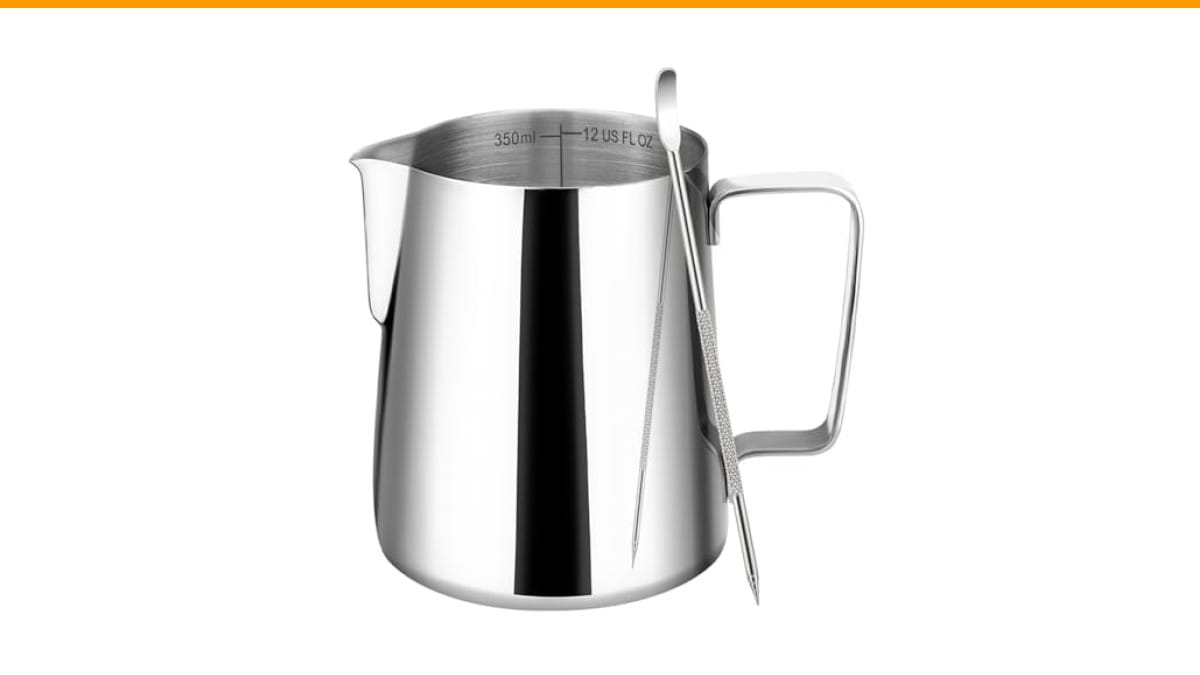
You pulled your first shot on the Barista Express and it tasted like battery acid. Or maybe it gushed out in eight seconds. The machine is fine — it’s the accessories that need work. The stock portafilter is a 54mm basket with a plastic tamper that flexes when you press. The grinder clumps. And the included jug is fine for steaming, but useless for pouring latte art. So you start shopping, and suddenly a WDT tool costs $15, a bottomless portafilter costs $80, and a scale costs $120. Where does it stop?
This guide breaks down what to actually spend, in order of impact. You’ll get a budget range for each upgrade, a clear buy-now or wait verdict, and a phased roadmap that covers your first month and first year. No fluff, no brand worship — just what fixes the shot quality problems you’re hitting right now.

possiave
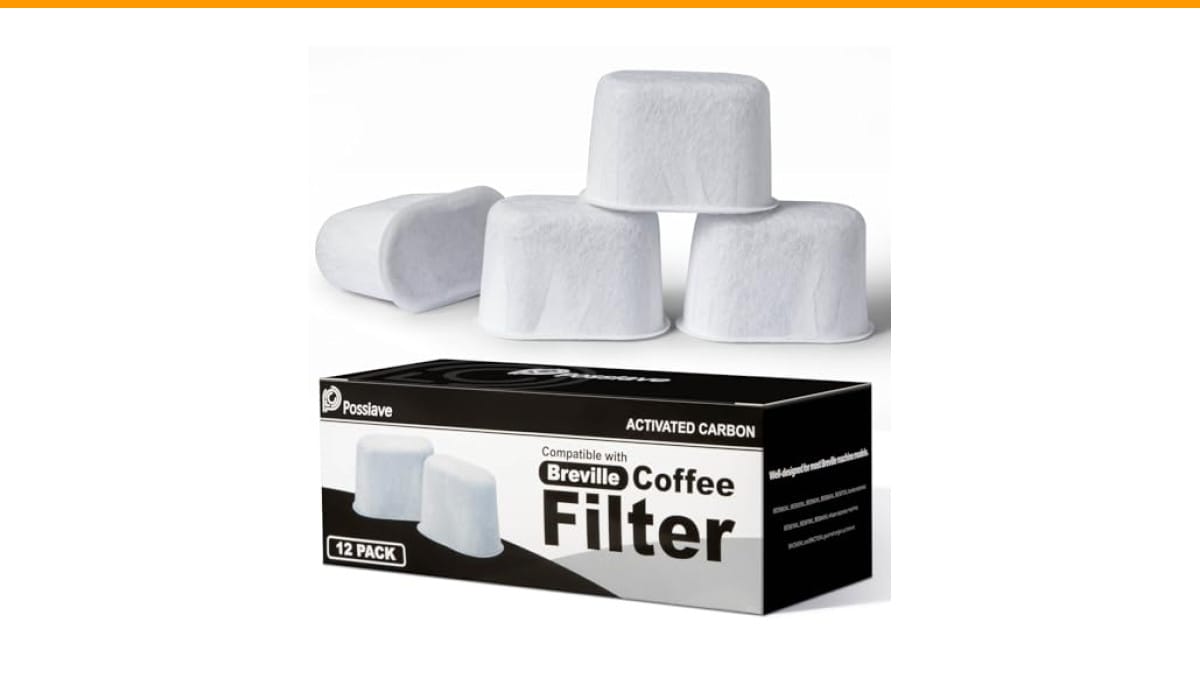
Possiave 12-Pack Water Filters Compatible with Breville…
- SUITABLE FOR MOST OF BREVILLE MACHINES - Well -designed for all Breville machine models: BES980XL, BES920XL, BES900XL, BES860XL, B…
- IMPROVE FLAVOR - Filter out chlorine, calcium, bad odors and impurities with purest coconut shell charcoal. The pore structure and…
- CONVENIENT TO STORAGE - For convenient storage, we provide individual package for each two water filters, which can also keep othe…
As an Amazon Associate I earn from qualifying purchases.
Before you buy anything, check the machine’s water filter. Hard water ruins espresso flavor faster than any basket upgrade. The Possiave water filters are a drop-in replacement for the Breville BWF100, and they filter chlorine and impurities with coconut shell charcoal. It’s a cheap fix that protects your machine and your cup.
What the Barista Express Gets Right (and Wrong) Out of the Box
The Barista Express is a solid entry point. The 54mm portafilter is standard, the built-in grinder has conical burrs, and the steam wand produces enough power for microfoam. For a home machine, it’s genuinely capable. But the stock setup has three weak points that will frustrate you.
First, the grinder clumps. The chute and the declumper create static, so your ground coffee looks like a bird’s nest. Second, the tamper is plastic and sized slightly under the basket diameter, which causes uneven tamp pressure. Third, the stock double-wall baskets are forgiving but hide flavor. You can’t diagnose channeling or extraction issues because you can’t see the bottom of the basket.
The good news: every one of these problems has a cheap fix. The bad news: most people buy the wrong fix first. They upgrade the burrs or buy a bottomless portafilter before they fix distribution. That’s backwards.
Start with distribution. If your puck is uneven, no amount of grind adjustment will save you.
The $20 Fix: WDT Tool, Dosing Funnel, and Tamp Mat
This is the highest-impact, lowest-cost tier. You can solve 70% of your shot quality issues for under $25 total. The WDT tool (a small rake with thin needles) breaks up clumps in the ground coffee before you tamp. It’s not a gimmick — it physically redistributes particles so water flows evenly through the puck.
You can make a WDT tool from a wine cork and three paperclips. That works. But a proper one with 0.4mm needles costs about $12 and is easier to hold. The dosing funnel is the other essential. It sits on top of the 54mm portafilter and prevents grounds from spilling over the rim during distribution. Without it, you’ll make a mess every single shot.
A tamp mat is optional but practical. It protects your countertop and your knuckles. A silicone one costs $8. You don’t need a $40 walnut version.
Verdict: Buy the WDT tool and dosing funnel immediately. Skip the tamp mat if you have a cutting board.
Why the Stock Tamper Is Holding You Back
The stock tamper is 53mm, which leaves a gap around the edge of the 54mm basket. That gap means the coffee bed is denser in the center and looser at the edges. Water takes the path of least resistance, so it flows through the edges first. That’s channeling — and it tastes sour and thin.
A calibrated tamper solves this by pressing to a consistent depth and force. The cheap fix is a 54mm tamper from a third-party brand. But you can also get a self-leveling tamper for about $30, which is worth it if you’re not confident in your wrist technique.
You don’t need a $100 force gauge tamper. The Barista Express’s grinder is not precise enough to benefit from that level of control.
The $50 Upgrade: Precision Basket and Calibrated Tamper
Once distribution is sorted, the next bottleneck is the basket. The stock double-wall baskets are designed for pre-ground coffee and convenience, not flavor. They use a single hole at the bottom to create pressure, which masks poor extraction. A precision basket — one with precision-machined holes across the entire surface — lets water flow evenly and exposes the true flavor of your beans.
For the Barista Express, you need a 54mm basket. A precision basket with straight walls costs around $25. This is the single best taste upgrade per dollar. It will make your shots more complex, but it will also expose flaws in your technique. That’s a good thing — it teaches you.
Pair that with a calibrated tamper. The best option is a self-leveling tamper with a spring mechanism that stops at a preset pressure, usually 30 pounds. You’ll pay $35 to $50. The key is the flat base. A level tamp is more important than the exact pressure.
Verdict: Buy the precision basket and calibrated tamper in your first month. This combo transforms straight espresso shots.
The $100 Investment: Espresso Scale and Bottomless Portafilter
Here’s where the money gets real. A scale and a bottomless portafilter are diagnostic tools, not just upgrades. They tell you what’s wrong with your shot.
An espresso scale with a timer costs $30 to $60. The best ones are small enough to fit on the drip tray with your cup. They measure brew ratio — the weight of coffee in versus espresso out. The standard starting point is 1:2, meaning 18 grams in, 36 grams out, in 25 to 30 seconds. Without a scale, you’re guessing. Guessing produces inconsistent shots.
The bottomless portafilter costs $50 to $80. It removes the spouts so you can see the bottom of the basket during extraction. This is how you spot channeling, spray, and uneven flow. It’s humbling at first — your shots will look like a fountain. That’s fine. The visual feedback corrects your technique faster than any forum post.
Verdict: Buy the scale first, the bottomless portafilter second. Both are worth it if you drink straight shots.
When a Bottomless Portafilter Is Overkill
If you only drink milk-based drinks — lattes, cappuccinos — the bottomless portafilter is less critical. The milk masks minor extraction flaws. You’ll still benefit from a scale, but you can skip the bottomless portafilter for a few months.
That said, it’s the best learning tool you can buy. Even if you don’t need it for your daily latte, it’s worth owning for troubleshooting.
The $150+ Workflow Overhaul: Single-Dose Hopper, Bellow, and Knock Box
This tier is about convenience and consistency, not flavor. The stock hopper holds a lot of beans, but it has a few problems. The beans at the bottom sit for weeks, going stale. And the grinder retains a few grams of old grounds in the chute, which mixes into your fresh dose.
A single dose hopper — a small tube that holds just one dose of beans — fixes the stale bean problem. It costs $25 to $40. A silicone bellow fits on top and pushes air through the grinder to purge retained grounds. That’s another $15 to $25. Together, they make your grinder deliver a consistent dose every time.
The knock box is a simple metal box with a bar to knock the spent puck into. It costs $20 to $50. It’s not sexy, but it keeps your counter clean. The stock knock bar on the machine is too small and flimsy for a solid knock.
Verdict: Buy the bellow early if you switch beans often. The single-dose hopper and knock box are quality-of-life purchases for month six or later.
Cleaning Accessories That Pay for Themselves (Backflush Disc, Tablets, Filters)
Most people skip maintenance until the machine screams. That’s a mistake. A dirty machine makes sour, bitter shots and takes longer to heat up. The Barista Express needs a backflush every 50 to 100 shots. That requires a blind basket or backflush disc and cleaning tablets.
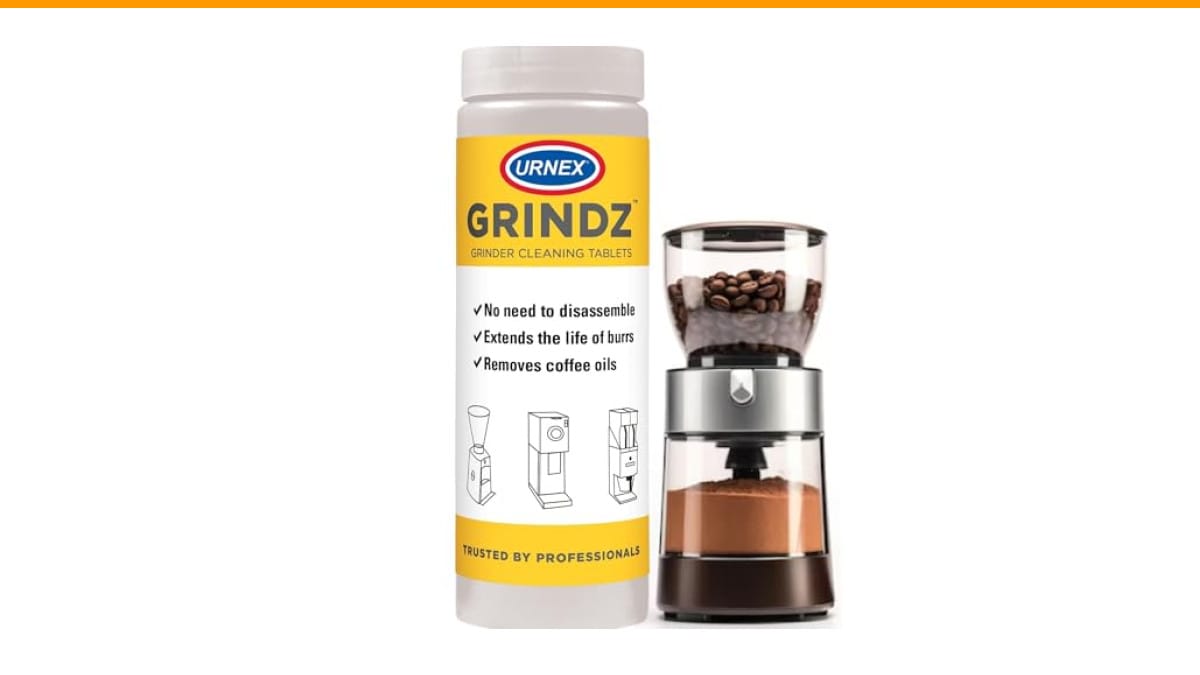
The backflush disc costs $15. A bottle of 12 cleaning tablets costs $12. Together, they’re the cheapest insurance you can buy. Skip this and you’ll pay for a descale cycle later, or worse, a repair.
The water filter is the other quiet investment. The stock Breville BWF100 filters need replacing every two months. Third-party options like the Possiave 12-pack work the same and cost less per filter. They’re easy to swap — just lift the water tank handle and drop the new one in. This is a recurring cost, so buying in bulk makes sense.
When to Skip the Upgrade Entirely (Diminishing Returns)
Not every accessory is worth the money. Here’s where you should stop spending.
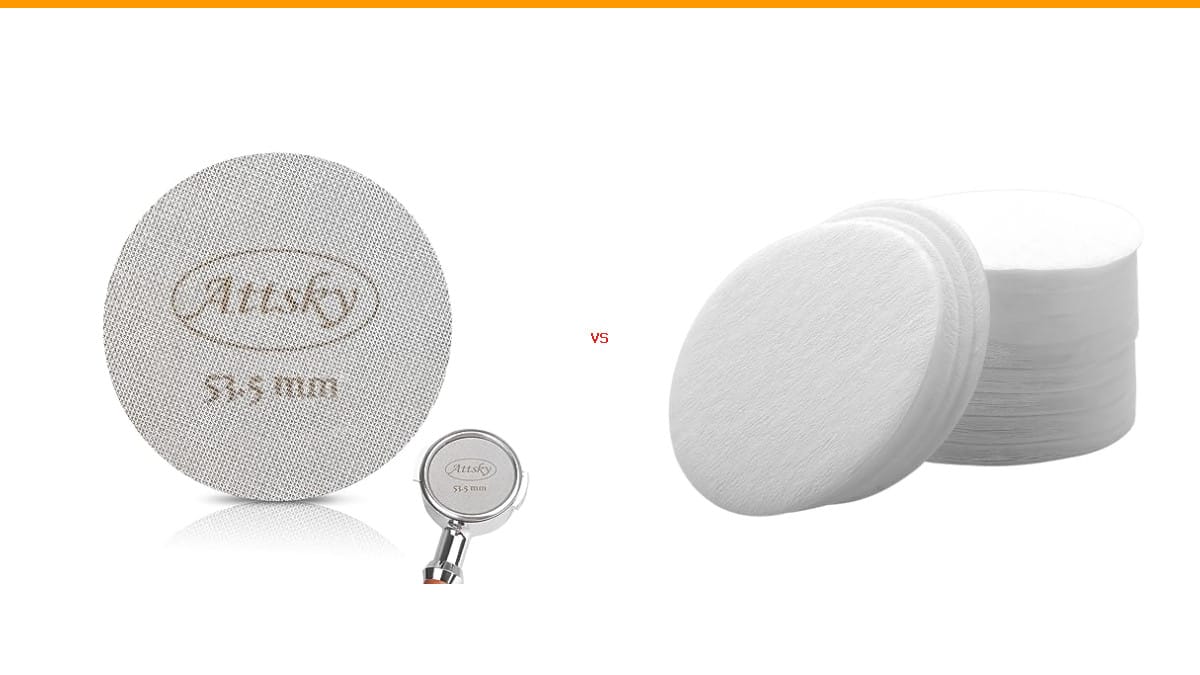
Skip the puck screen. It’s a thin mesh disc that sits on top of the coffee bed to keep the group head clean. It costs $10 to $20. In testing, it does keep the shower screen cleaner, but it also absorbs heat and adds another variable to your workflow. The benefit is marginal on the Barista Express.
Skip the precision burr upgrade. The Barista Express’s grinder is not meant to be disassembled for burr replacement. You can find aftermarket burrs, but the alignment and motor aren’t built for that level of precision. You’ll spend $80 and get inconsistent results.
Skip the bottomless portafilter if you never drink straight espresso. The milk hides the flaws, so the visual feedback is wasted.
And skip anything that claims to make your machine a commercial-grade espresso maker. It won’t. The Barista Express is a home machine. Its value is convenience and simplicity.
Warranty, Resale Value, and Third-Party Risks
Breville’s warranty is two years. It covers manufacturing defects, not user modifications. If you install a third-party grinder burr and the grinder fails, Breville can deny the claim. The same applies to third-party water filters, but those are less risky because they’re a standard replacement part.
Your best bet: keep all stock parts. If you upgrade the tamper or basket, store the original in the box. When you sell the machine — and you will, eventually — the resale value is higher with the original accessories included. A complete kit sells for $100 to $150 more than a bare machine.
Third-party accessories are generally safe. The 54mm portafilter and baskets are standardized. Just avoid anything that requires drilling, filing, or modifying the machine’s housing.
Phased Buying Guide: First Month vs. First Year
Here’s the roadmap I recommend. It spreads the cost out and matches upgrades to your skill level.
First Month (Under $60)
- WDT tool ($12)
- Dosing funnel ($10)
- Precision 54mm basket ($25)
- Backflush disc and cleaning tablets ($27)
This gets you consistent, clean shots without breaking the bank.
Month Two to Three ($70)
- Espresso scale with timer ($40)
- Calibrated tamper ($40)
Now you’re measuring brew ratio and tamping evenly. Your shots become repeatable.
Month Four to Six ($100)
- Bottomless portafilter ($60)
- Silicone bellow ($15)
- Knock box ($25)
This is the diagnostic phase. You’ll see your mistakes and fix them.
Month Six to Twelve (Optional)
- Single-dose hopper ($30)
- Water filter refills (ongoing)
These are convenience upgrades. Buy them if you’re still using the machine daily.
| Upgrade | Budget Range | Fixes What? | Buy Now or Wait? |
|---|---|---|---|
| WDT tool | $10 – $15 | Clumping, channeling | Buy now |
| Dosing funnel | $8 – $12 | Messy distribution | Buy now |
| Precision basket | $20 – $30 | Flavor clarity | Buy now |
| Calibrated tamper | $35 – $50 | Uneven tamp | Buy in month 2 |
| Espresso scale | $30 – $60 | Brew ratio | Buy in month 2 |
| Bottomless portafilter | $50 – $80 | Diagnosing channeling | Buy in month 4 |
| Single-dose hopper | $25 – $40 | Stale beans in hopper | Wait 6 months |
| Knock box | $20 – $50 | Counter cleanliness | Wait 6 months |
| Puck screen | $10 – $20 | Group head cleanliness | Skip |
FAQ: Budget-Specific Answers for Common Questions
Do I need a bottomless portafilter to make good espresso?
No. It’s a diagnostic tool, not a flavor tool. You can make great espresso with the stock spouted portafilter if your distribution and tamp are solid. The bottomless portafilter just shows you your mistakes so you can fix them faster.
Is a calibrated tamper worth it over the stock one?
Yes. The stock tamper is undersized and plastic. A calibrated tamper guarantees a level, consistent tamp every time. It removes one variable from your workflow, which matters when you’re learning.
Can I use third-party water filters without voiding my warranty?
Generally, yes. Water filters are consumable parts, like a car’s oil filter. Breville can’t reasonably deny a warranty claim because you used a compatible filter. Keep your receipt and the original filter just in case.
How much should I spend on an espresso scale?
Spend $30 to $50. You need a scale that measures to 0.1 grams and fits on the drip tray. The $100 scales add Bluetooth and app integration, which you don’t need on a Barista Express.
What’s the one accessory I should never buy?
The precision burr upgrade for the built-in grinder. It’s expensive, hard to install, and the grinder’s motor and alignment aren’t designed for it. You’ll get better results from a $25 precision basket.
What I’d Actually Buy, In Order
- Buy a WDT tool and dosing funnel first — they fix channeling for under $25.
- Swap the stock basket for a precision 54mm basket — it’s the best flavor upgrade per dollar.
- Get a scale with a timer before you buy any more gear — you can’t improve what you can’t measure.
- Add a calibrated tamper once you’ve mastered the scale — consistent pressure matters.
- Buy a bottomless portafilter only if you drink straight shots and want to diagnose your technique.
- Replace the water filter every two months — the Possiave filters are a cost-effective way to keep your machine clean.
- Skip the puck screen, precision burrs, and anything that costs more than your machine’s resale value.
Your total spend should land between $150 and $250 over the first year. That’s the sweet spot. Less than that and you’re fighting the machine’s flaws. More than that and you’re polishing a turd — the Barista Express has limits, and no accessory will turn it into a commercial machine.
If you’re hitting specific grinder issues, check out our guide on Barista Express grinder problems for fixes that don’t require new parts. And if your machine isn’t cleaning properly, the cleaning cycle troubleshooting guide covers common failures. For a full breakdown of the machine’s strengths and weaknesses, read our Barista Express review.
Products related to this article
Sponsored / affiliate links. As an Amazon Associate I earn from qualifying purchases. I may earn additional commission from eligible campaigns.
 Linnkyfloa Coffee Espresso Maker Handle Replacement for Stovetop Moka Pot or Percolator, Black Plastic for Spare Part Compatible with Italian(9-12 Cup)
 Coffee Espresso Machine Handle Replacement Parts, Cafe Bracket Handle for Lidl Silvercrest CM4621 CM4218 KF5002 KF500S Barista (for 51mm Portafilter Basket - Not included)
 SOLUSTRE Electric USB Coffee Cup Warmer with Temperature Settings Portable Milk and Beverage Heating Coaster for Office Desk Small Lightweight Design Easy to Clean Surface Multi Functional