You pull the shot, and it takes 12 seconds. The grind looks fine, the machine is clean, but the coffee tastes sour and thin. You check the basket, then the shower screen, and then it hits you: the tamper. That flat stainless steel disc you press into every puck has been collecting dried coffee oils, old grounds, and whatever else landed on the counter for the past three weeks. You rinse it under hot water, wipe it with a towel, and call it clean. That rinse is not sanitation.
Here is the thing about coffee tools: they touch food, they touch water, and they sit in warm, damp environments. That combination is an open invitation for bacteria, mold, and rancid oil buildup. This guide covers exactly how to sanitize an espresso tamper the right way, what not to do, and how to keep the surface from degrading over time. You will learn the difference between cleaning and sanitizing, which methods work for stainless steel, and which ones will ruin the finish.

JOEZEST
51mm Espresso Tamper Espresso Accessories Kit: Espresso…
- 【Perfect Coffee Lover's Gift】Inside this premium package, you'll discover a 51mm tamper, wdt tool, dosing funnel, and puck screen—…
- 【Durable 316 Stainless Steel Tamper】Crafted for precision and durability, easy to clean, ensuring even tamping for consistent extr…
- 【Upgraded 316 WDT Tool Espresso】Espresso distribution tool is tested by professional baristas, our 6*0.4mm needle stirrer effortle…
As an Amazon Associate I earn from qualifying purchases.
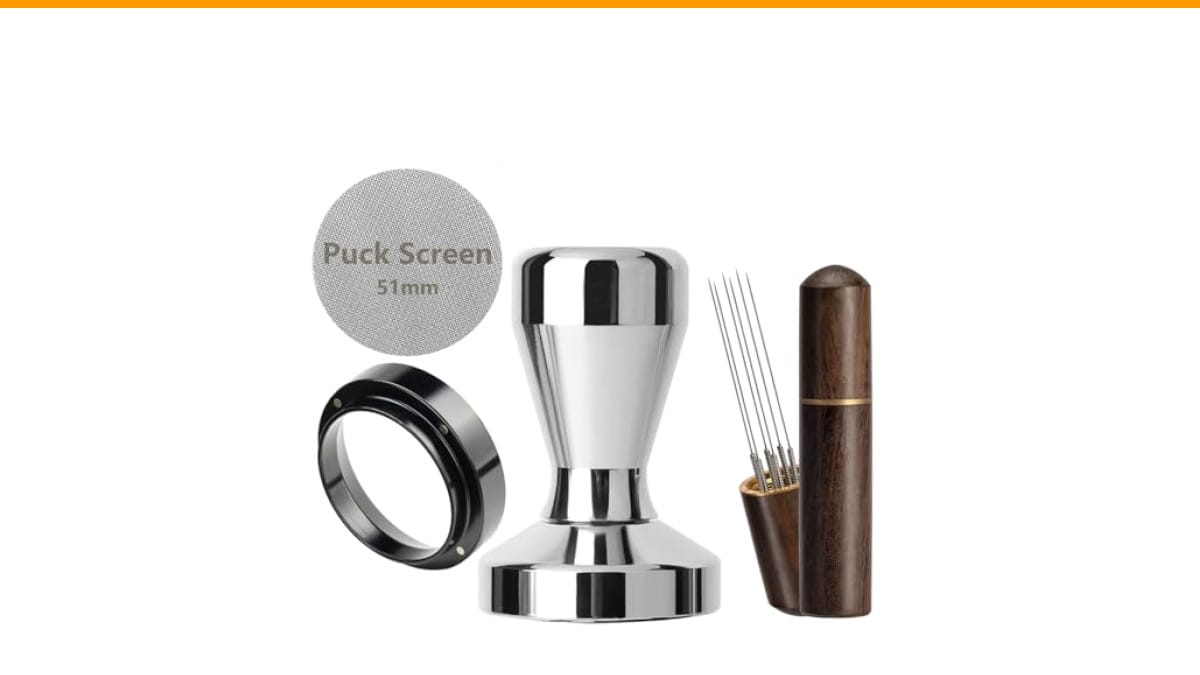
If you are working with a 51mm portafilter setup, the JOEZEST 51mm Espresso Tamper Kit includes a tamper, WDT tool, dosing funnel, and puck screen. All four items need regular sanitation, and the same rules apply to each. The 316 stainless steel construction handles chemical sanitizers well, but the wooden or coated handles do not. Keep that distinction in mind as you read.
Cleaning vs. Sanitizing: The Difference Matters
Most home baristas stop at cleaning. Cleaning removes visible debris. Sanitizing reduces the number of microorganisms to a safe level. You need both.
Think about a restaurant kitchen. The cook scrubs the cutting board with soap and hot water, then runs it through a sanitizer cycle. The scrub gets the food off. The sanitizer kills the germs. Your tamper deserves the same two-step process, especially if you use it daily.
For a home setup, you do not need commercial-grade chemicals. A food-safe sanitizing solution, like a quaternary ammonium compound or a simple hydrogen peroxide mix, works fine. You can also use a steam wand if your espresso machine has one. Steam at 212°F or higher kills most pathogens on contact, but it also heats the metal. Let the tamper cool before you touch it.
The Myth: Hot Water Alone Sanitizes
Hot tap water sits around 120°F. That is warm enough to loosen oils but not hot enough to kill bacteria. Most pathogens die at 160°F or higher, and they need sustained contact time. A quick rinse under the faucet does nothing except move the germs around.
Boiling water works, but it is risky. Dropping a cold tamper into boiling water can warp the metal or crack a wooden handle. If you choose this method, bring the water to a rolling boil, turn off the heat, and let it sit for 30 seconds before adding the tamper. Leave it in for two minutes, then remove with tongs.
Step-by-Step Sanitizing Routine for Stainless Steel Tampers
This process works well in home kitchens and is worth following. It takes about five minutes and works for any stainless steel tamper, including the 316 grade used in the JOEZEST kit.
- Disassemble if possible. Some tampers have removable bases. Separate the base from the handle so water does not pool inside the joint.
- Rinse with warm water. Knock off loose coffee grounds. Do not use soap yet.
- Wash with mild dish soap. Use a soft sponge or cloth. Avoid abrasive pads; they scratch the mirror finish and create tiny crevices where bacteria hide.
- Soak in a sanitizing solution. Mix one tablespoon of unscented hydrogen peroxide (3%) with one cup of water. Submerge the base for five minutes. For commercial sanitizer, follow the label dilution exactly.
- Rinse thoroughly. Any residual sanitizer will affect the taste of your next shot. Rinse under running water for at least 15 seconds.
- Dry completely. Use a lint-free microfiber cloth. Pay attention to the edges where the base meets the handle. Moisture trapped there leads to rust and mold.
That is the whole routine. It is not complicated, but it is consistent. Do this every week if you pull multiple shots daily, or every two weeks for occasional use.
The Myth: You Can Put a Tamper in the Dishwasher
Dishwashers use aggressive detergents, high heat, and prolonged moisture. That combination strips the protective oxide layer on stainless steel and can cause pitting. The handle, especially if it is wood or coated, will swell, crack, or peel. An expensive tamper can be ruined by just one dishwasher cycle. Hand washing is the only safe route.
Chemical Sanitizers: Which Ones Are Safe?
Not all sanitizers are food-safe. Some leave residues that are toxic if ingested, and coffee is acidic enough to pull those residues into your drink. Stick to these three options.
| Sanitizer | Concentration | Contact Time | Pros | Cons |
|---|---|---|---|---|
| Hydrogen peroxide (3%) | 1 tbsp per cup of water | 5 minutes | Food-safe, no rinse needed if diluted properly, cheap | Breaks down in light, short shelf life |
| Quaternary ammonium (quat) | Follow label (usually 150-200 ppm) | 1-2 minutes | Fast, effective against a broad range of pathogens | Must rinse thoroughly, can leave a film |
| Isopropyl alcohol (70%) | Undiluted, wipe on | 30 seconds | Evaporates quickly, no rinse needed | Flammable, can dry out wooden handles |
I prefer hydrogen peroxide for home use. It is cheap, readily available, and breaks down into water and oxygen. No toxic residue. Just make sure you buy the 3% solution, not the 35% food-grade stuff that requires serious handling.
If you use a quat sanitizer, check the label for food-contact approval. Many commercial quats are designed for surfaces, not utensils. The difference matters. A surface sanitizer might be fine for a countertop but not safe for something that touches your coffee.
What About Wooden or Coated Handles?
Stainless steel bases can take a soak. Wooden handles cannot. Wood is porous. It absorbs water, sanitizer, and coffee oils. Over time, that leads to cracking and bacterial growth inside the grain.
For wooden handles, wipe the handle with a damp cloth and mild soap, then dry immediately. Never soak it. If the handle has a food-safe finish, like mineral oil or beeswax, reapply it every few months to maintain the seal. A dry, cracked handle is a bacteria trap.
Coated handles, like those with a matte epoxy or powder coat, are more forgiving. They resist moisture but can chip. Once the coating chips, water gets underneath and rusts the metal core. Inspect the handle regularly. If you see chips, sand the area smooth and apply a food-safe sealant, or replace the tamper. The espresso machine type you own does not change this maintenance requirement.
If you are dealing with a machine that leaks water or steam, check our guide on water leak fixes because a leaking group head can splash water onto your tamping station and speed up corrosion.
How Often Should You Sanitize?
The short answer: weekly for daily use, biweekly for occasional use, and immediately after any visible contamination. Dropping the tamper on the floor is an instant sanitize event. So is letting it sit in a wet drip tray overnight.
Here is a practical schedule. If you pull two or more shots every day, sanitize the tamper base every Sunday. If you pull a shot every few days, sanitize twice a month. If you only use it on weekends, a monthly sanitize is enough, but still wipe it down after each use.
One more thing: the puck screen and WDT tool need the same treatment. The puck screen, especially, collects fines and oils in its mesh. A quick rinse is not enough. Soak it in the same hydrogen peroxide solution for five minutes, then brush it with a soft nylon brush to dislodge trapped grounds. For a deeper clean on the whole machine, including the steam wand, see our steam wand cleaning guide.
Common Mistakes That Ruin a Tamper
Testing many tampers over time usually leads to making most of these mistakes. Learn from them.
- Using bleach. Bleach is corrosive to stainless steel. It causes pitting and leaves a residue that is hard to rinse away.
- Scrubbing with steel wool. Steel wool leaves microscopic metal particles embedded in the surface. Those particles rust and stain the tamper. Use a nylon pad or soft cloth.
- Leaving it to air dry. Hard water spots form on the surface. More importantly, moisture in the handle joint creates a breeding ground for mold.
- Storing it in a closed drawer while wet. No airflow means the moisture stays trapped. Dry it fully before storage.
- Using a citrus-based cleaner. Citrus acids can etch stainless steel over time. Stick to neutral pH dish soap.
The 316 stainless steel in the JOEZEST kit is more corrosion-resistant than the cheaper 304 grade, but it is not invincible. It still needs the same care.
Frequently Asked Questions
Can I use rubbing alcohol to sanitize my tamper?
Yes, 70% isopropyl alcohol works well. It evaporates quickly and leaves no residue. Wipe the base with an alcohol-soaked cloth, let it sit for 30 seconds, then wipe dry. Do not soak the handle in alcohol; it will dry out the wood or degrade the coating.
Is it safe to boil my tamper?
Boiling is safe for the stainless steel base if you do it carefully. Bring the water to a boil, turn off the heat, wait 30 seconds, then add the tamper. Leave it for two minutes. The risk is thermal shock, which can warp the metal or crack the handle. If the tamper has a wooden handle, do not boil it.
How do I remove coffee oil stains from the tamper base?
Coffee oils leave a brown film that soap and water will not remove. Use a paste of baking soda and water, rub it gently with a soft cloth, then rinse. For stubborn stains, a dedicated stainless steel cleaner like Bar Keepers Friend works, but test it on a small area first.
Does sanitizing affect the taste of my espresso?
Only if you do not rinse properly. Residual sanitizer, especially quat compounds, will add a bitter, chemical taste to your next shot. Always rinse thoroughly after sanitizing. Hydrogen peroxide breaks down into water and oxygen, so it is the least likely to affect flavor.
Can I use the same sanitizer for the puck screen and WDT tool?
Yes. The same hydrogen peroxide solution works for all stainless steel and metal tools. The puck screen needs a soft brush to dislodge grounds from the mesh. The WDT tool needles should be wiped individually with an alcohol pad.
What to Do Right Now
You do not need a lab-grade protocol. You need a consistent habit. Here is the short version.
- Wash with mild soap and warm water after every use. Dry immediately.
- Sanitize weekly with a diluted hydrogen peroxide soak (5 minutes).
- Never put the tamper in the dishwasher or use bleach.
- Inspect the handle for cracks or chips monthly.
- Dry the tamper completely before storing it in a drawer or cabinet.
- Treat the puck screen and WDT tool with the same routine.
- Replace any tamper with a cracked handle or deep scratches in the base.
Your tamper touches every shot you pull. Keeping it clean is not about aesthetics; it is about flavor and safety. A clean tamper means a clean puck, and a clean puck means better extraction. That is worth five minutes a week.
Products related to this article
Sponsored / affiliate links. As an Amazon Associate I earn from qualifying purchases. I may earn additional commission from eligible campaigns.