You just washed your French press after a great cup of coffee. You set it on the drying rack, maybe you put it away in a cabinet. A week later, you pull it out to brew and notice a faint stale smell, or worse, a cloudy film on the glass. That is not just annoying — it can actually affect the taste of your next brew.
Most people store their French press wrong. They leave it assembled, trap moisture inside, or toss it in a cabinet where it rattles against other gear. The good news: proper storage takes about two minutes and makes your press last years longer. This guide covers exactly how to store a French press coffee maker, whether you use it daily or pull it out once a month.
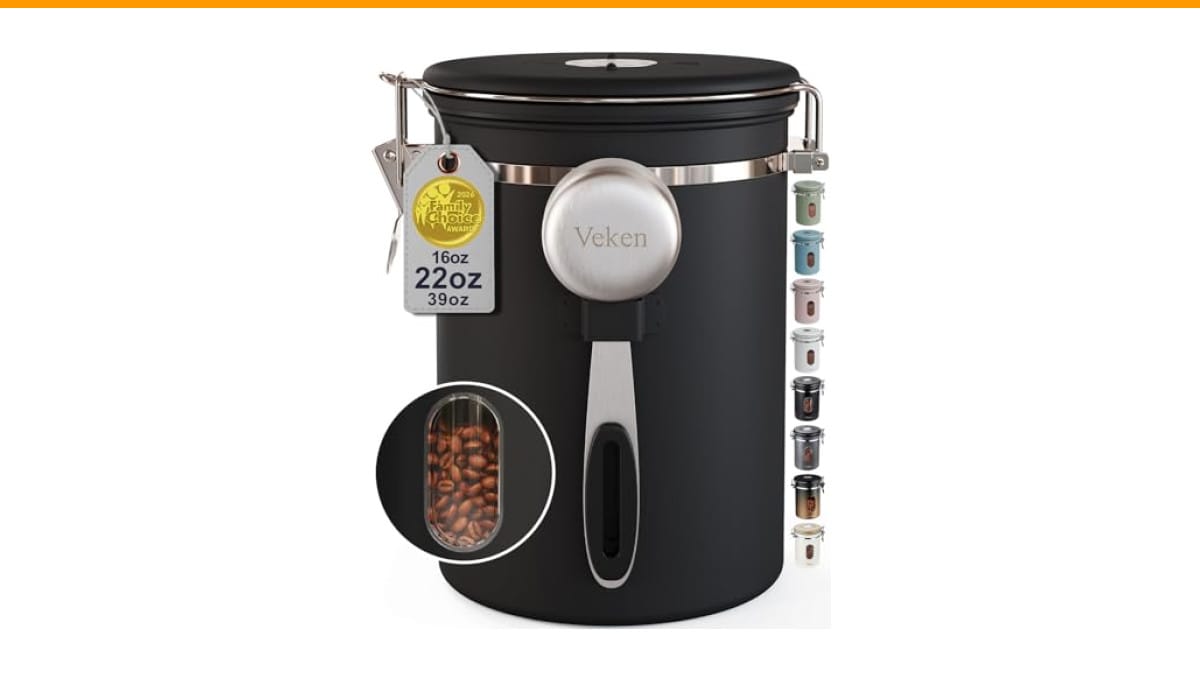
And while you are at it, think about where your coffee beans live. A French press is only as good as the coffee you put in it. A Veken Coffee Canister with Window keeps beans fresh and your countertop tidy, which pairs nicely with a well-stored press.
Why Storage Matters More Than You Think
A French press is simple. Glass carafe, mesh filter, plunger, lid. But that simplicity hides a few weak points. The mesh filter traps coffee oils and grounds. The rubber or silicone gasket holds odors. The glass carafe is fragile.
If you store the press while any moisture remains, you invite mold and mildew. That is not a scare tactic — it happens fast. A damp, sealed carafe in a dark cabinet is a perfect breeding ground. Even if you do not see mold, stale coffee oils go rancid and make your next cup taste bitter and flat.
The fix is straightforward: clean thoroughly, dry completely, and store disassembled. That is the whole secret. But the details matter, so let us walk through each step.
The Right Way to Clean Before Storage
Rinsing the carafe after a brew is not cleaning. Coffee oils cling to glass and the mesh filter. If you store a press that has only been rinsed, those oils oxidize and turn rancid.
Here is the routine I use after every single brew:
- Disassemble the press completely. Remove the plunger, filter, and lid.
- Rinse all parts under warm water to remove loose grounds.
- Wash the carafe with dish soap and a non-abrasive sponge. Pay attention to the bottom corners.
- Clean the mesh filter separately. Use an old toothbrush to work out trapped grounds.
- Wash the rubber gasket and lid with soapy water.
- Rinse everything thoroughly. Soap residue will ruin your next cup.
For a deep clean once a month, soak the carafe and filter in a solution of equal parts water and white vinegar for 15 minutes. That dissolves built-up oils. Then wash as normal. If you want the full breakdown on cleaning methods, this cleaning guide covers more ground.
Drying: The Step Everyone Skips
Air drying is fine, but it is not enough for storage. Water droplets hide in the filter assembly and under the gasket. Those droplets are exactly what causes mold.
After washing, do this:
- Shake off excess water from every part.
- Dry the carafe with a clean microfiber towel. Glass dries fast, so this takes ten seconds.
- Dry the mesh filter and gasket with the towel. Press the towel into the mesh to pull out trapped moisture.
- Leave everything on a drying rack for at least an hour before assembling.
If you are in a hurry, you can use a hair dryer on the cool setting to blow moisture out of the filter assembly. That works in a pinch, but I prefer letting things air dry naturally.
One more thing: never store the press with the plunger pushed all the way down. That compresses the rubber gasket and can deform it over time. Store the plunger pulled up or completely disassembled.
Where to Store a French Press: Cabinet, Counter, or Elsewhere
Your storage location matters almost as much as your cleaning routine. Here is how the main options compare.
| Location | Best For | Pros | Cons |
|---|---|---|---|
| Open shelf or counter | Daily users | Easy access, air circulation prevents moisture | Collects dust, risk of accidental knocks |
| Closed cabinet | Weekly or occasional users | Protected from dust and sunlight | Poor air circulation, must be fully dry first |
| Pantry or dry storage | Rarely used presses | Out of the way, safe from breakage | Easy to forget, may accumulate odors |
| Box or original packaging | Long-term storage (months) | Maximum protection | Takes up space, not practical for regular use |
The best choice depends on how often you brew. If you use your press every morning, keep it on the counter, disassembled, with the carafe upside down on a towel. If you brew once a week, a cabinet is fine as long as everything is bone dry.
One caveat: do not store the press on top of the refrigerator. The heat from the appliance can degrade the rubber gasket over time. A lower cabinet or a dedicated shelf is better.
Long-Term Storage: What to Do If You Will Not Use It for Months
Maybe you are switching to an espresso machine for a season. Maybe you are moving. Long-term storage requires a bit more care.
First, do a deep clean with vinegar as described above. Then dry every part completely. Wrap the glass carafe in a soft cloth or bubble wrap. Put the plunger assembly in a separate bag. This prevents the metal rod from scratching the glass.
Do not store the press fully assembled. The weight of the plunger resting on the mesh filter can bend it over months. Store parts side by side in a box. If you still have the original packaging, use it.
When you pull the press out months later, wash everything again before the first use. Dust settles even in closed boxes, and the rubber gasket may need a quick soak to regain flexibility.
How Coffee Bean Storage Fits In
Your French press storage routine is only half the equation. The other half is where you keep your beans. Coffee beans go stale fast when exposed to air, light, and heat. Storing beans in the bag they came in is fine for a week, but not much longer.
A dedicated canister makes a real difference. The Veken canister has an airtight seal and a window so you can see how many beans remain without opening it. The date tracker on the lid helps you remember when you opened the bag. That is a small detail, but it matters when you are trying to keep your morning brew consistent.
Keep the canister away from the stove and direct sunlight. Heat speeds up oxidation. A cool, dark cabinet is ideal. And never store beans in the refrigerator — they absorb moisture and odors from other foods.
Common Mistakes That Ruin a French Press
Most people do not ruin their French press by dropping it. They ruin it slowly through bad habits. Here are the ones I see most often.
- Storing it assembled. Trapped moisture between the plunger and carafe leads to mold and a musty smell.
- Using the dishwasher. The heat and detergent can warp the plastic or rubber parts and cloud the glass. Hand washing is safer.
- Scrubbing with steel wool. That scratches the glass, creating tiny crevices where bacteria hide. Use a soft sponge.
- Ignoring the mesh filter. It holds more coffee oils than the carafe itself. Clean it every time.
- Storing in a damp cabinet. If your cabinet is near a dishwasher or sink, humidity gets in. Add a small silica gel packet to absorb moisture.
If you notice a stale smell that will not go away, your filter might be the culprit. A vinegar soak usually fixes it. If not, replacement filters are inexpensive.
Frequently Asked Questions
Can I store a French press fully assembled?
You can, but you should not. Storing it assembled traps moisture between the plunger and the carafe. That moisture leads to mold and a stale odor. It also keeps constant pressure on the rubber gasket, which can deform it over time. Disassemble the press, dry every part, and store the pieces separately.
How long can I leave coffee in a French press before cleaning?
You should clean it within an hour of brewing. Coffee left in the carafe for several hours develops bitter compounds and the oils start oxidizing. If you leave it overnight, you will need a thorough wash with soap and possibly a vinegar soak. Do not just rinse and store — that is how stale flavors build up.
Is it okay to store a French press in the dishwasher?
No. The dishwasher is too harsh for most French press parts. The heat can warp plastic components, and the detergent can cloud the glass. The high-pressure water can also damage the mesh filter. Hand washing takes two minutes and protects your investment.
Should I store my French press upside down?
Yes, if it is clean and dry. Storing the carafe upside down on a drying rack or towel allows any residual moisture to drip out. It also keeps dust from settling inside. Just make sure the carafe is stable and cannot roll off the counter.
How do I remove a stale smell from my French press?
Soak the carafe and filter in equal parts white vinegar and warm water for 15 to 20 minutes. Rinse thoroughly and wash with dish soap. If the smell persists, sprinkle baking soda inside the carafe, add warm water, and let it sit for an hour. Rinse well. This usually removes even stubborn odors. If the rubber gasket still smells, it may be time to replace it.
What to Remember
Storing a French press is not complicated, but it does require consistency. Here is the short version:
- Disassemble the press after every use — do not store it assembled.
- Wash all parts with soap and warm water, including the mesh filter.
- Dry everything completely with a towel, then let it air dry for an hour.
- Store in a dry, cool place away from heat and direct sunlight.
- For long-term storage, wrap the glass and keep parts separate.
- Deep clean with vinegar once a month to prevent oil buildup.
- Keep your coffee beans in an airtight canister to maintain freshness.
Follow these steps and your French press will brew clean, flavorful coffee for years. Skip them and you will eventually deal with mold, stale tastes, or a broken carafe. The choice is yours.
If you are troubleshooting other coffee gear issues, this brewing problem guide might help. And if your grinder needs attention, check out this grinder cleaning routine.
Products related to this article
Sponsored / affiliate links. As an Amazon Associate I earn from qualifying purchases. I may earn additional commission from eligible campaigns.
 HomeBeyond Espresso Coffee Maker 12 Cups, Classic Stovetop Espresso Maker, 600ml / 20oz Coffeemaker for Gas & Ceramic Stovetops (Silver)
 Belly Moka Coffee Maker Stovetop Espresso Maker 9 Cup Aluminum Moka Pot Percolator 15oz 450ml Easy Brewing for Electric Ceramic Stoves Home Camping Italian Cuban Café Classic Black
 Belly Moka Coffee Maker Stovetop Espresso Maker 6 Cup Aluminum Moka Pot Percolator 10oz 300ml Easy Brewing for Electric Ceramic Stoves Home Camping Italian Cuban Café Classic Silver