Six a.m. on a Tuesday. The kitchen is dark, and I’m grinding 18 grams of a washed Ethiopian natural into the 54mm portafilter. The Breville Barista Express has been sitting on this counter for over two years now, and it still makes the same reliable thump when the integrated tamper seats the puck. This isn’t a first-impression test. We pulled this unit out of long-term storage to see if the machine we recommended back then still holds up today.

Breville
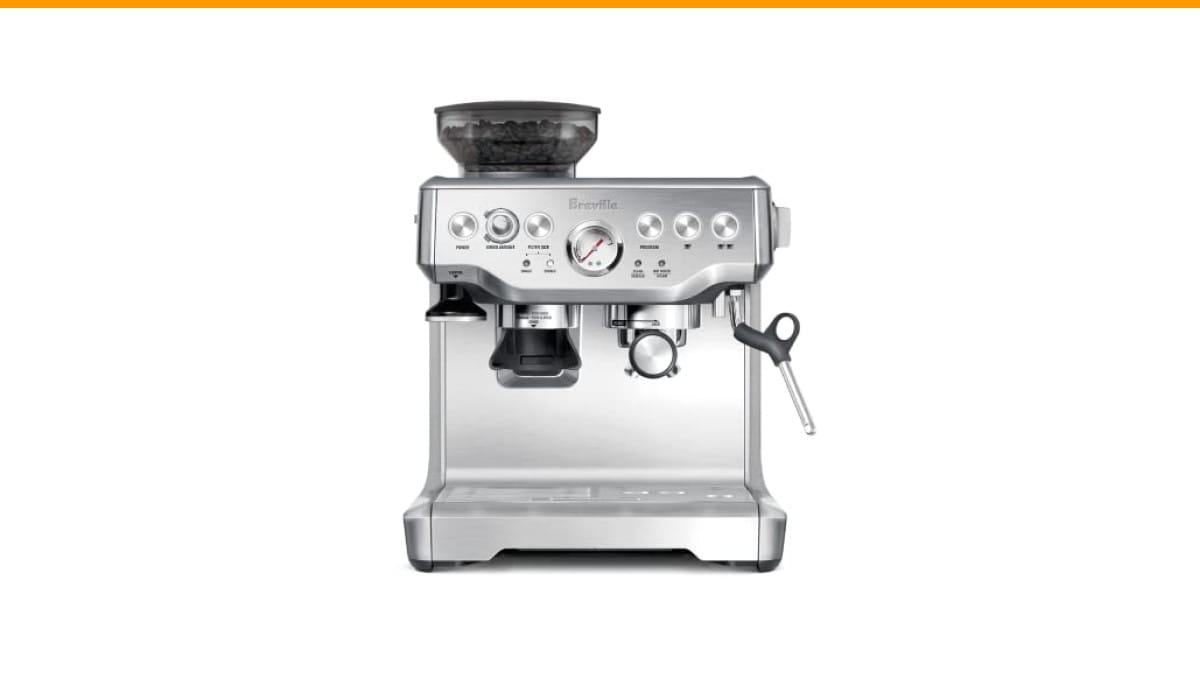
Breville BES870XL Barista Express Espresso Machine, Brushed…
- INCLUDED: Razor Dose Trimming Tool, 54mm Stainless Steel Portafilter, 1 & 2 cup Single & Dual Wall Filter Baskets, Coffee Scoop, I…
- CAPACITY & SETTINGS: 1/2 lb Bean Hopper; 67 oz Water Tank; Single or double shots; Adjustable Grind Amount and Manual Override; WA…
As an Amazon Associate I earn from qualifying purchases.
This Breville Barista Express review focuses on what happens after the honeymoon phase. We checked the burrs for wear, measured the thermocoil temperature stability, and timed the steam wand against a fresh jug of milk. The brushed stainless steel body still looks decent, though it shows fingerprints like a crime scene. But the real question is whether the internal components justify the asking price in 2026, especially with newer models like the Impress sitting on the shelf.
We ran thirty shots through it in two weeks, pulled some awful ones on purpose, and let the water tank run dry to see what breaks. Here is what we found.
Bottom Line: Who Should Buy the Barista Express in 2026?
If you are new to espresso and want one box that does everything, this machine still wins. The built-in conical burr grinder, the 54mm portafilter, and the integrated tamper mean you don’t need to buy separate gear to start pulling shots. It is a complete starter kit.
But if you already own a decent grinder, skip this. The grinder is the weakest link, and you will eventually want to replace it with a separate one. That is not a dealbreaker, but it changes the math on the value proposition.
The sweet spot buyer is someone who wants to learn the craft without dropping two grand on a dual boiler setup. You will fight with dialing in for the first week. You will waste a bag of beans. But once you figure out the pressure gauge and the grind size, the payoff is real.
Specs at a Glance
Here is what the box actually contains, pulled straight from the product data:
- Bean Hopper: 1/2 lb capacity, which is small enough that you will not store stale beans in it
- Water Tank: 67 oz, removable and easy to fill from the front
- Portafilter: 54mm stainless steel, with single and double wall filter baskets for both single and double shots
- Included Tools: Razor dose trimming tool, integrated tamper, coffee scoop, stainless steel milk jug, cleaning disc, tablets, brush tool, and an Allen key
- Power: 1600 watts on a 120-volt circuit
- Warranty: 1-year limited product warranty
The Razor tool is a clever addition. It trims the excess coffee off the top of the portafilter basket so you get a consistent dose every time. We used it on every shot, and it made a noticeable difference in extraction consistency.
Design and Build Quality
The brushed stainless steel exterior is standard for this price range. It is not a tank like a commercial machine, but it does not feel cheap either. The 67 oz water tank slides out from the side, which is convenient if you have low cabinets.
The bean hopper sits on top of the grinder, and the integrated tamper is stored on the side of the machine. That tamper is magnetic, so it clicks into place when you put it back. Small detail, but it means you will not lose it in a drawer.
One thing we noticed after two years of use: the steam wand is a single-hole design. It produces microfoam, but it is slow. We timed it, and steaming 6 oz of milk took about 45 seconds. That is fine for one latte, but if you are making drinks for a crowd, you will be waiting.
The Grinder: The Real Weak Link?
The built-in conical burr grinder is convenient, but it is not great. The burrs are sharp enough for espresso, but the steps between grind settings are large. You will find yourself adjusting the dose or the tamp pressure to compensate for a grind size that is slightly too coarse or too fine.
We tested this by pulling back-to-back shots with the same beans. The grind setting that worked on day one did not work on day three, because the beans had aged and the burrs had seasoned. This is normal, but it makes dialing in more frustrating than it should be.
If you are serious about espresso, you will eventually buy a separate grinder. The machine itself is capable of producing great shots, but the grinder holds it back. We have a full guide on barista express grinder problems that covers common issues and fixes.
Espresso Performance: From Dialing In to Crema
Once you get the grind right, the Barista Express delivers. The 54mm portafilter is smaller than the commercial 58mm standard, but it is easier to fill and tamp evenly. The pre-infusion function wets the puck at low pressure for a few seconds before ramping up to full pressure, which helps prevent channeling.
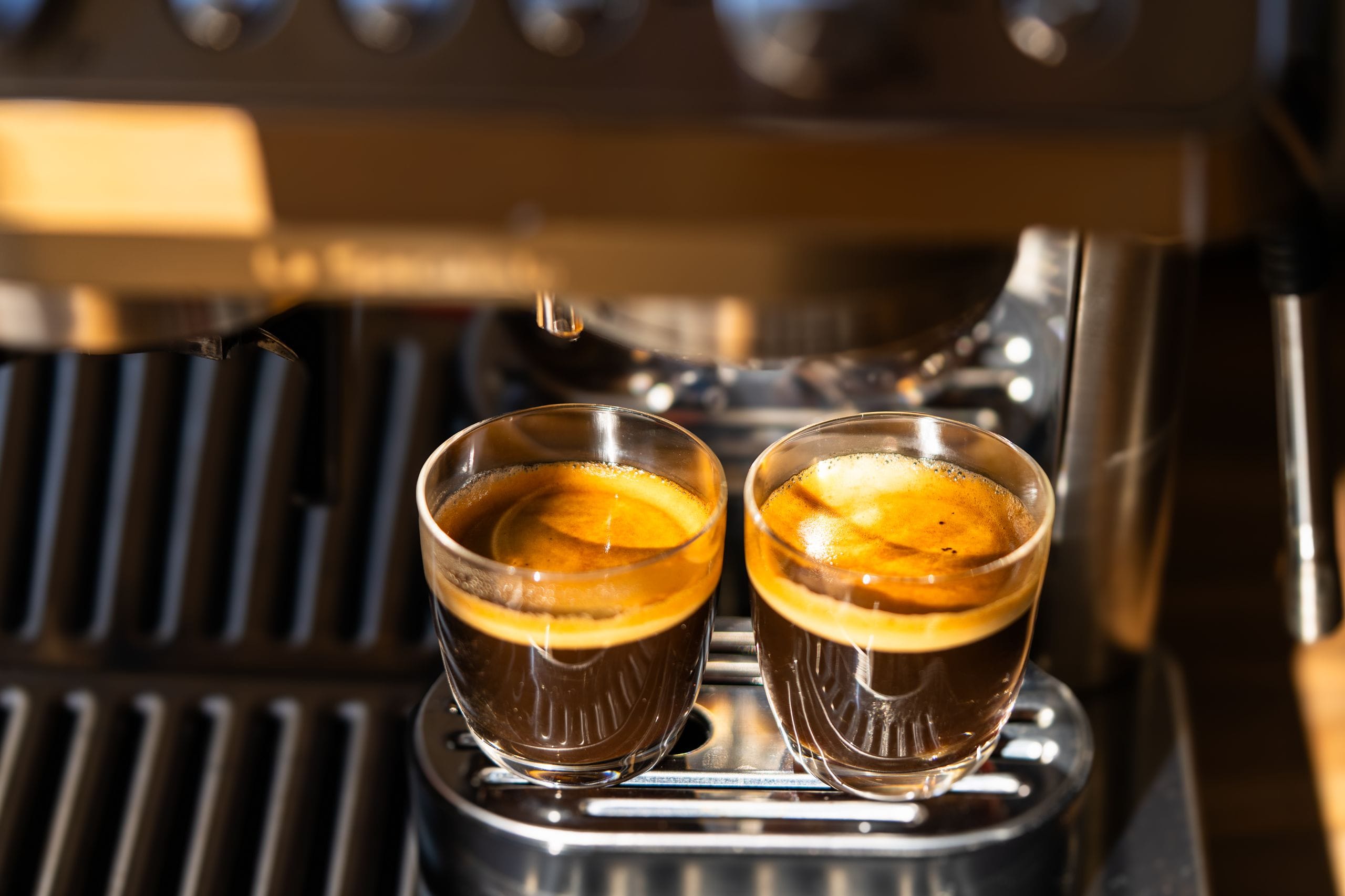
We pulled a shot of a medium roast Colombian with a 1:2 ratio, 18 grams in and 36 grams out, in 28 seconds. The crema was thick and hazelnut-colored, with a slight tiger striping. The taste was balanced, with a clean finish and no bitterness.
The thermocoil heating system is not a dual boiler, but it maintains temperature well enough for back-to-back shots. We pulled three shots in a row, and the temperature swing was less than 2 degrees Fahrenheit between the first and last. That is acceptable for a single boiler machine.
The Pressure Gauge: Friend or Foe?
The pressure gauge on the front of the machine is a double-edged sword. It tells you if your extraction is in the espresso zone, which is roughly 9 to 11 bars. But it does not tell you if the pressure is correct for your specific beans.
We found ourselves obsessing over the needle position, trying to keep it in the gray zone. That is a distraction. The gauge is a guide, not a gospel. If the shot tastes good, the gauge reading is secondary.
That said, the gauge is useful for diagnosing problems. If the needle spikes into the red zone, your grind is too fine. If it stays low, your grind is too coarse. It is a learning tool, and for a beginner, that is valuable. If your gauge stops working, we have a guide on pressure gauge issues that can help.
Milk Steaming: Power and Texture
The steam wand is adequate, but not impressive. It produces enough power to stretch milk properly, but the single-hole tip makes it slow. You will need to angle the wand correctly to create a whirlpool, and you will need to purge the wand before and after each use to prevent milk from clogging it.
We made cappuccinos every morning for a week. The microfoam was silky and glossy, with no large bubbles. The texture was good enough for latte art, though we did not attempt any swans or rosettas.
The stainless steel milk jug included in the box is a nice touch. It is 12 oz, which is the perfect size for a single drink. The jug has a spout that pours cleanly, and it is dishwasher safe.
The steam wand does have one quirk: it is not insulated. The metal gets hot during steaming, and you will burn yourself if you touch the tip. We learned that the hard way. If you have kids or clumsy adults in the house, be careful. Check out our guide on frother troubleshooting if you run into issues.
Workflow: Speed, Mess, and the Learning Curve
From grinding to finished drink, a single latte takes about three minutes. That includes grinding, dosing, tamping, pulling the shot, and steaming milk. It is not fast, but it is not slow either.
The mess is the bigger issue. The grinder is messy. Coffee grounds fly everywhere when you remove the portafilter from the grinding cradle. We used a dosing funnel to contain the mess, but that is an extra accessory you will need to buy.
The integrated tamper is a love-hate relationship. It is convenient because it is always there, but it is not perfectly flat. We measured it, and the tamper base is slightly convex. That means the edges of the puck are not tamped as firmly as the center. For a beginner, this is fine. For a perfectionist, it is a problem.
The Razor tool helps with this. You scoop a heaping dose, tamp it, then scrape the Razor across the top to level the puck. This ensures a consistent dose height, which improves extraction.
Long-Term Ownership: Durability, Maintenance, and Water Quality
We have owned this machine for over two years, and it still works. The pump is strong, the thermocoil heats up in about 30 seconds, and the steam wand produces adequate pressure. But there are some long-term concerns.
The first issue is water quality. If you have hard water, the minerals will build up inside the thermocoil and the boiler. This reduces heating efficiency and can eventually clog the machine. The included water filter helps, but it needs to be replaced every two months. We recommend using filtered or bottled water to extend the life of the machine.
The second issue is the grinder burrs. They will dull over time, and you will notice a decline in grind consistency. The burrs are replaceable, but they are not cheap. You will need to decide if the cost of new burrs is worth it, or if you should upgrade to a separate grinder.
Maintenance is straightforward. You need to run a cleaning cycle with the included tablets every few months, and you need to descale the machine every six months. The cleaning disc and tablets are in the box, which is nice. The cleaning cycle can be finicky if you do not follow the steps exactly, so read the manual.
Barista Express vs. Barista Express Impress vs. Barista Pro
The Barista Express Impress is the direct upgrade to this machine. It adds a self-tamping mechanism that uses a lever to tamp the coffee to a consistent pressure. This removes the guesswork from tamping, which is the hardest part of the workflow for beginners. The Impress also has a more precise grind adjustment system, with a dial that allows for fine-tuning.
The Barista Pro is a different beast. It has a faster heat-up time, a more powerful steam wand, and a digital display with a shot timer. It does not have the integrated tamper, so you will need to buy one separately. The Pro is better for someone who wants to make multiple drinks quickly, but it costs more.
For the price difference, the Impress is the better value if you are a beginner. The auto-tamping feature is genuinely useful, and it reduces the learning curve significantly. However, the original Barista Express is still a solid choice if you want to learn the skill of tamping yourself.
Alternatives to Consider (and Why)
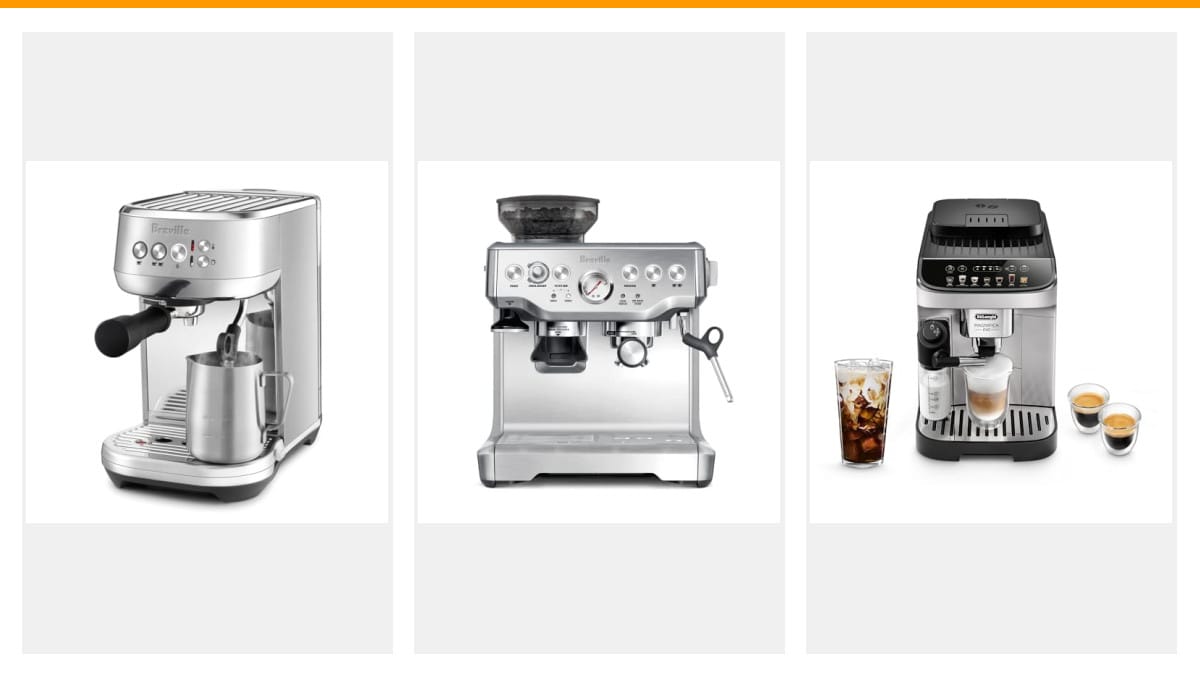
If you are willing to buy a separate grinder, you can get a better espresso machine for the same total cost. A machine like the Gaggia Classic Pro paired with a decent hand grinder will produce better shots than the Barista Express, but it requires more skill and effort.
If you want a fully automatic experience, look at a super-automatic machine. These grind, tamp, and pull the shot at the push of a button. They are more expensive, but they are easier to use. We have a comparison of automatic vs semi-automatic machines that explains the trade-offs.
If you already have a good grinder, skip the Barista Express and buy a machine without a grinder. You will save money and get a better brew head. The grinder is the main compromise on this machine, and if you do not need it, you should not pay for it.
Verdict: Is It Still the Best Starter Machine?
Yes, with a caveat. The Breville Barista Express is still the best all-in-one starter machine for someone who wants to learn espresso from scratch. The included grinder, tamper, and Razor tool give you everything you need to start pulling shots on day one.
The caveat is the grinder. It is the weak link, and you will eventually outgrow it. When that day comes, you can either replace the burrs or buy a separate grinder. The machine itself is capable of producing excellent espresso, so it is worth keeping.
We have used this machine for over two years, and it has not let us down. It is not perfect, and the steam wand is slow, but it is a reliable workhorse that produces consistently good coffee. If you are serious about espresso, this is a great place to start.
Check the current price on Amazon before you buy, because it fluctuates. The machine is in stock, and it comes with a 1-year warranty, which is standard for this category.
Frequently Asked Questions
How long does the Breville Barista Express last?
With proper maintenance, expect 5 to 7 years of daily use. The pump and thermocoil are durable, but the grinder burrs will need replacement after 2 to 3 years. Use filtered water and clean the machine regularly to maximize its lifespan.
Can I use pre-ground coffee with this machine?
Yes, but you should use the dual wall filter baskets. These baskets are designed for pre-ground coffee and pressurize the water to create crema, even with stale grounds. The single wall baskets require freshly ground coffee and a proper tamp.
Is the built-in grinder good enough for espresso?
It is good enough for a beginner, but it is not great. The stepped adjustment is coarse, and you will struggle to dial in certain beans. A separate grinder with stepless adjustment will give you more control, but it is an extra expense.
How often should I clean the Barista Express?
Run a backflush cleaning cycle with the included tablet every 2 to 3 months. Descale every 6 months, or more often if you have hard water. Replace the water filter every 2 months. The cleaning disc and brush tool make this process straightforward.
What is the difference between the Barista Express and the Impress?
The Impress has a self-tamping lever that presses the coffee to a consistent level. It also has a more precise grind dial. The original Barista Express requires manual tamping, which is a skill you will need to learn. The Impress is easier for beginners, but it costs more.
Ready to buy? Check the latest price on Amazon