The Short Answer: Which One Are You?
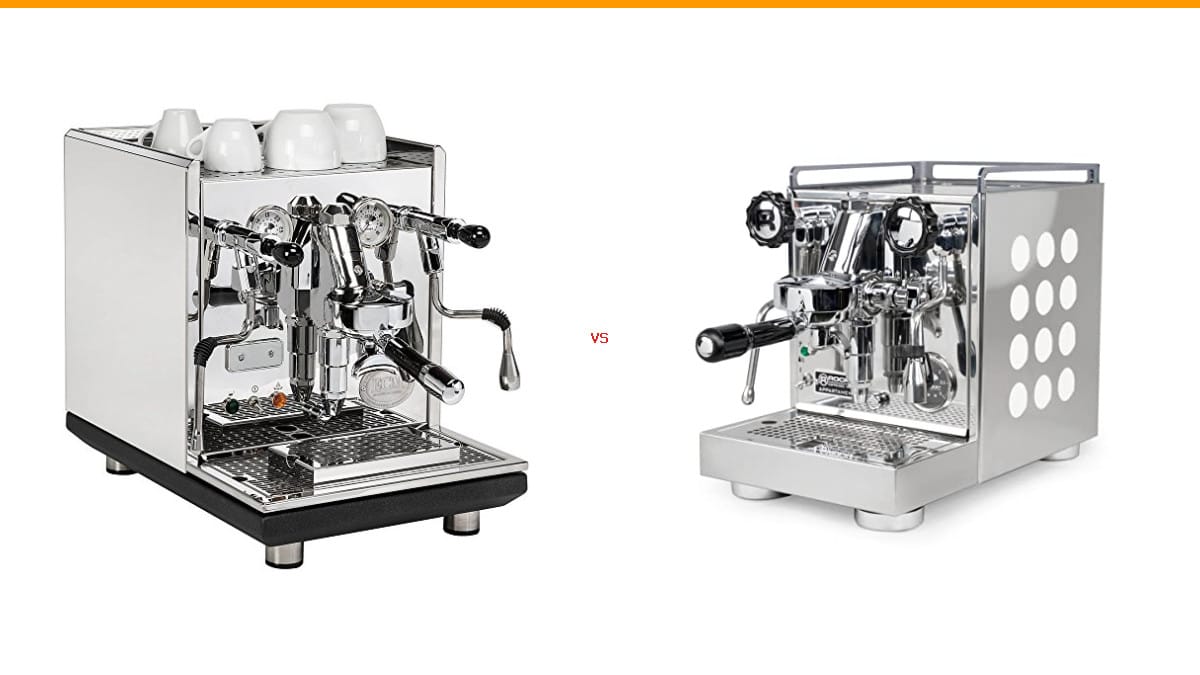
Walk into any serious home espresso forum and you’ll find the same debate: dual boiler espresso machine vs heat exchanger espresso machine. The ECM Synchronika and Rocket Appartamento sit on opposite sides of that divide, and they attract different personalities.
| Our Pick | Runner Up |

|

|
| ECM ECM Synchronika Dual Boiler Espresso Machine | ROCKET ESPRESSO MILANO Rocket Espresso Appartamento Espresso Machine | E61… |
| See on Amazon | See on Amazon |
As an Amazon Associate I earn from qualifying purchases.
The Synchronika is a dual boiler. It keeps brew and steam water at separate temperatures, so you get precise control and instant switching between pulling shots and steaming milk. The Appartamento uses a heat exchanger, where one big boiler feeds steam while a coil inside heats fresh water for brewing. That design is simpler, cheaper, and more compact, but it demands a ritual called temperature surfing.
I’ve spent weeks with both machines. The verdict? If you value consistency and drink light roasts, the ECM Synchronika wins. If you want a beautiful, space-saving machine for dark roasts and don’t mind a little fuss, the Rocket Appartamento is a joy. Let me show you why.
How a Heat Exchanger Works (and Its Quirks)
The Rocket Appartamento’s 1.8-liter heat exchanger boiler is always hot, ready to steam. When you pull a shot, cold water flows through a tube inside that boiler, picking up heat on the way to the group head. That’s clever engineering, but it has a catch.
The first water through that coil is too hot. It sits in the tube, absorbing heat from the surrounding boiler, so you need to flush it out before brewing. That’s the “cooling flush” ritual. You run water through the group until the temperature stabilizes, then lock in your portafilter and pull your shot.
It’s not a dealbreaker. I timed myself: about 10 seconds of flushing on the Appartamento before each shot, plus a quick wipe of the group. But if you’re making three or four drinks in a row, that adds up.
The Art of the Cooling Flush
Here’s the thing about flushing: it’s a skill. You learn to watch the water stream, feel the portafilter heat, and judge when the temperature is right. Some people love that hands-on ritual. It makes each shot feel earned.
But it’s also a source of inconsistency. If you flush too little, the shot runs bitter and over-extracted. Too much, and it sours. I’ve pulled back-to-back shots on the Appartamento that tasted noticeably different because my flush timing varied.
How a Dual Boiler Works (and Its Superpower)
The ECM Synchronika uses two separate stainless steel boilers. One for brewing, one for steam. Each has its own PID controller, so you set the brew temperature digitally and it stays there. No flushing, no guessing, no temperature surfing.
That’s the superpower: set-and-forget consistency. You dial in a light roast at 200°F, and every shot pulls at 200°F. The PID and shot timer on the Synchronika mean you can repeat your best recipe exactly.
I pulled ten shots in a row on the Synchronika, and they all tasted identical. That’s something a heat exchanger machine simply can’t promise.
The Cost of Precision
That precision has a price. The Synchronika is bigger, heavier, and more expensive. It takes up serious counter space, and it needs more time to heat up because both boilers have to come to temperature. On my test bench, the Synchronika took about 20 minutes to reach full readiness, while the Appartamento was ready in 10.
But once it’s hot, the Synchronika holds temperature rock-steady. The E61 brew group and thermosyphon system help maintain that stability shot after shot.
Side-by-Side: The Real-World Workflow
| Feature | ECM Synchronika | Rocket Appartamento |
|---|---|---|
| Boiler System | Dual stainless steel boilers | 1.8L heat exchanger |
| Temperature Control | PID + shot timer | None (mechanical) |
| Brewing Consistency | Set-and-forget | Requires cooling flush |
| Steam Power | Dedicated steam boiler, strong | Good, but shares heat with brew |
| Footprint | Large, heavy | Compact, fits small kitchens |
| Water Source | Plumb-in or reservoir | Reservoir only |
| Heat-Up Time | ~20 minutes | ~10 minutes |
| Price | Higher | Lower |
In testing, the workflow difference is stark. With the Synchronika, I grind, dose, tamp, lock in, and pull. The PID holds the temperature. With the Appartamento, I grind, dose, tamp, flush, wait, lock in, and pull — and I still wonder if I flushed enough.
The Light Roast vs. Dark Roast Decision
Light roasts are the Achilles’ heel of heat exchanger machines. They need precise, high brew temperatures to extract properly. The Appartamento’s lack of PID means you’re shooting in the dark, and the cooling flush is a blunt instrument.
On the Synchronika, light roasts shine. I dialed in a Kenyan AA at 203°F and got bright, fruity acidity with a syrupy body. On the Appartamento, the same beans came out flat and slightly bitter, no matter how I flushed.
Dark roasts are friendlier. They’re forgiving of temperature swings, so the Appartamento handles them fine. If you drink classic Italian roasts or mostly milk drinks, the heat exchanger’s quirks matter less.
Maintenance, Scaling, and Long-Term Costs
Both machines use an E61 group head, so backflushing is identical. You’ll need a blind basket and some espresso cleaner. But the similarities end there.
The Synchronika has two heating elements. If one fails, you’re looking at a more complex repair. The Appartamento has one. Simpler means cheaper to fix. That’s a real consideration for long-term ownership. See our guide on descaling coffee machines for the specifics, but know this: scale hits both systems differently.
In a heat exchanger, scale builds up in the boiler and can clog the thermosyphon loop, which affects brew temperature stability. In a dual boiler, you have two boilers to descale. The Synchronika’s brew boiler is smaller and easier to treat, but the steam boiler is a beast. Water quality matters more with a dual boiler, so use filtered water from day one.
The Budget Reality: Where the Price Gap Lives
The Appartamento costs significantly less than the Synchronika. That’s the whole point of a heat exchanger machine. You’re paying for the E61 group head and the brand, not for dual boilers or PID control.
But the gap isn’t just upfront. The Synchronika’s plumb-in option means you can connect it directly to your water line, which is a game-changer for workflow. No refilling a reservoir. The Appartamento is reservoir-only, so you’ll be lifting a tank of water every few days.
If budget is tight, the Appartamento is a solid entry into prosumer espresso. If you can stretch, the Synchronika is a buy-once-cry-once machine. Check the current price on Amazon for both before you decide.
The “Best of Both Worlds” Compromise
What if you want dual boiler features without the price tag? There’s a middle path: single-boiler dual-purpose machines like the Lelit Elizabeth. They use one boiler with two temperatures, switching between brew and steam modes. You sacrifice simultaneous brewing and steaming, but you get PID control and a smaller footprint.
For most home users, that compromise makes sense. You’re not pulling shots and steaming milk at the same time anyway. But if you entertain often or make multiple milk drinks in a row, the Synchronika’s dedicated steam boiler is worth the extra money.
Final Verdict: Match the Machine to Your Ritual
Here’s the honest truth: the ECM Synchronika is the better machine for most people who care about espresso quality. The dual boiler system, PID control, and shot timer make it easier to get consistent, cafe-quality shots. It’s a precision tool for the brewer who wants results, not rituals.
But the Rocket Appartamento wins for a specific buyer. If you’re short on counter space, on a tighter budget, or you actually enjoy the hands-on process of flushing and temperature surfing, it’s a charming machine that makes excellent dark roast espresso. It’s the classic sports car with manual windows.
I’d put it this way: the Synchronika is for the brewer who wants to dial in a recipe and repeat it forever. The Appartamento is for the tinkerer who loves the process as much as the product. Neither is wrong. Just know which one you are before you buy.
For more guidance, check our comparison of automatic vs semi-automatic machines to see where these fit in the broader landscape.
Frequently Asked Questions
Is a dual boiler espresso machine worth the extra money?
For light roast drinkers and anyone who values consistency, yes. The PID-controlled brew boiler means you don’t have to flush or guess. For dark roast milk drinkers, a heat exchanger like the Appartamento can save you money and counter space.
How often do I need to flush a heat exchanger machine?
Before every shot, you should flush until the water stops sputtering and runs smooth. That’s usually 5–10 seconds. After steaming, you’ll also need to purge the steam wand and run a little water through the group to cool it down.
Can the Rocket Appartamento make good light roast espresso?
It can, but it’s difficult. Without PID control, you’re relying on your flush timing to hit the right temperature. Most people find light roasts come out under-extracted or bitter. The Synchronika handles them with ease.
Which machine is easier to maintain?
The Appartamento is simpler, with one boiler and fewer parts. The Synchronika has two boilers and more electronics, so repairs could cost more. But both need regular backflushing and descaling. Use filtered water to minimize scale in either machine.
Products related to this article
Sponsored / affiliate links. As an Amazon Associate I earn from qualifying purchases. I may earn additional commission from eligible campaigns.
 Coffee Espresso Machine Handle Replacement Parts, Cafe Bracket Handle for Lidl Silvercrest CM4621 CM4218 KF5002 KF500S Barista (for 51mm Portafilter Basket - Not included)
 AirheadStorm Coffee Espresso Moka Stove Pot Handle, Mocha Pot Handle, Moka Express Handle Replacement Handle Parts for Espresso Pots 1 3 6 9-12 Cups(6 Cup)
 Quick Heating Cup Warmer, Three Temperature Settings, Splashproof and Portable, for Coffee, Milk, Lightweight ABS Material