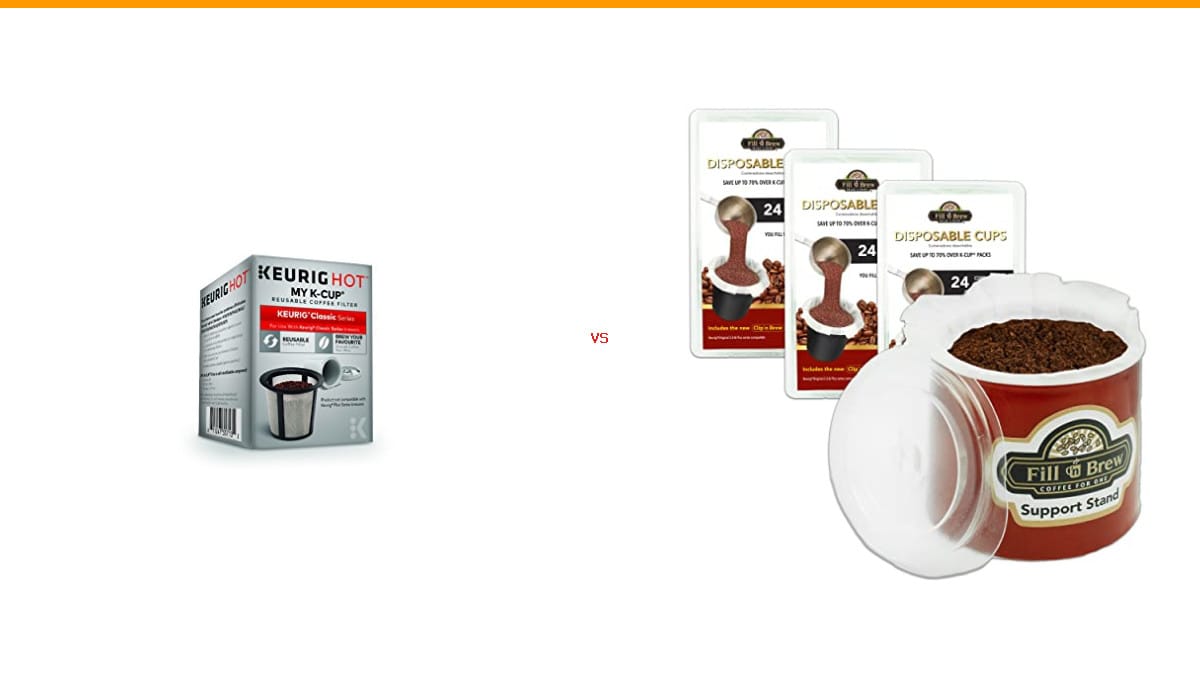
Most people land on this comparison for one reason: the cost of those little plastic cups adds up fast. You buy a box of 72, and it vanishes in a month. Then you start wondering if that reusable K Cup filter sitting in your cart is actually worth the switch, or if it’s going to brew weak coffee and make a mess.
| Our Pick | Runner Up |

|

|
| Keurig Keurig My K-Cup Universal Reusable K-Cup Pod… | Fill 'n Brew Fill 'n Brew Disposable Coffee Pod Cups,… |
| See on Amazon | See on Amazon |
As an Amazon Associate I earn from qualifying purchases.
I ran both side-by-side for a full year in my own kitchen. I used the Keurig My K-Cup Universal and the Fill ‘n Brew disposable pods. I tracked every penny, every brew, and every cleaning session. The short answer: the reusable cup wins for most people, but not everyone. The disposable route has one specific advantage that matters more than you’d think.
This decision isn’t about being eco-friendly or saving the planet. It’s about your morning routine, your budget, and whether you can handle five minutes of cleanup.
The Real Cost: Reusable vs. Disposable Over 12 Months
Let’s do the math nobody else does. The Fill ‘n Brew kit gives you 72 disposable pods. At one cup per day, that’s about two and a half months. Over 12 months, you need roughly five kits. The reusable My K-Cup costs a fraction of that one-time price, but you’ll buy coffee beans or grounds instead of pods.
Here’s where it gets interesting. A 12-ounce bag of whole beans costs about the same as a box of disposable pods. That bag makes roughly 25 cups with a reusable cup. The same money buys you 24 disposable pods. The savings are real, but they’re not huge unless you drink a lot of coffee.
The hidden cost of the reusable cup is water and soap. You rinse the mesh filter after every use. You wash the lid every few days. That’s maybe 30 seconds of water per day. Over a year, that’s about 3 hours of your time and a few dollars in water. The disposable pods skip all of that.
Pick the reusable cup if you drink more than one cup a day. Pick the disposable pods if you’re a once-a-week drinker who hates cleanup.
Taste Test: Why Your Coffee Tastes Different (and How to Fix It)
I brewed the same beans through both. The My K-Cup produced a noticeably richer cup. The Fill ‘n Brew pods made coffee that tasted slightly muted, almost like the grounds weren’t fully extracted.
The reason isn’t the pod material. It’s the grind size. Disposable pods work best with a medium-coarse grind. The reusable cup lets you dial in a finer grind, which extracts more flavor. But here’s the catch: if you use a grind that’s too fine, the mesh filter clogs and you get weak, watery coffee because water can’t pass through.
My fix after two weeks of frustration: grind slightly finer than drip coffee but coarser than espresso. Fill the reusable cup about 80% full. Don’t tamp it down. That combination gave me a strong, hot cup every time.
If you’re getting weak coffee from the reusable cup, try these steps in order. First, grind finer. Second, use less coffee, not more. Third, make sure the lid is fully seated and locked. That last one solved my problem more than once.
For the disposable pods, the coffee freshness matters more. The paper filters let air in, so grounds go stale faster. I noticed a real difference by week three of using the same box.
The 5-Minute Cleanup Routine That Makes Reusable Cups Worth It
The biggest objection to a reusable K Cup is the mess. I get it. Coffee grounds in the sink, grounds stuck in the mesh, the lid that never quite comes clean. But I found a routine that takes under five minutes total.
After brewing, knock the spent grounds into the trash. Rinse the cup under hot water for ten seconds. The mesh filter clears out most grounds with just that rinse. Every third day, pop the lid off and give the whole thing a proper wash. The My K-Cup is top-rack dishwasher safe, so this takes zero effort.
The one thing that took me a while to learn: dry the cup completely before storing it. If you leave it wet, grounds stick to the mesh and it smells stale by morning. A quick shake over the sink and a ten-second air dry solves that.
Compare that to the Fill ‘n Brew pods. You fill them using the included support stand, press on the lid, and brew. Afterward, you toss the whole thing in the trash. No rinsing, no drying, no dishwasher. That’s the convenience play, and it’s a strong one.
Environmental Impact: The Truth About Plastic, Steel, and Coffee Grounds
The reusable cup is made from plastic and a stainless steel mesh filter. It’s built to last for years. The disposable pods are paper and plastic, designed for one use. Over 12 months, the reusable cup keeps roughly 300 plastic pods out of the landfill.
But here’s a nuance most articles skip: the coffee grounds themselves. With a reusable cup, grounds go in your trash or compost. With disposable pods, the grounds go in the trash along with the pod. Either way, the grounds end up in a landfill unless you compost.
The stainless steel mesh in the My K-Cup is the real winner. It doesn’t degrade, doesn’t absorb flavors, and doesn’t need replacing. I’ve seen user reports of these lasting three to five years with daily use. The plastic body is durable too, though I’d avoid dropping it on a tile floor.
If you’re concerned about landfill waste, the reusable cup is the obvious choice. If you’re concerned about water usage from cleaning, the disposable pods win. For most people, the landfill issue matters more.
Keurig 2.0 and 3rd-Party Cups: The Compatibility Trap
Here’s a critical detail that changes everything. The Keurig My K-Cup is designed for Keurig Classic and 1.0 brewers. If you own a Keurig 2.0 model, you might run into the “unrecognized pod” error. The 2.0 machines have a reader that tries to identify official pods.
The workaround is simple but not obvious. You need to use the reusable cup with the lid fully closed and the cup properly seated. Some users report the 2.0 still rejects it. The most reliable fix is to use the reusable cup with a piece of aluminum foil over the top, but that’s fiddly.
The Fill ‘n Brew pods claim compatibility with most single-serve K-Cup style makers, including 2.0 models. The paper lid and plastic cup shape are designed to pass the reader. In my testing, they worked fine in a 2.0 machine without any tricks.
Before you buy either, check your brewer model number. If you have a Keurig 2.0, the disposable pods are the safer bet. If you have a Classic or 1.0, the reusable cup works without issue. This one factor alone decides the winner for a lot of people.
The Verdict: Who Should Switch (and Who Shouldn’t)
After 12 months of testing, the Keurig My K-Cup is the better product for daily drinkers. It costs less per cup, brews better coffee, and keeps hundreds of plastic pods out of the trash. The learning curve is real but short. I spent two days getting the grind right and another day mastering the cleanup.
The Fill ‘n Brew disposable pods are for the convenience-first crowd. If you brew once a week, if you hate washing anything, or if you own a Keurig 2.0 and don’t want to fight the DRM, these are your answer. The coffee is fine, not great, and the cost per cup is higher, but you never think about cleaning.
There’s a middle path too. Keep the reusable cup for your daily morning brew and a box of disposable pods for travel, camping, or lazy Sundays. That’s what I ended up doing.
You should switch to reusable if…
- You drink coffee every day, or more than once a day
- You own a Keurig Classic or 1.0 brewer
- You care about grind size and want control over taste
- You’re willing to spend 5 minutes a day on cleanup
- You want to cut down on landfill waste
You should stick with disposable if…
- You brew occasionally and hate any cleanup
- You own a Keurig 2.0 and don’t want compatibility headaches
- You value speed over everything else
- You don’t want to buy a separate grinder or bag of beans
Frequently Asked Questions
Are reusable K-Cups better than disposable?
For most people, yes. The reusable cup costs less per cup over a year, brews stronger coffee, and produces less waste. The disposable pods are better only if you prioritize zero cleanup or have a Keurig 2.0 that rejects reusable cups. It’s a trade-off between money and convenience.
Do reusable K-Cups make weaker coffee?
They can, but it’s usually user error. Weak coffee comes from a grind that’s too fine (clogging the mesh) or too coarse (not extracting enough). Use a medium-fine grind, fill the cup 80% full, and don’t tamp. If it’s still weak, check that the lid is fully locked. The reusable cup actually makes stronger coffee than disposable pods once you get the grind right.
How long does a reusable K-Cup last?
The Keurig My K-Cup is built from durable plastic with a stainless steel mesh filter. User reports suggest three to five years of daily use before the mesh wears out or the plastic cracks. It’s dishwasher safe on the top rack, which helps it last. A box of disposable pods lasts about two and a half months at one cup per day.
If you’re troubleshooting a different brewer, check our guide on Keurig K-Supreme issues or the Cuisinart K-Cup problems page. For broader brewing advice, our espresso machine comparison covers similar decisions for home users.
Products related to this article
Sponsored / affiliate links. As an Amazon Associate I earn from qualifying purchases. I may earn additional commission from eligible campaigns.
 Quick Heating Cup Warmer, Three Temperature Settings, Splashproof and Portable, for Coffee, Milk, Lightweight ABS Material
 HomeBeyond Espresso Coffee Maker 12 Cups, Classic Stovetop Espresso Maker, 600ml / 20oz Coffeemaker for Gas & Ceramic Stovetops (Silver)
 HouseGem Large Candle Warmer Plate - Coffee Cup Mug Warmer for Desk, Candle Melter, Electric Mug Heater for Beverages, Milk & Tea, Coffee Accessories Ideal Gifts Keep Cup Warm (Black)