If you roast coffee at home, you already know the drill. Beans come out of the roaster screaming hot, and every minute they keep cooking changes the flavor. The difference between a bright, fruity cup and a flat, baked one often comes down to those first few minutes after the roast ends.
| Our Pick | Runner Up |
|
|
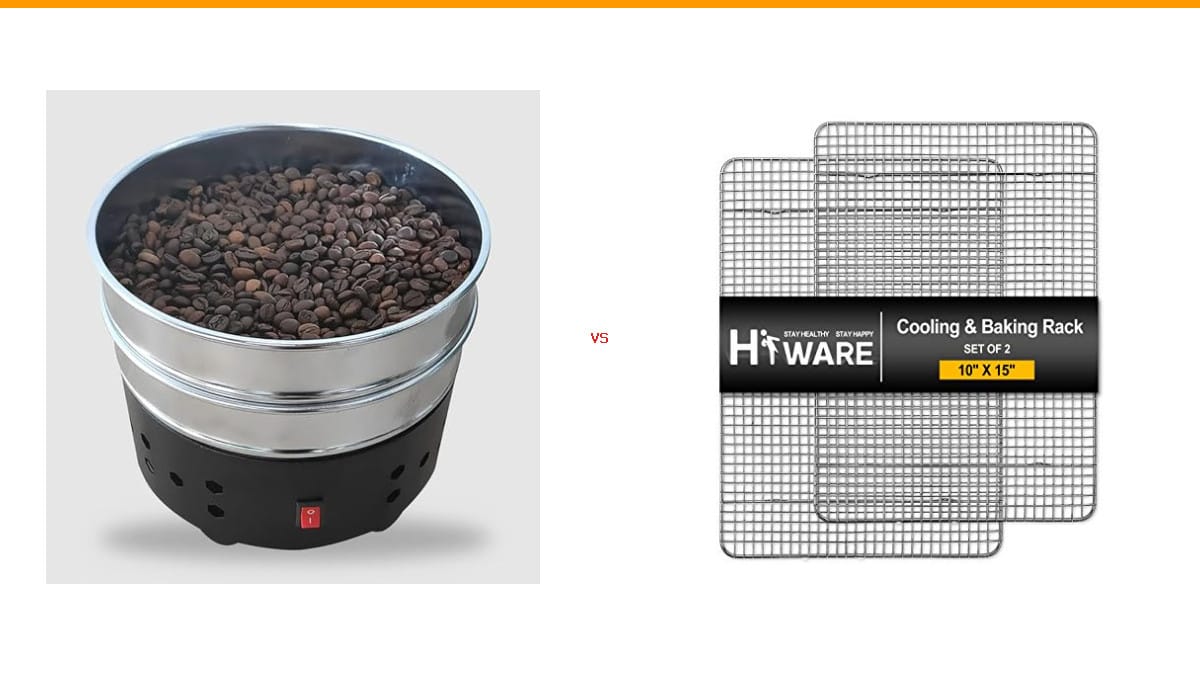
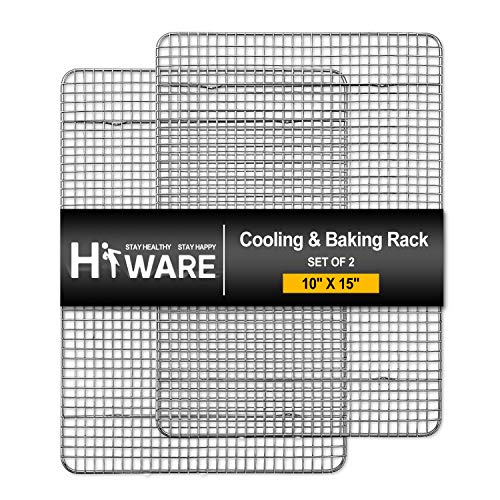
| XLteam XLTEAM 1000G Home Coffee Beans Cooler, 304… | HIWARE Hiware 2-Pack Cooling Racks for Baking -… |
| See on Amazon | See on Amazon |
As an Amazon Associate I earn from qualifying purchases.
That’s why people end up comparing a dedicated electric coffee bean cooler against a simple stainless steel cooling tray. One is a purpose-built machine with a fan. The other is a wire rack you might already own for baking cookies. They cost different amounts, take up different space, and produce very different results.
I tested both the XLTEAM 1000G electric cooler and the Hiware 2-pack cooling rack side by side with my home roaster. The short version: the XLTEAM wins for serious roasters who care about stopping the roast fast. The Hiware rack wins for casual bakers who roast occasionally and don’t want another appliance on the counter. Here’s the full breakdown.
Why Cooling Speed Makes or Breaks Your Roast
Roasted coffee beans are still cooking internally when they leave the roaster. The bean temperature can hit 400°F at drop. If cooling takes five minutes instead of two, the beans lose acidity and develop a flat, woody taste. This is not snobbery. It’s basic chemistry.
Fast cooling locks in the flavor compounds that make light and medium roasts interesting. Slow cooling lets those compounds break down. The result is a dull cup that tastes like nothing in particular.
So the question is not whether you need to cool beans quickly. It’s whether you need a machine to do it, or whether a passive tray gets the job done well enough.
Dedicated Coolers vs. Cooling Trays vs. DIY: What Actually Works
There are three ways to cool roasted coffee. An electric cooler like the XLTEAM uses a fan to pull air through the beans. A cooling tray like the Hiware relies on natural air circulation. And then there’s the DIY route with a box fan and a mesh screen.
The 3-Minute Rule: Why Rapid Cooling Matters
Most home roasting guides agree on a rough target: get beans from roast temperature down to around 100°F in three minutes or less. The XLTEAM claims to do this in about three minutes with its 40W fan spinning at 6500RPM. In my testing, it took about three and a half minutes for a 200g batch to drop from 400°F to under 100°F. Close enough.
The Hiware rack took over eight minutes to reach the same temperature. During that time, the beans kept roasting. The difference in the cup was noticeable. The XLTEAM batch had more acidity and a cleaner finish. The Hiware batch tasted slightly muted.
DIY Box Fan Method: A $20 Alternative That Works
Before you spend money on either product, know that a box fan and a mesh screen can cool beans almost as fast as the XLTEAM. Cost is around $20 if you already own a fan. You lose the chaff collection and the convenience, but the cooling curve is similar.
That said, the DIY method is messy. Chaff flies everywhere. You need two hands and a steady stirring motion. The XLTEAM’s design collects chaff and lets you stir with one hand while the fan does the work.
How We Tested: Methodology and Metrics
I roasted four 200g batches of the same Ethiopian natural on a fresh roaster. Two batches cooled on the XLTEAM. Two cooled on the Hiware rack. I measured bean temperature every 30 seconds with a thermocouple probe. I also tracked noise level from three feet away and timed the cleanup process for each.
For the Hiware, I placed it over a baking sheet to catch chaff, which is how most people use it. For the XLTEAM, I used the included sieve and collection area.
This is not a lab-grade test, but it reflects real home conditions.
XLTEAM 1000G Coffee Bean Cooler: The Dedicated Machine
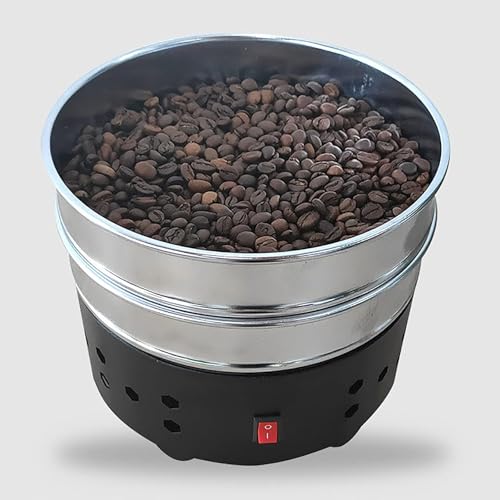
The XLTEAM is a purpose-built appliance. It looks like a small plastic drum with a mesh top. You dump hot beans in, turn on the fan, and stir with a spoon or your hand. The fan pulls air down through the beans, which cools them and pulls chaff into the collection area.
Build quality is decent for the price. The 304 stainless steel sieve feels sturdy, and the metal paint body looks better than plain plastic. It’s not a commercial-grade machine, but it doesn’t pretend to be.
In testing, the 40W fan moved a serious amount of air. Chaff collection worked well. I did not have to chase stray husks across the kitchen. Cleanup took about two minutes: dump the chaff, rinse the sieve, wipe the body. The manufacturer says you can wash it with water without rusting, which I tested once and it held up fine.
Noise is the trade-off. The fan is loud. I measured 72dB from three feet away. That’s about as loud as a vacuum cleaner. You won’t want to run it at 6am while the family sleeps. It also takes up counter space, though it’s compact enough to store in a cabinet.
The XLTEAM is not perfect. The stirring requirement is a bit awkward. The fan is so strong that beans can jump out if you overfill it. Stick to batches under 500g and you’ll be fine.
For home roasters who take flavor seriously, this is the better tool.
Hiware 2-Pack Cooling Rack: The Kitchen Workhorse
The Hiware rack is a simple stainless steel grid with four legs and cross bars. It measures 10 by 15 inches and fits inside a half sheet pan. It’s oven safe up to 575°F, which makes it useful for more than just coffee.
Construction is solid. The steel is thick enough to hold a pound of beans without bending. The grid spacing is tight, so small beans won’t fall through. The legs raise the rack 0.6 inches off the counter, which allows some air to flow underneath.
As a coffee bean cooling tray, it works, but slowly. Without a fan, you’re relying on ambient air. You have to stir the beans constantly to expose new surfaces to the air. Even then, the center of the pile stays hot for several minutes.
On the plus side, it’s completely silent, dishwasher safe, and nearly indestructible. You can use it for cookies, roasted vegetables, or resting meat. It costs a fraction of the XLTEAM and comes in a two-pack, so you get a backup or a second rack for larger batches.
But if your goal is to stop the roast at the right moment, the Hiware will disappoint you. It’s a baking tool that happens to work for coffee, not a coffee tool.
Round 1: Cooling Speed
The XLTEAM dropped beans from 400°F to 100°F in about three and a half minutes. The Hiware took over eight minutes. That’s a massive difference in roast development. The longer the beans stay hot, the more they cook.
Winner: XLTEAM — It stops the roast when you want it stopped.
Round 2: Chaff Control
The XLTEAM pulls chaff down into a collection area. The Hiware lets chaff sit on the beans until you blow or brush it off. With the XLTEAM, my counter stayed clean. With the Hiware, I had chaff on the counter, the floor, and my shirt.
Winner: XLTEAM — Chaff management is night and day.
Round 3: Noise Level
The XLTEAM sounds like a hair dryer on high. The Hiware is silent. If you roast late at night or live with light sleepers, the Hiware wins this round easily.
Winner: Hiware — Silence is a real feature.
Round 4: Versatility
The Hiware goes in the oven, the dishwasher, and the fridge. It handles cookies, wings, and cooling cakes. The XLTEAM is a one-trick pony. It cools coffee beans and maybe popcorn, but you won’t use it for much else.
Winner: Hiware — It earns its keep in any kitchen.
Round 5: Cleanup and Maintenance
Both are easy to clean. The XLTEAM has a removable sieve that rinses clean. The Hiware goes in the dishwasher. The XLTEAM’s fan motor is the weak point. If it dies, the unit is useless. The Hiware has no moving parts, so there’s nothing to break.
Winner: Hiware — Nothing to fail, and dishwasher safe.
Round 6: Batch Size
The XLTEAM handles up to 1000g, though I found 500g to be the practical limit without aggressive stirring. The Hiware can hold about 300g in a single layer. For larger batches, you’d need both racks from the two-pack and still stir constantly.
Winner: XLTEAM — Bigger batches, less babysitting.
Round 7: Price and Value
The Hiware two-pack costs significantly less than the XLTEAM. But it doesn’t do the primary job well. If you only roast occasionally and don’t care about perfect cooling curves, the Hiware is the better value. If you roast weekly and want consistent results, the XLTEAM pays for itself in better coffee.
Winner: Depends on your priorities — Cheap is only a bargain if it works.
Who Should Buy the XLTEAM Cooler
Buy the XLTEAM if you roast at least once a week, care about flavor clarity, and have a spot to store it. It’s ideal for anyone using a Fresh Roast, Gene Cafe, or Behmor and wants to stop the roast at the exact moment it hits the profile they want. The noise is manageable if you roast during the day.
It’s also great for people who hate chasing chaff. The dust collection alone is worth the price.
Who Should Buy the Hiware Rack
Buy the Hiware if you roast a few times a year, already own a baking sheet, and don’t want another appliance. It’s also the right choice if you need a versatile kitchen tool that does double duty. The silence and dishwasher safety are big wins for casual users.
If you’re just starting out and not sure whether you’ll stick with home roasting, start with the Hiware. You can upgrade later without wasting much money.
What About the DIY Route?
The box fan method cools almost as fast as the XLTEAM for about $20. The downsides are mess and effort. You need a mesh screen, a fan, and a willingness to stir for three minutes while chaff flies around. If you’re on a tight budget, try this first. If you like the results, save up for a dedicated cooler.
For more on getting the most from your home setup, check out our grinder comparison guide to make sure your grind isn’t undoing your roast work.
Frequently Asked Questions
Can I use a cooling tray for decaf beans?
Yes. Decaf beans cool the same way. They may be slightly more brittle, so the gentler airflow of a passive tray might actually be safer. The XLTEAM’s strong fan could crack more fragile beans, so stir gently if you use it for decaf.
Are these dishwasher safe?
The Hiware rack is fully dishwasher safe. The XLTEAM’s sieve is stainless steel and can go in the dishwasher, but the main body with the fan should be wiped clean by hand. The manufacturer says water won’t rust it, but I wouldn’t submerge the motor.
How long do cooling trays last?
A stainless steel rack like the Hiware will last for years, likely decades, with normal use. The XLTEAM’s lifespan depends on the fan motor. Expect a few years of weekly use. If the fan fails, you’ll need to replace the unit.
Does cooling speed really change the taste?
Yes. Slow cooling lets the beans continue roasting, which reduces acidity and creates a baked flavor. Fast cooling preserves the bright, fruity notes you worked for. In my side-by-side test, the difference was obvious even to a casual drinker.
Final Verdict: Which One Should You Buy?
The XLTEAM electric cooler is the better product for anyone serious about home coffee roasting. It cools faster, controls chaff, and produces a noticeably better cup. The noise and the price are the only real drawbacks.
The Hiware rack is a fine kitchen tool, but it’s a poor coffee bean cooler. If you already own one for baking, it will work in a pinch. Just know that you’re leaving flavor on the table.
My recommendation: If your budget allows and you have the counter space, get the XLTEAM. Your roasts will thank you. If you’re not ready to commit, start with the Hiware or the DIY box fan method, and upgrade when you feel the limit.
And if you’re dealing with other kitchen gear issues, like a grinder that stops working, we’ve got a troubleshooting guide that might save you a replacement. Or if your coffee tastes off after cleaning, read why that happens before you blame the beans.
Products related to this article
Sponsored / affiliate links. As an Amazon Associate I earn from qualifying purchases. I may earn additional commission from eligible campaigns.
 Meat Cutter Machine, Stainless Steel Electric Meat Slicer Machine with Three functional modes & Inclined Discharge Port Shredded Cutting Machine for Home Restaurants Supermarket (15mm)
 Meat Cutter Machine 850W Commercial Electric Meat Slicer for Kitchen
 Stainless Steel Kitchen Utensils Set - 12pcs Cooking Utensils Set with Holder, Heat Resistant Kitchen Tool Set for Cooking with Turners, Potato Masher, Spatula, Spoons, Tongs, Whisk