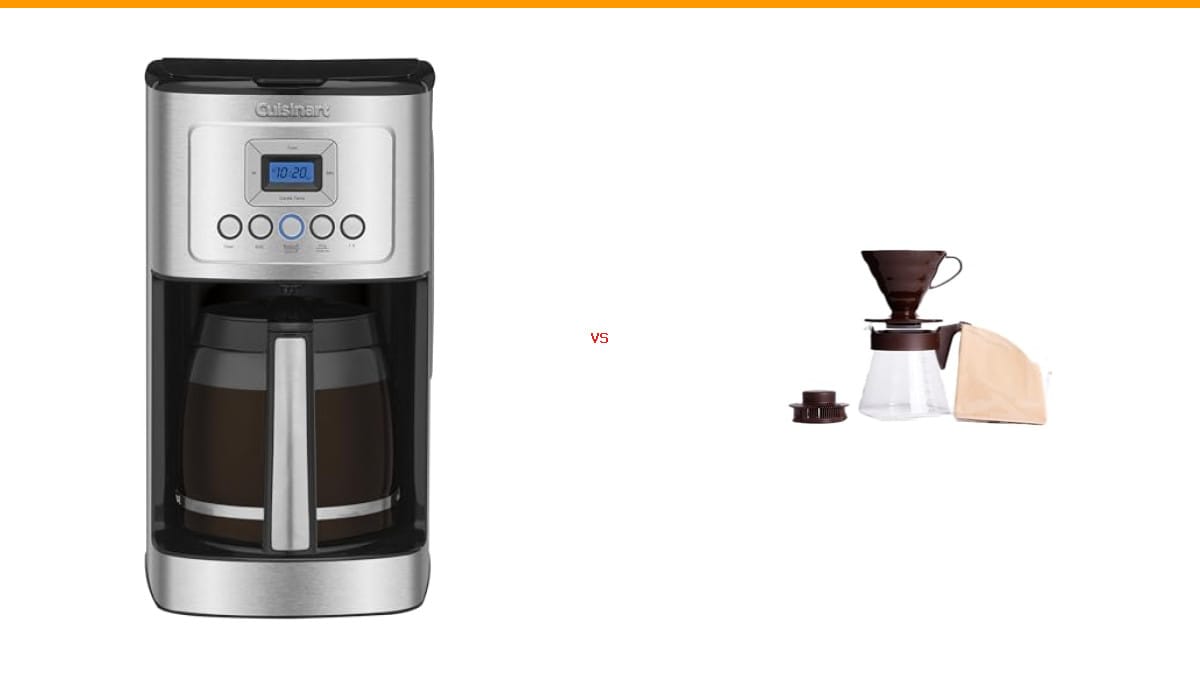
Walk into any kitchen and you’ll find one of these two machines. On the counter sits a big stainless steel drip machine, gurgling at 6 AM. In the cabinet, there’s a plastic cone and a glass carafe that only come out on weekends. That’s the classic setup. Most people think you have to pick a side.
| Our Pick | Runner Up |

|

|
| Cuisinart Cuisinart Coffee Maker, Programmable, 14-Cup Glass Carafe,… | HARIO Hario V60 Pour Over Coffee Starter Set,… |
| See on Amazon | See on Amazon |
As an Amazon Associate I earn from qualifying purchases.
I’ve spent the last month running both of these side by side. The Cuisinart DCC-3200 (the model number stamped on the bottom) handles my workdays. The Hario V60 starter set takes over Saturday mornings. They’re completely different animals, and the right choice depends on what you actually want from your coffee ritual.
Here’s the short version: the Cuisinart wins for anyone with a job, kids, or a general desire to not think before caffeine. The Hario wins for people who enjoy the process and want better flavor from the same beans. But the real answer might be both.
Quick Verdict: Which One Fits Your Life?
If you need coffee ready when your alarm goes off, the Cuisinart is the obvious pick. It has a timer, brew strength control, and a 14-cup capacity. You set it up the night before and wake up to fresh coffee. That’s a huge deal for busy mornings.
The Hario V60 demands your attention. You’ll boil water, wet the paper filter, bloom the grounds, and pour in slow circles for about three minutes. It’s not hard, but it’s not automatic. The payoff is a cleaner, brighter cup that shows off light roast beans better than any drip machine.
My honest take after testing both: the Cuisinart is the better purchase for 70% of people. The Hario is the better purchase for anyone who already enjoys coffee as a hobby.
Defining the Terms: What ‘Programmable’ and ‘Manual’ Actually Mean
A programmable coffee maker automates the entire brew cycle. You add water and grounds, set the timer, and it starts brewing at your chosen time. The Cuisinart also lets you pick between regular and bold strength, plus it has an adjustable keep-warm temperature. It’s a set-and-forget appliance.
A manual coffee maker like the Hario V60 is just a cone with a hole in it. You place a paper filter inside, add grounds, and pour hot water over them by hand. The starter set includes the plastic dripper, a 700mL glass server, and a 40-pack of paper filters. No electricity, no moving parts, no timer.
The difference is control. With the Hario, you control water temperature, pour speed, and bloom time. With the Cuisinart, you control strength and temperature, but the machine does the rest. Both approaches make decent coffee. They just get there by different routes.
The Morning Routine: Convenience vs. Ritual
My Cuisinart sits on the counter with yesterday’s grounds still in the filter basket. I rinse it, add fresh grounds, fill the reservoir, and set the timer. The next morning, I stumble into the kitchen and there’s a full carafe waiting. The hot plate keeps it warm, so I can pour a cup at 6 AM and another at 9 AM.
The Hario is a different experience entirely. It takes about four minutes from start to finish. You need a kettle, a scale if you’re serious, and a steady hand. The first time I used it, I poured too fast and the water overflowed. By day three, I had the rhythm down.
Here’s the thing nobody tells you about manual brewing: it’s not slower in a bad way. It’s slower in a meditative way. You focus on the water, the bloom, the spiral pour. For me, it’s the only quiet moment before the kids wake up. But if you’re running late, the last thing you want is a pour over cone and a kettle.
The Cuisinart is also louder than you’d expect. The brew cycle makes a gurgling noise, and the hot plate clicks on and off. The Hario makes no noise at all, unless you count the whistle of a kettle. For early mornings, that silence matters.
Brew Quality: Does Manual Really Taste Better?
Yes, but only if you know what you’re doing. I brewed the same medium roast Ethiopian beans through both setups. The Cuisinart produced a consistent, full-bodied cup with decent depth. The Hario produced a brighter, more complex cup with noticeable floral notes. The difference was obvious in a side-by-side tasting.
The reason comes down to extraction. A programmable drip machine sprays water over the grounds in a fixed pattern. It works fine, but it doesn’t allow for a proper bloom phase. The Hario’s single large hole lets you pour water slowly, saturating the grounds evenly and letting carbon dioxide escape before full extraction. That’s the bloom, and it matters for flavor.
You can also control grind size with the Hario. A finer grind extracts faster; a coarser grind extracts slower. With the Cuisinart, you’re stuck with whatever grind works for drip, which is usually medium. That’s fine for most beans, but it limits what you can do with single-origin or light roasts.
The Science of Extraction and Bloom
When hot water first hits coffee grounds, they release CO2. This creates a barrier that repels water. If you don’t let that gas escape, the water can’t reach the coffee inside. The Cuisinart doesn’t pause to let this happen. It just keeps spraying.
The Hario forces you to pour a small amount of water first, wait 30 seconds, then continue. That waiting period is the bloom. It allows the grounds to swell and release gas, so the subsequent pours extract more flavor. It’s a small step, but it’s the difference between a good cup and a great one.
The Cuisinart’s bold setting helps by using hotter water or a longer brew cycle. It’s a rough approximation of better extraction. It works, but it’s not the same as hands-on control.
The Problem with Hot Plates and Burnt Coffee
The Cuisinart comes with a glass carafe and a hot plate. That’s standard for drip machines, but it’s also the biggest flaw. Leave coffee on the plate for more than 30 minutes and it starts to develop a burnt, bitter taste. The Cuisinart has an adjustable keep-warm temperature, which helps, but it doesn’t eliminate the problem.
The Hario server is double-walled glass. It keeps coffee hot for about 20 minutes without any heat source. After that, it cools to a drinkable warm. You don’t get the burnt flavor, but you also don’t get a second hot cup hours later. That’s a trade-off.
If you drink your coffee quickly, the Cuisinart is fine. If you sip slowly over an hour, the Hario is better. Neither is perfect, but the burnt taste is a real issue for drip machines, and it’s one of the main reasons manual brewing tastes cleaner.
The Hidden Costs: Wattage, Maintenance, and Long-Term Value
The Cuisinart draws about 1025 watts during brewing. The Hario uses zero electricity. Over a year of daily use, the Cuisinart will add a few dollars to your electric bill. It’s not much, but it’s a recurring cost.
The bigger cost is coffee. A 14-cup drip machine encourages you to brew more than you need. I found myself making 8 cups and drinking 3, then dumping the rest. That’s wasted beans. The Hario makes exactly one or two cups at a time, so nothing goes to waste.
Replacement parts are another factor. The Cuisinart’s glass carafe is fragile, and replacement carafes aren’t cheap. The Hario’s paper filters are a recurring purchase, but they’re inexpensive. The plastic dripper itself basically never wears out.
Over five years, the Hario is likely cheaper per cup, even with the paper filters. The Cuisinart costs more upfront, uses more electricity, and may need a new carafe. But it also saves you time, which has its own value.
Cleaning and Descaling: A Chore Comparison
Nobody likes cleaning a coffee maker, but the Cuisinart is worse. The carafe, filter basket, and lid all need regular washing. The water reservoir collects mineral scale, and you’ll need to descale it every few months. If you ignore it, the machine slows down and the coffee tastes off. We have a full guide on coffee maker cleaning frequency that covers this.
The Hario is simpler. The dripper and server are both dishwasher safe. The paper filter catches all the grounds, so there’s no scrubbing. You just toss the filter and rinse the cone. Descaling isn’t an issue because there are no internal tubes or heating elements.
One thing I noticed: the Cuisinart’s gold tone permanent filter is nice, but it lets fine sediment through. Paper filters in the Hario produce a cleaner cup with less sludge at the bottom. If you hate gritty coffee, that’s a point for the Hario.
For maintenance, the Hario wins easily. It’s less work, less mess, and no descaling chemicals required.
Common Mistakes to Avoid (For Both Types)
With the Cuisinart, the most common mistake is using too fine a grind. That clogs the filter basket and causes overflow. Stick to a medium grind. Another mistake is forgetting to clean the carafe. Old coffee oils go rancid and ruin the next pot.
With the Hario, the biggest mistake is pouring water too fast. The single hole can’t drain quickly enough, so the water pools and over-extracts. Pour in a slow, steady spiral. Also, don’t skip the bloom. It’s not optional if you want good flavor.
I also made the mistake of using boiling water with the Hario. That scorched the grounds and made the coffee bitter. Let the water sit for 30 seconds after boiling, around 200°F, before pouring.
If your Cuisinart starts acting up, check the buttons and the power supply before assuming it’s broken. We have a guide on Cuisinart button issues that might save you a repair call.
The Hybrid Approach: Using Both for Different Days
Here’s the secret nobody in the reviews mentions: you don’t have to choose. I use the Cuisinart Monday through Friday and the Hario on weekends. It’s a split strategy that gives me convenience when I need it and ritual when I have time.
The weekday routine is simple. I set the Cuisinart’s timer the night before, and it’s ready when I wake up. I use the bold setting for a stronger morning cup. The 14-cup capacity means I can fill a thermos for the commute.
Weekends are for the Hario. I grind fresh beans, boil water, and take my time. It’s a slower start to the day, but it’s worth it. The flavor difference is noticeable, and I’ve grown to enjoy the process.
This approach costs more upfront, but it covers every scenario. If you’re on a budget, start with the Cuisinart and add the Hario later. If you’re a coffee enthusiast, start with the Hario and add the Cuisinart when you need to feed a crowd.
Frequently Asked Questions
Can the Cuisinart make a single cup of coffee?
Technically, yes, but it’s not great at it. The machine is designed for 14 cups, and brewing just one cup uses the same amount of hot water and time. You’re better off using the Hario for single cups. The Cuisinart shines when you need a full carafe.
Is the Hario V60 starter set good for beginners?
It’s a solid starting point. The plastic dripper is forgiving, and the included paper filters make cleanup easy. You’ll need a gooseneck kettle for best results, but you can start with a regular kettle. Expect a few messy pours while you learn the technique.
Does the Cuisinart’s permanent filter affect taste?
The gold tone permanent filter lets more oils through than paper filters. That adds body and richness, but it also lets fine grounds into your cup. Some people love that full-bodied taste; others find it muddy. The Hario’s paper filters produce a cleaner, crisper cup.
How long does coffee stay hot in each setup?
The Cuisinart’s hot plate keeps coffee warm indefinitely, but the flavor degrades after about 30 minutes. The Hario’s glass server keeps coffee hot for 20-25 minutes without any heat source, then it gradually cools. Neither is a thermos, so plan accordingly.
Final Recommendation
The Cuisinart programmable coffee maker is the better buy for most households. It’s convenient, reliable, and makes a full pot of decent coffee without any effort. The timer alone is worth it for anyone who craves coffee before they’re fully awake. If you want a good cup with zero fuss, this is your machine.
The Hario V60 is the better buy for anyone who cares about flavor and enjoys the brewing process. It’s cheaper, easier to clean, and makes a noticeably better cup of coffee. But it demands your attention and a bit of practice. If you’re willing to learn, the payoff is real.
My honest recommendation is to start with the Cuisinart if you’re new to coffee gear. Get your routine stable, then add the Hario for weekends. That hybrid approach gives you the best of both worlds without sacrificing convenience or taste. And if you’re already a pour over fan, the Cuisinart is a smart addition for busy mornings.
Either way, you’re getting a quality product from a trusted brand. The choice comes down to your lifestyle, not the specs. Check the current price on Amazon for both, and pick the one that fits how you actually drink coffee.
Products related to this article
Sponsored / affiliate links. As an Amazon Associate I earn from qualifying purchases. I may earn additional commission from eligible campaigns.
 HomeBeyond Espresso Coffee Maker 12 Cups, Classic Stovetop Espresso Maker, 600ml / 20oz Coffeemaker for Gas & Ceramic Stovetops (Silver)
 Stainless Steel Moka Pot Coffee Filter Disc for Espresso Brewing, Coffee Maker Replacement Filter Plate for Home Office Coffee Bar Cafe (FOR 4 Cups)
 Quick Heating Cup Warmer, Three Temperature Settings, Splashproof and Portable, for Coffee, Milk, Lightweight ABS Material