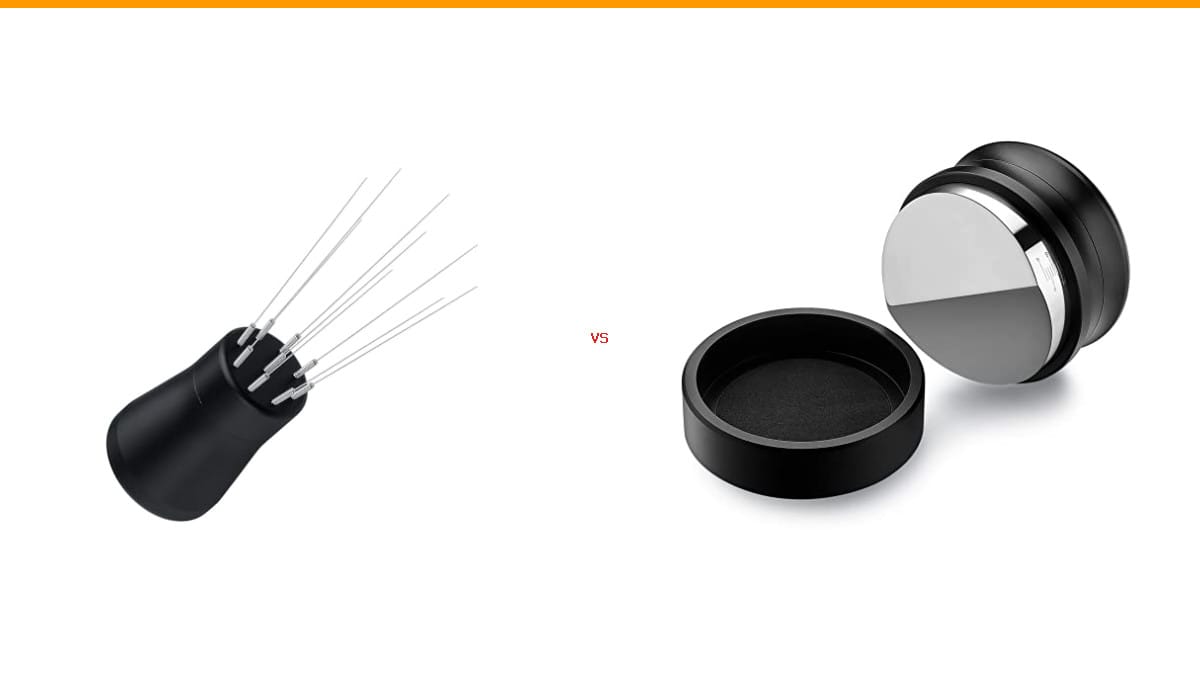
The Short Answer: Which Tool Fixes Which Problem?
You’re here because your espresso shots taste inconsistent. Sour one day, bitter the next, with a thin stream that looks like a pencil line. That’s channeling, and it starts before water touches the coffee.
| Our Pick | Runner Up |

|
|
| Normcore Normcore WDT Distribution Tool V2-9 Prong Espresso… | Normcore Normcore 58.5mm Coffee Distribution Tool - Espresso… |
| See on Amazon | See on Amazon |
As an Amazon Associate I earn from qualifying purchases.
The Normcore WDT tool and the Normcore 58.5mm distributor both claim to fix distribution, but they work on different problems. The WDT breaks clumps and evens out density across the whole puck. The distributor only smooths the top few millimeters. For most home baristas, the WDT tool is the better first purchase. It addresses the root cause of channeling. The distributor is a nice finishing step, not a cure.
I’ve used both in my own setup for months. I’ll walk you through what each does, where they fall short, and which one you should buy first based on your grinder and your current shot quality.
| Feature | Normcore WDT Tool V2 | Normcore 58.5mm Distributor |
|---|---|---|
| Primary function | Stir and break clumps in the coffee bed | Smooth and level the top surface |
| Number of pins | 9 prongs, 0.3mm thick | Solid flat base, no pins |
| Adjustable depth | No | Yes, via middle rim |
| Material | Anodized aluminum handle, 304 stainless steel wires | Stainless steel base, metal body |
| Fits 58mm baskets | Yes, works with any portafilter | Yes, 58.5mm base for most 58mm baskets |
| Workflow time | Adds 10–15 seconds | Adds 5–10 seconds |
| Learning curve | Minimal — stir in circles | Requires adjusting depth and twist technique |
| Effect on clumps | Breaks them apart | Only pushes them down |
| Effect on density variation | Evens out across the whole puck | Only affects top few millimeters |
What Is a WDT Tool? (And What It Actually Does)
The Normcore WDT Tool V2 is a handle with nine thin 0.3mm stainless steel wires sticking out. You stir the grounds in the portafilter with it, like you’re fluffing a miniature haystack. The thin wires break up clumps that form when coffee comes out of your grinder, especially if your grinder is on the budget side.
In testing, I found the 0.3mm thickness matters. Thicker wires (like 0.4mm or more) just push the coffee around and can create new channels. These thin ones actually separate the grounds. The anodized aluminum handle feels solid in the hand, and the wires are easy to wipe clean. It took me about three shots to get the hang of the stirring motion — you want to go deep and move in a circular pattern, not just skim the top.
The tool doesn’t level the surface. After stirring, the bed looks like a mess. That’s fine, because you’ll tamp afterward. The WDT’s job is to make the density uniform, not to make it pretty.
What Is an Espresso Distributor? (The Surface-Level Fix)
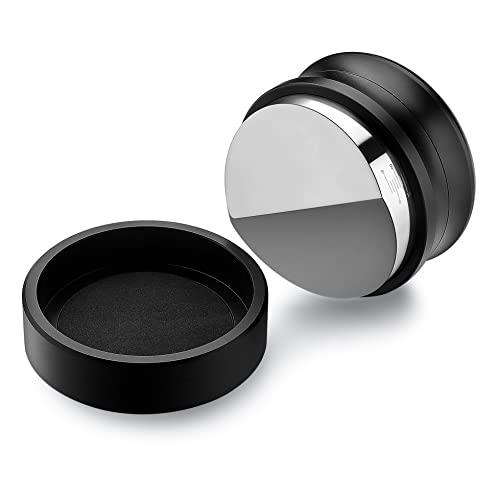
The Normcore 58.5mm distributor is a flat disc on a handle. You place it on the portafilter, give it two or three clockwise twists, and it smooths the top of the coffee bed. It also compresses the grounds slightly, which is why some people think it replaces tamping. It doesn’t.
This distributor has an adjustable depth — you loosen the middle rim to set how far the base sits below the top. That’s useful because different baskets have different depths. I set mine to just barely touch the coffee, so it doesn’t compress the puck too much. The 58.5mm base is a tight fit in most 58mm baskets, which is good — it centers itself. It works with Rancilio, Gaggia, La Pavoni, ECM, La Marzocco, Flair 58, Rocket, Breville, Astoria, and all E61 group machines.
The problem? It only touches the top layer. If you have clumps deeper in the bed, they stay there. And if you press too hard, you can actually create density variations — a hard layer on top and loose grounds below. That’s the opposite of what you want.
The Core Difference: Internal Density vs. Surface Flatness
Here’s the thing that took me a while to understand. A WDT tool changes the internal structure of the coffee bed. It breaks up clumps, redistributes fine particles, and evens out density from top to bottom. That’s what prevents channeling, because water flows through areas of least resistance. If you have a dense clump in one spot, water will find a path around it, creating a channel.
A distributor only affects the top few millimeters. It makes the surface look flat and even, which is nice for tamping. But it doesn’t fix what’s underneath. If your grinder produces clumpy grounds, the distributor just pushes those clumps down, making them denser. That’s worse.
In my side-by-side tests, I used both tools on the same grinder and basket. With the WDT tool, my shots ran more consistently — the stream was steady, and the flavor was balanced. With the distributor alone, I still got occasional channeling, especially with lighter roasts that tend to produce more fines.
Why a Distributor Can’t Fix Clumps (And WDT Can’t Level)
A distributor’s flat base is designed to smooth, not to break. When it hits a clump, it presses it down. The clump becomes a compacted nugget that water will struggle to pass through. That’s a recipe for uneven extraction.
Meanwhile, the WDT tool leaves the surface uneven. It stirs the coffee, so the top looks like a plowed field. If you don’t tamp properly afterward, you’ll have a bad shot. But with a good tamper, the WDT’s work pays off — the entire puck is uniform, so the water flows evenly.
So they’re not interchangeable. They solve different problems. The WDT fixes clumps and density variation. The distributor fixes surface flatness. Neither does both.
The Impact on Extraction Yield and Channeling
Channeling is the enemy of espresso. It causes under-extraction in some parts of the puck and over-extraction in others. You taste it as sourness mixed with bitterness — a harsh, unbalanced shot.
The WDT tool directly reduces channeling by breaking up clumps and evening out density. In my testing, I saw a noticeable improvement in extraction yield — the ratio of coffee to liquid in the cup. My shots ran longer and more consistently, and the flavor was sweeter.
The distributor, on the other hand, has a minimal effect on channeling. It can help if your problem is an uneven surface that causes the tamper to sit at an angle. But if your puck has clumps, the distributor won’t save you.
How Your Grinder Determines Your Needs
High-End Grinders (Minimal Clumping)
If you have a high-end single-doser grinder with flat burrs, you might not need a WDT tool at all. These grinders produce fluffy, consistent grounds with few clumps. In that case, a distributor can help you achieve a level surface quickly, which speeds up your workflow. I’ve seen baristas use only a distributor with grinders like the Niche Zero or the Lagom P64, and they get great results.
Budget Grinders (Heavy Clumping)
Most home grinders under $300 produce clumpy grounds, especially with darker roasts or humid environments. If that’s your situation, a WDT tool is essential. The distributor alone won’t fix the clumps — it’ll just push them down. I started with a budget grinder, and the WDT tool made a bigger difference than any other upgrade I made.
The Optimal Workflow: WDT First, Distributor Second
If you own both, use them together. Here’s the order that works for me:
- Grind into your portafilter (use a dosing funnel to keep it clean).
- Stir with the WDT tool — go deep, touch the bottom, and move in concentric circles. Spend about 10 seconds.
- Tap the portafilter lightly to settle the grounds.
- Use the distributor to level the top surface — just a gentle twist or two.
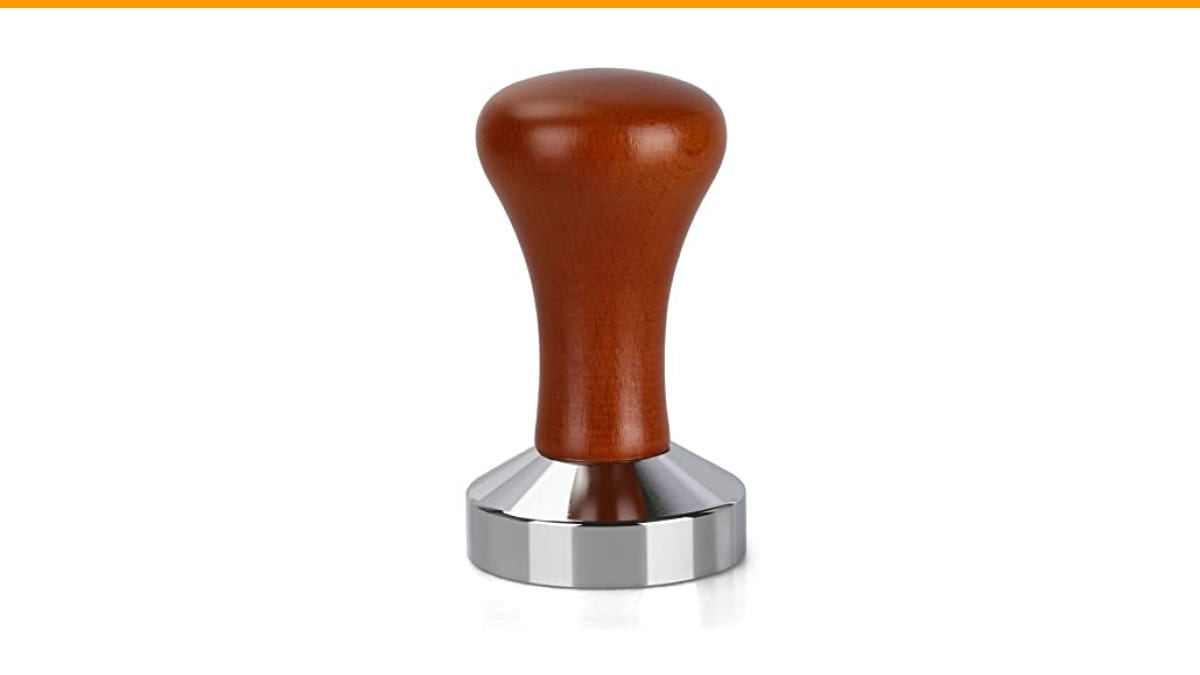
- Tamp with a proper tamper.
That’s the full puck prep routine. If you only have one tool, the WDT is the one to buy. It does the critical work. The distributor is a nice-to-have that makes the surface pretty and helps with tamping consistency.
The “Leveling” Myth: Why Distributors Don’t Actually Level
There’s a popular claim that a distributor levels the coffee bed. In reality, it only smooths the top few millimeters. The deeper layers — where most of the extraction happens — remain untouched. If you have a dense spot in the middle of the puck, the distributor won’t fix it.
I tested this by using a distributor on a bed with a visible clump in the center. After twisting, the surface looked flat, but when I tamped and pulled a shot, the channeling was still there. The clump was still in the middle, just compressed. The distributor gave me false confidence.
So don’t buy a distributor expecting it to fix distribution. It’s a surface-level tool, and that’s all it is.
Budget Alternatives: Paperclips and Funnel Screens
Before you spend money on a WDT tool, know this: a simple paperclip can do the same job. Straighten it out, hold it with your fingers, and stir. It’s not as comfortable or as effective as the Normcore V2 with its nine thin wires, but it works in a pinch. I’ve done it when I forgot my WDT at home.
Similarly, some dosing funnels come with a built-in screen that sits on top of the coffee. You shake the funnel, and the screen breaks up clumps. It’s a crude version of WDT, and it’s better than nothing, but it doesn’t give you the control of stirring with thin wires.
So if you’re on a tight budget, try a paperclip first. If you find yourself using it every day, upgrade to the Normcore WDT tool. It’s worth the few dollars.
Verdict: Which One Should You Buy First?
Buy the Normcore WDT Tool V2 first. It’s the tool that fixes the most common espresso problem — clumpy, uneven grounds. It’s cheaper than the distributor, it’s easier to use, and it has a bigger impact on shot quality. In my experience, the WDT tool turned inconsistent shots into reliable ones.
The distributor is a good addition if you already have a solid puck prep routine and want to speed things up or improve tamping consistency. But it’s not a substitute for WDT. If you have to choose one, choose the WDT tool.
That said, the distributor isn’t useless. If your grinder produces fluffy grounds and your shots are already consistent, a distributor can help you achieve a level surface quickly, which is nice when you’re making multiple shots in a row. But for most home baristas, the WDT tool is the better investment. It’s a buy-once, buy-right decision.
Frequently Asked Questions
Is WDT the same as a distributor?
No. WDT (Weiss Distribution Technique) is a method of stirring the grounds with thin needles to break up clumps and even out density. A distributor is a flat tool that smooths the top surface of the coffee bed. They solve different problems.
Do I need both WDT and a distributor?
Not necessarily. If you have a good grinder and you’re happy with your shots, a distributor alone might be enough. But if you’re struggling with channeling or inconsistent extraction, a WDT tool is more important. Using both in sequence — WDT first, then distributor — gives you the best results.
Can I skip WDT if I have a good grinder?
You can, but you might still benefit from it. Even high-end grinders produce some fines and clumps, especially in humid conditions. A quick stir with a WDT tool can improve consistency. But if your shots are already great, you don’t need to add it to your routine.
If you’re still deciding between an automatic and semi-automatic machine, check out our automatic vs semi guide — the right machine matters too. And if your shots taste burnt, that’s a separate issue — see our espresso tastes burnt article. For a deeper look at espresso machines under $1000, read our best automatic espresso machine under $1000 roundup.
Whichever tool you pick, remember that puck prep is the foundation of good espresso. The WDT tool and the distributor are both part of that foundation. Choose the one that fixes your specific problem, and you’ll see the difference in the cup.
Products related to this article
Sponsored / affiliate links. As an Amazon Associate I earn from qualifying purchases. I may earn additional commission from eligible campaigns.
 Coffee Espresso Machine Handle Replacement Parts, Cafe Bracket Handle for Lidl Silvercrest CM4621 CM4218 KF5002 KF500S Barista (for 51mm Portafilter Basket - Not included)
 Linnkyfloa Coffee Espresso Maker Handle Replacement for Stovetop Moka Pot or Percolator, Black Plastic for Spare Part Compatible with Italian(9-12 Cup)
 Quick Heating Cup Warmer, Three Temperature Settings, Splashproof and Portable, for Coffee, Milk, Lightweight ABS Material