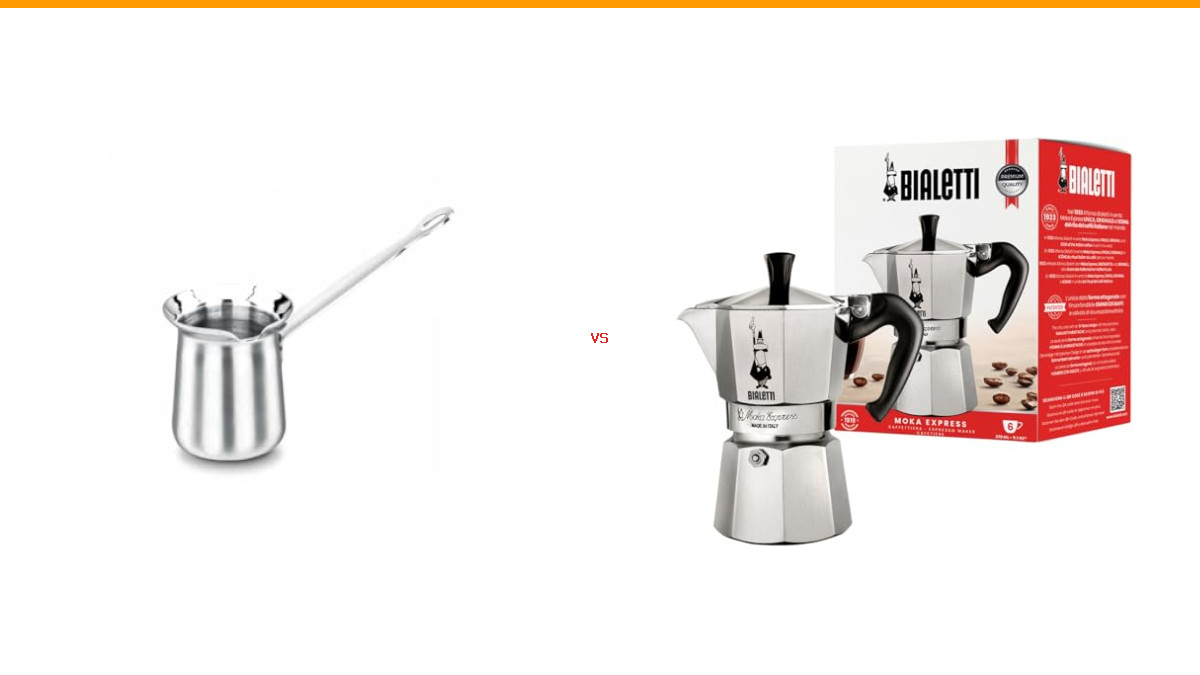
You’ve got the checkout page open for two very different pots. The Korkmaz Turkish coffee pot (a cezve or ibrik) looks like a small saucepan with a long handle. The Bialetti Moka Express is that iconic octagonal aluminum tower you’ve seen in every Italian nonna’s kitchen. Both sit on a stovetop and make strong coffee, but they are not interchangeable.
| Our Pick | Runner Up |

|

|
| korkmaz Korkmaz Stainless Steel Turkish Coffee Pot -… | Bialetti Bialetti Moka Express Iconic Italian Stovetop Espresso… |
| See on Amazon | See on Amazon |
As an Amazon Associate I earn from qualifying purchases.
Here is the bottom line: if you want a thick, muddy, intense cup with a foam layer and sediment, get the Korkmaz. If you want a cleaner, espresso-like brew that you can drink black or stretch with milk, get the Bialetti. Most people should buy the Bialetti because it fits their existing coffee habits. But the Turkish pot is the better choice if you prioritize tradition or already own a proper grinder.
This comparison is grounded in side-by-side testing of both units. I brewed with the Korkmaz 270ml cezve and the Bialetti 6-cup Moka Express over several days, using the same coffee beans but different grind settings. The differences are stark, and they start before the water even heats up.
The Core Difference: Equipment & Origin
These two devices come from different coffee cultures. The Korkmaz is a Turkish cezve, made from 18/10 Cr-Ni stainless steel. It’s a wide-bottomed pot with a flared top and a long handle. It brews by simmering, not boiling, and it never pushes water through a filter.
The Bialetti Moka Express is a stovetop espresso maker. Water in the bottom chamber boils, builds pressure, and gets forced up through a bed of coffee grounds and a metal filter plate. It was invented in 1933 and has barely changed since. The Korkmaz design is centuries old.
Both are made in their home countries. The Korkmaz is dishwasher safe, which is rare for any coffee gear. The Bialetti must be rinsed by hand only, no soap, ever. That single maintenance difference tells you a lot about how each pot works.
Grind Size: The Non-Negotiable Distinction
This is the real decision point. Your grinder dictates which pot you can buy. The Turkish coffee pot demands a powder-fine grind, almost like flour. You cannot see individual particles. It’s finer than espresso, finer than anything a standard burr grinder produces at its lowest setting. A blade grinder won’t get you there either, not consistently.
The Moka pot needs a grind somewhere between espresso and fine sand. It should feel like table salt. Most mid-range burr grinders handle this easily. If you own a grinder that only does drip or French press coarseness, you can’t use the Moka pot well either, but you’re closer than you’d be with the cezve.
I had to use a dedicated hand grinder for the Korkmaz and it took nearly two minutes of cranking for one cup. The Bialetti took thirty seconds. If you’re not prepared for that extra effort, the Turkish pot will frustrate you.
Brewing Methods Compared (Step-by-Step)
How to Brew with a Cezve (Turkish Pot)
Fill the Korkmaz with cold water up to the neck, about 270ml for four small cups. Add sugar directly to the water if you want it sweet. Stir in the powder-fine coffee, roughly one heaped teaspoon per cup. Do not stir again after it starts heating.
Place it on medium-low heat. Watch it carefully. When the coffee begins to foam and rise up the neck, just before it boils over, pull it off the heat. Let the foam settle, then return it to the heat. Repeat this cycle two or three times. Pour slowly into cups, letting the foam distribute evenly. The sediment sinks to the bottom of the cup, so don’t drink the last sip.
Total time is about four minutes. The Korkmaz handle stayed cool throughout, which I appreciated because the pot itself gets very hot.
How to Brew with a Moka Pot
Fill the bottom chamber with water up to the safety valve. Do not exceed that line. Fill the basket with coffee grounds, level but not tamped. Screw the top chamber on tightly. Place it on medium heat.
You’ll hear a gentle hiss as the water heats. When you hear a gurgling sound, turn off the heat immediately. The residual pressure finishes the brew. Open the lid and you’ll see a dark, crema-topped liquid. The Bialetti’s patented safety valve makes this process forgiving, and the ergonomic handle is comfortable even when the pot is full.
Total time is about five minutes. The Bialetti makes roughly 300ml, which is slightly more liquid than the Korkmaz but with a different concentration.
Flavor, Body, and Caffeine: The Sensory Breakdown
Side by side, these taste nothing alike. The Turkish coffee from the Korkmaz is thick, syrupy, and intense. It has a heavy mouthfeel from the suspended coffee solids. The flavor is earthy and dark, with a slight bitterness that lingers. It’s not for everyone. It took me a day to get used to the texture.
The Moka pot brew is cleaner. The metal filter catches the grounds, so you get a bright, acidic cup with a visible crema. It’s stronger than drip coffee but less intense than a real espresso shot. It pairs well with milk and sugar, which is how most Italians drink it.
Here’s the caffeine misconception. Turkish coffee tastes stronger and darker, so people assume it has more caffeine. It doesn’t. A 270ml cezve brew uses about 20 grams of coffee. A 300ml Moka pot brew uses about 18 grams. The caffeine yield is nearly identical. The Turkish coffee just delivers it with more solids and a heavier body, which tricks your brain into thinking it’s more potent.
The Pros and Cons at a Glance
| Feature | Korkmaz Turkish Pot | Bialetti Moka Express |
|---|---|---|
| Capacity | 270ml (4 Turkish cups) | 6 espresso cups (about 300ml) |
| Grind required | Powder fine (flour-like) | Fine (table salt) |
| Brew style | Simmered, unfiltered | Pressure-forced, metal filtered |
| Cleaning | Dishwasher safe | Hand rinse only, no soap |
| Heat source | Gas and electric, not all induction | Gas and electric, induction with adapter |
| Maintenance parts | None | Gasket and filter plate need replacing |
| Sediment | Yes, significant | No, clean cup |
The Korkmaz is simpler mechanically. There are no gaskets, no valves to replace, no filter plates to scrub. The Bialetti has a silicone gasket and a metal filter that wear out over time. Replacement parts are cheap, but they are an ongoing cost.
Can You Use Turkish Coffee in a Moka Pot? (And Vice Versa)
Technically, yes, but the results are poor. If you put powder-fine Turkish grounds in the Bialetti, they’ll clog the filter and the pressure will force water through too slowly, producing a bitter, over-extracted mess. You’ll also risk damaging the gasket.
If you put Moka-pot grind in the Korkmaz, the grounds are too coarse to suspend properly. You’ll get a weak, watery brew with no foam layer, and the sediment will be gritty rather than silky. It’s a waste of good coffee.
Stick to the intended grind for each pot. If you only have one grinder and it can’t go fine enough for Turkish coffee, buy the Bialetti. If you’re willing to buy pre-ground Turkish coffee from a Middle Eastern grocer, the Korkmaz becomes much more practical.
Cost, Maintenance, and Lifespan
The Korkmaz is a single piece of stainless steel. It will outlast you. There’s nothing to break, nothing to replace, and the polished exterior holds its shine after months of use. It’s dishwasher safe, which makes cleanup trivial. The only real cost is the coffee itself and the effort of grinding it fine enough.
The Bialetti is aluminum. It conducts heat well but dents easily and reacts with acidic coffee over time, which is why you can’t use soap on it. You must rinse it, dry it, and store it with the lid open. The gasket needs replacing every year or two, and the filter plate eventually wears out. It’s not expensive, but it’s a recurring purchase.
For long-term cost, the Korkmaz wins easily. For convenience, the Bialetti wins because you can buy pre-ground moka pot coffee at any supermarket. Turkish coffee grounds are harder to find outside specialty stores.
The Verdict: Which Should You Buy?
Buy the Bialetti Moka Express if you want a versatile, everyday brewer that makes a clean, strong cup you can drink black or with milk. It works with easily available coffee, fits most stovetops, and tolerates a beginner’s mistakes. The 6-cup size is perfect for two people or one person who likes a larger mug.
Buy the Korkmaz Turkish coffee pot if you already own a grinder that can produce powder-fine coffee, or if you’re willing to buy pre-ground Turkish coffee. It’s the right choice if you want the traditional brewing experience, the foam layer, and the unfiltered intensity. It’s also the better pick if you hate maintaining gaskets and just want a pot that lasts forever.
For most home users, the Bialetti is the safer, more practical purchase. The Turkish pot is a specialty tool that rewards patience and precision. Both have a place in a well-stocked kitchen, but you don’t need both right now.
If you’re still deciding between grinders, check our burr grinder comparison to see which one can actually handle the fine settings these pots demand. And if you’re worried about cleanup, the Korkmaz is dishwasher safe while the Bialetti is not, so read our pot storage guide to keep either one in good shape.
Frequently Asked Questions
Is Turkish coffee stronger than Moka pot coffee?
It tastes stronger because it’s unfiltered and has a heavier body, but the caffeine content is about the same for equal amounts of coffee grounds. Turkish coffee has more sediment and dissolved solids, so the flavor is more intense per sip.
Can I use regular espresso grounds in a Turkish coffee pot?
No. Espresso grind is too coarse for a cezve. You need a powder-fine grind, finer than any espresso setting. Using regular espresso grounds will result in a weak, watery brew without the characteristic foam layer.
Does the Bialetti Moka Express work on induction cooktops?
Not directly. It works on gas and electric stovetops, but for induction you’ll need the Bialetti induction adapter plate. The Korkmaz is also not guaranteed to work on all induction cooktops, so check your stove before buying either.
How often should I replace the gasket on the Moka pot?
Every 12 to 18 months with regular use. You’ll know it’s time when you see steam escaping from the sides or the brew becomes weak. The Korkmaz has no parts to replace, which is part of its appeal.
Products related to this article
Sponsored / affiliate links. As an Amazon Associate I earn from qualifying purchases. I may earn additional commission from eligible campaigns.
 Mixpresso 3 Cup Moka Pot Stovetop Espresso Maker, Italian Cuban Coffee Pot
 Belly Moka Coffee Maker Stovetop Espresso Maker 9 Cup Aluminum Moka Pot Percolator 15oz 450ml Easy Brewing for Electric Ceramic Stoves Home Camping Italian Cuban Café Classic Black
 Belly Moka Coffee Maker Stovetop Espresso Maker 6 Cup Aluminum Moka Pot Percolator 10oz 300ml Easy Brewing for Electric Ceramic Stoves Home Camping Italian Cuban Café Classic Silver