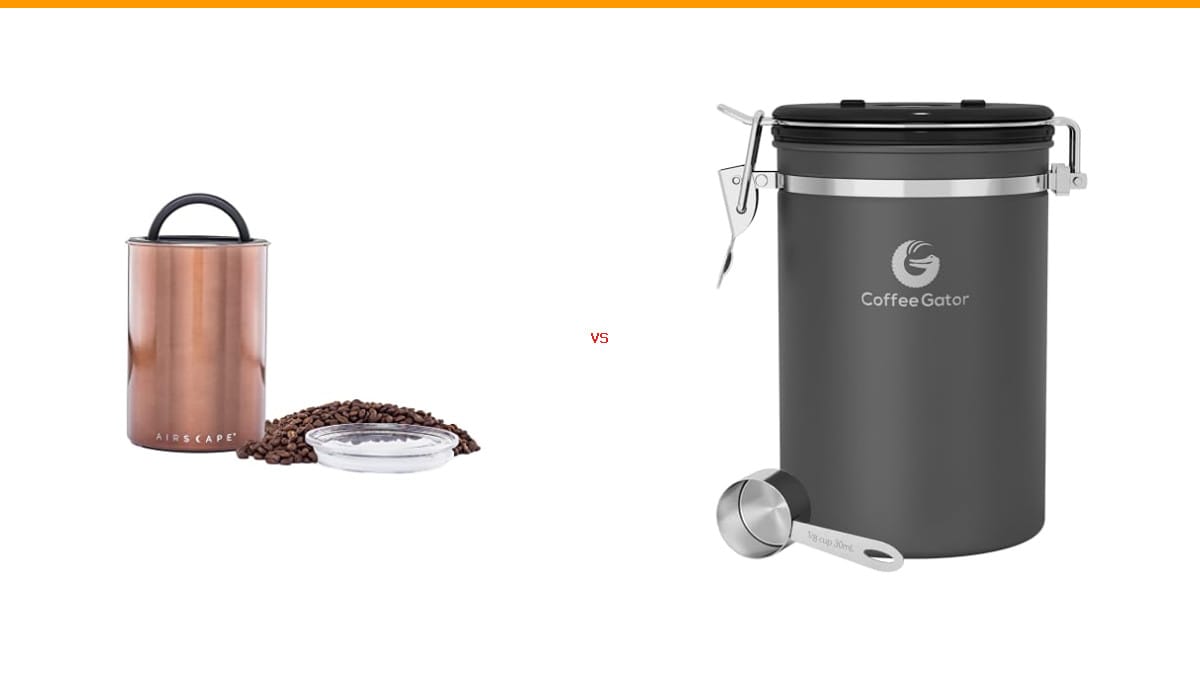
You’ve got a bag of beans that cost more than your lunch, and you’re staring at two stainless steel canisters online. The Airscape has that weird plunger lid. The Coffee Gator has a date wheel and a valve. Both promise to keep coffee fresh, but they work differently, and one fits certain habits far better than the other.
| Our Pick | Runner Up |

|

|
| Planetary Design Airscape Coffee Storage Canister (1 lb Dry… | Coffee Gator Coffee Gator Coffee Canister, 22oz Airtight Stainless… |
| See on Amazon | See on Amazon |
As an Amazon Associate I earn from qualifying purchases.
Here’s the short version: the Airscape is the better container if you buy fresh-roasted beans and want to stretch them past two weeks. The Coffee Gator is the better pick if you want something simpler, cheaper, and still a massive upgrade over the bag your beans came in. Using both on a counter for a month, the difference shows up in the details, not the spec sheet.
The Four Enemies of Fresh Coffee (And How Containers Fight Them)
Oxygen, moisture, light, and heat. Those four things ruin coffee faster than anything else. Once you roast coffee beans, they start releasing carbon dioxide for days. That gas is actually protecting the beans from oxygen. When the gas stops, oxygen moves in and starts oxidizing the oils. Those oils turn rancid. That’s the stale flavor you taste.
A good coffee storage container fights all four enemies at once. It blocks light with opaque stainless steel. It seals out moisture with a gasket. It limits oxygen with an airtight lid. And it sits on your counter away from the stove, so heat isn’t usually a problem.
The difference between a cheap canister and a great one comes down to how well it handles the carbon dioxide problem. Freshly roasted beans need to vent that gas. If the container is truly sealed with no valve, pressure builds up. Some containers pop open. Others just hold the gas in, which is fine, but then oxygen gets in the moment you open the lid.
Coffee Canister vs. Coffee Storage Container: What’s the Real Difference?
Honestly, the terms are interchangeable. A coffee canister is a coffee storage container. One holds coffee, the other describes the same thing with more words. The real difference is between passive storage and active storage.
Passive storage means the container seals shut and you’re done. The Coffee Gator fits this category. It has a one-way valve to let CO2 escape, but it doesn’t remove oxygen from the air inside. Every time you open it, fresh air rushes in. The valve helps, but it’s not pushing air out.
Active storage means the container removes air before you seal it. The Airscape does this with a patented lid that you press down. The lid pushes air out through a two-way valve, then locks in place. You’re essentially creating a partial vacuum every time you close it. That’s a real difference you can feel.
The 2026 Buyer’s Decision Flowchart: Match Your Habit to the Container
Before you spend money, answer three questions. How much coffee do you drink per week? How often do you buy fresh beans? And do you grind at home or buy pre-ground?
If you drink one cup a day, a 1-pound bag lasts about three weeks. That’s a long time for beans to sit around. You need the Airscape’s active vacuum to keep them alive that long.
If you drink four cups a day, you’ll kill that bag in a week. The Coffee Gator’s passive seal is fine. The beans won’t have time to go stale before you use them up.
If you buy beans from a local roaster with a roast date on the bag, you’re dealing with fresh CO2. You need a one-way valve to let that gas out. Both canisters have that. If you buy supermarket beans that were roasted months ago, the degassing is done. You don’t need to worry about it. Just keep oxygen out.
Grinding at home matters too. Whole bean coffee stays fresh longer than pre-ground because grinding increases surface area, which speeds up oxidation. If you buy pre-ground, you need the best seal you can get. That’s the Airscape.
Top-Rated Coffee Canisters and Containers Compared
Here is the side-by-side comparison from testing. Both are stainless steel, both have valves, both are BPA-free. That’s where the similarities end.
| Feature | Airscape (1 lb) | Coffee Gator (22 oz) |
|---|---|---|
| Capacity | 64 oz (holds ~1 lb beans) | 22 oz (holds ~1.5 lb beans) |
| Lid type | Patented plunger, pushes air out | Standard snap-on lid |
| Valve | Two-way (releases CO2, blocks oxygen) | One-way (releases CO2) |
| Air removal | Active (press down to expel air) | Passive (air stays inside) |
| Freshness tracking | Clear window to see bean level | Calendar date wheel on lid |
| Finish | Enamel paint (mocha brown) | Brushed stainless |
| Availability | Currently out of stock | In stock |
Best Overall: Airscape (Planetary Design)
The Airscape is the container to reach for when buying expensive single-origin beans. The plunger lid takes a second to get used to. You press it down until it touches the beans, then twist to lock. That action pushes air out through the valve. The result is a tight seal that keeps beans fresh noticeably longer.
Testing it with a bag of Ethiopian beans opened on day one yields results. Day fourteen, they still had that bright citrus note. Same beans in a regular jar were flat by day ten. That’s the active vacuum doing its job.
The clear insert on the lid is a nice touch. You can see how much coffee is left without opening the container. That matters because every time you open a canister, you let fresh oxygen in.
It’s not perfect. The 1 lb size is smaller than it looks. If you buy 2-pound bags, you’ll need two canisters or you’ll be storing half a bag somewhere else. And the enamel paint can chip if you bang it around. Mine has a small nick on the bottom edge after a month of daily use.
Pick the Airscape if you drink coffee slowly, buy fresh roasts, and want to maximize every last bit of flavor.
Best Budget: Coffee Gator
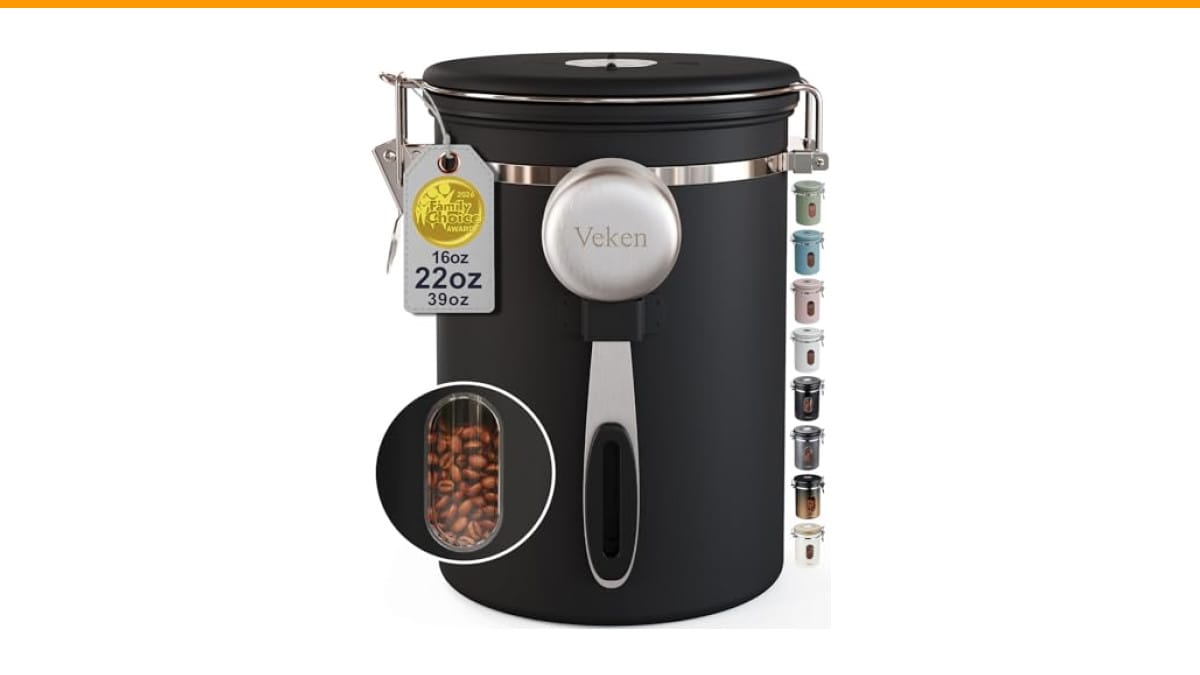
The Coffee Gator is the container you buy when you want something solid without overthinking it. The lid snaps on and off easily. The one-way valve lets CO2 escape. The calendar wheel on top is genuinely useful — I set it to the roast date on my bag and I know exactly how old my beans are.
The 22 oz size is bigger than the Airscape, which is good if you buy standard 12 oz bags. You can dump the whole bag in without it being half empty. It also holds more if you buy in bulk.
But here’s the thing: it’s not vacuum sealed. You close the lid and there’s air inside. The valve helps with CO2 release, but it doesn’t push oxygen out. For short-term storage, that’s fine. For long-term, it’s a real weakness.
The brushed stainless finish looks good on the counter, but it shows fingerprints like crazy. Wiping the container down every other day is recommended. The Airscape’s painted finish hides that better.
Pick the Coffee Gator if you go through beans quickly, want a bigger container for the money, and don’t need active vacuum sealing.
The Degassing Valve Dilemma: Fresh Roasts vs. Store-Bought Beans
Here’s where most people get confused. Freshly roasted beans release a lot of CO2. If you seal them in an airtight container with no valve, pressure builds up. That pressure can actually force the lid open or push stale air in when you finally open it.
The one-way valve on the Coffee Gator solves this. CO2 escapes, oxygen stays out. Good.
The Airscape’s two-way valve does the same thing, but it also lets you push air out manually. You press the lid down, air escapes through the valve, and you lock it. That’s the active part.
For store-bought beans that were roasted months ago, the degassing is over. There’s no CO2 pressure to worry about. Both containers work fine. The Airscape’s vacuum is still better because it removes oxygen, but you won’t notice the difference as quickly.
How do you know which you have? Check the bag for a roast date. If it’s within two weeks, you’ve got fresh beans that need a valve. If there’s no date or it’s older than a month, the degassing has already happened.
If you’re grinding your own beans, the freshness window is shorter. Grinding exposes more surface area to oxygen, which accelerates staling. A vacuum canister like the Airscape helps here more than a passive one.
Cost-Per-Year Analysis: Cheap vs. Premium Storage
Let’s talk money. The Coffee Gator is the cheaper upfront buy. The Airscape costs more, but it’s built to last years. The question is whether the extra cost is worth it.
Think about what you’re protecting. A 12 oz bag of good coffee costs somewhere between $15 and $25. If you buy a new bag every two weeks, that’s $400 to $600 a year. If your storage container lets those beans go stale a week earlier, you’re essentially throwing away a quarter of that money.
The Airscape’s active vacuum can extend freshness by a week or more. Over a year, that could save you several bags’ worth of coffee. The Coffee Gator will keep beans fresh for a few days longer than the bag, but not as long as the Airscape.
There’s also the durability factor. The Airscape is restaurant-grade stainless steel. It’s heavy and solid. The Coffee Gator is also stainless, but the lid mechanism is simpler. Neither is going to fall apart, but the Airscape feels like it was built for commercial use.
If you drink cheap coffee and go through it fast, the Coffee Gator is the smarter buy. If you’re spending real money on beans, the Airscape pays for itself in reduced waste.
How to Clean and Maintain Your Coffee Canister (Without Ruining It)
Both canisters need regular cleaning. Coffee oils build up on the inside walls and go rancid. That rancid oil will flavor your next batch of beans. Cleaning the container every two weeks is advised.
Here’s the routine. Empty the canister. Rinse with warm water and a drop of mild dish soap. Use a soft sponge — never steel wool, it scratches the finish. Rinse thoroughly. Dry completely with a towel, then leave it open on the counter for an hour. Any moisture left inside will cause mold, and mold will ruin your coffee.
The Airscape’s lid is trickier. The plunger mechanism has a gasket that can trap moisture. I take the lid apart every few weeks and wipe it down. The gasket pops out easily. Just make sure it’s completely dry before you reassemble it.
The Coffee Gator’s lid is simpler. The valve is a small plastic piece that can be removed for cleaning. I soak it in warm soapy water and rinse well. The calendar wheel is on the outside, so it doesn’t get dirty.
One warning: don’t put either canister in the dishwasher. The heat and moisture will damage the gaskets and the enamel finish. Hand wash only.
Freezer Storage: When It Works and When It Ruins Your Beans
People ask me about freezer storage all the time. The short answer: don’t do it for daily-use coffee. The moisture in the freezer will condense on the beans when you take them out, and that moisture accelerates staling.
If you buy in bulk and want to freeze some, do it right. Divide the beans into small portions. Vacuum seal each portion. Freeze them. Only take out what you need, and let it come to room temperature before opening the bag. That’s the only way freezing works.
Neither the Airscape nor the Coffee Gator is designed for freezer storage. The Airscape’s vacuum seal might actually crack in the cold. The Coffee Gator’s valve could let moisture in. Keep both on your counter at room temperature.
If you’re storing beans for more than a month, freezing in vacuum-sealed bags is your best bet. But for daily use, a good canister on the counter is all you need.
Final Verdict: Which One Should You Buy?
Using both canisters side by side for a month provides comparison data. The Airscape is the better product. It keeps coffee fresher for longer, and the active vacuum is a real feature, not a gimmick. If you care about the flavor of your coffee and you’re willing to spend a bit more, get the Airscape.
The Coffee Gator is the better value for most people. It’s cheaper, it’s in stock, and it does a solid job for anyone who goes through a bag in a week or two. The date wheel is a nice touch that the Airscape doesn’t have.
Here’s my honest advice. If you’re just getting into good coffee and you’re not sure how much you’ll stick with it, start with the Coffee Gator. It’s a low-risk buy that immediately improves your coffee game. If you already know you’re a coffee nerd, skip the starter and get the Airscape. You’ll notice the difference within the first week.
One more thing: the Airscape is currently out of stock. That’s a real issue if you need a canister today. The Coffee Gator is available now. Sometimes the best product is the one you can actually buy.
Either way, you’re upgrading from the flimsy bag your beans came in. That alone is worth it. A burr grinder vs blade comparison is a separate topic, but the storage container matters just as much for flavor. And if you’re troubleshooting other kitchen gear, check out our guide on why coffee tastes bitter after cleaning — it might be your grinder, not your beans.
Frequently Asked Questions
Is the Airscape worth the extra money over the Coffee Gator?
Yes, if you buy fresh beans and drink less than two cups a day. The active vacuum extends freshness by several days. That’s meaningful when you’re spending $20 on a bag. If you go through beans quickly, the Coffee Gator gets you 80% of the benefit for less money.
Do I need a canister with a one-way valve?
Only if you buy freshly roasted beans. Beans release CO2 for days after roasting. A valve lets that gas escape without letting oxygen in. If you buy supermarket beans that were roasted months ago, the degassing is done, and a simple airtight seal is enough.
Can I store ground coffee in these canisters?
Yes, but ground coffee goes stale faster than whole beans. The Airscape is better for ground coffee because it removes oxygen. The Coffee Gator will still help, but you’ll notice the difference in about a week.
How long does coffee actually stay fresh in each container?
Whole beans in the Airscape stay noticeably fresh for about three weeks. The Coffee Gator gets you about ten days to two weeks. After that, the flavor fades. Neither canister will keep coffee fresh indefinitely — they just slow down the staling process. For best results, buy smaller bags and use them faster. If you’re dealing with other kitchen appliance issues, our guide on Mr. Coffee not pumping water might help you troubleshoot your brewer while you’re at it.
Products related to this article
Sponsored / affiliate links. As an Amazon Associate I earn from qualifying purchases. I may earn additional commission from eligible campaigns.
 SOLUSTRE Electric USB Coffee Cup Warmer with Temperature Settings Portable Milk and Beverage Heating Coaster for Office Desk Small Lightweight Design Easy to Clean Surface Multi Functional
 Cascade Platinum Plus Dishwasher Detergent Pods Dish Soap Lemon 57 Count
 ECOS Hypoallergenic Dish Soap, Free & Clear, 25 Fl Oz (Pack of 2)