Most home baristas start with a rag. They steam milk, wipe the wand, and call it a day. That works for a while, but it skips a fundamental difference in how your machine builds up gunk. The wand itself gets crusty on the outside, but the inside of the tube, and any enclosed milk circuit, harbor dairy residue you can’t see.
| Our Pick | Runner Up |

|

|
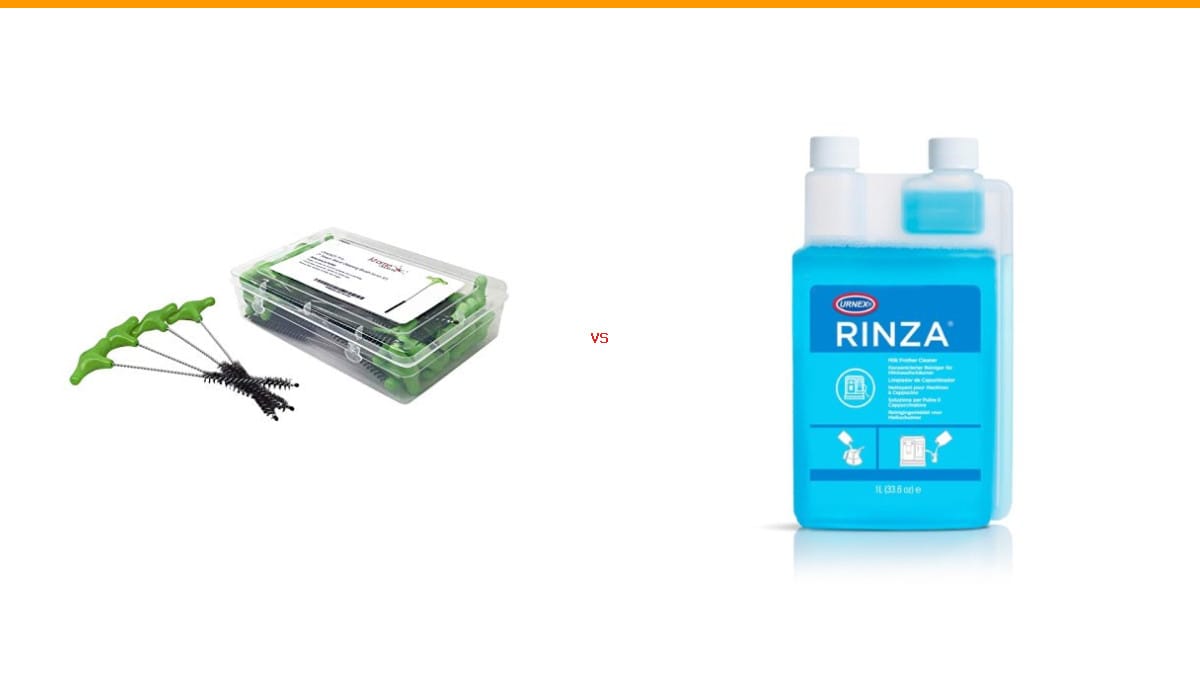
| Krome Dispense Krome Steamy Wanda Steam Wand Cleaning Brush… | Urnex Urnex Rinza Milk Frother Cleaner - 32oz… |
| See on Amazon | See on Amazon |
As an Amazon Associate I earn from qualifying purchases.
The comparison usually comes down to a physical tool like the Krome Steamy Wanda brush versus a chemical solution like Urnex Rinza. One scrubs visible grime; the other dissolves invisible protein film. They are not substitutes. They serve two different points in a cleaning routine, and understanding that split saves you from sour-tasting milk and a sputtering wand.
For most home users, you will need both. But if you only want to buy one thing right now, the chemical cleaner is the more critical purchase because it addresses the parts you cannot reach. Here is the breakdown.
The Core Difference: Direct Wand vs. Enclosed Circuit
Your espresso machine has one of two designs. A traditional steam wand is an open metal tube. You purge it, wipe it, and soak the tip. The inside is narrow but accessible with a brush or a pin.
An enclosed milk system, like the LatteGo on certain Breville models or the auto-foamer on super-automatic machines, is a sealed loop. Milk travels through silicone tubes, a mixing chamber, and a jug. You cannot wipe inside those tubes. The only way to remove milk protein residue is to run a cleaning solution through the entire circuit.
This mechanical difference dictates your cleaning agent. A brush handles the first category. A chemical cleaner handles the second. Trying to swap them leads to frustration.
Why Milk Residue is a Different Beast (Proteins vs. Coffee Oils)
Coffee oils are easy. They dissolve with a standard detergent or a backflush tablet. Milk is harder because it contains proteins that bond to metal when heated. Heat denatures the protein, causing it to stick to the inside of the wand or tube.
That baked-on film is not just ugly. It goes rancid quickly. The smell is unmistakable: a sour, almost vomit-like odor that transfers directly into your next cup of milk. A dry wipe removes the visible layer but leaves a microscopic film that continues to harbor bacteria.
This is where the cleaning chemistry splits. Alkaline cleaners break down the protein. Acidic cleaners handle mineral buildup. You need the alkaline option for milk, which is exactly what Urnex Rinza is formulated to do.
Steam Wand Cleaning: The 3-Step Purge and Wipe Routine
Let’s talk about the physical side of cleaning first. The Krome Steamy Wanda brush is a simple tool. It is a pack of 25 nylon brushes with an ergonomic handle. The bristles are stiff enough to remove residue but soft enough to avoid scratching the stainless steel.
Here is the routine that actually works in practice. After steaming, purge the wand for two seconds to clear milk from the internal tube. Wipe the outside with a damp cloth. Then, once a day, use the brush to scrub the tip and the exterior threads where milk crust tends to collect.
The “Every Drink” Habit
You should wipe after every single drink. This is non-negotiable. Milk dries fast, and once it dries, it is harder to remove. The brush is for the end-of-day deep clean, not for every drink.
The Deep Soak for Clogged Tips
When the wand starts sputtering or the holes in the tip are blocked, you need more than a brush. Remove the tip if possible and soak it in a warm alkaline solution. The Krome brush helps scrub the softened residue after the soak, but the soak does the heavy lifting.
Milk System Cleaner: When and How to Run a Cleaning Cycle
For enclosed systems, brushing is not an option. You need to run a cleaning cycle with a product like Urnex Rinza. This comes as a 32oz bottle in a case of six. The solution is designed to be diluted and run through the milk circuit.
Unlike a brush, which is a one-time purchase, the cleaner is a recurring cost. You will use it weekly or bi-weekly depending on how often you steam milk. The process involves filling the milk container with the diluted solution, running the cleaning cycle, and then rinsing thoroughly with fresh water.
Alkaline vs. Acidic: Which Chemical Do You Need?
Alkaline cleaners target protein and fat. These are your primary milk cleaners. Acidic cleaners target mineral scale, like calcium deposits from hard water. You might need both if your water is hard, but for milk residue specifically, alkaline is the answer.
Urnex Rinza is an alkaline cleaner. It is safe for most plastics and stainless steel, but you should always check your machine’s manual. Some aluminum components can corrode with strong alkaline solutions, so verify compatibility before running a cycle.
The Disassembly Checklist (Tubes, Jugs, and Gaskets)
Chemical cleaning is not a replacement for physical disassembly. Every week, you should remove the silicone tubes and the milk jug. Rinse them under warm water. Inspect the rubber gaskets. Use the Krome brush on any part that is removable and has a surface you can reach.
The chemical cleans the circuit. The brush cleans the accessible parts. They work together.
Steam Wand Cleaner vs. Milk System Cleaner: A Direct Comparison
| Feature | Krome Steamy Wanda Brush | Urnex Rinza Cleaner |
|---|---|---|
| Primary Function | Physical scrubbing of wand and portafilter | Chemical removal of milk protein residue |
| Application Area | External wand surface, tip, portafilter basket | Internal tubes, auto-foamer, enclosed circuits |
| Action Type | Abrasive (mechanical) | Alkaline (chemical) |
| Pack Size | 25 brushes | 6 bottles of 32oz each |
| Reusability | Disposable, but each lasts weeks | Liquid concentrate, diluted per use |
| Best For | Traditional steam wands | Super-automatic and enclosed milk systems |
| Material Safety | Nylon bristles, safe on steel | Check compatibility with aluminum parts |
The Cost of Neglect: Signs Your Milk System is Failing
You will notice the failure before it becomes catastrophic. The wand starts sputtering instead of producing a smooth jet of steam. The milk foam becomes thin and watery, lacking the microfoam texture you expect. There is a sour smell that lingers even after a purge.
These are all symptoms of baked-on protein. The residue restricts steam flow, causing the sputter. It contaminates fresh milk, killing the foam structure. The bacteria growth produces the smell. Ignoring these signs leads to worse problems, like a completely blocked tube that requires disassembly.
A regular cleaning routine prevents all of this. The brush costs pennies per use. The cleaner costs a small amount per cycle. Both are cheaper than a service call or a new machine.
The Ultimate Weekly Maintenance Schedule
Here is a realistic schedule for a home user who steams milk daily. After every drink, purge the wand and wipe it with a damp cloth. This takes five seconds.
At the end of each day, use the Krome brush to scrub the wand tip and the exterior. Remove the tip and soak it in hot water with a drop of detergent. Rinse and reassemble.
Once a week, run a cleaning cycle with Urnex Rinza if you have an enclosed milk system. Follow the dilution instructions on the bottle. Rinse thoroughly. Disassemble the tubes and jugs, scrub them with the brush, and let them air dry.
Once a month, check the rubber gaskets for wear. Replace them if they are cracked or hard. This schedule takes about fifteen minutes a week and keeps your milk tasting fresh.
Frequently Asked Questions
Can I use a steam wand brush on an auto-foamer?
Only on the removable parts. The brush is excellent for scrubbing the external surfaces and the removable jug. It cannot clean the internal silicone tubes or the mixing chamber. For those, you need a chemical cleaner like Rinza to flush the residue out.
Is the Krome brush safe for all portafilters?
The nylon bristles are soft enough for chrome and steel. It will not scratch the basket. It is not ideal for coated or plated surfaces if you scrub aggressively, but normal use is fine. The brush is more about removing coffee grounds and milk crust than deep scratching.
How often should I run the Rinza cleaning cycle?
It depends on how often you steam milk. For daily milk steaming, a weekly cycle keeps the system fresh. If you only steam milk on weekends, a bi-weekly cycle is sufficient. The bottle lasts a long time because you only use a small amount per cycle.
What is the difference between a milk cleaner and a descaler?
A milk cleaner is alkaline and breaks down proteins and fats. A descaler is acidic and removes mineral scale like limescale. They address different problems. You might need both, but they are not interchangeable. Running a descaler through a milk system will not remove the protein film.
For a deeper look at your wand routine, check our guide on cleaning a steam wand. If you own a Breville and the clean light is stuck on, this descaling light fix might save you a headache. And for the full picture, our deep cleaning routine covers the rest of the machine.
Which One Should You Buy?
If you own a traditional espresso machine with a manual steam wand, the Krome Steamy Wanda brush is the better first purchase. It is a low-cost, high-utility tool that handles the daily grime. The 25-pack means you always have a fresh one on hand.
If you own a super-automatic machine with an enclosed milk system, the Urnex Rinza cleaner is the priority. Without it, you cannot properly clean the internal circuit. The brush is still useful for the removable parts, but the chemical does the critical work.
Most home users should buy both. The brush costs little and lasts a long time. The cleaner is a recurring expense but a small one. Together, they cover every surface and every tube in your milk system. Skipping either one leaves a gap where bacteria can grow.
Start with the brush if you are on a tight budget and have a simple wand. Upgrade to the chemical cleaner when you notice the first sign of sour milk or sputtering steam. That is the moment you know the protein film has won.
Products related to this article
Sponsored / affiliate links. As an Amazon Associate I earn from qualifying purchases. I may earn additional commission from eligible campaigns.
 Coffee Espresso Machine Handle Replacement Parts, Cafe Bracket Handle for Lidl Silvercrest CM4621 CM4218 KF5002 KF500S Barista (for 51mm Portafilter Basket - Not included)
 Air Duct Cleaner Spray, Deep HVAC Vent Cleaning Action, 120ml, AC Vent Cleaning Spray, Air Freshener HVAC System Cleaner, Powerful Odor Neutralizing Formula, For Car Vents, And Indoor Spaces
 Linnkyfloa Coffee Espresso Maker Handle Replacement for Stovetop Moka Pot or Percolator, Black Plastic for Spare Part Compatible with Italian(9-12 Cup)