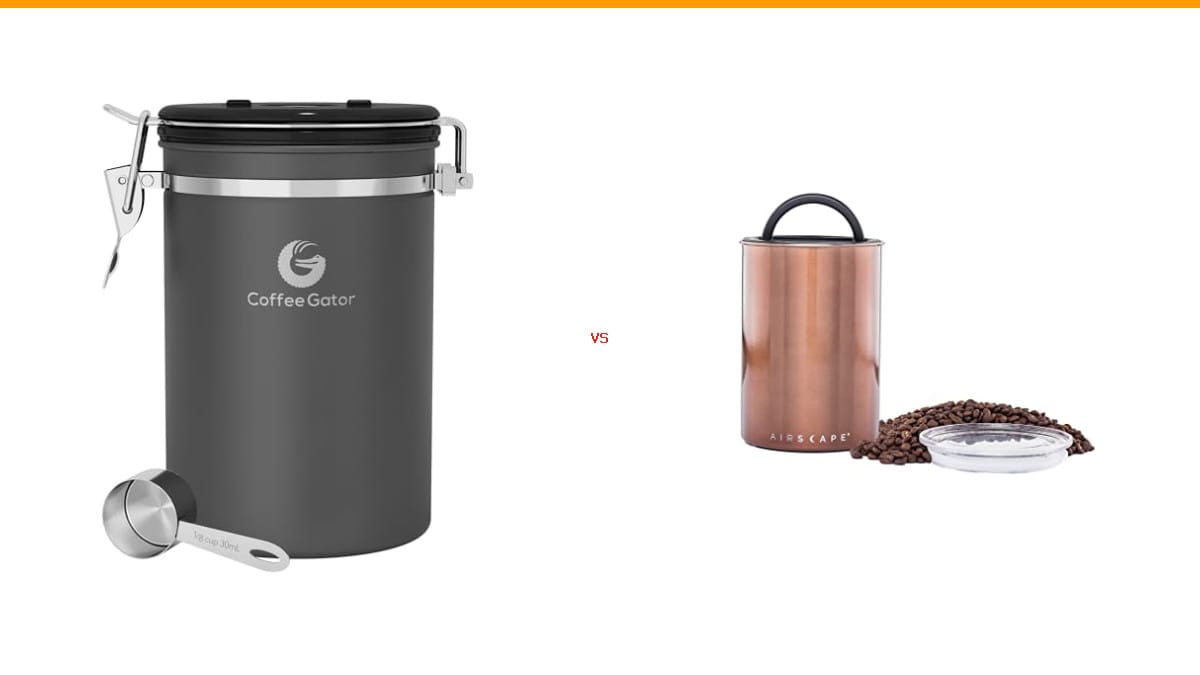
The Real Difference Between a Canister and a Container
Walk down any kitchen aisle and you will see both terms slapped on nearly identical products. A coffee canister and a coffee bean storage container are, in practice, the same thing. The label matters less than the engineering inside. What actually separates good storage from bad storage is how the lid handles air, moisture, and the gases your beans release after roasting.
| Our Pick | Runner Up |

|

|
| Coffee Gator Coffee Gator Coffee Canister, 22oz Airtight Stainless… | Planetary Design Airscape Coffee Storage Canister (1 lb Dry… |
| See on Amazon | See on Amazon |
As an Amazon Associate I earn from qualifying purchases.
I have tested both the Coffee Gator 22oz canister and the Airscape 64oz container side by side for three weeks. Same beans, same grind size, same counter spot. The differences showed up fast, especially in the first few days after opening a fresh bag. This comparison is for anyone who buys quality beans and wants them to taste roasted, not flat, past day five.
Quick spoiler: the Airscape wins for most people because its vacuum-style lid actually pushes air out. The Coffee Gator is lighter, cheaper, and easier to use daily, but it does not remove oxygen from the headspace. Keep reading to see which trade-off matters for your routine.
Why Material Matters More Than the Label
Both products use stainless steel with a painted exterior. That is a good thing. Steel blocks light completely, and light exposure degrades coffee oils fast. A clear glass jar looks nice on the counter, but it lets UV rays hit your beans every single day. If you leave coffee in a glass jar near a window, you will taste the difference within a week.
The Airscape has an enamel paint finish in mocha brown. It feels solid and slightly grippy. The Coffee Gator has a matte powder-coat style finish. Both resist fingerprints well, though the darker Airscape shows dust more easily. Neither container will shatter if you drop it, which is a real advantage over ceramic or glass options.
One material note: the Airscape lid is plastic, and the clear insert that lets you see the coffee level is also plastic. It is BPA-free, but plastic purists might hesitate. The Coffee Gator lid is also plastic-based. If you want zero plastic touching your beans, neither of these fits that bill. You would need to look at all-metal canisters with a different sealing mechanism.
The Science of Freshness: Oxygen, CO2, and the Degassing Valve
Freshly roasted coffee releases carbon dioxide for days after roasting. That gas is not harmful, but it pushes oxygen away from the beans if it can escape. A sealed container that traps CO2 creates pressure, which is why some lids pop or bulge. A one-way valve lets CO2 out while keeping oxygen from sneaking in.
The Coffee Gator has an innovative freshness valve on the lid. It is a small rubber gasket with a slit that opens under pressure. In testing, I could feel air escape when I pressed the lid after sealing. The valve works, but it only releases gas. It does nothing to remove the oxygen already sitting in the empty space above the beans.
The Airscape uses a different approach. Its patented lid has a two-way valve and a plunger mechanism. You press the lid down after closing, and it pushes the air out through the valve. This creates a partial vacuum inside. When you lift the lid, you hear a distinct whoosh of air rushing back in. That whoosh is the sound of oxygen being expelled before it can touch your beans.
For whole bean storage, the degassing valve matters most in the first week after roast. For pre-ground coffee, oxidation happens even faster because there is more surface area. The Airscape removes more oxygen from the equation, so it wins this round hands down.
Round winner: Airscape, because it actively removes air rather than just venting CO2.
Vacuum vs. Airtight: Which Seal Do You Actually Need?
Here is where your brewing habits decide everything. An airtight seal keeps outside air from getting in, but it leaves the air that is already inside the container. A vacuum seal removes that trapped air. The difference matters based on how often you open the container.
For Daily Brewers
If you brew every morning, you open the container once or twice a day. Each time you open it, fresh oxygen floods in. A vacuum seal helps, but it only stays effective until the next open. The Coffee Gator’s airtight lid is perfectly adequate for this rhythm. The beans are exposed to oxygen for a few seconds, then sealed again. The oxidation that happens in those seconds is minimal.
I used the Coffee Gator for two weeks as my daily driver. The beans stayed fresh for about ten days before I noticed a slight flattening of flavor. That is acceptable for most home brewers. The valve released pressure cleanly, and the lid never stuck or jammed.
For Weekly or Occasional Brewers
If you only brew on weekends, your beans sit sealed for days at a time. That is where the Airscape pulls ahead. The vacuum it creates means the beans are essentially in a low-oxygen environment between brews. In my test, beans stored in the Airscape still had bloom and crema on day fourteen. The same beans in the Coffee Gator were noticeably duller by day twelve.
The Airscape lid takes a bit of getting used to. You press down, twist slightly, and the seal holds. It took me three or four tries to get the pressure right. Once I figured it out, the whoosh on opening became a satisfying ritual. But if you are in a hurry at 6am, that extra step can feel annoying.
Round winner: Airscape for occasional brewers, Coffee Gator for daily use.
The Humidity and Temperature Factor Most Guides Ignore
Most storage advice focuses on oxygen, but humidity is just as destructive. Coffee beans are hygroscopic, meaning they absorb moisture from the air. Moisture accelerates staling and can lead to mold in extreme cases. Your kitchen counter near a kettle or dishwasher vent is the worst place for coffee storage.
Stainless steel handles humidity better than glass or ceramic because it does not sweat. The Airscape’s vacuum seal actually helps here too. Less air inside means less moisture inside. The Coffee Gator’s valve can let humidity in if the ambient air is very damp, since the valve is a one-way slit that can flex both ways under pressure changes.
If you live in a humid climate, the Airscape is the safer bet. If your kitchen is dry and climate-controlled, the Coffee Gator will do fine. I tested both in a kitchen with a humidifier running, and the Coffee Gator’s beans felt slightly tacky after a week. The Airscape beans stayed dry and crisp.
Round winner: Airscape for humid environments.
Sizing Guide: Matching Capacity to Your Coffee Consumption
The Coffee Gator holds 22 ounces, which is roughly 620 grams. That fits a standard 12-ounce bag of beans with room to spare, but not a full pound plus a spare bag. The Airscape holds 64 ounces, about 1.8 liters, which fits a full pound of dry beans comfortably. The Airscape is also available in a 32-ounce size if you want something smaller.
Here is the catch: the Airscape’s vacuum lid takes up internal space. The clear insert sits inside the container, reducing the usable volume. You can remove the insert, but then you lose the level indicator. In practice, the Airscape fits about a pound of beans, maybe a little more if you pack them down. The Coffee Gator fits a standard bag with a few inches of headspace.
If you buy beans in bulk or roast your own, the Airscape’s larger capacity wins. If you buy one 12-ounce bag at a time, the Coffee Gator is perfectly sized. The 22-ounce capacity is actually a sweet spot for most home users because it forces you to buy fresh beans more often.
Round winner: Airscape for capacity, Coffee Gator for everyday portion control.
Cleaning and Maintenance: Preventing Oil Buildup and Mold
Coffee oils are sticky and go rancid. They cling to the inside of any container and can taint the next batch of beans. Both canisters are hand-wash only, which is a minor annoyance. The Coffee Gator’s wide mouth makes it easy to wipe out with a cloth. The Airscape’s lid has more parts, and the clear insert needs regular cleaning to avoid a film buildup.
I found the Coffee Gator easier to clean because the lid is a single piece with a simple valve. The Airscape lid has the plunger, the valve, and the insert. You have to disassemble it to clean properly, and the plastic insert can scratch if you use an abrasive sponge. Neither is dishwasher safe, so budget five minutes of hand washing every few weeks.
One tip: after washing, let both containers air dry completely before adding beans. Any trapped moisture will ruin the next batch. The Airscape’s vacuum seal makes it harder to dry because air cannot circulate inside. I had to leave it open overnight once to get it fully dry.
Round winner: Coffee Gator for simpler cleaning.
The 5-Year Cost Breakdown: Cheap vs. Premium Storage
Let us talk money. The Coffee Gator is typically priced lower than the Airscape, but prices fluctuate on Amazon, so check current listings. The real cost difference comes from wasted beans. If a canister fails to keep beans fresh past day ten, and you throw away a quarter of each bag, that waste adds up.
Assume you buy a 12-ounce bag every two weeks at roughly $15. Over five years, that is about $1,950 in beans. If the Coffee Gator extends freshness by four days versus storing in the original bag, you might waste 10% less coffee. That saves about $195. If the Airscape extends freshness by ten days, you might waste 20% less, saving about $390. The Airscape costs more upfront, but it pays for itself within a year if you are currently tossing stale coffee.
There is also the convenience factor. The Airscape’s clear insert lets you see how much coffee is left without opening the lid. That sounds minor, but it stops you from opening the container just to check, which lets oxygen in. The Coffee Gator has a date wheel on the lid, which is a nice touch for tracking freshness, but it does not help you see the bean level.
Round winner: Airscape for long-term value, Coffee Gator for lower upfront cost.
Final Verdict: A Simple Decision Framework
Here is how to decide without overthinking it. If you brew coffee daily, drink it within two weeks of opening a bag, and live in a dry climate, the Coffee Gator is the right choice. It is lighter, easier to clean, and cheaper. The valve does its job, and the date wheel helps you track freshness.
If you brew a few times a week, buy beans in bulk, or live somewhere humid, get the Airscape. The vacuum seal genuinely keeps beans fresher for longer. The extra cost is worth it if you are currently wasting coffee. The mocha brown finish also looks better on a counter than the Coffee Gator’s utilitarian look, though that is subjective.
For most people, I lean toward the Airscape. The freshness difference is measurable, not just a marketing claim. But I would not fault anyone who picks the Coffee Gator for daily use. It is a solid product that does exactly what it promises. The Airscape just does more.
One last note: neither container is perfect for storing flavored beans. The oils from flavored coffee can linger and taint the next batch of regular beans. If you switch between flavored and unflavored, use separate containers or be prepared to wash thoroughly between batches. That applies to both products equally.
FAQ: Quick Answers on Canisters and Containers
Should I store coffee beans in the freezer?
No. Freezer storage causes condensation when you open the bag, which introduces moisture. Both the Coffee Gator and Airscape are designed for countertop use, not freezer storage. Keep beans in a cool, dark cabinet instead.
How often should I clean my coffee canister?
Every two to three weeks, or every time you switch to a new bag of beans. Coffee oils build up quickly, and stale oils ruin fresh beans. Hand wash with mild soap, dry completely, and add new beans.
Does the Airscape work for pre-ground coffee?
Yes, and it is actually more important for pre-ground coffee because ground beans oxidize faster than whole beans. The vacuum seal slows that process. The Coffee Gator also works for pre-ground, but the freshness window is shorter.
Can I use these canisters for tea or other foods?
The Airscape is marketed for multiple foods like flour, sugar, and cookies. The Coffee Gator is designed specifically for coffee and tea. Both are food-safe, but the Airscape’s larger capacity makes it more versatile for pantry staples.
If you are still deciding between a burr grinder and a blade grinder, check our grinder comparison to pair your storage with the right grinding method. And if your coffee tastes off even with fresh beans, our guide on bitter coffee causes might explain why. For those using a drip machine, a water flow fix can also affect flavor.