If you single-dose your espresso grinder, you already know the drill: you weigh beans, drop them in, and then watch in mild annoyance as grounds spray everywhere, cling to the chute, and miss the portafilter entirely. A dosing cup and a dosing funnel both claim to fix this, but they solve different parts of the problem. After testing the Normcore 58mm Dosing Cup alongside a standard dosing funnel on my home setup, I can tell you this: you probably need both, but if you can only buy one right now, the choice depends entirely on where your mess happens.

Normcore
Normcore 58mm Dosing Cup - Espresso Coffee…
- WIDE MOUTH - The mouth is a perfect match for most portafilters and grinders. and makes for easy transfer of grounds.
- SINGLE DOSING PRECISION – Much faster for weighing individual doses, and helps distribute grounds in the portafilter more evenly,…
- PREMIUM MATERIALS – Made of food-grade 304 stainless steel, to be used daily, for every shot, and last a lifetime.
As an Amazon Associate I earn from qualifying purchases.
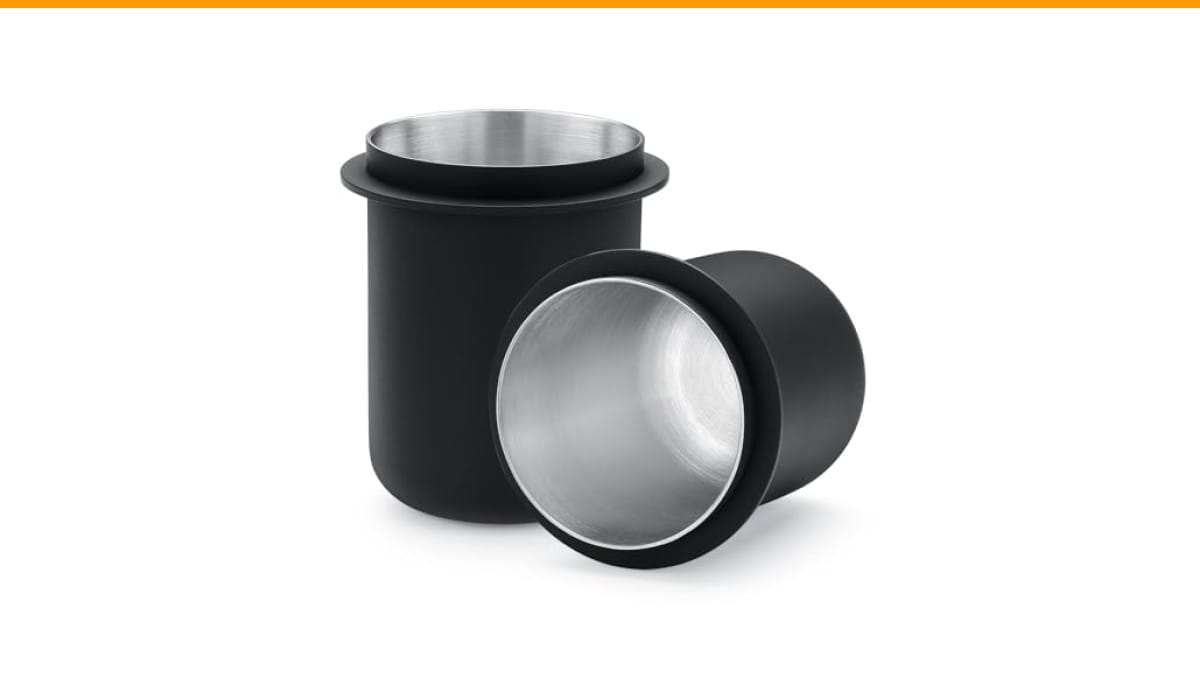
The Normcore cup is a tall, non-stick stainless steel vessel that catches grounds straight from your grinder’s chute. The funnel sits on top of your portafilter and widens the opening so grounds don’t spill over the rim. They sound similar, but they work at opposite ends of the workflow. One catches, the other guides. Most people buy one, hit a remaining problem, and then buy the other a month later. I’d rather you skip that cycle.
Let’s break down what each tool actually does, where it falls short, and how to build a clean, fast puck prep routine without wasting money on gear you don’t need.
The Real Difference: Dosing Cup vs. Dosing Funnel
A dosing cup is a catch container. You hold it under the grinder chute, let the grounds fall in, and then transfer them to the portafilter. The Normcore version is made from 304 stainless steel with a non-stick coating, so grounds don’t cling to the walls. It’s tall, which means you can fit it under most grinder chutes without bending the portafilter at an awkward angle.
A dosing funnel is a guide. It sits on top of the portafilter basket and flares outward, giving you a wider target to aim at. You grind directly into the basket through the funnel, then remove it before tamping. The funnel’s job is to keep grounds inside the basket, not to catch them from the grinder.
Here’s the practical difference: if your grinder spits grounds everywhere, you need a cup. If your problem is overfilling the basket and spilling when you transfer, you need a funnel. Most home grinders have some retention and static cling, so the cup solves the mess at the source. But once you pour from the cup into the basket, you’re back to aiming at a 58mm hole — and that’s where the funnel earns its keep.
What a Dosing Cup Does Best (and Its Limits)
The Normcore dosing cup shines in one specific scenario: single dosing with a grinder that has a vertical chute. You weigh your beans, grind them into the cup, and then weigh the cup again to check for retention. That second weigh is huge. If your grinder holds back 0.3 grams, you’ll see it immediately and can adjust your dose.
The non-stick coating is genuinely useful, not a marketing gimmick. Oily beans leave residue on bare metal, and that residue builds up over time and starts flaking into your next dose. The coating on this cup minimizes that. I also like that it’s dishwasher safe, because cleaning a narrow cup by hand is fiddly work.
But the cup has a limit: it doesn’t help you get grounds into the portafilter. You still have to pour, and pouring from a tall cylinder into a 58mm basket without spilling takes a steady hand. The wide mouth helps — the opening matches most portafilters and grinders, per the specs — but it’s not a funnel. You’ll still get a few stray grounds on the counter unless you’re careful.
Another thing: the tall version is tall. That’s great for clearance under a grinder chute, but it means the cup takes up more space on your counter and doesn’t fit under all machine heads. Check your clearance before you buy.
What a Dosing Funnel Does Best (and Its Limits)
A dosing funnel solves the transfer problem. You place it on the portafilter, grind directly into the basket, and the flared walls catch every stray ground. No more sweeping coffee off the counter after every shot. For bottomless portafilters, a funnel is non-negotiable — you can’t afford a messy basket when you’re trying to diagnose channeling.
Funnels also help with distribution. With a funnel in place, you can give the portafilter a few taps or swirls to level the bed before tamping, without losing grounds over the rim. That’s a real improvement to puck prep, especially if you don’t use a WDT tool.
The limit? A funnel does nothing about grinder retention. If your grinder holds back grounds, they stay in the chute and end up in tomorrow’s shot, not in your basket. You also can’t weigh your dose directly into the funnel — you’d have to weigh the portafilter, which is awkward on most scales.
And here’s the trap: some people try to tamp through the funnel. Don’t. The funnel walls get in the way, you can’t get a level tamp, and you’ll compress grounds unevenly. That leads to channeling and sour shots. Remove the funnel before tamping, every time.
The Winner? Why You Need Both for a Clean Workflow
I tested the Normcore cup with a funnel from another brand, and the combination is genuinely better than either tool alone. Here’s why: the cup handles the grinder side, the funnel handles the portafilter side, and together they eliminate almost every mess point in the workflow.
For the price of a bag of specialty coffee, you can get both. The Normcore cup is built to last — 304 stainless steel, non-stick coating, dishwasher safe — so it’s not a disposable gadget. A basic funnel costs even less. If you’re already spending money on a WDT tool and a leveler, these two are the missing pieces.
The “Stacked” Method: Grind into Cup, Transfer with Funnel
Here’s the routine I’ve settled on after testing:
- Weigh beans into the Normcore cup.
- Grind into the cup, holding it under the chute.
- Weigh the cup again to check retention.
- Place the funnel on the portafilter.
- Pour the grounds from the cup into the funnel.
- Tap to level, remove the funnel, tamp.
This sequence takes about 15 extra seconds compared to grinding straight into the basket, but it eliminates two mess points: the grinder chute and the basket rim. The wide mouth on the Normcore cup makes the pour easy, and the funnel catches any wobble. I’ve had zero grounds on my counter since I started doing this.
The one caveat: you need a scale that fits the cup. The Normcore cup is tall, so it won’t fit on some compact scales. Measure your setup before you commit.
How to Choose the Right Size and Fit
The Normcore cup is designed for 58mm portafilters, which covers most commercial-standard machines: Bezzera, Rocket, Sage, Breville, ECM, La Marzocco, E61 groups, Astoria, La Pavoni, Magister, VBM, La Spaziale. If you own one of those, the fit is a non-issue.
But if you have a machine with a smaller basket, like a 54mm Breville or a 51mm La Pavoni, this cup won’t work. The mouth is sized for 58mm, and pouring into a smaller basket without a funnel is a mess. Check your portafilter diameter before ordering.
Measuring Your Portafilter Diameter (51mm, 54mm, 58mm)
Don’t guess. Take a ruler and measure the inside of your basket, not the outside of the portafilter. The basket size is what matters. Most home machines fall into three camps: 51mm (older La Pavoni, some Gaggia), 54mm (Breville), and 58mm (everything else). If you’re not sure, look up your machine model online or check the basket itself for a stamped number.
If you have a 54mm machine, you’ll need a 54mm-specific cup and funnel. The Normcore cup won’t fit, and a 58mm funnel will sit loose and let grounds escape. This is the most common fit mistake I see in home espresso forums, and it’s an easy one to avoid.
Magnetic vs. Friction Fit: Which is Better for Your Grinder?
This is a question I get a lot, and the answer depends on your grinder. A magnetic funnel snaps onto the portafilter with magnets embedded in the rim. It’s secure, easy to remove with one hand, and won’t shift when you tap the basket. The downside is that magnets add bulk, and they can interfere with some grinders’ electronic sensors if you grind directly into the funnel.
A friction-fit funnel relies on the tension of the metal against the basket rim. It’s lighter and cheaper, but it can pop off if you tap too hard. For grinding directly into the basket, friction fit is usually fine. For the transfer method I described above, magnetic is better because you can lift the funnel off with one hand while holding the cup with the other.
The Normcore cup doesn’t have this issue because it’s not a funnel — it’s a catch cup. But if you’re pairing it with a funnel, think about which fit works with your grinder’s chute height and your portafilter’s rim shape. Some baskets have a tapered rim that makes friction fit unreliable.
Common Mistakes: Tamping Through the Funnel and Static Cling
I already mentioned tamping through the funnel, but it deserves more detail because it’s the most common puck prep error I see. When you tamp with a funnel in place, the funnel walls prevent the tamper from seating flat against the basket. You end up with an uneven tamp, which creates weak spots in the puck and leads to channeling. The result is a sour, under-extracted shot that tastes nothing like the beans you paid for. Remove the funnel, tamp, then reattach the funnel if you need to add more grounds.
Static cling is the other big issue. Dry beans, especially in winter, generate static that makes grounds stick to the grinder chute and the cup walls. The Normcore cup’s non-stick coating helps, but it’s not magic. The product data suggests spraying a little water on the beans before grinding — a common trick called RDT (Ross Droplet Technique). A single spritz from a spray bottle eliminates most static. I keep a small spray bottle next to my grinder and use it every time. It’s a tiny habit that saves a lot of cleaning.
One more mistake: not checking retention. If you grind into the cup and don’t weigh it afterward, you’re flying blind. A grinder that retains 0.5 grams will give you a weak shot every time. The cup makes this check trivial — weigh the cup before and after grinding, and you’ll know exactly what your grinder is doing.
Verdict: Which Should You Buy First?
If you single-dose and your grinder has a chute that sprays grounds, buy the Normcore 58mm Dosing Cup first. It fixes the mess at the source, lets you check retention, and the non-stick coating actually works. It’s a solid, well-built tool that will last.
If your grinder is clean and your problem is spilling when you pour into the portafilter, buy a funnel first. A basic 58mm funnel is cheap, and it will save you from sweeping the counter after every shot. For bottomless portafilter users, the funnel is the priority — you need that wide target to keep the basket clean.
But the honest answer is that these tools are complementary, not competing. The cup catches, the funnel guides, and together they make puck prep faster and cleaner than either one alone. If you can stretch your budget, get both. Check the current price on Amazon for the Normcore cup, and pick up a magnetic funnel in the same order. Your countertop — and your espresso — will thank you.
For more on building a solid home setup, read our guide on automatic vs semi-automatic machines. And if you’re troubleshooting shot quality, our piece on why espresso tastes burnt covers extraction issues that dosing tools can’t fix.
Frequently Asked Questions
Can I use a dosing cup with any grinder?
Mostly yes, but it depends on the chute height. The Normcore cup is tall, so it fits under most vertical chutes, but some grinders with a short clearance won’t accommodate it. Measure the space between the chute and your counter before buying. If it doesn’t fit, a shorter cup or a funnel-only workflow is the alternative.
Is the non-stick coating safe for daily use?
The cup is made from food-grade 304 stainless steel with a non-stick coating. It’s designed for daily espresso use and is dishwasher safe. The coating minimizes residue from oily beans, but it’s not indestructible — avoid metal utensils that could scratch it.
Do I need a dosing funnel if I have a dosing cup?
Not strictly, but you’ll probably want one. The cup solves the grinder mess, but you still have to pour grounds into the portafilter without spilling. A funnel makes that pour foolproof. If you’re on a tight budget, start with the cup and add a funnel later — but you’ll likely end up with both.
Will this cup fit my Breville portafilter?
Only if your Breville uses a 58mm basket. Many Breville machines (like the Barista Express and Pro) use 54mm baskets, which won’t work with this cup. Check your basket size first. If you have a 54mm machine, look for a cup and funnel sized for that diameter.
Can I use the cup for weighing beans before grinding?
Yes, and that’s one of its best uses. The cup is light enough to tare on a scale, so you can weigh beans directly into it, grind, and then weigh again to check retention. The wide mouth makes it easy to pour beans in and grounds out. Just make sure your scale can handle the height.
Ready to buy? Check the latest price on Amazon
Sponsored / affiliate links. As an Amazon Associate I earn from qualifying purchases. I may earn additional commission from eligible campaigns.Products related to this article
 Coffee Espresso Machine Handle Replacement Parts, Cafe Bracket Handle for Lidl Silvercrest CM4621 CM4218 KF5002 KF500S Barista (for 51mm Portafilter Basket - Not included)
 Supvision 4 Cup Thickened Moka Pot 304 Stainless Steel 200ml
 SOLUSTRE Electric USB Coffee Cup Warmer with Temperature Settings Portable Milk and Beverage Heating Coaster for Office Desk Small Lightweight Design Easy to Clean Surface Multi Functional