You’ve measured the coffee, ground it coarse, and set your timer. Then you pause, kettle in hand, wondering: should this water be cold, room temp, or something in between? Most cold brew guides skip past this detail, but water temperature shapes everything from acidity to mouthfeel. Get it right and you’ll have a smooth, sweet concentrate. Get it wrong and you’ll be nursing a bitter or sour batch for a week.
This guide breaks down the actual science of cold brew extraction, compares fridge vs. countertop steeping, and gives you a practical way to calibrate your specific maker without a thermometer. You’ll walk away knowing exactly how to adjust time and temperature for your taste, and how to fix a batch that went sideways.

QHH
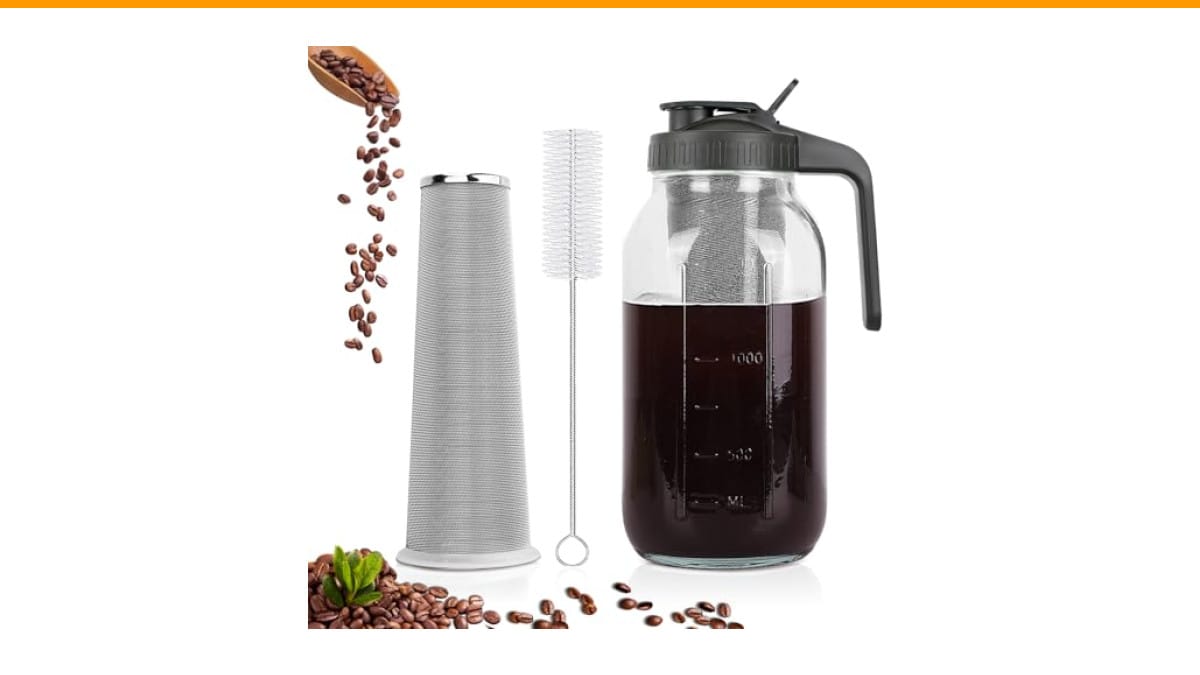
QHH Cold Brew Coffee Maker, 64 oz…
- 【⚠️ Important Usage Warning】: Do not pour boiling water directly into the container; the maximum safe operating temperature is 60°…
- 【What You Will Get】:1 Pcs / 64 oz mason jar pitcher with pour spout lid, 1 stainless stell filter, 1 cleaning brush. Large capacit…
- 【High Quality Material】: The glass pitcher with lid is crafted with heavy duty, food grade soda lime glass and premium plastic lid…
As an Amazon Associate I earn from qualifying purchases.
If you’re using a glass cold brew pitcher like the QHH Cold Brew Coffee Maker, remember it has a maximum safe temperature of 140°F — so no hot water at all. That’s fine, because cold brew doesn’t need heat. The 64-ounce mason jar with a stainless steel filter handles a full batch of concentrate, and the airtight lid keeps fridge odors out during the long steep.
Why Cold Brew Ignores the “Golden Rule” of Hot Coffee
Hot coffee brewing relies on heat to accelerate extraction. Water at 195-205°F pulls soluble compounds from coffee grounds in minutes. The heat also drives off volatile aromatics and breaks down acids that taste harsh when hot. That’s why a hot brew that sits too long turns bitter.
Cold brew flips that logic. You’re using water anywhere from 35°F to 72°F, which extracts slowly and selectively. The low temperature means you’re pulling out the sweeter, fruitier molecules first — the ones that taste like chocolate, caramel, and berries. The bitter, astringent compounds that need heat to dissolve stay behind. That’s why cold brew is naturally less acidic and smoother, even with a long steep.
So the “golden rule” of hot coffee — exact temperature window, short contact time — simply doesn’t apply. Instead, you control extraction with time. Temperature still matters, but it’s a dial you can turn within a forgiving range. Think of it as immersion brewing where patience replaces heat.
This is the core trade-off: hot coffee is time-limited, cold brew is temperature-limited. You can’t rush a cold brew with hotter water, but you can adjust the steep to compensate for a cooler fridge or a warm kitchen.
The Ideal Temperature Range for Cold Brew (And Why It’s a Range)
The best water temperature for cold brew coffee maker falls between 35°F and 72°F. That’s the full range from fridge-cold to room temperature. Anything above 80°F starts to edge into “cold brew” territory that’s actually closer to iced coffee, and you’ll get faster extraction that can turn bitter if you’re not careful.
Within that range, you’ll find two common camps:
- Room temperature (68-72°F): Faster extraction, more pronounced sweetness, and a fuller body. This is the classic countertop method.
- Refrigerator (35-40°F): Slower extraction, brighter acidity, and a cleaner, lighter cup. This is the “set it and forget it” approach.
Neither is objectively better. The right choice depends on your schedule and taste preferences. The range exists because cold brew is forgiving — you have a 37°F window to work with, unlike the 10°F window for hot coffee.
One caveat: if your tap water is warm in summer (say, 80°F+), that’s too hot. You’ll get over-extraction and a harsh, vegetal taste. Use filtered water that’s been sitting out, or add a few ice cubes to bring it down.
Room Temperature vs. Refrigerator: The Great Steeping Debate
I’ve tested both methods side by side with the same beans, same grind, same ratio. The difference is real, but it’s not night and day. Here’s what I found.
The Case for Room Temperature (68-72°F)
Steeping on the counter at room temperature is the traditional cold brew method. The warmer water speeds up extraction, so you can steep for 12-14 hours instead of 18-24. The result is a concentrate with a rounder mouthfeel and more pronounced chocolate and nut notes. The acidity is still low, but it’s not as flat as fridge-brewed coffee.
The downside? You have to remember to strain it on time. Leave it an extra 4-6 hours and you risk over-extraction — that’s when the bitter compounds finally dissolve. Also, if your kitchen runs warm (above 75°F), you’re flirting with the edge of the safe range.
The Case for Refrigerator Brewing (35-40°F)
Fridge brewing is more forgiving. The cold slows extraction dramatically, so a 24-hour steep is totally fine, and even 30 hours won’t ruin the batch in most cases. The flavor profile shifts toward brighter, fruitier notes with a lighter body. Think of it as a cleaner, more tea-like cup.
The trade-off is time. You need to plan a day ahead. Also, fridge temperatures can vary — if your fridge is packed or set colder, extraction slows further. I’ve had batches that needed 28 hours to reach the same strength as a 20-hour countertop steep.
My honest take: if you’re new to cold brew, start with room temperature. It’s faster, and the results are more forgiving of grind size inconsistencies. Once you’re comfortable, try a fridge batch and compare.
How Temperature Affects Acidity, Sweetness, and Mouthfeel
Temperature doesn’t just change speed — it changes which compounds end up in your cup.
- Acidity: Cold water extracts less chlorogenic acid, which is why cold brew is smoother. But fridge-cold water extracts even less than room temp, so you get a slightly brighter, more tangy cup. Room temp pulls a bit more acid, rounding out the flavor.
- Sweetness: The sugars and carbohydrates in coffee dissolve readily in cold water. Room temperature water extracts them faster, so you get a sweeter, more caramel-forward concentrate. Fridge brewing produces a more neutral sweetness, which some people find cleaner.
- Mouthfeel: Room temperature brewing creates a thicker, almost syrupy body because more oils and fine particles end up in the final brew. Fridge brewing yields a lighter, more tea-like texture. If you like your cold brew over ice with milk, the thicker body holds up better.
There’s also the sludge factor. If your cold brew comes out cloudy with a gritty layer at the bottom, it’s often a sign of over-extraction from too-warm water or too-long steeping. The fine coffee particles get forced through the filter. Dropping the temperature by 10°F or shortening the steep will usually fix it.
Adjusting Steeping Time to Match Your Water Temp
Here’s the practical part. You don’t need a thermometer to get great cold brew — you just need to adjust time based on how cold your water is.
Start with a baseline: 1 part coffee to 4 parts water (by weight) for a concentrate. Use a coarse grind, like sea salt. Then adjust steep time based on temperature:
| Water Temperature | Steep Time (Concentrate) | Flavor Profile | Best For |
|---|---|---|---|
| 35-40°F (fridge) | 20-28 hours | Bright, clean, light body | Those who want a milder cup |
| 50-60°F (cool room) | 16-20 hours | Balanced, medium body | Most people |
| 68-72°F (room temp) | 12-16 hours | Sweet, full body, low acid | Those who want strong concentrate |
| 75°F+ (warm kitchen) | 8-12 hours | Risk of over-extraction | Only if you watch it closely |
These are starting points, not gospel. Your specific coffee beans, roast level, and grind size will shift things. A dark roast extracts faster than a light roast, so cut the steep time by an hour or two. A finer grind (still coarse by hot coffee standards) will also speed extraction.
The best approach: taste your brew at the low end of the time range. If it’s weak and sour, steep another 2 hours and taste again. Keep going until it hits the sweet spot.
How to Brew Cold Brew Without a Thermometer (Visual Cues)
You don’t need a thermometer to nail the best water temperature for cold brew coffee maker. Your senses are enough.
- Check the water feel: Fill your pitcher with filtered water. If it feels cold to the touch (like tap water in winter), that’s roughly 50-60°F. If it’s noticeably cooler than that, it’s fridge-cold. If it’s lukewarm, it’s too hot.
- Watch the color: After 4-6 hours, the water should start turning light brown. At room temp, you’ll see this by hour 3-4. In the fridge, it’ll take 6-8 hours. If the water stays clear after 8 hours, your water is too cold — move it to the counter.
- Feel the grounds: After steeping, press a spoon against the grounds. If they feel slimy or have a weird texture, you’ve over-extracted. If they’re still firm and dry-ish, you’ve under-extracted.
- Do the taste test: At the end of your steep, dip a spoon into the concentrate. It should taste strong but not bitter. If it’s sour, it needs more time. If it’s harsh and astringent, it’s gone too far.
This method works for any brewing vessel — French press, Toddy, or a mason jar like the QHH pitcher. The visual cues are universal.
Troubleshooting: Fixing Sour and Bitter Cold Brew
Even with the right temperature, things go wrong. Here’s how to diagnose and fix the two most common problems.
Sour, weak, or salty taste (under-extraction): Your water was too cold, your steep was too short, or your grind was too coarse. Fix it by steeping longer (add 2-4 hours), moving the brew to a warmer spot, or grinding slightly finer. Don’t change all three at once — adjust one variable and taste again.
Bitter, astringent, or “burnt” taste (over-extraction): Your water was too warm, your steep was too long, or your grind was too fine. Fix it by diluting the concentrate with water, steeping shorter next time, or moving the brew to the fridge. If it’s already bitter, you can’t undo it — but you can mask it with milk or a sweetener, or use it as a base for a cold brew cocktail.
One piece of advice: always taste your cold brew before diluting it. Concentrate is meant to be strong. If it tastes bitter at concentrate strength, dilute it 1:1 with water and taste again — sometimes the bitterness fades with dilution.
Cold Brew vs. Japanese Iced Coffee: A Temperature Contrast
Japanese iced coffee is the opposite of cold brew. You brew hot coffee directly onto ice, chilling it instantly. The result is a brighter, more aromatic cup that preserves the delicate floral notes that cold brew loses.
Cold brew, on the other hand, is smoother and less acidic, but it can taste flat if you use low-quality beans. Japanese iced coffee keeps the complexity of hot brewing, but it’s more work and requires a thermometer to get the hot water right.
Which is better? It depends. If you want a concentrate that lasts a week in the fridge, cold brew wins. If you want a single cup with maximum flavor, Japanese iced coffee is worth the effort. I keep both methods in rotation — cold brew for busy mornings, Japanese iced coffee for weekend treats.
Final Checklist for Perfect Cold Brew Extraction
- Use filtered water — tap water with chlorine can add off-flavors.
- Grind coarse, like sea salt. Too fine leads to sludge.
- Stick to a 1:4 or 1:5 coffee-to-water ratio for concentrate.
- Choose your temperature: room temp for faster, sweeter results; fridge for slower, cleaner ones.
- Adjust steep time based on temperature — see the table above.
- Taste at the low end of the time range, then extend in 2-hour increments.
- Strain through a fine filter (the 160-micron stainless steel filter in the QHH pitcher works well) to avoid grit.
- Store concentrate in the fridge for up to 2 weeks, but it’s best within the first 5 days.
One more thing: if your cold brew is always cloudy, try a paper filter after the metal filter. It catches the ultra-fine particles that cause sludge.
Frequently Asked Questions
What is the ideal water temperature for cold brew coffee maker?
The ideal range is 35-72°F. Room temperature (68-72°F) is the most common and produces a balanced, sweet concentrate. Fridge temperature (35-40°F) is also fine but requires a longer steep. Avoid anything above 75°F, which can cause over-extraction.
Can I use hot water to speed up cold brew?
No. Hot water (above 140°F) will ruin the flavor and can crack glass pitchers like the QHH. Stick to cold or room temperature water. If you’re in a hurry, use a finer grind and a shorter steep — but never hot water.
Does water temperature affect caffeine content?
Not significantly. Caffeine is highly soluble in cold water, so you’ll extract most of it regardless of temperature within the cold brew range. The difference is more about flavor compounds than caffeine.
How do I know if my cold brew is over-extracted?
It will taste bitter, astringent, or “burnt.” The color will be darker than usual, and you might see fine particles in the concentrate. If it tastes that way, dilute it or use it for cooking — next time, shorten the steep or use cooler water.
Can I brew cold brew in the refrigerator with a mason jar?
Yes, absolutely. The QHH 64 oz mason jar pitcher is designed for fridge storage. Just make sure the lid is sealed to prevent odor absorption. The stainless steel filter fits inside the jar, so you can steep and store in the same container.
For more coffee maker troubleshooting, check out our guide on Braun coffee maker won’t brew or how often to clean your coffee maker to keep your equipment in top shape.
Products related to this article
Sponsored / affiliate links. As an Amazon Associate I earn from qualifying purchases. I may earn additional commission from eligible campaigns.
 HomeBeyond Espresso Coffee Maker 12 Cups, Classic Stovetop Espresso Maker, 600ml / 20oz Coffeemaker for Gas & Ceramic Stovetops (Silver)
 Quick Heating Cup Warmer, Three Temperature Settings, Splashproof and Portable, for Coffee, Milk, Lightweight ABS Material
 SOLUSTRE Electric USB Coffee Cup Warmer with Temperature Settings Portable Milk and Beverage Heating Coaster for Office Desk Small Lightweight Design Easy to Clean Surface Multi Functional