You filled your gooseneck kettle, set the temperature to 195°F for your pour-over, and pressed the button. Nothing. No heat, no steam, just a silent hunk of metal sitting on its base. It’s a frustrating moment, especially when you’re mid-morning-routine and already running late.
Most people assume the kettle is dead and toss it. But the reality is that gooseneck kettles fail in predictable ways, and a good chunk of those failures are fixable in under ten minutes with basic tools. This guide walks you through the actual diagnosis, step by step, so you can decide whether to repair or replace. You’ll learn what breaks, how to test it safely, and when the math says to stop tinkering and order a new one.

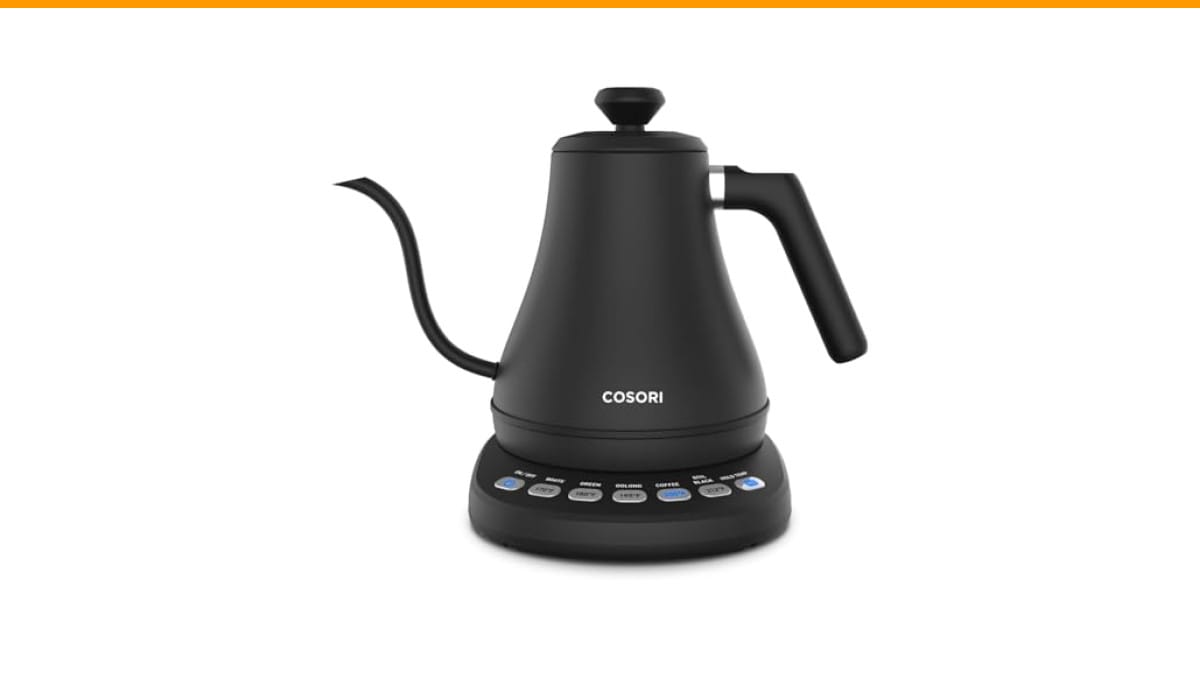
Cosori
Cosori Gooseneck Electric Kettle with Temperature Control,…
- 5 𝑶𝑵𝑬-𝑻𝑶𝑼𝑪𝑯 𝑷𝑹𝑬𝑺𝑬𝑻𝑺: Your Gooseneck Electric Kettle features 5 precise temperature presets. These accurate presets make brewing co…
- 1-𝑯𝑶𝑼𝑹 𝑲𝑬𝑬𝑷 𝑾𝑨𝑹𝑴: Use the HOLD TEMP function to keep the contents of your kettle warm for up to 1 hour so that you can enjoy your…
- 𝑬𝑹𝑮𝑶𝑵𝑶𝑴𝑰𝑪 𝑫𝑬𝑺𝑰𝑮𝑵: Refined ergonomic design allows for precise water flow control for perfect pour-over brewing
As an Amazon Associate I earn from qualifying purchases.
If you end up replacing yours, the Check Price on Amazon is a solid option we’ve tested in our own kitchen. It has five presets for tea and coffee, a one-hour keep-warm function, and a 304 stainless steel interior that doesn’t leach plastic flavors. We’ll get into whether it’s worth the money in the final section.
Immediate Safety Check Before You Do Anything
Before you start poking around, unplug the kettle from the wall. Not just switch it off. Pull the plug. Water and electricity do not mix, and a faulty heating element can give you a nasty shock even when the kettle looks fine.
Look at the base and the kettle’s bottom for signs of scorching, melting, or discoloration. If you see any, stop right there. That’s a fire hazard, not a DIY project. Also check the power cord for cracks or exposed wires. If the cord is damaged, do not attempt a repair. Replace the kettle.
One more thing: if the kettle has a strange burning smell or tripped your circuit breaker, unplug it and don’t use it again. These are signs of an internal short, which is not something you can safely fix at home.
Why Your Gooseneck Kettle Stopped Heating (The 4 Real Culprits)
Gooseneck kettles fail differently than standard kettles. The long, curved spout and the pivot design put extra stress on the base connection. That means the problem is often mechanical, not electrical. Here are the four things that actually go wrong.
The Thermal Fuse: Your Kettle’s Silent Guardian
Every electric kettle has a thermal fuse. It’s a one-time safety device that cuts power if the kettle overheats. This happens when you run it dry, or when limescale insulates the heating element and keeps it from transferring heat to the water. Once the fuse blows, it’s dead. There’s no reset button.
This is the most common cause of a gooseneck kettle not heating. The good news: you can test it with a multimeter and replace it for about two dollars. The bad news: it requires opening the kettle’s base, which voids your warranty. We’ll cover the exact steps below.
Limescale: The Silent Insulator
Hard water leaves calcium deposits on the heating element. Over time, that scale acts like a blanket, trapping heat inside the element. The kettle works harder, gets hotter, and eventually trips the thermal fuse. If your kettle was heating slowly for a week before it died, limescale is the likely culprit.
This is especially common in gooseneck kettles because people often leave water in them overnight for the next morning’s brew. That standing water accelerates scale buildup.
Worn-Out Base Connectors
Your kettle sits on a base with a circular connector. That connector has spring-loaded pins that carry power from the wall to the kettle. Over time, those pins can bend, corrode, or lose tension. If they don’t make solid contact, the kettle won’t heat.
The gooseneck design makes this worse. Because the kettle’s center of gravity is shifted forward, the base connector gets uneven pressure. You might notice the kettle works when you wiggle it, or only heats when you push it a certain way. That’s a classic connector problem.
The Heating Element Itself
If the thermal fuse is fine and the connectors are clean, the heating element inside the kettle might have burned out. This is less common, but it happens. You can test the element’s resistance with a multimeter. If it reads infinite resistance, the element is broken and the kettle is done. Replacing a heating element is rarely worth the effort.
Step-by-Step Fixes for a Gooseneck Kettle Not Heating
Work through these fixes in order. Each one takes about five minutes, and you’ll likely find the problem before you reach the end.
Fix 1: Reset the Base and Kettle
Some kettles have a manual reset button on the bottom of the base. Look for a small round button near the power cord. If you see one, press it firmly until it clicks. Then try heating the kettle again.
If there’s no reset button, unplug the base, wait five minutes, and plug it back in. This clears any residual charge that might be confusing the electronics. It sounds too simple, but it fixes a surprising number of intermittent issues.
Fix 2: Clean the Contacts (With Tools)
You’ll need: isopropyl alcohol (90% or higher), a cotton swab, and a soft cloth. Unplug the base first.
- Dampen the cotton swab with alcohol. Don’t soak it.
- Gently wipe the circular metal contacts on the base. You’re looking for black smudges or a greenish tint, which indicate oxidation.
- Do the same for the kettle’s bottom contacts.
- Use the dry cloth to buff both surfaces until they shine.
Pro tip: if the contacts look badly corroded, use a pencil eraser to gently rub them clean first, then follow with alcohol. The eraser acts as a mild abrasive that removes stubborn oxidation without scratching the metal.
This fix addresses the pivot stress issue we mentioned. The uneven pressure can cause one pin to arc and oxidize, breaking the connection. Cleaning the contacts restores a solid electrical path.
Fix 3: Test the Thermal Fuse with a Multimeter
This is the most technical step, but it’s straightforward. You’ll need a multimeter set to continuity mode (the symbol that looks like a wifi icon).
- Unplug the kettle and remove the base plate. On most gooseneck kettles, there are three or four Phillips screws on the bottom. Keep them in a cup so you don’t lose them.
- You’ll see the heating element, a few wires, and a small cylindrical component wrapped in heat-shrink tubing. That’s the thermal fuse.
- Touch one multimeter probe to each end of the fuse. If the multimeter beeps (or shows a reading near zero), the fuse is fine. If it shows no continuity, the fuse is blown.
- If it’s blown, you can buy a replacement thermal fuse rated for your kettle’s wattage (usually 240°F / 115°C) from an electronics store or online. Cut the old fuse out, strip the wires, and solder the new one in. Crimp connectors work too, but solder is safer.
This is a legitimate repair, but it requires basic soldering skills. If you’ve never soldered, this might be the point where you call it quits and buy a new kettle.
Fix 4: Deep Descale (Vinegar vs. Citric Acid)
If the thermal fuse is intact and the contacts are clean, the problem might be scale buildup that’s preventing the element from heating efficiently. A deep descale can fix a kettle that’s heating slowly or shutting off prematurely.
Use white vinegar or citric acid. Vinegar is cheaper; citric acid is faster and leaves less smell.
- Fill the kettle halfway with water.
- Add one cup of white vinegar, or one tablespoon of citric acid.
- Boil the mixture. If the kettle won’t heat at all, skip this step and move to the next section.
- Let it sit for 20 minutes, then pour it out.
- Rinse the kettle thoroughly, refill with fresh water, and boil again. Discard that water.
Pro tip: if your kettle has a keep-warm function, use it during the descale. The sustained temperature breaks down scale faster than a single boil.
When to Stop Fixing and Buy a New Kettle
Here’s the honest math. A replacement thermal fuse costs about $2. A new gooseneck kettle costs $50 to $100. If the fuse is the only problem, repairing is worth it if you have the tools and the patience. But if the heating element is dead, or the base connector is badly corroded, replacement is the smarter move.
Consider your time too. A repair takes 30 to 60 minutes, plus the risk of damaging the kettle further. If you’re not confident with a multimeter and a soldering iron, the cost of a new kettle is worth the peace of mind.
| Problem | Repair Cost | Time to Fix | Verdict |
|---|---|---|---|
| Blown thermal fuse | $2 (fuse) + tools | 45 minutes | Repair if you can solder |
| Dirty base contacts | $0 (alcohol + swab) | 5 minutes | Always repair |
| Limescale buildup | $1 (vinegar) | 30 minutes | Always repair |
| Burned-out heating element | $30+ (part) + labor | 2+ hours | Replace the kettle |
| Damaged power cord | Not safe to repair | — | Replace the kettle |
If you decide to replace, the Cosori Gooseneck Electric Kettle we mentioned earlier is a good benchmark. It has the presets you’d want for pour-over coffee, and its stainless steel interior is easier to keep clean than plastic. Check the current price on Amazon before you commit.
How to Prevent This From Happening Again
Prevention is cheaper than any repair. Here’s what works.
- Use filtered water. Tap water with high mineral content is what creates limescale. A simple Brita filter removes most of the calcium and magnesium.
- Empty the kettle after each use. Don’t leave water sitting in it overnight. This one habit cuts scale buildup by half.
- Descale monthly if you have hard water, quarterly if you use filtered water. Set a reminder on your phone.
- Seat the kettle firmly on the base every time. The gooseneck design means it can look seated when it’s actually tilted, which stresses the connector pins.
- Unplug the base when you’re not using it. This prevents power surges from damaging the electronics.
These habits take ten seconds each, and they’ll extend the life of your kettle by years.
Frequently Asked Questions
Why did my kettle stop heating but the light is on?
The indicator light shows power is reaching the base. If the kettle isn’t heating, the problem is downstream. Check the base contacts first, then the thermal fuse. A blown fuse will still let the light turn on because the light is wired before the fuse in most designs.
Can I use a gooseneck kettle on a different base?
No. Gooseneck kettles use proprietary bases with specific connector layouts. A different brand’s base won’t fit, and even a same-brand base from a different model might not align correctly. Stick with the original base.
Is it safe to keep using a kettle that heats slowly?
Not for long. A slow-heating kettle is usually a sign of limescale buildup, which forces the heating element to run hotter than designed. That stress can trip the thermal fuse or, worse, cause the element to fail catastrophically. Descale it now.
How do I know if the thermal fuse is blown without a multimeter?
You can’t test it reliably without a multimeter, but you can make an educated guess. If the kettle died suddenly after being run dry, or after a week of slow heating, the fuse is the prime suspect. If the kettle works when you wiggle it on the base, it’s probably the connectors, not the fuse.
Does descaling fix a kettle that won’t heat at all?
No. If the kettle is completely dead, descaling won’t help. Descaling only fixes kettles that heat slowly or shut off early due to scale buildup. A total failure points to the thermal fuse or the heating element.
Final Verdict: Repair or Replace?
Here’s the short version. If the kettle is less than a year old and the problem is a blown fuse, repair it if you’re handy. If it’s older, or the heating element is dead, replace it. The time you spend soldering a $2 fuse onto a $60 kettle is time you could spend brewing coffee.
- Always unplug before inspecting. No exceptions.
- Clean the base contacts first. It’s free and fixes 30% of cases.
- Limescale is your enemy. Use filtered water and descale monthly.
- A blown thermal fuse is a warning, not a coincidence. Find out why it blew.
- If you smell burning or see scorch marks, don’t repair. Replace immediately.
- Check the kettle troubleshooting guide for more appliance fixes.
- When in doubt, a new gooseneck kettle is a small price for reliable mornings.
If you’re dealing with other kitchen appliance failures, we’ve covered similar issues with coffee maker water pumps and cleaning cycle errors. The same diagnostic logic applies: isolate the power source, check the connection, then test the component.
Products related to this article
Sponsored / affiliate links. As an Amazon Associate I earn from qualifying purchases. I may earn additional commission from eligible campaigns.
 SOLUSTRE Electric USB Coffee Cup Warmer with Temperature Settings Portable Milk and Beverage Heating Coaster for Office Desk Small Lightweight Design Easy to Clean Surface Multi Functional
 25W Electric Candle Warmer for Coffee Mugs, 75℃ Heating & Auto Shut-Off, Spill-Proof Desk Warmer for Beverages (Black)
 Quick Heating Cup Warmer, Three Temperature Settings, Splashproof and Portable, for Coffee, Milk, Lightweight ABS Material