You bought a nice insulated mug so your coffee stays hot for hours. Then, three weeks later, you take a sip and taste last Tuesday’s latte. The lid smells like old milk, and there’s a weird brown ring at the bottom that won’t budge. We’ve all been there.
Here’s the thing most people get wrong: insulated mugs are not indestructible. The vacuum seal that keeps your drink hot is delicate. Throw it in the dishwasher or soak it in boiling water, and you might permanently ruin it. This guide covers the exact steps to clean your insulated mug safely, remove stubborn stains, and keep the lid and straws fresh. You’ll walk away knowing how to handle daily washes, deep cleans, and the mistakes that kill mugs fast.

AONEZ
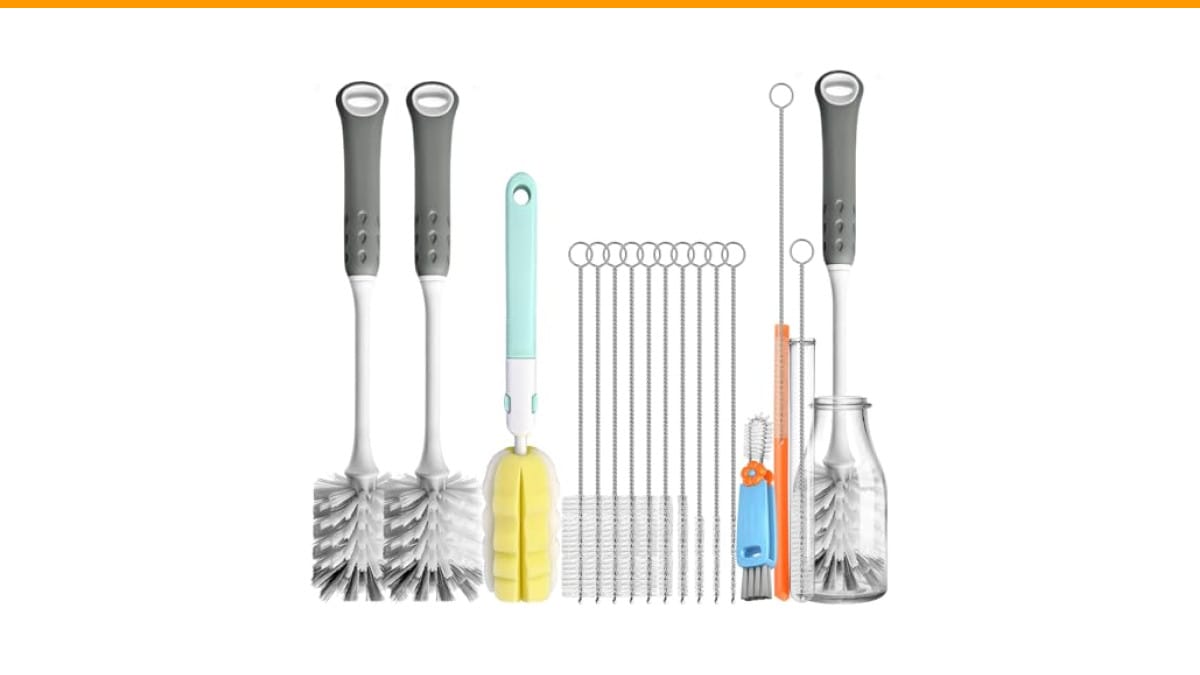
14 Pcs Bottle Brush Cleaner Set for…
- 14pcs bottle brush set includes:2×14" long handled bottle brushes, 1×sponge bottle brush, 1×3-in-1 multifunctional brush, and 10×s…
- 2×14" long handled bottle cleaning brush are made of high-quality nylon bristles, which can be used to remove stubborn stains from…
- Sponge bottle brush is made of soft material, which can easily and quickly clean some standard water bottles and glass cups.
As an Amazon Associate I earn from qualifying purchases.
Having the right tools makes a real difference. A set like the AONEZ Bottle Brush Cleaner Set covers the awkward parts most sponges miss: the narrow bottom corners, the rubber gasket inside the lid, and the inside of the straws. It’s a 14-piece kit with two long-handled brushes, a sponge brush, a 3-in-1 tool, and ten straw brushes of different thicknesses. It won’t fix a broken vacuum seal, but it will get your mug genuinely clean without scratching the interior.
Why Your Usual Dish Soap Routine Isn’t Enough
Most people rinse the mug, squirt soap in, swirl it, and call it done. That works for a glass you used for water. It doesn’t work for coffee, which leaves behind oils and tannins that cling to the walls. Over time, those residues build a film that traps bacteria and makes the mug smell stale even after a wash.
The other problem is the lid. The gasket and the grooves under it trap tiny particles of coffee grounds and milk. If you don’t disassemble the lid, you’re cleaning only the top layer. The bacteria living in those grooves is what causes that funky smell the next morning.
You also need to think about the interior coating. Many insulated mugs have a stainless steel or ceramic lining. Abrasive scrub pads and harsh bleach-based cleaners will scratch that surface. Scratches become hiding spots for residue and make the mug harder to clean every single time.
How to Clean a Insulated Coffee Mug: Step-by-Step
Here’s the routine I use on my own mugs. It takes about five minutes for a daily clean and fifteen minutes for a deep clean.
Daily Cleaning Routine
- Disassemble everything. Take off the lid, pop out the rubber gasket, and remove the sliding mechanism if your mug has one. Set all parts aside.
- Rinse with warm water immediately. Don’t let coffee sit for hours. A quick rinse right after you finish your drink prevents most staining.
- Wash the body with mild dish soap. Use a sponge or a soft bottle brush. Reach the bottom corners with a long-handled brush — that’s where the film builds up first.
- Scrub the lid and gasket separately. Use a small brush or the 3-in-1 tool from the AONEZ set to get into the grooves. Pay special attention to the underside of the gasket.
- Rinse everything thoroughly. Soap residue leaves a bitter taste. Rinse until the water runs clear and you don’t feel any slipperiness.
- Air dry completely. Put the parts on a drying rack with the lid upside down. Moisture trapped in the lid is the #1 cause of mold.
Deep Cleaning for Stains and Odors
Once a week, or whenever you notice a smell, do this:
- Mix a solution of 1 part white vinegar to 3 parts warm water. Fill the mug about halfway.
- Let it sit for 15-20 minutes. Don’t use boiling water — heat can damage the vacuum seal. Warm tap water is fine.
- Scrub with a soft brush. The vinegar loosens coffee oils and hard water deposits.
- For stubborn brown stains, make a paste of baking soda and water. Apply it to the stained areas and scrub gently. Baking soda is mildly abrasive but safe for stainless steel.
- Rinse thoroughly and air dry.
Pro tip: If your mug smells like old milk, soak the lid and gasket in the vinegar solution for 30 minutes. That kills the odor at the source instead of masking it.
Dishwasher vs. Hand Washing: What Actually Happens
I get it — the product description on many mugs says dishwasher safe. Some are. But the high heat and harsh detergents in a dishwasher break down the rubber gaskets and can compromise the vacuum seal over time. Hand washing is always safer. If you must use the dishwasher, put the mug on the top rack and skip the heated dry cycle. Even then, don’t do it every day.
| Cleaning Method | Vacuum Seal Safety | Lid & Gasket Wear | Stain Removal | Time Required |
|---|---|---|---|---|
| Hand wash with dish soap | Safe | Low wear if gentle | Good for daily use | 3-5 minutes |
| Dishwasher (top rack) | Risk of damage over time | High wear on rubber | Good for stains | 1-2 hours |
| Vinegar soak + scrub | Safe if water is warm, not boiling | Minimal wear | Excellent for buildup | 20-30 minutes |
| Baking soda paste | Safe | Minimal wear | Best for stubborn stains | 10-15 minutes |
| Bleach solution | Risky — can corrode metal | Can degrade rubber | Good, but harsh | 10 minutes |
Notice the pattern: the safest methods take a few extra minutes. That trade-off is worth it when a good insulated mug costs $25 to $40. Replacing one because you rushed the clean is a waste of money.
The Right Tools Make It Easier
You can clean a mug with a regular sponge, but you’ll miss spots. The bottom of a tall mug is unreachable with your fingers, and the lid grooves are too narrow for a cloth. A dedicated bottle brush set solves both problems. The AONEZ set I mentioned earlier has a 14-inch brush that reaches the bottom of even tall travel mugs. The straw brushes come in different diameters, so you can match the thickness of your straw or the narrow spout on a lid. The 3-in-1 tool is the one I use most: it has a corner brush for the rim and a pointed end for digging out the gasket groove.
If you’re also dealing with buildup in your coffee maker, the same principle applies — vinegar and regular scrubbing. Check out our guide on coffee maker cleaning for the full routine. And if your machine’s carafe has the same brown stains as your mug, the baking soda paste method works there too.
Common Mistakes That Ruin Insulated Mugs
I’ve seen people destroy perfectly good mugs in three ways. Avoid these:
- Using boiling water to soak. The heat expands the metal and can break the vacuum seal. Once that seal is gone, your mug won’t keep anything hot. Use warm water, not hot.
- Scrubbing with steel wool or abrasive pads. These scratch the interior lining. Scratches hold onto coffee oils and bacteria, making the mug permanently harder to clean.
- Forgetting the lid gasket. If you don’t remove and clean the rubber ring, mold will grow in the groove. You won’t see it, but you’ll smell it. A moldy gasket ruins the taste of every single drink.
One more thing: don’t store your mug with the lid sealed shut. Trapped moisture creates a breeding ground for bacteria. Leave the lid off or slightly ajar when you put it away.
Frequently Asked Questions
Can I put my insulated mug in the freezer?
No. Freezing can crack the inner wall or damage the vacuum seal. If you want cold drinks, add ice cubes to a cold beverage instead of freezing the mug itself.
Why does my mug taste like soap even after rinsing?
You’re leaving soap residue in the lid grooves or the gasket. The rubber absorbs the soap, and it leaches into your drink. Disassemble the lid, scrub the gasket with a brush, and rinse each part under running water for at least 30 seconds.
Is it safe to use bleach to clean the inside?
Technically yes, but I wouldn’t. Bleach can corrode stainless steel and degrade rubber gaskets. If you have a stubborn stain that vinegar and baking soda won’t touch, try a denture tablet dissolved in warm water instead. It’s gentler and works surprisingly well.
How often should I deep clean my insulated mug?
Once a week if you use it daily. If you only drink water or plain coffee, every two weeks is fine. If you add milk, cream, or syrup to your coffee, stick to the weekly schedule — dairy residue goes rancid fast.
My mug keeps coffee hot for only two hours now. Is it broken?
Probably, yes. A drop in heat retention usually means the vacuum seal has failed. That can happen from dropping the mug, putting it in the dishwasher repeatedly, or exposing it to extreme temperature changes. Once the seal is gone, there’s no fixing it. Time to recycle it and buy a new one. For the next mug, hand wash only and avoid sudden temperature swings.
What to Remember Next Time You Wash
- Disassemble the lid and gasket every single time. This is non-negotiable.
- Hand wash with mild dish soap. The dishwasher is convenient, but it costs you the mug’s lifespan.
- Use warm water, never boiling. Heat kills the vacuum seal.
- Scrub with soft brushes. A bottle brush set with multiple sizes makes the job faster and more thorough.
- Deep clean weekly with a vinegar soak or baking soda paste if you drink coffee with milk.
- Air dry completely with the lid off before storing.
- If heat retention drops, the seal is gone. Don’t waste time trying to fix it — replace the mug.
Cleaning an insulated mug isn’t complicated, but it does require a bit of care. Skip the shortcuts, spend the extra two minutes, and your mug will keep your coffee hot for years. If you’re also wondering about the rest of your coffee setup, our guide on deep cleaning your coffee machine covers the brewer itself, and the grinder cleaning steps will keep your beans tasting fresh. A clean mug is just the start.
Products related to this article
Sponsored / affiliate links. As an Amazon Associate I earn from qualifying purchases. I may earn additional commission from eligible campaigns.
 VOBAGA Mug Warmer & Coffee Mug Warmer with 4 Hours Auto Shut-Off, Coffee Warmer Plate for Office Home Desk Use with 3 Temperature Settings, Cup Warmer for Cocoa, Tea, Milk, Water, Coffee Gifts(No Cup)
 House Gem Coffee Mug Warmer for Desk, Candle Warmer Plate, 12H Timer, Wood
 VOBAGA Coffee Mug Warmer with 15oz Mug Set, Electric Coffee Cup Warmer