You notice it around month four. The brew cycle takes longer. The coffee tastes flat, almost bitter in a way that isn’t roast-related. Then one morning, the machine makes a sound like a kettle boiling and shuts off mid-brew. That’s not a random malfunction. That’s hard water.
Hard water is simply tap water carrying dissolved calcium and magnesium. It’s not dangerous to drink, but inside your coffee maker, it’s a slow-moving disaster. Every heating cycle leaves a thin layer of mineral scale on the boiler and internal tubing. Over a year, that layer builds into a crust that acts like insulation, forces the heating element to work harder, and eventually kills the machine.

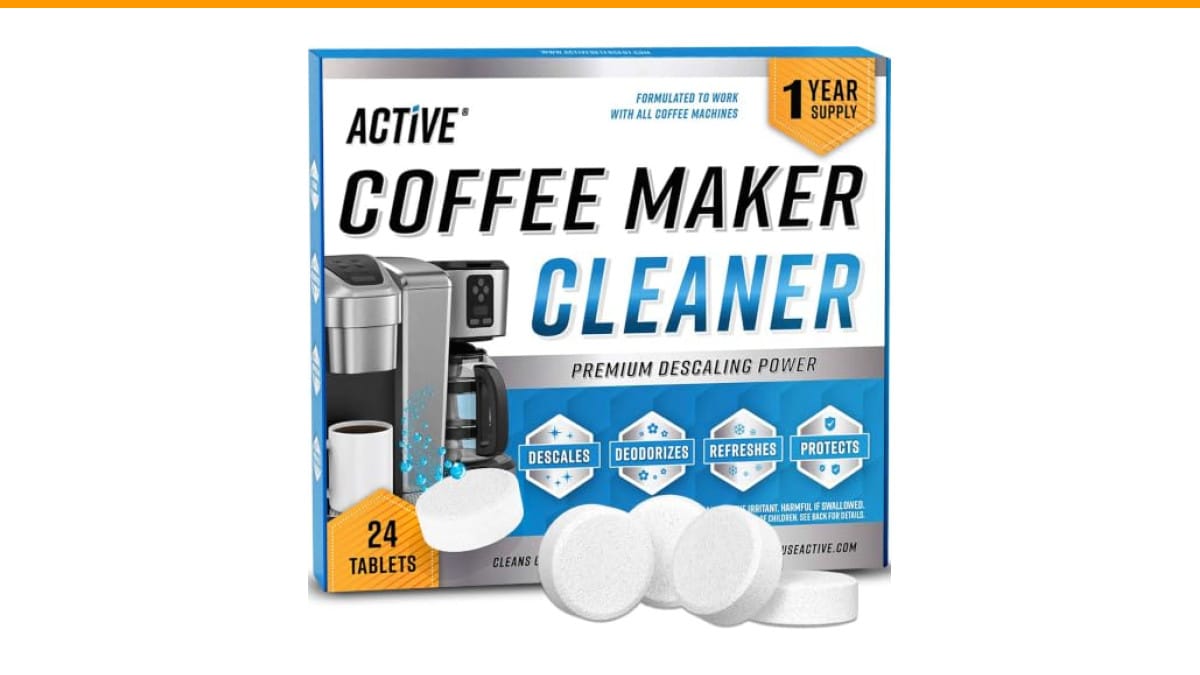
ACTIVE
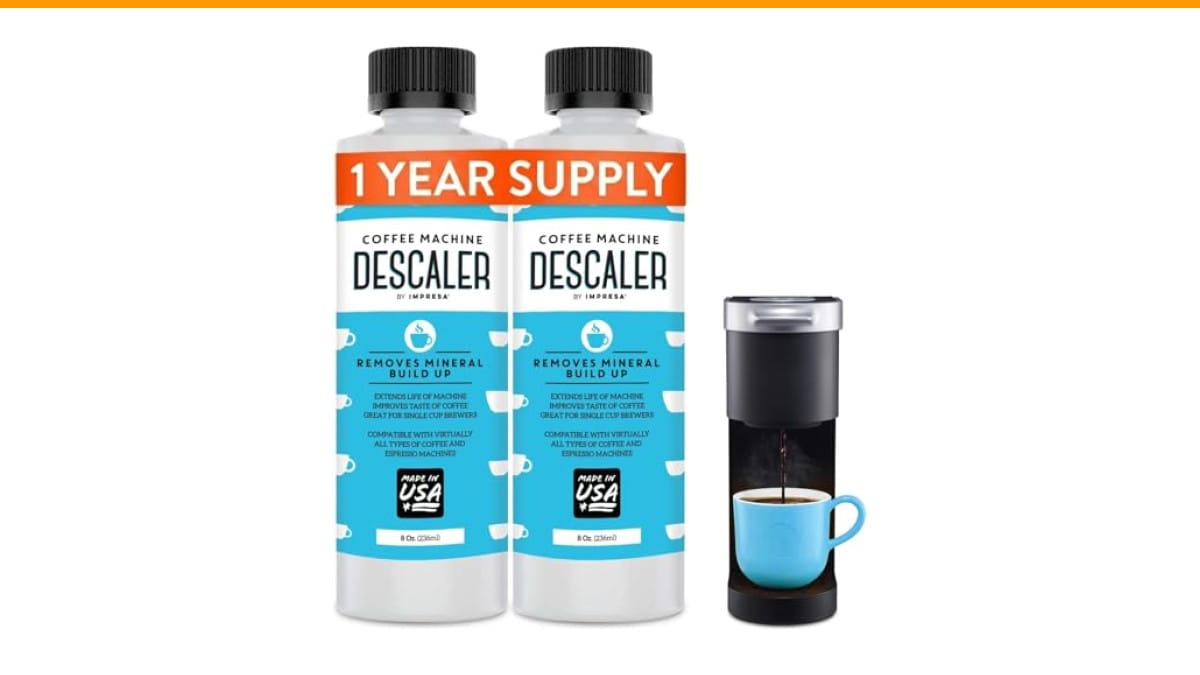
Coffee Machine Cleaner Descaler Tablets - 24…
- Bulk Coffeemaker Decalcifier Tablet: 24 Tablets Work out to a Year Supply or more. Compare to other products like powder, pods, sa…
- Wide Brewer Cleaner Compatibility: ACTIVE cleaners work with Single K Cup, Pod Style system and regular multi-cup machines. Compat…
- Descale and Deep Clean: ACTIVE Descales Hard Water Buildup, Calcium, Limescale, Grime, and Oil in your Machine with our concentrat…
As an Amazon Associate I earn from qualifying purchases.
This guide walks through exactly what hard water does to a drip coffee maker, how to spot the early warning signs, what the repair costs actually look like, and a maintenance schedule that prevents most of the damage. You’ll also learn why vinegar isn’t always the best descaling choice, and how to test your water hardness at home in under ten minutes.
If you’re already seeing scale buildup, a dedicated descaler like the ACTIVE Coffee Machine Cleaner Descaler Tablets (24 tablets, roughly a year’s supply) handles the job without the vinegar smell or the risk of residue. It’s compatible with most drip machines, single-serve brewers, and espresso units. We’ll get into the specifics of when to use it below.
What Hard Water Actually Does Inside Your Drip Coffee Maker
Think of your coffee maker as a tiny water heater. It pulls cold water, heats it to around 195-205°F, and pushes it through the grounds. Every time that water heats up, the dissolved calcium carbonate and magnesium carbonate in it become less soluble. They drop out of solution and stick to the hottest surface they can find—usually the heating element and the bottom of the water reservoir.
Scale is a terrible conductor of heat. A layer just 1/16 of an inch thick can reduce heat transfer efficiency by up to 20%. That means your machine has to run longer and hotter to achieve the same brew temperature. The heating element works harder, the internal thermostat gets confused, and eventually the element burns out completely.
There’s also a flow problem. The scale doesn’t just coat the heating element; it narrows the water lines and clogs the check valves. Water pressure drops, the brew basket gets less water, and extraction becomes uneven. You end up with a cup that’s either over-extracted in some parts and under-extracted in others.
One thing most people miss: hard water doesn’t just affect the machine. It affects the coffee. The minerals in hard water bind with the coffee’s flavor compounds. That’s why coffee brewed with hard water tastes noticeably worse than the same beans brewed with filtered water. It’s not your imagination.
The 5 Warning Signs Your Machine Is Scaling Up (And What They Mean)
Most people don’t notice the problem until the machine stops working entirely. But there are five earlier signs that are easy to miss if you’re not looking for them.
Slower Brew Time and Weak Extraction
Time your brew cycle when the machine is new. Write it down. If it takes 30-40% longer six months later, scale is narrowing the water lines. The machine is still working, but it’s struggling to push water through the system. The result is weak coffee because the water spends too long sitting in the heating chamber and not enough time actually contacting the grounds.
The “Hot Metal” or Burnt Smell
That metallic, almost electrical smell during the brew cycle is the heating element overheating. Scale is insulating it, so it has to run hotter to reach the target temperature. The element is literally burning off the scale. That smell is your warning that the element is close to failure.
Loud Boiling Noises
A healthy drip coffee maker is quiet. If you hear gurgling, popping, or a sound like water boiling aggressively, that’s water trapped under a layer of scale. It’s flashing to steam and pushing against the mineral crust. This is the most obvious sign that descaling is overdue.
Cloudy Water or White Flecks in the Carafe
Those white flakes floating in your brewed coffee are pieces of scale that have broken off and made their way into the carafe. They’re not harmful to drink, but they’re a clear sign that the scale layer has gotten thick enough to shed chunks.
Inconsistent Brew Temperature
Your first cup of the day might be hot, but the second cup is lukewarm. The thermostat is struggling to maintain a consistent temperature because the heating element is coated in scale. This temperature swing also affects extraction, so the flavor will be inconsistent from cup to cup.
Why Hard Water Ruins Flavor: The Mineral Chemistry Explained
There’s a common myth that hard water makes coffee taste “minerally” or “chalky.” That’s not quite right. The real problem is subtler and worse.
Calcium and magnesium ions in the water interact with the chlorogenic acids and caffeine in coffee. These minerals bind to the flavor compounds and change how they extract. In a 2026 study published in the Journal of Agricultural and Food Chemistry, researchers found that water with high magnesium content extracted more of the desirable flavor compounds, but water with high calcium content suppressed them. The result is a cup that tastes dull, flat, and sometimes harshly bitter.
There’s also a time element. The taste degradation isn’t sudden. It’s a curve. Week one, you might not notice a difference. Month two, the coffee tastes slightly less bright. Month four, it’s noticeably dull. By month six, you’re adding sugar and cream to mask the off-flavor. Most people blame the beans or their brewing technique, but the water is the culprit.
The scale itself also traps old coffee oils and residue. Once scale forms, it creates a rough surface that holds onto organic matter. That’s why a scaled machine eventually develops a stale, rancid smell that no amount of rinsing will fix. You’re not just tasting minerals; you’re tasting old coffee that’s been marinating in scale.
The Hidden Cost: Repair vs. Replace vs. Prevent
Let’s talk money, because that’s what actually motivates people to change habits.
A decent drip coffee maker costs between $40 and $150. A high-end one, like a Moccamaster, costs $300 or more. The average lifespan of a drip coffee maker is about 5 years if you use filtered water and descale regularly. With hard water and no maintenance, that drops to 2-3 years.
Here’s the cost breakdown:
- Repair: Most coffee makers aren’t worth repairing. A new heating element costs $20-30, but labor (if you can even find someone to do it) pushes the total past the cost of a new machine. Repairing is almost always a false economy.
- Replace: A mid-range replacement runs $60-100. If you’re replacing every 2 years instead of every 5, that’s an extra $60-100 every 2 years just because you didn’t descale.
- Prevent: A bottle of commercial descaler costs $10-15 and lasts 3-6 months. A water filter pitcher costs $20-30 for the pitcher and $5-8 per filter (every 2 months). Total annual cost: $30-60.
So the math is simple. Prevention costs about $50 a year. Replacement costs $100 every two years. Prevention wins by a wide margin.
There’s also the cost of wasted coffee. If your machine is brewing poorly, you’re wasting expensive beans on coffee that tastes bad. That might be the most frustrating cost of all.
The Complete Hard Water Maintenance Plan
Here’s a practical schedule based on your water hardness. This isn’t a one-size-fits-all routine; it’s a tiered approach.
| Water Hardness | Weekly | Monthly | Quarterly |
|---|---|---|---|
| Soft (0-60 ppm) | Rinse carafe and basket | Run one empty brew cycle with fresh water | Descale with commercial descaler |
| Moderate (60-120 ppm) | Rinse carafe and basket | Run one empty brew cycle with fresh water | Descale with commercial descaler |
| Hard (120-180 ppm) | Rinse carafe and basket | Run one empty brew cycle with white vinegar or descaler | Full descale with commercial descaler |
| Very Hard (180+ ppm) | Rinse carafe and basket | Full descale with commercial descaler | Full descale + replace water filter |
Monthly Descaling: Vinegar vs. Commercial Descaler
Vinegar works. It’s cheap, and it dissolves calcium carbonate effectively. But it has two problems.
First, it leaves a residual smell and taste that can linger for several brew cycles. You’ll need to run 3-4 empty cycles with fresh water afterward to flush it out fully. That’s time and water wasted.
Second, vinegar is acetic acid, which is harsher on rubber seals and plastic components than the citric or sulfamic acid used in commercial descalers. Over years of monthly vinegar descaling, you can accelerate wear on gaskets and O-rings.
Commercial descalers, like the ACTIVE descaler tablets, are formulated to dissolve scale quickly without attacking machine components. They also rinse clean in one or two cycles. The trade-off is cost—about $10-15 per bottle versus $3 for a gallon of vinegar. But the time saved and the reduced risk of damage makes it worth it for most people.
My honest take: use vinegar in a pinch, but make commercial descaler your regular routine. The smell alone is worth the extra few dollars.
The Weekly Flush Routine
This takes two minutes and prevents most of the buildup before it starts. After your last brew of the day, remove the carafe and run a brew cycle with just water. This flushes out any residual coffee oils and mineral deposits that haven’t yet baked onto the heating element. It also prevents stale coffee from sitting in the lines overnight.
Once a week, take out the brew basket and wash it with warm soapy water. The filter basket is where coffee oils accumulate, and those oils mix with scale to create a sticky film that’s hard to remove later.
When to Use a Water Filter vs. a Water Softener
These are not the same thing, and the distinction matters.
A water filter (like a Brita pitcher or a faucet-mounted filter) removes chlorine, sediment, and some heavy metals. It does not remove significant amounts of calcium or magnesium. A standard carbon filter reduces hardness by maybe 10-15%. That’s helpful but not enough to solve the problem in hard water areas.
A water softener (either a whole-house system or a countertop softening pitcher) exchanges calcium and magnesium ions for sodium or potassium ions. This actually reduces hardness. A countertop softening pitcher costs $30-50 and can reduce hardness by 50-70%. That’s meaningful.
For most people, the best approach is dual: use filtered water for taste (chlorine removal) and descale on a regular schedule to handle the remaining minerals. If your water is above 180 ppm, consider a softening pitcher for your coffee maker specifically.
How to Test Your Water Hardness at Home (3 Cheap Methods)
You can’t manage what you don’t measure. Here are three ways to know your water hardness without calling a lab.
- Test strips: You can buy a pack of 50-100 strips for about $10 on Amazon. Dip one in tap water, wait a minute, and compare the color to the chart. They’re accurate enough to put you in the right maintenance tier.
- The soap method: Fill a clear bottle halfway with tap water, add a few drops of pure liquid soap (no detergents), and shake. If you get a lot of suds, water is soft. If you get a thin layer of suds and the water looks cloudy, you have hard water. This is less precise but free.
- Check your local water report: Most municipal water suppliers publish an annual water quality report online. Search your city name plus “water quality report” and look for “hardness” or “calcium carbonate.” This gives you a number in ppm (parts per million) or grains per gallon (1 grain = 17.1 ppm).
Once you know your number, you can set your maintenance schedule. If you’re below 60 ppm, you’re fine with quarterly descaling. Above 180 ppm, you’re in the danger zone and need monthly descaling plus a water softening solution.
Frequently Asked Questions About Hard Water and Coffee Makers
Does hard water actually damage a drip coffee maker, or is that a marketing scare?
It’s real. The mineral scale physically coats the heating element and narrows the water lines. This reduces heat transfer efficiency, which causes the element to overheat and eventually fail. A 2026 study by the Specialty Coffee Association found that descaling frequency was the single biggest predictor of coffee maker lifespan. It’s not a ploy to sell cleaner; it’s basic physics.
Can I use bottled water instead of tap water to avoid the problem?
Bottled water varies wildly. Some bottled waters are actually hard water in disguise. Look for the mineral content on the label. You want water with less than 60 ppm of calcium and magnesium. Distilled water has zero minerals, but it tastes flat and can leach minerals from the machine itself. Spring water is usually in the 30-80 ppm range, which is fine. Don’t assume bottled equals soft.
How often should I descale if I only use filtered water?
Filtered water still has some minerals, just fewer. If you’re using a Brita-type filter, you’re still looking at quarterly descaling. If you’re using a reverse osmosis system or a proper water softener, you can stretch it to every 6 months. The key is to track your brew time and listen for noises. When those change, it’s time to descale.
Will descaling fix a coffee maker that’s already slow?
Sometimes. If the slowness is caused by scale buildup, a good descaling will dissolve the scale and restore flow. But if the slow brewing has been going on for months, the heating element may already be damaged from overheating. You might get a few more weeks out of it, but the element is likely weakened. If descaling doesn’t restore normal brew time within one or two cycles, the machine is probably beyond saving.
Is it safe to drink coffee from a machine with scale buildup?
Yes, it’s safe. The calcium and magnesium in scale are the same minerals found in milk and vegetables. The white flakes are harmless. But the coffee will taste worse, and the machine is at risk of failure. There’s no health danger, just a quality and longevity problem.
Bottom Line: Save Your Machine and Your Morning
Hard water is the silent killer of drip coffee makers. It doesn’t announce itself; it just degrades performance and flavor over months until the machine dies.
- Test your water hardness once. It takes 5 minutes and tells you exactly how aggressive your maintenance needs to be.
- Descale at least quarterly if your water is above 60 ppm. Monthly if it’s above 180 ppm.
- Use a commercial descaler for regular maintenance. Vinegar works in an emergency but leaves smell and can damage seals over time.
- Run a water-only brew cycle after your last cup of the day. It takes 2 minutes and prevents oil and mineral buildup.
- Track your brew time. If it increases by 25% or more, descale immediately.
- Consider a water softening pitcher if your hardness is above 180 ppm. It’s cheaper than replacing a machine every 2 years.
- If you’re already seeing white flakes or hearing boiling noises, descale today. Don’t wait.
Your coffee maker isn’t asking for much. A little routine care, and it’ll keep brewing good coffee for years. Ignore the scale, and you’ll be shopping for a replacement sooner than you think. The choice is yours.
For more troubleshooting help, check out our guide on cleaning a clogged coffee maker or the cleaning frequency guide to build a complete maintenance routine.
Products related to this article
Sponsored / affiliate links. As an Amazon Associate I earn from qualifying purchases. I may earn additional commission from eligible campaigns.
 HomeBeyond Espresso Coffee Maker 12 Cups, Classic Stovetop Espresso Maker, 600ml / 20oz Coffeemaker for Gas & Ceramic Stovetops (Silver)
 Bring It On Cleaner Hard Water Stain Remover for Shower Glass, 32 fl oz
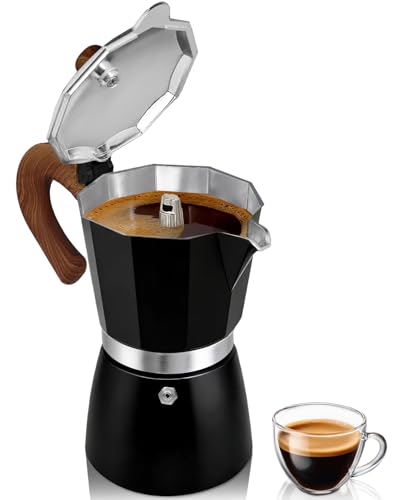 Belly Moka Coffee Maker Stovetop Espresso Maker 9 Cup Aluminum Moka Pot Percolator 15oz 450ml Easy Brewing for Electric Ceramic Stoves Home Camping Italian Cuban Café Classic Black