That grinding, screeching, or rattling coming from your espresso machine at 6 AM isn’t just annoying—it’s a message. Machines don’t groan without a reason. The trick is figuring out which part is doing the complaining before you start pulling things apart.
Most home espresso machines make some noise. Pumps hum, boilers hiss, and solenoid valves click. But there’s a difference between the background chatter of a healthy machine and the sound of something failing. This guide walks you through a mechanic’s diagnostic flowchart: you’ll identify the noise by when it happens and what it sounds like, then go straight to the fix that applies.

Tillbrook
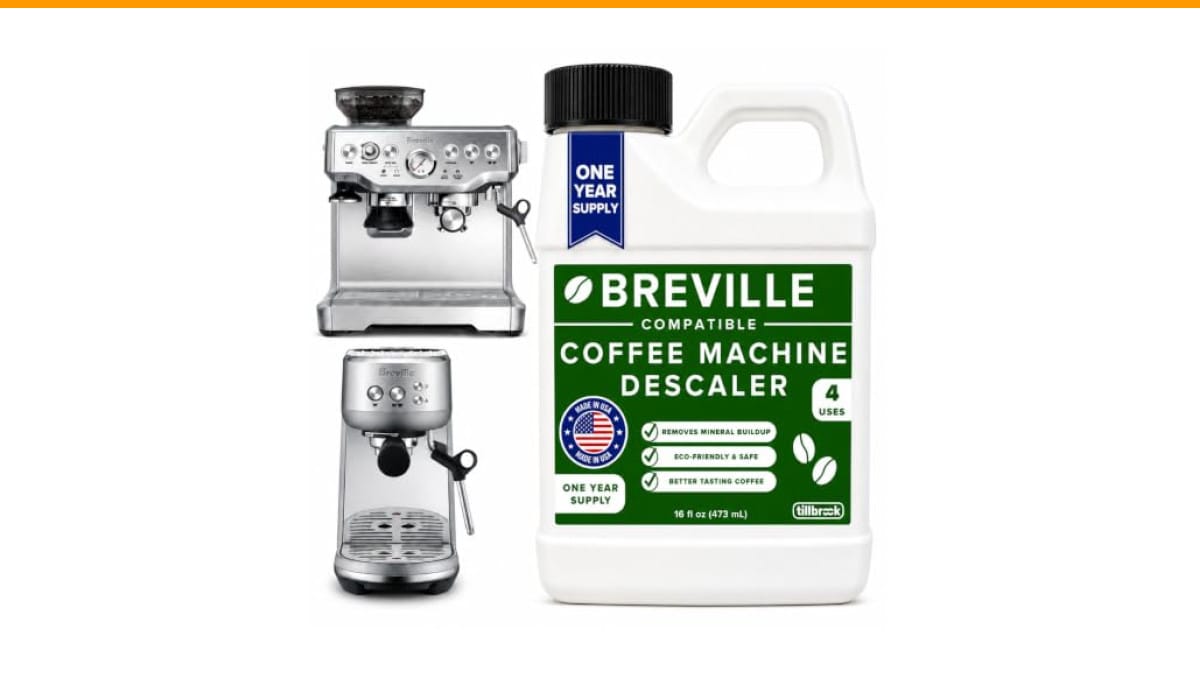
Breville Espresso Machine Compatible Descaler, 4 Uses,…
- EXCEPTIONAL RESULTS: Introducing Tillbrook Coffee Machine Descaler specifically formulated for Breville—the best choice for removi…
- 1 YEAR SUPPLY: Our concentrated formula is easy to use and provides remarkable value with 4 cleanings per bottle. Simply add 1/2 c…
- SCIENTIFICALLY ENGINEERED: Our advanced descaling solution is carefully crafted with powerful, all-natural ingredients that remove…
As an Amazon Associate I earn from qualifying purchases.
You’ll leave this article knowing exactly what to listen for, which problems you can solve in ten minutes, and which ones require a professional. No guesswork.
If your machine is overdue for a cleaning, scale buildup is often the real culprit behind odd noises. A product like the Tillbrook Coffee Machine Descaler (made for Breville machines) removes the hard water deposits that cause whistling and rattling. It’s a 16-oz bottle, enough for four descaling cycles—roughly a year’s supply if you clean every three months.
First, Isolate the Noise: Brew, Steam, or Idle?
Grab a mental timestamp. When does the noise happen? This single question eliminates half the suspects.
Noise during brewing (pump running): This points to the vibration pump, a clogged inlet valve, or scale restricting water flow. The pump works harder when water can’t pass through easily, and that strain shows up as a loud, angry buzz.
Noise during steaming: The steam wand hissing is normal. A high-pitched shriek or sputtering means the wand tip is clogged with dried milk or scale. The boiler is trying to push steam through a pinhole blockage.
Noise when idle (machine on, nothing running): This is rarer. Listen for a ticking sound, which often comes from the heating element cycling on and off, or a relay clicking. A constant hum with no water moving might be a failing pressure stat.
One quick test: run a shot with the portafilter removed. If the noise disappears, the problem is backpressure from a clogged basket or shower screen. If it stays, the pump or boiler is the issue.
Normal vs. Dangerous: Decibel Levels and Sound Profiles
Not all loud noises are emergencies. A standard vibration pump in a home machine operates around 70-80 decibels—about the volume of a vacuum cleaner. That’s normal. A healthy machine hums, clicks, and gurgles.
Danger starts when you hear metal-on-metal grinding, a repetitive knocking that speeds up with pump pressure, or a sudden screech. These sounds often sit above 85 decibels and indicate friction, not fluid movement.
Here’s a quick reference table to help you classify what you’re hearing:
| Sound Profile | Likely Source | Severity | Action |
|---|---|---|---|
| Low hum (70-75 dB) | Vibration pump running normally | Normal | None |
| Loud buzzing + slow flow | Clogged inlet valve or scale | Moderate | Prime pump, descale |
| High-pitched whine during steam | Blocked steam wand tip | Moderate | Soak and clear tip |
| Sharp clicking, repeated | Solenoid valve or relay | Low | Check wiring, replace valve |
| Grinding or crunching | Grinder burrs (if separate) or pump cavitation | High | Inspect burrs, check pump |
| Loud rattle + vibration | Loose shower screen or gasket | Moderate | Tighten or replace gasket |
A machine that jumps across the counter while brewing has a different problem than one that just sounds rough. Physical shaking points to a loose mount or a severely calcified boiler heating element rattling inside its housing.
Fix 1: Loud Buzzing or Rattling (Vibration Pump Issues)
The vibration pump is the workhorse of most home machines. It’s a small electromagnetic piston that oscillates rapidly to push water. When it buzzes louder than usual, something is restricting the water supply or the pump has lost its prime.
Priming the Pump and Checking Inlet Valves
An unprimed pump runs dry, and it sounds like a angry hornet. Here’s how to fix it:
- Turn off the machine and unplug it.
- Remove the water tank and check the inlet hose for kinks or air bubbles.
- Reattach the tank, making sure the hose sits fully submerged.
- Turn the machine on and run water through the group head without the portafilter for 30 seconds.
- If the noise persists, check the inlet valve (a small mesh screen inside the pump intake) for scale or debris. Clean it with a toothbrush.
Pro tip: If your machine sat unused for a few weeks, the pump often loses prime. Running water through it for a minute usually solves the problem.
For persistent buzzing with weak flow, scale is the likely villain. The pump works harder to push water through narrowed pipes. A proper descaling session, like the one described in our descaling guide, often quiets things down.
Fix 2: High-Pitched Whining or Screaming (Steam System)
A steam wand that screams like a tea kettle is a clogged wand. Milk residue and scale build up inside the narrow tip, turning a wide path into a hairline crack.
Clearing Scale from the Steam Wand Tip
You can fix this without a service call:
- Remove the steam wand tip (most unscrew counter-clockwise).
- Soak the tip in a small cup of descaling solution for 15 minutes.
- Use a fine needle or pin to poke through the hole(s).
- Rinse thoroughly and reattach.
- Run steam for 5 seconds to clear any remaining debris.
If the whine comes from inside the machine (not the wand), it’s the boiler trying to vent steam through a scaled-up safety valve. That’s a bigger issue—you may need to descale the boiler itself. Check our deep cleaning guide for the full process.
Fix 3: Grinding or Crunching (Grinder vs. Pump Diagnosis)
People often confuse grinder noise with pump noise. They’re different machines doing different jobs. A grinder makes noise before the shot, while the pump runs during the shot.
If the grinding sound happens when you pull a shot, it’s not the grinder. The vibration pump can cavitate—sucking air and making a harsh, gritty sound—when the water supply is inconsistent. That’s a priming issue.
If the crunching happens when you grind beans, the problem is in the burrs. Foreign objects (a small stone, a hard bean) or dull burrs cause that sound. Take the burrs out, brush them clean, and check for chips. Dull burrs need replacement; they don’t sharpen well.
Fix 4: Clicking and Ticking (Solenoid Valves and Relays)
A single click when you start a shot is normal—that’s the solenoid valve opening. Rapid, repeated clicking is not. It usually means the valve is sticking, often due to scale on the plunger mechanism.
You can sometimes fix a sticking solenoid by running a descaling cycle. The solution loosens the mineral deposits jamming the valve. If the clicking continues after descaling, the solenoid coil may be failing. That’s a $30-50 part on most machines and a straightforward swap if you’re handy with a screwdriver.
The Hidden Culprit: Hard Water and Scale Buildup
Hard water is the silent killer of espresso machines. It leaves calcium and magnesium deposits on every surface water touches. These deposits narrow pipes, coat heating elements, and jam valves.
Here’s the effect in numbers: water at 10 grains per gallon hardness (common in the Midwest) can deposit a millimeter of scale inside a boiler within six months. That layer acts as an insulator, making the heating element work harder and run hotter, which causes expansion noises and rattling.
Soft water (under 3 grains per gallon) rarely causes scale issues. If you live in a hard-water area, descaling every 3-4 months isn’t optional—it’s the difference between a quiet machine and a noisy one. The maintenance schedule guide breaks down the timing by water type.
Preventive Maintenance: The 3-Month Noise Prevention Checklist
Set a calendar reminder. Every three months, do this:
- Backflush with a blind basket and cleaning powder (if your machine supports it) to remove coffee oils from the group head.
- Descale the boiler and pipes with a proper descaler.
- Clean the steam wand tip and purge the wand after every use.
- Inspect the group head gasket for wear—a hardened gasket causes rattling and leaks.
- Check the water tank inlet filter for debris.
This routine takes about 20 minutes. It prevents 80% of the noise complaints I see in home machines.
When to Call a Pro vs. When to Replace the Machine (Cost Analysis)
Not every fix is a DIY job. Here’s a practical breakdown:
| Situation | DIY Cost | Pro Service Cost | Replacement Cost | Recommendation |
|---|---|---|---|---|
| Clogged steam wand | $0 (time only) | $50-80 | N/A | DIY, always |
| Vibration pump failure | $40-60 (part) | $100-150 | N/A | DIY if handy; pro if unsure |
| Solenoid valve sticking | $30-50 (part) | $80-120 | N/A | DIY after descaling fails |
| Heating element rattle | $50-80 (part) | $150-200 | N/A | Pro recommended |
| Machine 5+ years old, multiple failures | Varies | Varies | $300-500 | Replace—repair costs exceed value |
If your machine is under three years old and the repair quote exceeds 50% of a new unit’s price, lean toward replacement. Older machines develop cascading failures; fixing the pump today often means fixing the boiler next month.
Frequently Asked Questions
Why is my espresso machine making a loud noise but not brewing?
That’s almost always a pump problem. The pump runs but can’t push water through a blocked path. Check the inlet valve for scale, prime the pump, and confirm the shower screen isn’t clogged with old coffee grounds.
Is it normal for a new espresso machine to be loud?
New machines with vibration pumps are louder than rotary pump machines. A healthy hum around 70-75 dB is normal. If you hear grinding or metallic rattling on day one, that’s a defect—return it.
Can low water level cause a loud pump?
Yes. When the water tank runs low, the pump sucks air, which causes a loud, sputtering noise. Always keep the tank at least a quarter full to maintain prime.
How often should I descale to prevent noise?
Every 3-4 months for moderate water hardness. If you have very hard water (over 10 grains), monthly descaling might be necessary. Soft water areas can stretch to every 6 months.
Does a loud steam wand mean the boiler is failing?
Usually not. A screaming steam wand is a clogged tip. Clean the tip first. If the noise comes from deep inside after cleaning, then suspect a scaled-up safety valve or boiler issue.
The Bottom Line: Listen Before You Pull the Shot
Your machine tells you what’s wrong if you listen. A buzzing pump needs prime or scale removal. A screaming steam wand needs a needle. A clicking solenoid needs a descale. A grinding sound during the shot needs a pump check, not a grinder check.
Here’s what to remember:
- Isolate the noise by timing: brew, steam, or idle.
- Normal pump hum is 70-80 dB; anything above that with metal sounds means trouble.
- Descale every 3-4 months—scale is the number one cause of noise in home machines.
- Prime the pump after long idle periods to avoid dry-running buzz.
- Clean the steam wand tip after every session to prevent shrieking.
- Replace gaskets and shower screens when they harden—they cause rattles and leaks.
- Compare repair costs against replacement value for machines over five years old.
Start with the cheapest fix. Most of the time, it’s a cleaning issue, not a mechanical failure. Your ears (and your morning coffee) will thank you.
Products related to this article
Sponsored / affiliate links. As an Amazon Associate I earn from qualifying purchases. I may earn additional commission from eligible campaigns.
 Coffee Espresso Machine Handle Replacement Parts, Cafe Bracket Handle for Lidl Silvercrest CM4621 CM4218 KF5002 KF500S Barista (for 51mm Portafilter Basket - Not included)
 Linnkyfloa Coffee Espresso Maker Handle Replacement for Stovetop Moka Pot or Percolator, Black Plastic for Spare Part Compatible with Italian(9-12 Cup)
 Quick Heating Cup Warmer, Three Temperature Settings, Splashproof and Portable, for Coffee, Milk, Lightweight ABS Material