You bought a nice scale with a built-in timer. You use it every morning for your espresso shot. Six months later, the display flickers, the tare button feels mushy, or the battery dies mid-pour. You start wondering if you got a dud or if this is just how these things work.
The honest answer: a decent coffee scale with timer should last between 3 and 5 years of daily use. The battery will degrade faster than the load cell, and the load cell will outlast the electronics. But that range depends heavily on how you treat it, what environment it lives in, and whether you bought a $20 gadget or a $100 instrument. This guide breaks down the lifecycle of each major component, what kills them early, and how to get the maximum life out of what you own.

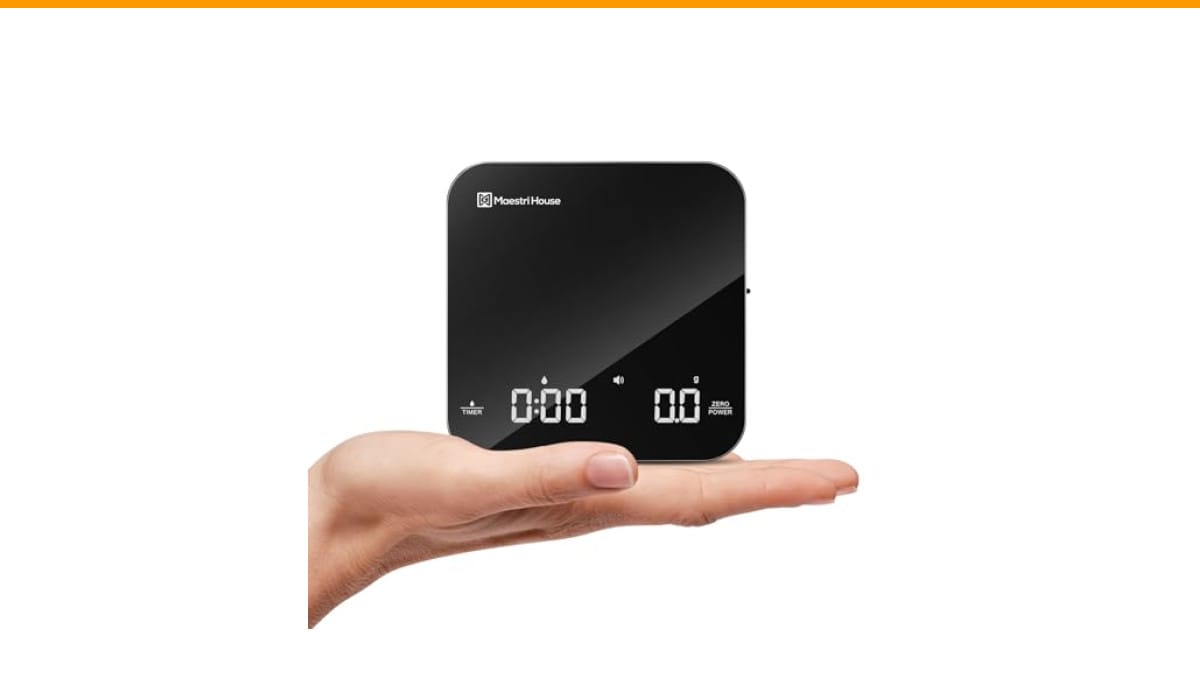
Maestri House
Maestri House S2 Espresso Coffee Scale with…
- 【Ultra Small, Yet Professional】The Espresso Scale is small enough to fit in your palm. It measures 4.13*4.13*0.78 inches and weigh…
- 【0.1g High Precision】This digital kitchen coffee scale is equipped with high-precision sensors and a reliable microprocessor, guar…
- 【Three Units & Dual Timekeeping Modes】The Espresso Digital Timer Scale has three units of measurement (g/oz/ml) that can be conver…
As an Amazon Associate I earn from qualifying purchases.
If you’re in the market, the Maestri House S2 Espresso Coffee Scale is a solid example of a modern rechargeable unit. It packs a 500 mAh lithium battery and a USB-C port, which puts it ahead of older AAA-powered scales in terms of long-term battery health and convenience. We’ll use it as a reference point throughout this article, but the principles apply to any scale you own.
The Real Answer: How Long Do They Actually Last?
Let’s cut through the marketing. Most manufacturers quote a battery life in hours or days of standby. That’s a lab number. In real use, with daily espresso shots and pour-overs, you’ll see something different.
Here’s what actually happens over time:
- Year 1: Everything works perfectly. Battery holds a charge for weeks. Load cell is accurate within 0.1g.
- Years 2-3: Battery capacity drops to about 70-80% of original. You’ll charge it more often. The load cell may drift slightly, needing recalibration every few months.
- Years 4-5: Battery life is noticeably shorter. The timer might lag. The display could dim. This is when most people replace the unit.
The load cell itself — the metal strain gauge that measures weight — can last a decade or more if it’s not physically damaged. The battery and the rubber buttons are what fail first. I’ve seen 10-year-old scales with perfect accuracy but dead batteries. I’ve also seen 6-month-old scales killed by a single drop off the counter.
So the real lifespan is a function of component quality and your habits, not a fixed number. A $15 scale with a CR2032 battery might last 2 years. A quality scale like the Maestri House S2, with proper care, should push past 4 years comfortably.
Battery Lifespan: Rechargeable vs. Disposable
The battery is the first thing to go. It’s also the one component you can actually manage. Let’s compare the two main power systems.
Rechargeable (Li-ion) Scales
Lithium-ion batteries have a finite number of charge cycles. A typical 500 mAh cell like the one in the Maestri House S2 is rated for about 300-500 full charge cycles before capacity drops below 80%.
Here’s the math. If you charge it once every 3 weeks (which is realistic for daily use with the S2’s 90-day standby claim), that’s about 17 charges per year. At 400 cycles, you’re looking at roughly 23 years of theoretical battery life. But that’s not how it works in practice.
Heat and full discharges kill Li-ion batteries faster than cycle count. Leaving your scale on a sunny windowsill or letting it drain to zero every time will cut that 400 cycles down to 200 or less. You’ll notice the battery dying after 2-3 years if you’re rough on it.
What does that mean for you? The battery will outlast the load cell in most cases. But when it does degrade, you’re stuck. Most scales with built-in batteries don’t have user-replaceable cells. The Maestri House S2 is no exception — when the battery gives up, you’re buying a new scale.
Disposable (AAA/CR2032) Scales
Older scales run on AAA batteries or coin cells. These don’t degrade with cycles — they just run out. A pair of AAA batteries in a scale with an auto-off timer will last 6-12 months with daily use. A CR2032 coin cell lasts about 3-6 months because it’s tiny.
The advantage is obvious: when the battery dies, you pop in a new one. No charging, no degradation curve. The scale itself can last 5+ years if the electronics don’t fail.
The downside is cost and waste. A set of quality AAA batteries costs $2-4. Over 5 years, that’s $20-40 in batteries. Plus the environmental cost of throwing away batteries. A rechargeable scale costs nothing to run after the initial purchase.
My honest take: rechargeable is better for daily use, but disposable wins for longevity of the device itself. If you want a scale to last 10 years, get one with replaceable batteries. If you want convenience and lower running costs, go rechargeable.
The Timer and Load Cell: What Wears Out First?
Let’s talk about the parts that actually do the measuring. The load cell is a piece of metal that bends microscopically under weight. Strain gauges on it change resistance, and a microprocessor converts that to a number on the display.
Load cells don’t wear out from use. They wear out from physical stress and environment. A load cell rated for 2000g won’t break if you put 2100g on it once, but repeated overloads will cause permanent drift. The metal can also fatigue from temperature cycling — hot espresso machine on top, cold counter below.
Accuracy degradation is the first sign. You’ll notice your 18g dose reads 18.2g, then 18.5g over time. This is the load cell’s zero point drifting. Most scales let you recalibrate with a known weight. If you don’t recalibrate, your brew ratio gets inconsistent, which directly affects your coffee quality.
The timer is simpler. It’s just a quartz crystal oscillator and a counter. These are incredibly reliable — they don’t drift or wear. The issue is the interface. Touch buttons and capacitive sensors degrade. The silicone pad on the Maestri House S2 protects the touch controls, but after 2-3 years of daily pressing, the sensitivity drops. You’ll tap the timer button twice to get it to register.
What fails first in my experience? The buttons. Then the battery. Then the display. The load cell is usually the last to go, and only if you’ve abused it.
Environmental Killers: Heat, Humidity, and Coffee Dust
Your scale lives in the worst possible environment. It sits next to a hot espresso machine, gets splashed with water, and accumulates a fine layer of coffee dust that gets into every crevice.
Heat is the biggest threat to the battery. Lithium-ion cells degrade rapidly above 40°C (104°F). The top of a double boiler espresso machine can hit 60-70°C. If you leave your scale on the drip tray or right next to the group head, you’re cooking the battery. This alone can halve the battery lifespan.
Humidity attacks the circuit board. Even if the scale has a waterproof surface, the electronics underneath aren’t sealed. Moisture from steam wand purges or a wet counter seeps in through the seams. Over time, this causes corrosion on the contacts and the microprocessor pins. The first symptom is erratic readings — the scale shows 0.3g when nothing’s on it, or the timer starts and stops on its own.
Coffee dust is the sneaky one. It’s abrasive and slightly oily. It gets between the load cell and the housing, affecting the zero point. It also accumulates on the touch sensors, making them less responsive. A scale used daily in a busy cafe will die from dust long before a home scale does.
You can’t control your environment entirely, but you can mitigate it. Keep the scale off the machine’s hot surface. Wipe it down after each use. Store it in a drawer or cabinet when not in use. These small habits add years to the device’s life.
Maintenance That Extends Lifespan (and Accuracy)
Most people never maintain their scale. They use it until it breaks. A few minutes of care every few weeks will keep it accurate and functional for years longer.
Here’s a practical routine:
- Wipe after every use. A dry microfiber cloth removes coffee dust and oils. Don’t use wet wipes — moisture gets into the seams.
- Deep clean monthly. Remove the silicone pad (if you have one) and wash it separately. Wipe the scale body with a slightly damp cloth, then dry it immediately.
- Recalibrate every 3-6 months. Use a known weight — a calibration weight or even a coin with a known mass. The process takes 30 seconds. Check the manual for your specific model.
- Store it properly. Keep it in a dry place away from heat sources. If you have the original box, use it.
- Don’t store it with weight on it. Leaving a heavy object on the scale for days can stress the load cell and cause drift.
For the Maestri House S2 specifically, the borosilicate glass surface and detachable silicone pad make cleaning easier than most. The glass wipes clean without absorbing oils, and the pad protects the surface from scratches and heat. This design extends the usable life because the scale’s surface stays pristine, and the touch controls stay responsive.
One thing I’ve learned the hard way: don’t use compressed air to clean the internals. It can push dust deeper into the load cell. A soft brush or a gentle tap upside down works better.
Signs Your Scale is Dying (and When to Replace)
Scales don’t just stop working. They degrade gradually. Here are the warning signs that your scale is on its last legs:
- Inconsistent readings: The same 18g dose reads 17.9g, then 18.1g, then 18.0g. This is load cell drift or internal moisture.
- Slow response time: It takes 2-3 seconds to settle on a weight instead of 1 second. The sensor is degrading.
- Battery drains fast: A scale that used to last 3 weeks on a charge now dies in 3 days. The battery is shot.
- Timer issues: The timer starts late, stops early, or resets itself. This is usually a circuit board problem.
- Display problems: Fading digits, flickering, or segments missing. The LCD or LED is failing.
When should you replace vs. repair? For most scales, repair isn’t worth it. You can’t easily buy replacement load cells or circuit boards. The labor cost exceeds the price of a new scale. The exception is if your scale is expensive and still under warranty — then contact the manufacturer.
If the battery is dead but everything else works, you could try replacing it if you’re handy with a soldering iron. But for a $50-80 scale, it’s not worth the effort. A new scale with fresh components and a warranty is a better investment.
My rule of thumb: if the scale is inaccurate by more than 0.2g and recalibration doesn’t fix it, replace it. If the battery dies and it’s older than 2 years, replace it. If the timer is unreliable, replace it immediately — a bad timer ruins your pour-over technique and your espresso shots.
Cost-Per-Year: Is Expensive Worth It?
Let’s do the math. A budget scale costs $15-25 and lasts 1-2 years. A mid-range scale costs $50-80 and lasts 3-5 years. A premium scale costs $150+ and lasts 5-8 years if treated well.
Here’s the cost per year:
| Price Tier | Typical Cost | Lifespan | Cost Per Year | Battery Cost/Year | Total/Year |
|---|---|---|---|---|---|
| Budget | $20 | 1.5 years | $13.33 | $4 (AAA) | $17.33 |
| Mid-range (like Maestri House S2) | $60 | 4 years | $15.00 | $0 (rechargeable) | $15.00 |
| Premium | $150 | 6 years | $25.00 | $0 (rechargeable) | $25.00 |
Interesting, right? A mid-range scale costs about the same per year as a budget scale, because it lasts twice as long and has no battery costs. The premium scale costs more per year, but you get better accuracy, faster response, and better build quality.
For home users, the sweet spot is the $50-80 range. You get a rechargeable battery, 0.1g precision, and a timer that works. The Maestri House S2 fits this category well. It’s small enough for a home setup, has a 2000g capacity that covers pour-over, and the USB-C charging means you’ll never buy batteries again.
The hidden cost is accuracy. A scale that drifts by 0.3g over a year costs you in coffee quality. If you’re pulling espresso, that’s the difference between a balanced shot and a sour one. Spending $20 more on a scale with better components is cheaper than wasting beans on inconsistent shots.
Frequently Asked Questions
How often should I charge my coffee scale?
With a 500 mAh battery and daily use, you’ll charge it every 2-4 weeks. The Maestri House S2 claims up to 90 days standby, but that’s with no use. In practice, expect 3-4 weeks of daily espresso shots and pour-overs. Charge it when the battery indicator shows low — don’t wait until it dies completely, as deep discharges stress Li-ion cells.
Can I leave my scale plugged in overnight?
Most modern scales have overcharge protection, so it won’t damage the battery. But it’s not ideal. Leaving it plugged in keeps the battery at 100%, which is actually a mild stressor for Li-ion cells. Better to charge it to full and unplug it. If you forget occasionally, it’s not a big deal — the protection circuit handles it.
Does the auto-off timer save battery life?
Yes, significantly. The auto-off feature (usually after 2-5 minutes of inactivity) prevents the display and sensors from draining power. A scale without auto-off will drain a 500 mAh battery in a week of daily use. With auto-off, you get weeks. The Maestri House S2 has a 5-minute auto-off, which is a good balance — it won’t cut off mid-pour, but it saves power when you walk away.
Why does my scale show different readings on different surfaces?
This isn’t a malfunction — it’s physics. A scale measures force, and uneven or soft surfaces distribute that force differently. A wobbly counter or a thick towel will cause inconsistent readings. Always use your scale on a flat, hard, stable surface. If you’re using a drip tray, make sure it’s level. This is the most common cause of apparent accuracy issues that aren’t actually the scale’s fault.
Should I buy a scale with a built-in timer or use my phone?
A built-in timer is much better for espresso. The scale’s timer starts automatically when it detects weight, which is essential for a hands-free shot. Using your phone requires you to start it manually, which adds a step and a potential error. For pour-over, a phone timer works fine, but the built-in timer is still more convenient because it’s right there on the scale. The Maestri House S2 has both automatic and manual timing modes, so you can use whichever suits your workflow.
What I’d Do With My Money
After years of testing scales, here’s my practical advice for home users.
- Buy a scale with a rechargeable battery. The convenience of USB-C charging outweighs the replaceability of AAA batteries for most people.
- Expect 3-5 years of life from a quality scale with daily use. Budget for replacement in your coffee gear expenses.
- Treat the battery gently. Avoid heat, avoid full discharges, and don’t leave it plugged in constantly.
- Recalibrate every 3-6 months. It’s a 30-second task that keeps your shots consistent.
- Clean the scale after each use. A dry wipe prevents dust buildup and keeps the touch controls responsive.
- If you see accuracy drift or timer lag, replace the scale. Don’t try to fix it — it’s not worth the effort.
- The Maestri House S2 is a solid choice in the mid-range. It offers 0.1g precision, a 2000g capacity, and a long-lasting battery in a compact package. Check the current price on Amazon if you’re interested.
Your scale is the unsung hero of your coffee setup. It doesn’t get the attention of a shiny grinder or a beautiful espresso machine, but it’s the piece that ensures consistency. Treat it well, and it’ll serve you for years. Ignore it, and you’ll be buying a new one every 18 months.
For more on keeping your coffee gear in top shape, check our coffee machine maintenance guide and our grinder cleaning routine. A scale that’s accurate and a machine that’s clean are the two biggest wins for better coffee at home.
Products related to this article
Sponsored / affiliate links. As an Amazon Associate I earn from qualifying purchases. I may earn additional commission from eligible campaigns.
 Coffee Espresso Machine Handle Replacement Parts, Cafe Bracket Handle for Lidl Silvercrest CM4621 CM4218 KF5002 KF500S Barista (for 51mm Portafilter Basket - Not included)
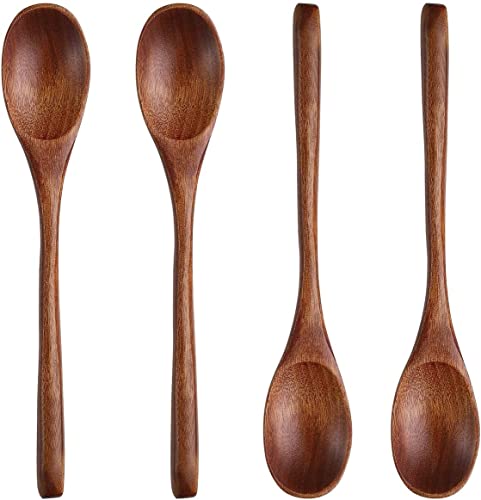 Long Handle Wooden Spoon For Mixing Coffee Tea Jam and Bath Salt In Kitchen, Environmentally Friendly Table Spoon, 8.6 Inches,4 Pieces…
 Wood Slotted Spatula Long Handle, Non-stick Friendly Coffee