You just dropped your favorite glass carafe on the counter. Or maybe the plunger is starting to stick halfway down, and you’re wondering if this $40 brewer has finally given up. It’s a common moment for anyone who uses a French press daily. The good news is that these devices are simple, and most of them don’t just die—they wear out in predictable ways.
This guide covers the realistic lifespan of a French press, the specific parts that fail, and how to tell the difference between a press that needs a quick fix and one that’s truly done. You’ll also see why a modular brewer beats a plastic electric machine for long-term cost and durability.

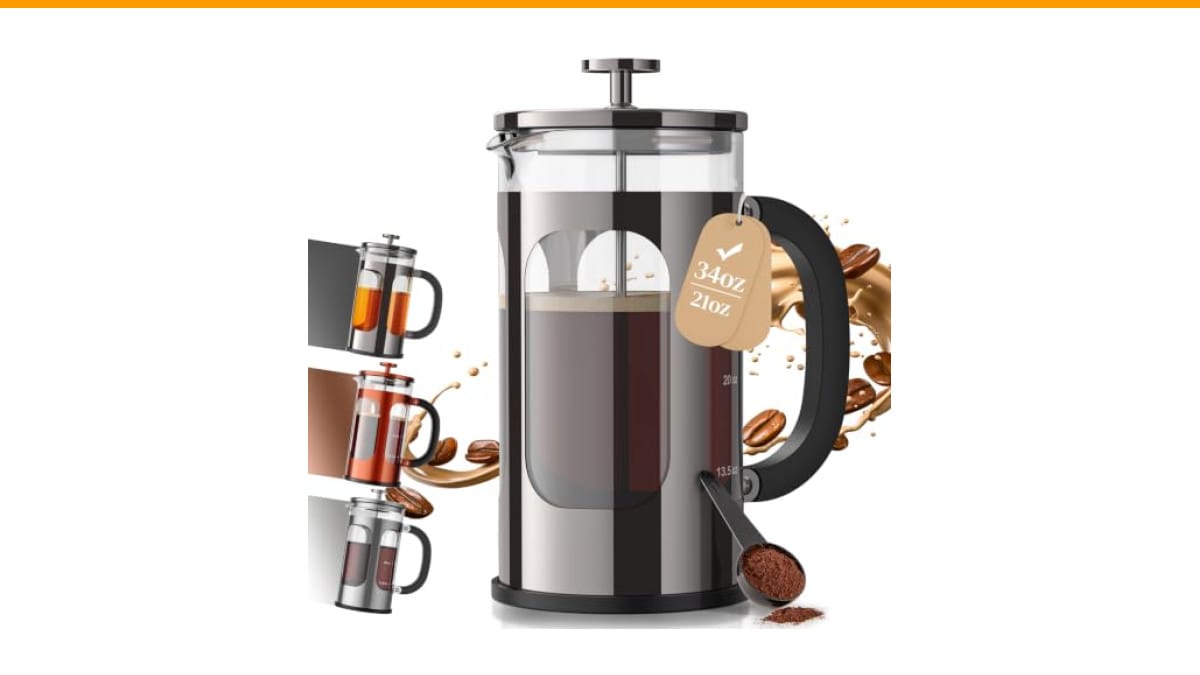
Veken
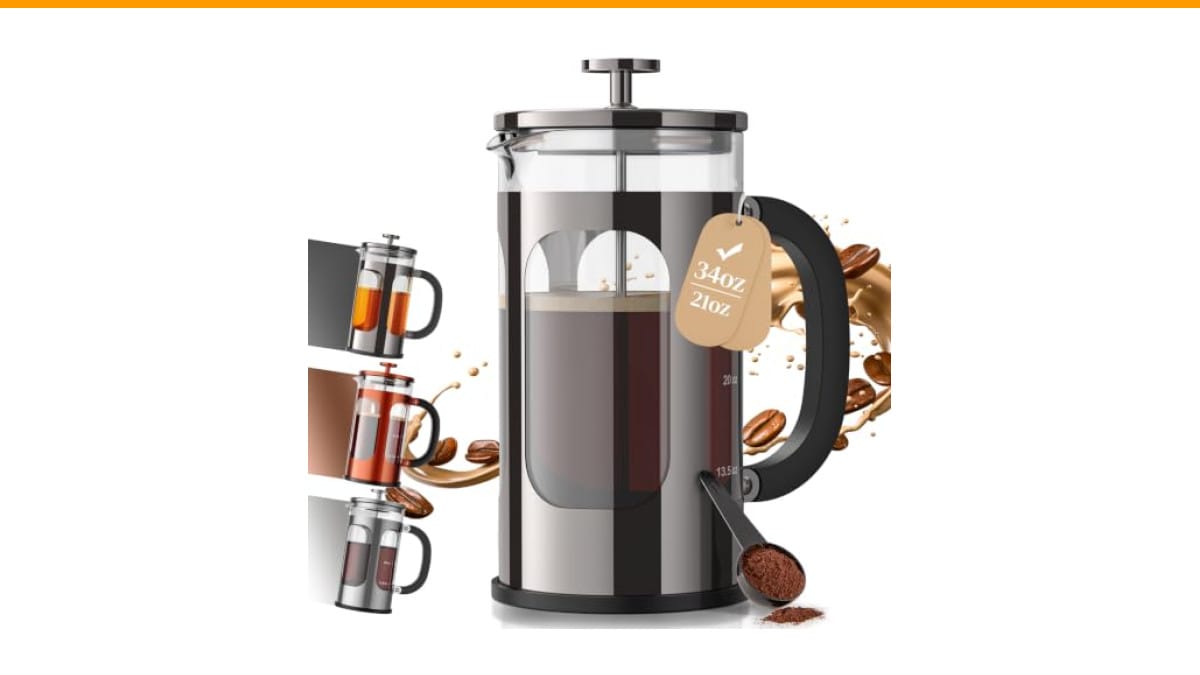
Veken 34oz French Press Coffee Maker, No…
- No Plastic Touching Food: Made with 304 stainless steel and food-grade silicone, our French press keeps all brewing surfaces plast…
- Thickened Glass and Versatile Brewing: Made of high borosilicate glass that resists thermal shock up to 302°F, this thick durable…
- 4-Level Filtration for Pure Coffee: This French press has a 4-layer stainless steel filter—spiral plate, cross plate, and two fine…
As an Amazon Associate I earn from qualifying purchases.
If you’re in the market for a new one, the Veken French Press Coffee Maker is a solid option. It uses a thick borosilicate glass carafe and a 4-level stainless steel filter, which addresses the two most common failure points we’ll talk about below.
The Short Answer: Expect 3–5 Years (or Decades with Care)
Most French presses last between three and five years with regular use. That’s the honest average when you factor in accidental drops, hard water scale, and normal wear on the plunger seal.
But that number is misleading. The frame and mesh filter are essentially indestructible. The glass carafe is the weak link. If you never drop it, the glass can last a decade or more. If you’re clumsy like me, you’ll be replacing the carafe every couple of years.
The real question isn’t how long the whole unit lasts. It’s how long each component lasts, because you can replace parts individually. A French press is not a sealed appliance. It’s a glass beaker, a metal frame, and a plunger assembly. Treat it like a modular tool and you’ll rarely buy a full replacement.
What Actually Wears Out on a French Press
The Glass Carafe (Chips and Thermal Shock)
The carafe is the most fragile part. Standard soda-lime glass cracks easily. Better models use borosilicate glass, which handles thermal shock up to around 360°F. That means you can pour boiling water in without fear, but it won’t save you from dropping it on tile.
Look for small chips on the rim. A chipped rim isn’t just ugly—it creates a stress point. The next time you press down, the pressure can turn that chip into a full crack. If you see a chip near the top, replace the carafe soon. Don’t wait for it to shatter mid-brew.
Thermal shock is the other killer. Pouring cold water into a hot carafe, or placing a hot carafe on a cold wet counter, can crack it instantly. Always rinse with warm water first if the carafe is cold.
The Plunger and Mesh Filter (Clogs and Seal Failure)
The plunger assembly has two parts that fail: the mesh screen and the rubber or silicone seal. The mesh screen collects coffee oils and micro-grounds over time. These oils can go rancid, which makes your coffee taste bitter or stale even if the beans are fresh.
The seal is the more common failure. It’s usually a rubber O-ring or a silicone gasket that sits around the plunger plate. After a few hundred presses, it loses its grip on the glass wall. You’ll notice coffee grounds leaking past the sides, or the plunger sinking on its own after you push it down.
Replacing the seal is a five-minute job. Most brands sell replacement plunger assemblies for under $10. You don’t need a new press. Just make sure you buy the correct diameter for your carafe.
The Frame and Handle (Rust and Loose Fittings)
The metal frame and handle are usually stainless steel or chrome-plated steel. Stainless handles rarely fail. Chrome plating can peel if you run it through the dishwasher, exposing the base metal to rust.
Check the hinge where the handle meets the frame. If it wobbles, you can often tighten it with a small screwdriver. If the handle is riveted and it breaks, that’s a harder fix. Some manufacturers sell replacement frames, but it’s often cheaper to buy a new press at that point.
One thing to watch: the bottom plate where the glass sits. If the press gets knocked around, that plate can bend. A bent plate makes the carafe sit unevenly, which puts stress on the glass. Straighten it gently with pliers if you catch it early.
Signs Your French Press Is Dying (Not Just Dirty)
There’s a difference between a press that needs a deep clean and one that’s structurally failing. Here are the specific indicators to look for.
- Grounds in your cup: If you see sediment after pressing, the mesh is either clogged or the seal is allowing fines past. Clean the mesh thoroughly first. If that doesn’t help, the screen is stretched or the seal is worn.
- Plunger resistance feels wrong: A new press has smooth, even resistance. If it suddenly becomes very hard to push, the mesh is clogged with oils. If it falls too easily, the seal has lost tension.
- Visible cracks or chips: Any crack in the glass is a reason to stop using it. Glass can fail under pressure, and you don’t want hot water exploding in your hands.
- Metallic taste: If your coffee tastes like metal, the stainless steel mesh may be corroding. This happens with cheap steel or if you leave the press soaking in acidic cleaner for hours. Replace the filter assembly.
- Rust on the frame: Surface rust on the handle or frame isn’t a safety issue, but it means the plating is compromised. Wipe it dry immediately after washing to slow it down.
If your press is just dirty, you’ll notice a dull, oily film on the glass and a bitter taste in the coffee. That’s a cleaning issue, not a death sentence. A proper disassembly and soak in hot soapy water usually fixes it. For stubborn buildup, check our guide on proper coffee maker cleaning.
How to Extend Lifespan: Cleaning and Handling Rules
Water quality matters more than most people think. Hard water leaves mineral scale on the glass and inside the mesh. That scale builds up over months and can clog the fine screens. If you live in a hard water area, use filtered water for brewing and rinsing.
Descaling is simple. Fill the carafe with a 50/50 mix of white vinegar and water. Let it sit for 30 minutes, then press the plunger up and down a few times. Rinse thoroughly. Do this once a month if you use hard water, once a quarter if you use filtered water.
Hand wash only. The dishwasher is the fastest way to kill a French press. The heat warps the rubber seal, the detergent etches the glass, and the water pressure can bend the mesh. It takes 30 seconds to rinse it by hand.
Don’t leave coffee sitting in the press after you finish your cup. Coffee oils oxidize and turn sticky. That sticky film traps grounds and makes the mesh harder to clean. Empty it, rinse it, and let it air dry.
Store the press with the plunger fully up. Leaving the plunger pressed down for days keeps the seal compressed, which can cause it to lose its shape faster.
Repair vs. Replace: When to Buy New Parts vs. New Press
Here’s the decision framework I use. It comes down to what broke and how much a replacement part costs.
| Failed Part | Fix | Typical Cost | Worth It? |
|---|---|---|---|
| Glass carafe cracked | Buy a replacement carafe | $10–$15 | Yes, if the frame and plunger are fine |
| Plunger seal worn | Replace the O-ring or plunger assembly | $5–$10 | Yes, always |
| Mesh filter clogged | Soak in vinegar, or replace mesh | $0 or $5 | Yes, try cleaning first |
| Frame bent or handle broken | Hard to source parts | Varies | No, buy a new press |
| Multiple parts worn | Full replacement | $30–$40 | Yes, if the old one is over 5 years old |
Generic replacement parts are hit or miss. The glass carafe diameter and height differ between brands. A generic carafe might fit the frame but sit too low, which means the plunger won’t reach the bottom. Always measure your current carafe before ordering.
Brand-specific parts are safer but cost more. Most major brands sell replacement carafes and plungers directly. If you own a Veken press, the replacement glass carafe is designed to fit the frame and mesh exactly.
My rule of thumb: if the press is less than three years old and only one part broke, repair it. If it’s older than five years and two or more parts are failing, upgrade. You’ll get better filtration and a fresh seal for not much more than the cost of multiple parts.
Why a French Press Outlasts Electric Coffee Makers
An electric drip machine has a heating element, a water pump, a timer, and a plastic reservoir. Any one of those can fail. A $200 drip machine typically lasts 3–5 years before something electronic gives out.
A French press has exactly one moving part: the plunger. There’s no motor to burn out, no heating element to scale over, no circuit board to fry. The cost per brew is also lower. A $40 French press brewed daily for five years costs about $0.02 per cup in equipment depreciation. A $200 drip machine over the same period costs about $0.11 per cup, and that’s before you factor in replacement filters and descaling tablets.
You also get better control over extraction. With a French press, you control water temperature, steep time, and grind size directly. An electric machine locks you into its preset cycle. For home users who want to experiment with different roasts, the manual method is more forgiving.
That said, a French press isn’t perfect. It can’t keep coffee warm, and it leaves a bit more sediment than a paper filter. But for durability and repairability, it wins every time.
Frequently Asked Questions
Can I put my French press in the dishwasher?
You can, but you shouldn’t. The heat and detergent will degrade the rubber seal and can etch the glass. Hand washing takes less than a minute and doubles the lifespan of the seal.
How do I know if my French press filter is bad?
If you see grounds in your cup after pressing, the filter is compromised. First, clean the mesh thoroughly. If sediment persists, the screen is stretched or the seal is worn. Replace the plunger assembly.
Is it safe to use a French press with a cracked carafe?
No. A crack weakens the glass structure. The pressure from plunging can cause it to shatter. Replace the carafe immediately. It’s not worth the risk of hot water burns.
Does the brand of French press matter for longevity?
Yes, but less than you’d think. The key factors are borosilicate glass versus cheap soda-lime glass, and the quality of the seal. A thick glass carafe and a silicone seal will outlast a thin glass one with a rubber seal. Read reviews for mentions of carafe thickness before you buy.
Why does my French press coffee taste bitter even after cleaning?
It could be your water temperature. Water that’s too hot (over 205°F) over-extracts the coffee. It could also be stale beans or a grind that’s too fine. If the coffee tastes metallic, the mesh might be corroding. If it tastes just flat and harsh, check your water temp first.
Final Verdict: Is It Worth Replacing or Upgrading?
Most French presses don’t need to be thrown away. They need a part swapped out. A new seal or a fresh carafe costs less than a third of a full replacement. If you’ve had your press for under three years, repair it.
- Expect 3–5 years of daily use before major parts fail.
- The glass carafe is the most fragile part; borosilicate glass resists thermal shock best.
- Replace the plunger seal when it loses tension—it’s a $5 fix.
- Hard water is the silent killer; descale monthly with vinegar.
- Hand wash only. The dishwasher ruins seals and glass.
- If the frame or handle breaks, buy a new press—parts are hard to source.
- A $40 French press outlasts a $200 electric machine on cost-per-brew.
A French press is the last coffee maker you’ll ever need to buy, as long as you’re willing to fix the small stuff. Check the current price on Amazon for the Veken French Press if you’re starting fresh. For keeping your existing gear alive, follow our coffee machine maintenance guide to avoid the common mistakes that kill brewers early.
Products related to this article
Sponsored / affiliate links. As an Amazon Associate I earn from qualifying purchases. I may earn additional commission from eligible campaigns.
 Linnkyfloa Coffee Espresso Maker Handle Replacement for Stovetop Moka Pot or Percolator, Black Plastic for Spare Part Compatible with Italian(9-12 Cup)
 HomeBeyond Espresso Coffee Maker 12 Cups, Classic Stovetop Espresso Maker, 600ml / 20oz Coffeemaker for Gas & Ceramic Stovetops (Silver)
 Stainless Steel Moka Pot Coffee Filter Disc for Espresso Brewing, Coffee Maker Replacement Filter Plate for Home Office Coffee Bar Cafe (FOR 4 Cups)