You just pulled a shot that took 45 seconds and tasted like battery acid. The usual suspects come to mind — grind size, dose, temperature. But you are flying blind. A spouted portafilter hides everything happening underneath the basket. Channeling, uneven saturation, a cracked puck — you will never see any of it until you taste the damage.
Swapping to a bottomless portafilter fixes that blindness. It turns your espresso machine into a diagnostic tool. You see the extraction in real time, spot channeling as it happens, and adjust your grind or dose with actual data instead of guesswork. This guide walks through what different price points actually deliver, where the hidden costs live, and how to match your spend to your machine class. You will leave knowing exactly what to buy and what to skip.
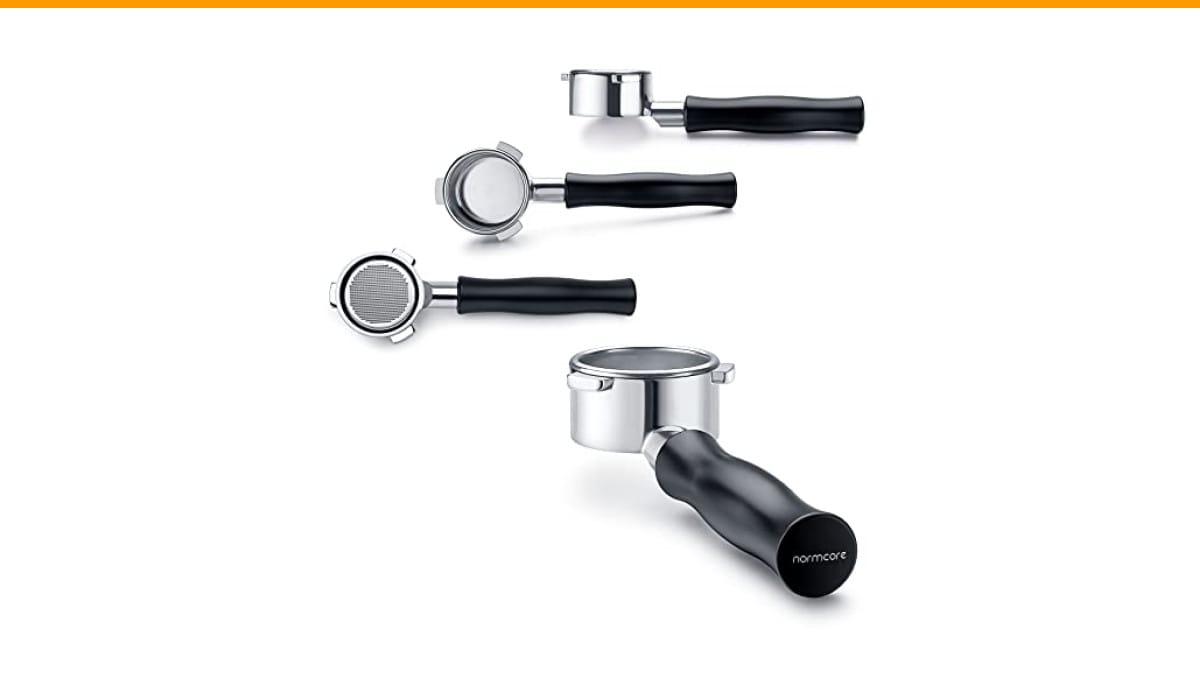
If you own a Breville Barista Express or Pro, a solid starting point is the Check Price on Amazon. It includes an 18g filter basket, fits the 54mm Breville group head, and its lathed aluminum handle feels far more premium than its price suggests. It is a sensible reference point for the mid-range tier discussed below.
The Real Cost of Going Bottomless: Why Price Varies So Much
Walk into any coffee gear shop and you will see bottomless portafilters ranging from $20 to well over $150. The spread confuses people. A metal basket holder and a handle cannot possibly justify a 7x price difference, right? The reality is more nuanced.
Three factors drive the price: material quality, machining tolerances, and brand positioning. A $25 portafilter typically uses a cast aluminum handle with a rough finish. The ears that lock into your group head might be slightly uneven, which causes the basket to sit crooked. That leads to uneven extraction before you even pull a shot.
At $60 and above, you are paying for precision. The ears are machined to tight tolerances so the basket sits perfectly level. The handle is often anodized aluminum or walnut, balanced so the weight sits in your palm rather than pulling the portafilter downward. These details matter when you are pulling multiple shots in a row.
There is also a brand tax. Some manufacturers charge a premium because their name appears on espresso machine forums. You are not always getting better metal — sometimes you are paying for the logo. That is why the value-per-dollar conversation matters more than the sticker price.
Price Tiers Explained: Budget ($20-$35), Mid-Range ($35-$60), Premium ($60+)
Here is the honest breakdown of what each price tier delivers. Use this as your baseline before considering your specific machine.
What Your Money Actually Buys at Each Tier
Budget ($20-$35): This is the entry ticket. You get a functional portafilter with a basic handle, usually plastic or uncoated metal. The ears fit standard group heads but may have minor imperfections. The basket included is usually a generic single-wall that works but lacks the precision of a named brand like IMS or VST. For someone with a starter machine who just wants to see their extraction, this tier is acceptable. The catch: you will likely replace it within a year if you get serious about dialing in.
Mid-Range ($35-$60): The sweet spot for most home users. Handles shift to anodized aluminum or quality wood. Machining tolerances tighten noticeably. The portafilter sits level, locks in with a satisfying click, and the weight distribution feels balanced. Many options in this tier include a decent precision basket, which saves you a separate purchase. The Normcore 54mm mentioned earlier lives here. It is the tier where you stop fighting your equipment and start focusing on your technique.
Premium ($60+): This is where you find the E61-style heavyweights and boutique manufacturers. Handles are often hand-finished walnut or precision-milled stainless steel. The fit is flawless. Some models feature a slight taper or ergonomic contour that makes long sessions comfortable. The real difference is consistency — every unit comes out identical, and the quality control means you are unlikely to get a dud. For a home barista, this tier is a luxury, not a necessity. For a small café or a serious enthusiast pulling ten-plus shots daily, the ergonomics and durability justify the cost.
The Hidden Costs: Baskets, Screens, and Tools You’ll Need
Here is where most buyers get blindsided. The portafilter itself is only half the equation. A bottomless portafilter exposes your basket’s flaws, which means you will quickly feel the pull to upgrade supporting gear.
Precision baskets: The stock basket that ships with most machines has rounded edges and inconsistent hole patterns. These cause channeling. A precision basket from IMS or VST costs $25-$40. The difference is immediate — cleaner flow, better crema, and fewer dead spots. If you buy a budget portafilter with a generic basket, factor this upgrade into your total spend.
WDT tools: A bottomless portafilter reveals distribution issues you never noticed. A simple WDT tool (essentially thin needles to break up clumps) costs $10-$20 and dramatically improves shot consistency. Some baristas use a paperclip, but a proper tool is easier to handle.
Puck screens: A stainless mesh screen sits on top of the coffee puck. It distributes water more evenly and keeps the group head cleaner. These run $10-$15 each. They are not mandatory, but they pair well with bottomless extraction and reduce the frequency of backflushing.
Better tamper: Your stock tamper likely does not fit your new basket perfectly. A proper 53.3mm or 58.35mm tamper costs $30-$60. A poor-fitting tamper causes uneven compaction, which shows up immediately on a naked portafilter.
Add it up: a $30 budget portafilter plus a $35 basket, $15 WDT tool, and $30 tamper equals $110. Suddenly the $60 portafilter that included a decent basket looks like the smarter financial move. Always calculate the total ecosystem cost, not just the portafilter price.
Matching Your Spend to Your Machine: Breville, E61, and 51mm Models
Your espresso machine’s class should dictate your portafilter budget. Spending $100 on a portafilter for a $200 machine is poor allocation. Conversely, buying a $25 portafilter for a $2,000 E61 setup creates a bottleneck in your workflow.
Why 51mm Options Are Cheaper (and When That’s OK)
Budget machines from Delonghi and similar brands use 51mm baskets. The market for 51mm bottomless portafilters is smaller, which limits competition. Prices hover in the $25-$40 range. The quality is generally lower because manufacturers know these machines are entry-level. The ears are thinner, and the handles feel hollow.
That said, a 51mm bottomless portafilter is still worth buying. It turns a Delonghi Dedica into a surprisingly capable machine. You just need to accept that the portafilter is a consumable item. If it lasts two years, you got your money’s worth. Do not chase a premium 51mm option — they barely exist, and the machine cannot extract the incremental precision anyway.
The E61 Premium: Justified or Overhyped?
E61 group heads are the standard on many prosumer machines. These portafilters use a larger 58mm basket and a heavier construction. The premium pricing on E61 portafilters comes from the sheer mass of metal required. A solid brass or stainless body with a wooden handle weighs nearly a pound. That material cost is real.
Is it worth it? For an E61 owner, yes. The heavy weight helps stabilize the portafilter when you lock it in. The precision machining ensures a tight seal against the group head gasket. A cheap E61 portafilter often leaks or wobbles, which ruins the shot. If you own an E61 machine, budget at least $60 for a quality unit. You will feel the difference every single day.
For Breville users with 54mm machines, the calculus is different. The group head is smaller, and the machine itself is lighter. A massive, heavy portafilter actually feels awkward on a Breville. A mid-range aluminum option like the Normcore balances well without overpowering the machine. Do not assume more money equals better fit for your specific setup.
Direct Comparison: Top Picks Under $50 vs. Premium Icons
To make this concrete, here is a side-by-side look at what separates a strong budget pick from a premium icon. These are general categories, not specific product endorsements.
| Feature | Budget Pick (Under $50) | Premium Icon ($60+) |
|---|---|---|
| Handle material | Cast aluminum or basic plastic | Anodized aluminum, walnut, or stainless |
| Ear machining tolerance | Acceptable, occasional unevenness | Precision-milled, consistent fit |
| Weight distribution | Handle-heavy, can tip forward | Balanced, sits level on counter |
| Included basket | Generic single-wall | Often a precision basket (IMS/VST style) |
| Ergonomics | Basic cylinder shape | Contoured or tapered for grip |
| Durability over 2 years | Possible coating wear, loose fit | Minimal wear, tight lock-in remains |
| Best for | First-time upgraders, casual users | Daily drivers, perfectionists |
The table shows the practical differences. A budget pick gets you 80% of the functionality for 40% of the price. The premium icon delivers better feel and longer lifespan, but it will not magically fix your bad grind technique.
The ‘Try It Cheap’ vs. ‘Buy It For Life’ Strategy
So which approach should you take? The answer depends on your current skill level and how often you pull shots.
Try it cheap: If you are new to espresso and still learning to dial in, start with a $25-$30 portafilter. You will likely make mistakes — uneven tamping, wrong dose, bad grind size. A cheap portafilter lets you learn the diagnostic process without a big financial commitment. Once you consistently pull decent shots, you will know whether the hobby is worth deeper investment. If you abandon espresso in six months, you are only out the cost of a few bags of coffee.
Buy it for life: If you pull two or more shots daily and have a decent grinder, skip the cheap tier. Go straight to a $50-$70 option with a precision basket. The reasoning is simple: you will buy the cheap one, use it for a month, and immediately feel its limitations. The upgrade path is inevitable. Buying once saves you money and frustration. The Breville maintenance routine is already a chore — do not add a flimsy portafilter to the list of things you fight with.
There is a middle path. Buy a cheap portafilter to learn, but plan to replace it within three months. Consider the initial purchase a rental fee. This works well if you are unsure about your machine’s longevity or your own commitment to the hobby.
Frequently Asked Questions on Budget and Value
Does a more expensive bottomless portafilter improve the taste of my espresso?
Indirectly, yes. The portafilter itself does not add flavor. But a precision-machined portafilter holds the basket level and seals properly. That consistency reduces variables in your extraction. A cheaper unit that sits crooked or leaks will cause channeling, which ruins the shot. The taste improvement comes from consistency, not the metal itself.
Can I use my existing basket with a new bottomless portafilter?
Usually, yes, if the basket is the correct diameter. Most bottomless portafilters accept standard baskets. However, your stock basket may be low quality. You will see its flaws immediately on a naked portafilter. Budget for a precision basket if your current one has rounded edges or inconsistent hole patterns.
Is a 51mm bottomless portafilter worth buying for a budget machine?
Yes, if you want to improve your extraction. It will not turn a $150 machine into a $1,000 machine, but it will show you what is happening during the shot. The limitations of the machine’s pressure and temperature stability will still exist. Treat it as a learning tool, not a performance upgrade.
How much should I spend on a bottomless portafilter for a Breville Barista Express?
Target the $35-$50 range. The 54mm group head does not need a heavy, expensive portafilter. A mid-range option with an anodized aluminum handle and a decent basket is the right balance. Spending more on a 58mm E61-style unit is wasted money because it will not fit your machine.
Do I need a bottomless portafilter if I already use a spouted one?
No, you do not need one. Plenty of baristas pull excellent shots with spouted portafilters. But if you are troubleshooting inconsistent shots, the bottomless version gives you visual feedback that a spout hides. It is the difference between guessing and knowing. Most enthusiasts find it worth the investment for the diagnostic value alone.
Final Verdict: The Smartest Way to Spend Your Money
Here is the practical takeaway. Do not overthink the portafilter price. Match it to your machine and your skill level.
- Own a 51mm budget machine? Spend $25-$35 and treat it as a consumable.
- Own a 54mm Breville? Spend $35-$50. The Normcore unit is a strong reference point, but check the current price on Amazon before deciding.
- Own an E61 machine? Spend $60 minimum. The weight and precision matter for daily use.
- Factor in the hidden costs: a precision basket ($25-$40) and a WDT tool ($10-$20) are the two upgrades that matter most.
- Never buy a portafilter without checking the included basket. A good basket adds $30 of value to a mid-range purchase.
- Skip the brand tax. A $100 portafilter from a famous manufacturer is not twice as good as a solid $50 option.
- If you are unsure, buy cheap first. Learn the diagnostic process, then upgrade once you know what you actually need.
Your espresso workflow is a chain. The grinder, the machine, the basket, the tamper — every link matters. The portafilter is just one link, but it is the one you hold in your hand every morning. Spend enough to make that moment pleasant, but do not let the hardware budget overshadow the real goal: better coffee. For more on keeping your gear in shape, check out our guide on coffee maker cleaning frequency.
Products related to this article
Sponsored / affiliate links. As an Amazon Associate I earn from qualifying purchases. I may earn additional commission from eligible campaigns.
 Coffee Espresso Machine Handle Replacement Parts, Cafe Bracket Handle for Lidl Silvercrest CM4621 CM4218 KF5002 KF500S Barista (for 51mm Portafilter Basket - Not included)
 18/10 Stainless Steel Kitchens Set with Wooden Handle
 Stainless Steel Moka Pot Pressed Powder Tool for 2 4 6 9 Cup Espresso Coffee Brewer(6 Cups)