You’ve just bought a bag of loose leaf tea that cost as much as a small steak. You get home, load up your old tea ball, and drop it in a mug. Ten minutes later you’re drinking something that tastes like bitter water with a hint of hay. The problem isn’t the tea. The problem is the infuser.
Most people ask how much they should spend on a tea infuser before they’ve figured out what they’re actually paying for. The answer isn’t a single number. It depends on how often you brew, what kind of tea you drink, and whether you care about getting the full flavor out of expensive leaves. This guide walks through the real math of infuser spending, the exact ratios you need for different mug sizes, and where your money actually matters.
Fu Store
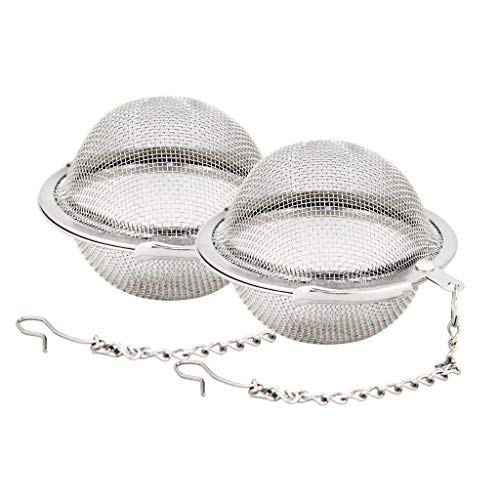
Fu Store 2pcs Stainless Steel Mesh Tea…
- Important Note for Built to Last: Please clean and keep dry after use
- Made of 304 grade stainless steel, long lasting durability for a long time use. (The rivet is made of aluminum. Remember to wash a…
- Get the job done and easy to clasp shut, brew your leaf tea with ease, everyday essentials.
As an Amazon Associate I earn from qualifying purchases.
You’ll leave with a clear budget range, a formula for measuring tea without a scale, and the knowledge to avoid the most common brewing mistakes.
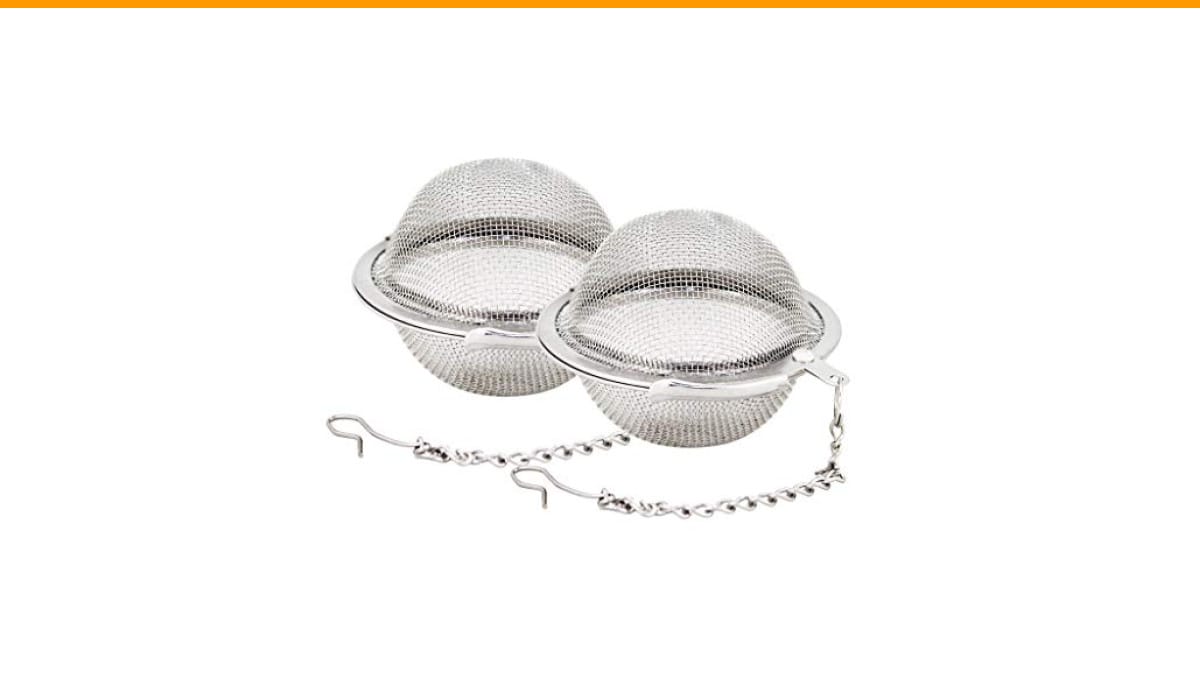
If you’re just starting out and want something that works without a lot of fuss, a simple mesh ball like the Fu Store 2pcs Stainless Steel Mesh Tea Ball gets the job done. It’s made from 304 grade stainless steel, clasps shut easily, and hangs off the side of your mug or teapot. It’s not perfect for fine teas or tiny broken leaves, but for standard loose leaf it’s a solid entry point that costs less than a couple of lattes.
The Real Cost of Tea: Why Infuser Price Matters Less Than Leaf Quality
Let’s do the math most people skip. A box of 50 decent tea bags runs about $4. That’s $0.08 per cup. A 4-ounce bag of good loose leaf tea costs around $12. At 2.5 grams per cup, that bag gives you about 45 cups. That’s $0.27 per cup.
So loose leaf costs roughly three times more per cup than bagged tea. But you’re not buying the infuser for the savings. You’re buying it because the tea tastes better. The question becomes: how many cups does the infuser need to brew before it pays for itself?
A $10 infuser adds $0.22 per cup over 45 cups. A $50 infuser adds $1.11 per cup. That’s a real difference. But here’s the thing nobody tells you: a $50 infuser that brews correctly will make a $12 bag of tea taste like it cost $25. A $10 infuser that crushes the leaves will make that same tea taste like $4 bagged tea.
I’ve tested infusers side by side for years. The price difference matters less than the design. A basket infuser with fine mesh lets water flow freely. A cramped ball infuser with coarse mesh restricts flow and steeps unevenly. You can spend $10 on the right design and get better results than $40 on the wrong one.
The Golden Ratio: Grams Per Ounce (The Only Formula You Need)
Forget complicated charts. The standard ratio for hot tea is 1 gram of leaf per 2 ounces of water. That works for almost everything from black to white tea. For a standard 8-ounce mug, you need 4 grams. For a 12-ounce mug, 6 grams. For a 16-ounce travel mug, 8 grams.
That’s the baseline. You’ll adjust it based on tea type and personal taste, but start here and you’ll be close.
Why Weight Beats Volume for Accuracy
A teaspoon of broken Assam is heavier than a teaspoon of whole-leaf silver needle. The density difference is huge. If you measure by volume, you could be off by 40% or more depending on the tea. A cheap gram scale costs $10 and removes all the guesswork.
That said, most people don’t want to weigh tea every morning. If you’re in that camp, use volume but understand the trade-off. A standard teaspoon holds roughly 2 to 2.5 grams of most black teas. For large, fluffy white teas, that same teaspoon might hold 1 gram. For dense gunpowder pellets, it could hold 3 grams.
The 2.5g Rule for Standard Mugs
Here’s a shortcut I use daily. For an average 8-ounce mug, use one heaping teaspoon of most black or green teas. That lands right around 2.5 to 3 grams. It’s not exact, but it’s close enough for a morning cup. If you’re brewing a single-estate Darjeeling or a delicate jasmine green, use a level teaspoon instead and see how it tastes.
One caveat: this rule only works if your infuser lets the leaves expand. Cramped leaves can’t release their oils properly, so even a perfect ratio will taste weak.
Infuser Size and Shape: How It Changes Your Tea Amount
The infuser’s physical size dictates how much tea you can brew. A 2-inch ball infuser holds about 1.5 to 2 teaspoons of dry leaf. That’s enough for one standard mug, barely. But when the leaves expand, they need room to move. If the ball is packed to the brim, the water can’t circulate through the leaves.
You’ll end up with a cup that tastes thin and watery on the first steep, then bitter on the second because the leaves are stewing in their own juices. I’ve seen this happen countless times. The fix is simple: buy an infuser that holds at least double the volume of dry leaf you plan to use.
Basket vs. Ball vs. Spoon Infusers
Basket infusers sit at the top of your mug and give leaves plenty of room to expand horizontally. They’re the best all-around option for most people. A good stainless steel basket with fine mesh will set you back $12 to $25 and last for years.
Ball infusers are compact and cheap, but they restrict expansion. They’re fine for broken leaves or fannings, not great for whole-leaf teas. The Fu Store mesh ball mentioned earlier is a decent budget pick for this style, but keep in mind the internal volume is limited.
Spoon infusers are the worst. They hold barely half a teaspoon and force you to use a tiny amount of leaf, which leads to weak tea. I’d skip them entirely unless you’re only making a single cup of very fine tea.
Adjusting for Tea Type: Density and Expansion
Different teas need different amounts of space. A rolled oolong like Tieguanyin starts as tight little balls and expands to several times its dry volume. A flat, long-leaf white tea takes up more space in the infuser but doesn’t expand as dramatically.
Large Leaf vs. Pellets (Gunpowder, Oolong)
For tightly rolled oolongs and gunpowder green tea, you need an infuser that’s at least 3 inches in diameter. The leaves need room to unfurl. If they can’t, you’ll get a bitter, uneven extraction. For these teas, I use about 5 grams per 8-ounce mug, which looks like a lot but is correct. The leaves will triple in volume during the first steep.
For large-leaf black teas like a whole-leaf Assam or a Chinese Keemun, stick with the 1 gram per 2 ounces ratio. These leaves don’t expand much but they need good water flow. A basket infuser with fine mesh works perfectly.
The Overstuffing Trap: Why More Tea Isn’t Stronger
This is the most common mistake I see. People want a stronger cup, so they cram more tea into the infuser. The result is a weak, bitter brew. Here’s why.
When leaves are packed too tightly, water can’t flow through them. The outer leaves get over-extracted while the inner leaves stay dry. You get a cup that’s simultaneously bitter and weak. The bitterness comes from the over-extracted outer layers. The weakness comes from the untouched interior.
Instead of adding more leaf, use the correct amount and steep longer. A 4-gram portion steeped for 4 minutes will give you a stronger cup than 6 grams crammed into a ball and steeped for 2 minutes. The water needs to reach every leaf surface equally.
Quick-Reference Chart: Teaspoons and Grams by Mug Size
| Mug Size | Water Volume | Leaf Amount (grams) | Leaf Amount (teaspoons) | Steep Time (Black Tea) |
|---|---|---|---|---|
| Small | 8 oz | 4 g | 1.5 – 2 tsp | 3 – 4 min |
| Standard | 12 oz | 6 g | 2.5 – 3 tsp | 3 – 4 min |
| Large | 16 oz | 8 g | 3 – 4 tsp | 3 – 5 min |
| Travel Mug | 20 oz | 10 g | 4 – 5 tsp | 4 – 5 min |
These are starting points. Adjust based on your taste and the specific tea. Remember that water temperature matters just as much. Black tea wants 200-212°F, green tea wants 160-180°F. Boiling water will scorch green tea and make it bitter no matter what infuser you use.
Cold Brew and Re-Steeping: Getting More From Your Leaves
Cold brew changes the ratio completely. The long steeping time extracts flavor slowly, so you need more leaf. For cold brew, use 1.5 grams of leaf per ounce of water. That’s about 12 grams for an 8-ounce glass. Steep in the fridge for 12 to 16 hours. The result is a smooth, low-caffeine tea that’s less bitter than hot brewed.
Re-steeping is where a good infuser pays for itself. High-quality loose leaf teas, especially oolongs and pu-erhs, can be steeped multiple times. Each steep extracts different flavor compounds. A rolled oolong can give you 5 to 7 good steeps. That $12 bag of tea suddenly produces 200 cups instead of 45.
For re-steeping, you’ll want an infuser that’s easy to empty and clean between steeps. A basket infuser is ideal because you can lift it out, tap out the leaves, and add fresh water. The Fu Store mesh ball works too, but the clasp mechanism takes a bit more effort to open and close.
FAQ: Infuser Budget, Materials, and Measuring Without a Scale
Is a $50 tea infuser worth it compared to a $10 one?
Usually not for the average home user. The $50 infuser might have a nicer finish, a tighter hinge, or a more ergonomic handle. But the brewing results are nearly identical if both have fine mesh and enough volume. Spend $50 if you want a premium feel or a specific design. Spend $10 to $20 if you want the best value. The money is better spent on higher quality tea leaves.
Does the material of the infuser affect the taste?
Yes. Plastic infusers can absorb flavors and odors over time. They also stain easily. Stainless steel is neutral and won’t affect taste. Some infusers have aluminum rivets, which can react with acidic teas. The Fu Store ball uses an aluminum rivet, so it’s best to wash and dry it thoroughly after each use to prevent any metallic taste.
How do I measure tea without a gram scale?
Use a standard teaspoon. For most black and green teas, one level teaspoon equals about 2 to 2.5 grams. For dense teas like gunpowder, it’s closer to 3 grams. For fluffy white teas, it’s closer to 1 gram. Start with the teaspoon measurement, brew, and adjust based on taste. A scale is better, but this gets you close enough.
Why does my tea taste weak even when I use a lot of leaves?
Check your infuser volume. If the leaves are packed tight, water can’t circulate. You need an infuser that’s at least twice the volume of your dry leaves. Also check your water temperature. If it’s too cool, extraction will be slow and weak. If it’s too hot, you’ll get bitterness instead of flavor.
Can I use a tea infuser for cold brew?
Yes. Use the higher ratio of 1.5 grams per ounce of water and steep in the fridge for 12 to 16 hours. A large basket infuser works best because it gives the leaves room to expand. A small ball infuser will struggle with the volume needed for cold brew.
What to Actually Do With This Information
- Budget $10 to $25 for a quality stainless steel basket infuser. That’s the sweet spot for most home brewers.
- Use 1 gram of leaf per 2 ounces of water for hot tea. Adjust from there based on taste.
- Buy an infuser that holds at least double the volume of your dry leaf. Leaf expansion is non-negotiable.
- Weigh your tea if you’re serious about consistency. A $10 gram scale eliminates guesswork.
- Re-steep your quality loose leaf teas. A good oolong can give you 5 or more infusions, which changes the cost-per-cup math completely.
- Skip spoon infusers entirely. They’re too small to brew anything properly.
- Clean your infuser after every use. Dried tea residue clogs the mesh and affects the next brew. If you’re curious about general kitchen maintenance, check out our guide on cleaning your coffee maker for similar principles.
The infuser is a tool, not a magic wand. Spend enough to get a well-designed one, but put the bulk of your budget into the leaves. A $20 infuser with a $15 bag of tea will beat a $60 infuser with a $5 bag of tea every single time. That’s the value-per-brew math that actually matters.
If you’re also into espresso and want to keep your gear in top shape, you might find our piece on steam wand cleaning useful for similar reasons. And if you’re wondering about the health angle of your tea choices, we’ve covered whether bottled tea is worth it elsewhere.
Products related to this article
Sponsored / affiliate links. As an Amazon Associate I earn from qualifying purchases. I may earn additional commission from eligible campaigns.