You pull a shot, expecting that syrupy tiger-striped pour, and instead you get a spray of coffee in ten different directions. Or worse, the shot tastes like burnt rubber and regret. You’ve adjusted your grind, checked your dose, and your tamp is level. But the problem didn’t go away. The culprit might be sitting right in front of you, covered in a thin film of rancid coffee oil.
A bottomless portafilter is the best diagnostic tool you can put on your espresso machine. It shows you channeling, uneven extraction, and distribution issues in real time. But that open design also means the basket and the metal head are exposed to air, heat, and sticky coffee oils every single time you brew. Those oils oxidize, turn rancid, and then find their way into your next shot. This guide walks you through exactly how to clean a bottomless portafilter so it stays a diagnostic tool instead of becoming a source of off-flavors.
You’ll learn the daily routine that takes under a minute, the weekly chemical soak that dissolves stubborn oils, and the monthly descale for hard water buildup. You’ll also learn how to diagnose whether your shot tastes sour or bitter because of a dirty portafilter, a clean one, or something else entirely.
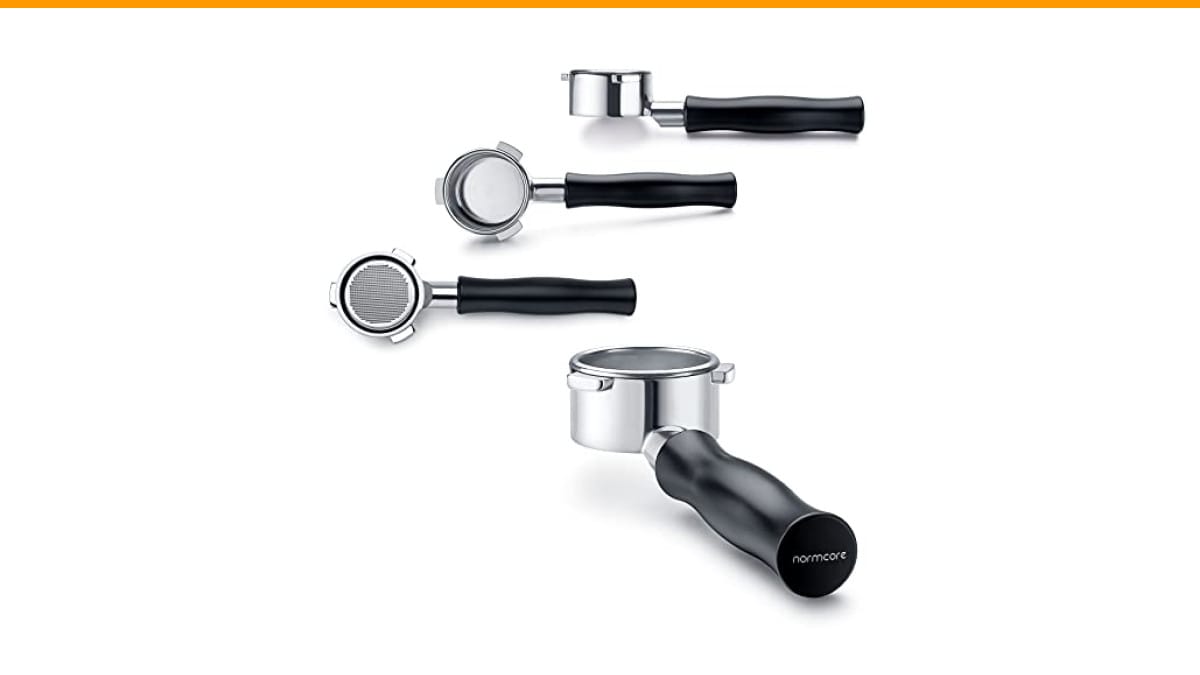
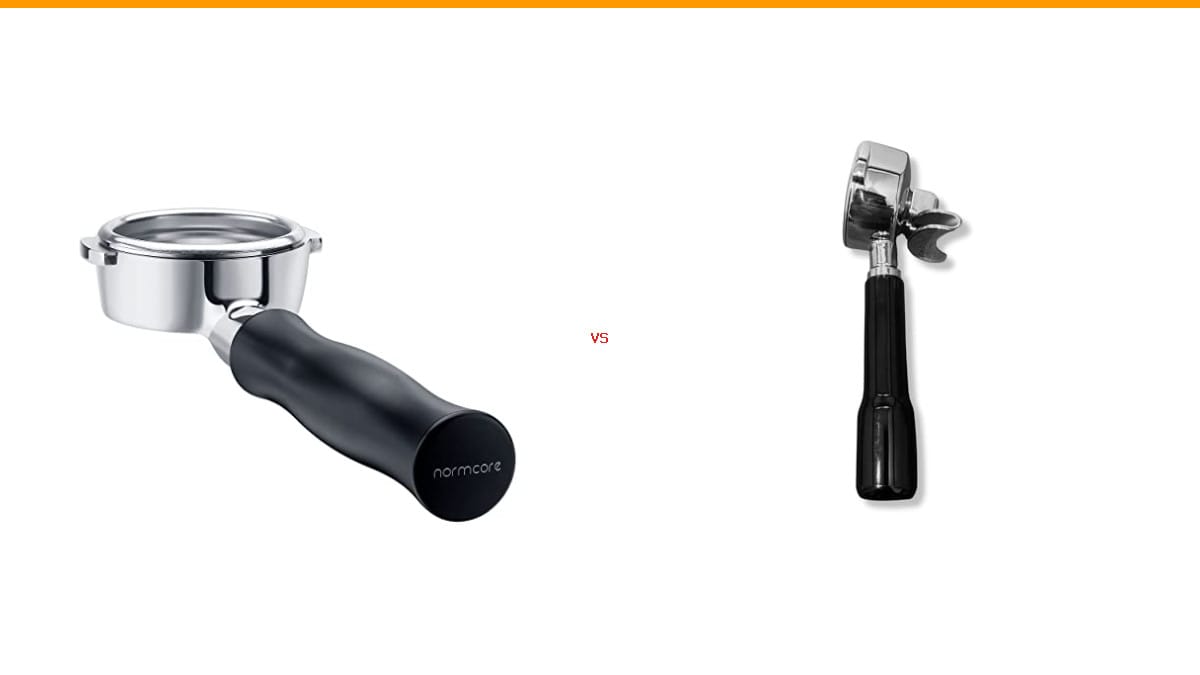
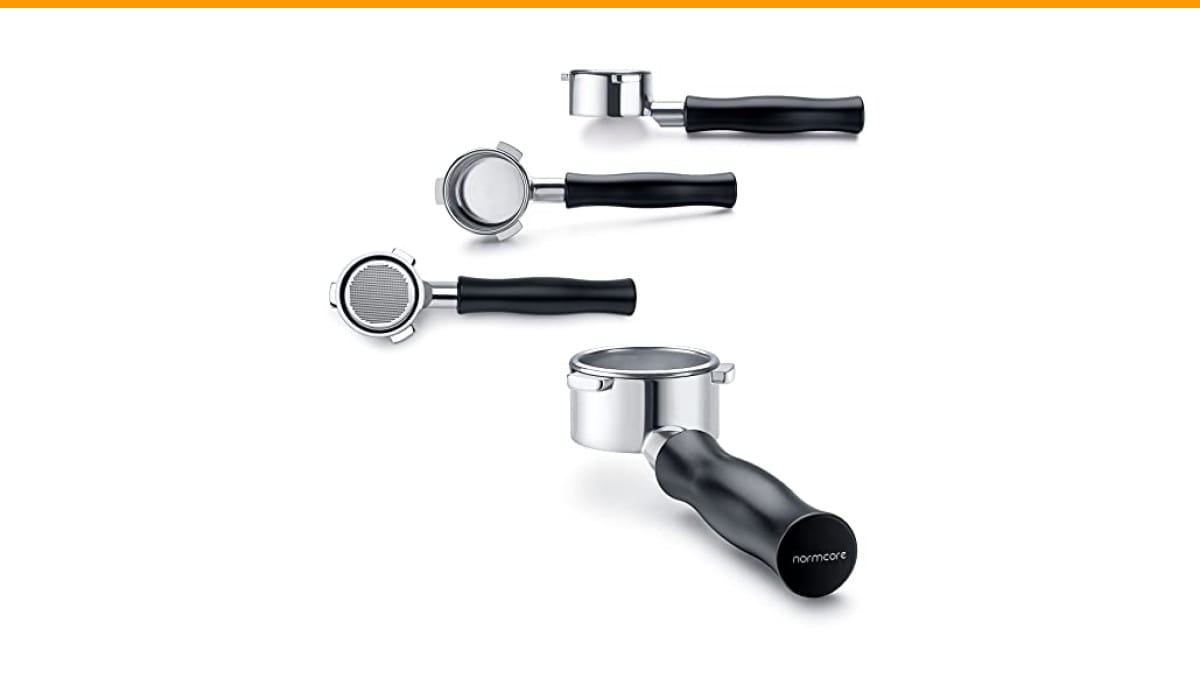
If you’re using a Breville machine, the Normcore 54mm bottomless portafilter is a solid upgrade. The anodized aluminum handle feels comfortable, and since there’s no bottom, you can swap in any 54mm basket you like. It makes the cleaning process easier too, because you can see exactly where the buildup is.
Why a Bottomless Portafilter Gets Dirty Faster
Think about what happens during a shot. Hot water hits coffee grounds at around 200°F, extracts oils and dissolved solids, and then drips through the basket. With a spouted portafilter, the spouts are the first thing the coffee touches after the basket. With a bottomless one, the coffee falls straight onto your scale or cup, but the entire underside of the basket is exposed to the heat and the spray.
That spray is the key. When you get slight channeling, even on a good shot, fine coffee particles get forced through the laser-cut holes. Some stick to the edges of those holes. Others get baked onto the underside of the basket by the heat of the group head. Over time, that layer of burnt coffee oil and micro-grounds builds up and starts restricting water flow. You’ll notice the shot starts taking longer, or you get a bitter taste that wasn’t there before.
The metal head of the portafilter, the part that locks into the group head, also collects residue. Every time you lock in the portafilter, the gasket presses against the top rim. Coffee oils and water residue get trapped in that tiny gap. If you never clean it, the gasket area becomes a breeding ground for stale coffee smells and, eventually, mold.
So a bottomless portafilter isn’t harder to clean than a spouted one. It just shows you the dirt more clearly. And because you can see it, you have no excuse to ignore it.
Tools You Need for a Pro-Level Clean
You don’t need a drawer full of specialty gear. Most of these items you probably already own. But using the right tool makes the difference between a portafilter that looks clean and one that actually is clean.
- Cafiza or espresso machine cleaning detergent: This is a powder or tablet designed to break down coffee oils. Regular dish soap won’t cut it because it doesn’t emulsify coffee oil well, and it leaves a residue that ruins crema.
- A stiff nylon brush: A portafilter brush with angled bristles works best. You need something that can get into the corners of the basket and the grooves of the metal head.
- An old toothbrush: For the laser-cut holes and the rim of the basket. A toothbrush has finer bristles than a portafilter brush.
- A small bowl or container: For the chemical soak. Glass or ceramic works better than plastic because plastic can absorb the detergent smell.
- Microfiber cloth: For drying and polishing. Paper towels leave lint.
- White vinegar or citric acid: Only for descaling, not for daily cleaning. More on that below.
That’s it. No ultrasonic cleaner required, though if you have one, it works wonders on baskets. But for most home users, a brush and a soak are plenty.
One thing I’ll add from experience: don’t use a metal scrubber on the basket. It will scratch the surface, and those scratches become hiding spots for coffee residue. Stick with nylon or brass brushes.
The Daily 30-Second Routine
This is the habit that keeps your portafilter from ever getting to the point where you need a deep clean. Do this every time you finish pulling shots, not just once a day.
Wiping and Dry-Firing the Basket
Immediately after your last shot, knock the puck out and rinse the basket under hot running water. Get the water hot, as hot as your tap goes. The heat helps melt the oils before they cool and harden.
Then do the dry fire. Lock the empty, wet basket into the group head and run water through it for about five seconds. This is the trick most people skip. The steam and hot water blast through the holes and push out any coffee particles stuck in them. You’ll see the water coming through the bottom turn from brown to clear. That’s the signal you’re done.
Wipe the basket and the metal head with a dry cloth. Don’t leave them wet, because standing water in the basket can cause mineral deposits if you have hard water.
Inspecting the Screen and Gasket
While the portafilter is still locked in, take a look at the group head screen. If you see coffee grounds stuck to it, wipe it with a damp cloth. The screen is the part of the machine that distributes water over the coffee. If it’s clogged, your shots will run slow and taste bitter no matter how clean your portafilter is.
Also check the gasket, the rubber ring inside the group head. If it’s coated in black sludge, that’s a sign you’re not cleaning the top rim of your portafilter well enough. A quick wipe with a damp cloth usually fixes it. If the gasket looks cracked or hardened, it’s time to replace it, but that’s a separate job.
This daily routine takes less than a minute once you get the hang of it. It prevents the buildup that makes weekly cleaning a miserable chore.
The Weekly Deep Clean (Chemical Soak)
Even with a perfect daily routine, coffee oils will slowly accumulate in the microscopic pores of the metal. That’s where the weekly soak comes in. If you skip this, you’ll start noticing a dull, bitter taste in your shots that no amount of grinding adjustment can fix.
Mixing the Solution and Soaking Time
Fill a small bowl with hot water, about two cups. Add one scoop of Cafiza, or one cleaning tablet if that’s what you have. Stir it until the powder dissolves completely. The water should turn a pale blue or green.
Submerge the entire portafilter head, including the basket, in the solution. Make sure the basket is fully covered. Let it soak for 10 to 15 minutes. Don’t leave it overnight, because the detergent can be corrosive to aluminum if left too long. The metal head of most portafilters is chrome-plated brass or stainless steel, but the handle might be aluminum or wood, and that’s a different story.
After 10 minutes, you’ll see the water turn brownish as the oils lift off the metal. That’s the detergent working.
Scrubbing the Holes and Spout
Take the basket out of the solution and hold it under running water. Use your portafilter brush to scrub the inside and outside. Pay special attention to the underside, where the laser-cut holes are. Those tiny holes are where the buildup hides.
For stubborn spots, use the toothbrush. Angle it so the bristles push into the holes. You want to see the water running through each hole clearly when you rinse. If some holes are still blocked, put the basket back in the solution for another five minutes and scrub again.
If you’re using a spouted portafilter, scrub the spouts too. Coffee residue collects on the inside of the spout and can flake off into your cup. A pipe cleaner works well for this, but a toothbrush is usually enough.
Rinse everything thoroughly with hot water. You should not be able to smell any detergent residue. If you can, soak again in plain hot water for a few minutes.
Dry everything completely before storing. A damp basket in a drawer is a recipe for mold.
The Monthly Scale Removal (Descaling the Basket)
Here’s the part most cleaning guides get wrong. Coffee oil buildup and mineral scale are two different problems that require two different cleaning agents. Cafiza dissolves oils. It does not dissolve calcium and magnesium scale. If you have hard water, you’ll eventually get a white, chalky film on your portafilter basket and the metal head. That film insulates the metal and can affect the temperature of your extraction.
To remove scale, you need an acid. White vinegar works, but it smells strong and can leave a vinegary taste if you don’t rinse thoroughly. Citric acid powder is better. It’s odorless and works faster.
Mix one tablespoon of citric acid powder into two cups of hot water. Submerge the portafilter head and basket. Let it soak for 20 to 30 minutes. You’ll see bubbles forming as the acid dissolves the scale. If the buildup is heavy, you might need a second soak.
After the soak, scrub gently with a nylon brush and rinse thoroughly. The metal should feel smooth, not rough or chalky.
Don’t do this more than once a month unless you have extremely hard water. Acid can slowly eat away at the chrome plating if you overdo it. And never mix citric acid with Cafiza in the same soak. They neutralize each other and you get a useless solution.
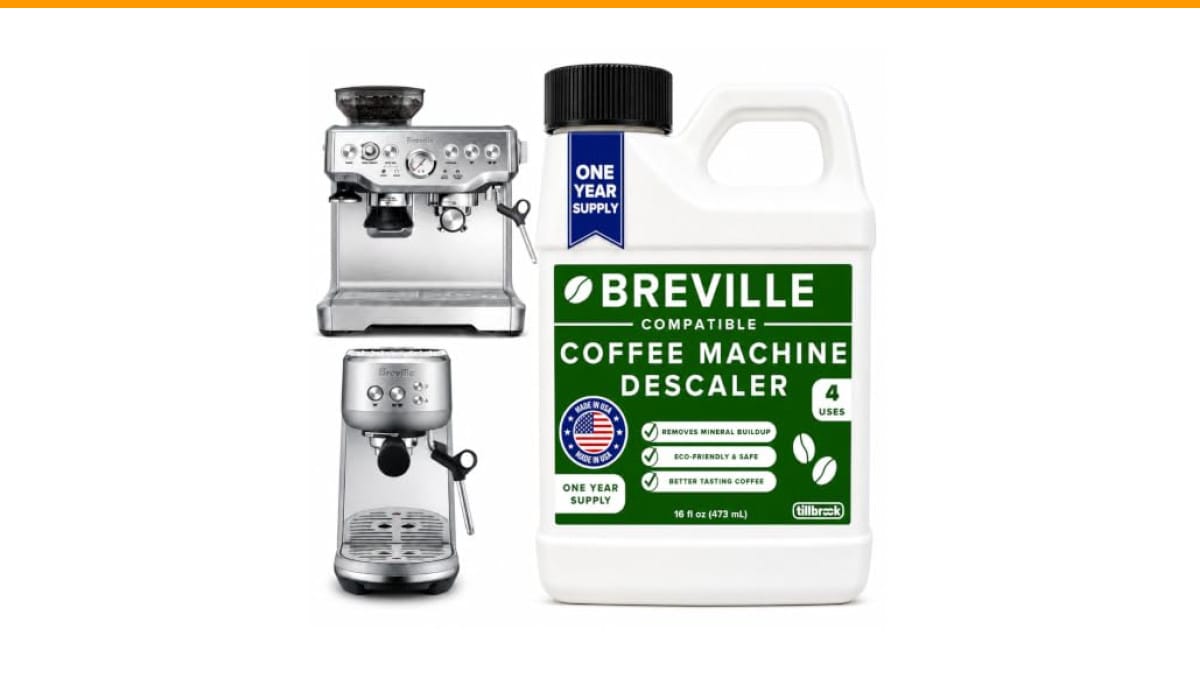
If you’re dealing with scale inside your machine itself, not just the portafilter, that’s a different process. Check our guide on Breville descale light for machine-specific steps.
How to Clean the Handle and Collar
The metal head gets all the attention, but the handle needs care too, especially if it’s wood. Wood handles are gorgeous, but they’re porous. Coffee oils and water will soak in, darken the wood, and eventually cause it to crack.
For a wood handle, never submerge it in water. That’s a one-way ticket to a warped, split handle. Instead, wipe it down with a damp cloth after each use. Once a month, apply a small amount of food-safe mineral oil or beeswax to the wood. Rub it in with a cloth and let it sit for an hour, then buff it off. This keeps the wood sealed and prevents it from drying out.
Plastic or resin handles are more forgiving. You can wipe them with a damp soapy cloth, but don’t soak them either. The joint where the handle meets the metal collar is usually a weak point. Water can get inside and rust the screw or loosen the adhesive.
The collar, the metal ring that connects the handle to the head, is often the dirtiest part. Coffee drips down there and gets baked on. Use a toothbrush dipped in your Cafiza solution to scrub the collar, then rinse and dry.
The Normcore handle mentioned earlier is anodized aluminum, which is nice because it doesn’t absorb oils like wood does. A quick wipe is all it needs.
Troubleshooting: Sour vs. Bitter Shots
Here’s where the diagnostic angle comes in. Your portafilter’s cleanliness level directly affects the taste of your espresso. The trick is learning which flavor flaw points to which problem.
A sour shot tastes sharp, like lemons or vinegar. This is usually a sign of under-extraction. The water didn’t pull enough flavor out of the coffee. A dirty portafilter can cause this because the buildup in the basket restricts water flow, which messes with your pressure and flow rate. But more often, sour shots are a grind or dose problem. If your portafilter is clean and your shot is still sour, you need to grind finer.
A bitter shot tastes harsh, burnt, or ashy. This is over-extraction. The water pulled too much out of the coffee. Here’s the connection: a dirty portafilter with old, rancid oils will absolutely make your shot bitter. Those burnt oils get re-extracted by the fresh water and end up in your cup. If your shot is bitter and you haven’t deep cleaned your portafilter in a while, clean it first before you change your grind.
There’s also a third case: a soapy taste. This happens when you don’t rinse your portafilter thoroughly after a chemical soak. The detergent residue creates a slick, soapy flavor that ruins the shot. If you taste this, your portafilter is too clean, or rather, it’s not rinsed well enough. Run hot water through the basket for 30 seconds to flush out any remaining detergent.
So the order of operations when troubleshooting a bad shot is: clean the portafilter properly, then adjust your grind. Cleanliness first, then variables. That way you’re not chasing a grind problem that’s actually a cleanliness problem.
Common Mistakes That Ruin Your Portafilter
People damage their portafilters more often by cleaning them wrong than by not cleaning them at all. Here are the mistakes I see most often.
Soaking the whole thing, handle included. I already mentioned this, but it deserves repeating. The handle is not waterproof. If you soak a wood handle, it will swell and crack. If you soak a plastic handle, water gets into the joint and rusts the screw. Only the metal head and basket should go in the solution.
Using dish soap. Dish soap leaves a residue that kills crema. You’ll pull a shot that looks like weak tea and tastes flat. Use a dedicated espresso detergent like Cafiza.
Scrubbing with steel wool. This scratches the metal. Scratches hold onto oils and make future cleaning harder. Stick with nylon brushes.
Putting it in the dishwasher. The dishwasher’s high heat and harsh detergent will strip the chrome plating off the metal head and ruin any wood handle. Always hand wash.
Ignoring the group head gasket. You can clean your portafilter perfectly, but if the gasket is covered in old coffee residue, it will transfer that grime to your portafilter the next time you lock it in. Clean the gasket as part of your weekly routine.
Forgetting to descale. If you have hard water, scale will build up inside the basket holes and restrict flow. This is a silent killer of good espresso because it happens slowly over weeks. You’ll just think your shots are getting worse for no reason.
Avoid these mistakes and your portafilter will last for years. If you do manage to damage one, it’s not the end of the world. Replacement baskets are cheap, and a new portafilter is a reasonable upgrade. Just make sure you check the current price before buying anything.
FAQ: Dishwasher, Vinegar, and Frequency
Can I put my bottomless portafilter in the dishwasher?
No. The dishwasher is too harsh. The high heat and alkaline detergents will dull the chrome finish and can damage the handle. Hand washing takes 30 seconds. Just do it.
Is vinegar okay for cleaning a portafilter?
Vinegar works for descaling, but it’s not great for daily cleaning. It doesn’t dissolve coffee oils well, and the smell lingers. Use Cafiza for oils and citric acid for scale. If you only have vinegar, use it sparingly and rinse extremely well.
How often should I clean my bottomless portafilter?
Rinse and dry it after every use. Do a chemical soak once a week. Descale once a month if you have hard water. If you pull more than four shots a day, move the chemical soak to twice a week.
Why does my espresso taste bitter even after cleaning?
If the portafilter is clean and the shot is still bitter, the problem is your grind, dose, or water temperature. Grind coarser, reduce the dose, or lower the temperature. Bitter can also come from stale coffee beans. Check your roast date before you blame the equipment.
Can I use baking soda to clean my portafilter?
Baking soda is mildly abrasive and can scratch the basket. It’s not ideal. If you’re in a pinch, make a paste with water and rub gently, but rinse thoroughly. Cafiza is a better long-term solution.
Final Checklist for a Perfect Shot
- Rinse and dry the portafilter after every shot. Don’t let oils sit overnight.
- Dry fire the empty basket for five seconds to clear the holes.
- Soak in Cafiza solution once a week for 10-15 minutes, then scrub with a nylon brush.
- Descale with citric acid once a month if you have hard water.
- Never soak the handle. Wipe it down separately.
- Clean the group head gasket and screen as part of your weekly routine.
- Taste your shots. Sour means clean and grind finer. Bitter means clean the portafilter first.
A clean bottomless portafilter is the difference between guessing and knowing. When you pull a shot and it sprays, you want to be able to trust that the equipment is clean so you can focus on your technique. Spend the 30 seconds a day and the 15 minutes a week. Your espresso will thank you, and so will your taste buds.
For more on keeping your whole setup in shape, check our guides on steam wand cleaning and grinder maintenance. Both are quick reads and will save you from some nasty surprises down the line.
Products related to this article
Sponsored / affiliate links. As an Amazon Associate I earn from qualifying purchases. I may earn additional commission from eligible campaigns.
 Coffee Espresso Machine Handle Replacement Parts, Cafe Bracket Handle for Lidl Silvercrest CM4621 CM4218 KF5002 KF500S Barista (for 51mm Portafilter Basket - Not included)
 Cascade Platinum Plus Dishwasher Detergent Pods Dish Soap Lemon 57 Count
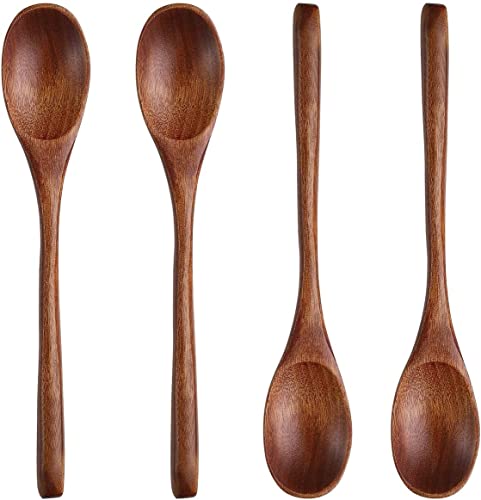 Long Handle Wooden Spoon For Mixing Coffee Tea Jam and Bath Salt In Kitchen, Environmentally Friendly Table Spoon, 8.6 Inches,4 Pieces…