You buy a nice bag of beans, transfer them to a fancy canister, and three days later the beans look dull. The aroma is flat. Maybe you spot tiny droplets inside the lid. That’s the moisture problem, and it ruins more coffee than staleness ever will.
Moisture is the enemy because it accelerates staling and invites mold. Beans are porous; they absorb ambient humidity and release the volatile oils that carry flavor. Once those oils degrade, you can’t brew them back. This guide walks you through the exact mechanics of moisture, the rules for using a canister correctly, and the few tools that actually work.

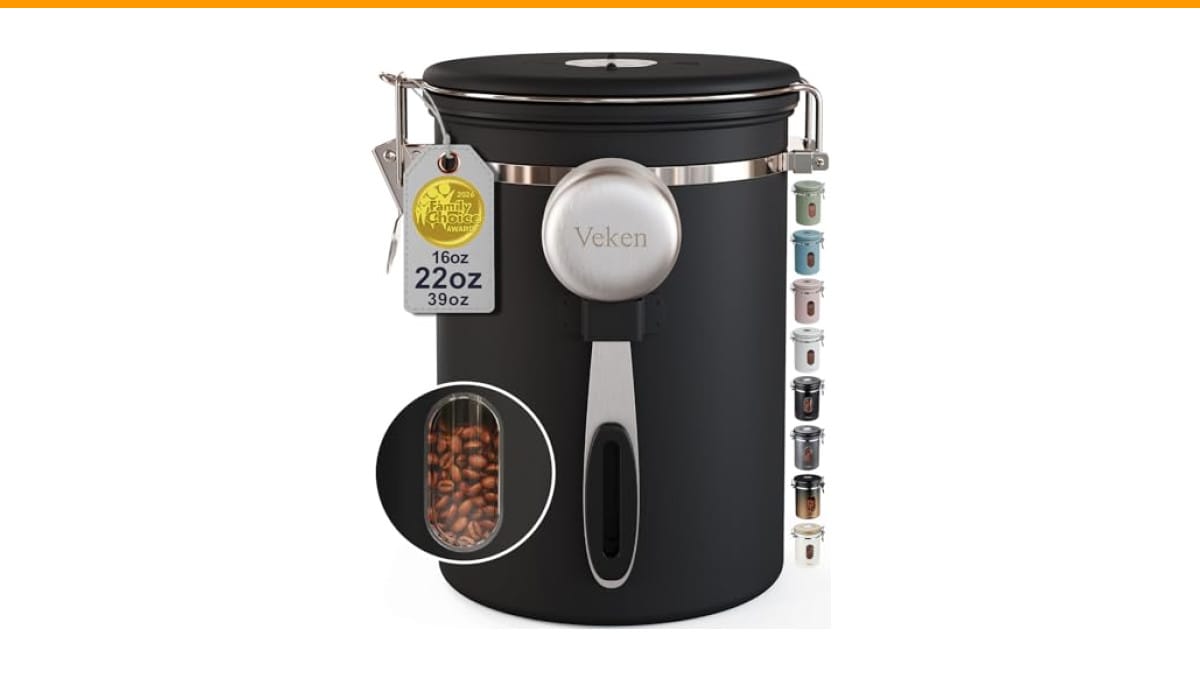
Veken
Veken Coffee Canister with Window, Airtight Stainless…
- Gifts for Coffee Lovers: This elegantly designed jar is a stylish and functional gift for coffee lovers, friends, and family. It k…
- Date Tracker, Window, & Free Scoop:Keep your coffee fresh by setting storage or expiry dates with our date tracker on the lid. A h…
- Premium Quality Assurance:We understand the importance of quality when it comes to your coffee experience; That's why our Veken co…
As an Amazon Associate I earn from qualifying purchases.
You’ll leave knowing how to store beans for weeks without degradation, what to do if you live in a humid climate, and which canister habits you should drop immediately.
A canister like the Veken Coffee Canister with Window helps because the airtight seal and stainless steel body block external humidity better than a paper bag or a ceramic jar with a loose cork. The window lets you check bean levels without opening the lid, which means fewer opportunities for humid air to sneak in.
Why Moisture Gets In Even With a Lid On
Most people think the lid is the only barrier. It’s not. The air trapped inside the canister when you close it already contains water vapor. Every time you open the canister, you swap that dry-ish air for room air that might be 60% relative humidity.
Temperature swings make it worse. If your canister sits near the stove or in direct sunlight, the air inside warms up, expands, and pushes out. When it cools, it contracts and sucks humid air in through any microscopic gap. That’s the pump effect, and it’s why you should keep coffee away from heat sources.
The fix starts with the environment. Pick a cool, dark cabinet away from the oven, dishwasher, or kettle. The ideal storage temperature is between 60°F and 75°F. If your kitchen gets hotter than that in summer, consider a pantry or a closet.
Another overlooked factor is how much coffee you leave in the canister. A half-empty canister has a large air pocket that holds moisture. That air releases water into the beans every time the temperature shifts. Fill the canister as much as possible, or transfer remaining beans to a smaller container.
The 3-Second Rule for Opening the Canister
The single best habit you can adopt is a fast open-and-close motion. Crack the lid just enough to scoop, grab the beans, and seal it. The longer the lid is off, the more humid air enters. In a typical kitchen, leaving the lid off for 30 seconds can raise the internal humidity by 10-15%.
Use the scoop that comes with your canister, or a dry spoon. Never use a wet scoop. One drop of water introduced into a canister of beans can cause localized clumping and mold growth within a week. If you must rinse your scoop, dry it thoroughly with a towel first.
Don’t store the canister in the refrigerator either. The fridge is a humid environment (around 65-70% RH), and the beans will absorb odors from other foods. The freezer works only for long-term storage of unopened vacuum-sealed bags, not for daily-use canisters.
If you grind beans daily, keep the canister on the counter but away from the sink. Steam from cooking or washing dishes is a major source of moisture. A spot near the coffee maker is usually fine, as long as it’s not directly above the boiler.
Desiccants, Silica Packets, and Other Fixes That Work
Silica gel packets are the cheapest insurance you’ll ever buy. They absorb moisture from the air inside the canister. Drop one packet (the kind that comes with beef jerky or electronics) into the bottom of the canister before adding beans. Replace it every two months. The packets are food-safe, but keep them away from the scoop so nobody mistakes them for a snack.
Food-grade desiccant packs designed for coffee storage are slightly more effective because they use a moisture indicator that changes color. They cost a few dollars for a pack of ten. You don’t need to buy a special container; just toss one in.
Another method is the oxygen absorber, but these are different from desiccants. Oxygen absorbers remove oxygen, not moisture. They’re useful for long-term storage of whole beans in sealed mylar bags, but they don’t solve the humidity problem in a daily-use canister. Don’t confuse the two.
If you live in a coastal area or a place with summer humidity above 70%, consider a small rechargeable dehumidifier canister placed next to your coffee storage area. These are usually sold for closets and safes. They pull moisture from the air in a small cabinet, which keeps the ambient RH down.
Comparison: Canister Materials and Moisture Resistance
Not all canisters handle moisture the same way. Ceramic is porous unless glazed. Plastic can absorb odors and may not seal perfectly. Stainless steel with a silicone gasket is the most reliable for moisture control.
| Material | Moisture Resistance | Best For | Watchouts |
|---|---|---|---|
| Stainless Steel (with gasket) | Excellent | Daily use, humid kitchens | Can dent if dropped |
| Glass (with rubber seal) | Good | Countertop display | Fragile, heavier |
| Ceramic (glazed) | Good | Aesthetic appeal | Lid fit varies by brand |
| Plastic (with clip lid) | Fair | Travel, budget | Can absorb odors over time |
| Paper bag (original) | Poor | Short-term (1 week) | No seal, no protection |
Stainless steel wins because it doesn’t breathe, and the gasket creates a true seal. If you already own a ceramic canister, test the seal by placing a piece of paper between the lid and rim. If you can pull the paper out easily, the seal is weak.
How to Test If Your Canister Is Actually Airtight
Here’s a quick test you can do at home. Dry the canister completely. Place a small dry paper towel inside. Close the lid and submerge the canister in a sink of water for 10 seconds. If bubbles escape, the seal is compromised. Dry it thoroughly after the test.
If you don’t want to get it wet, use the flashlight test. Shine a bright flashlight inside the canister in a dark room. If you see light leaking around the lid, air can get in. That’s a leak.
For the Veken canister specifically, the silicone gasket sits in a groove on the lid. If the gasket pops out after a drop, push it back in evenly. A twisted gasket won’t seal correctly. Clean the gasket monthly with warm soapy water and dry it before reassembling.
One more test: the smell test. Put a strong-smelling item like a garlic clove in the canister for 24 hours. If the canister doesn’t smell like garlic after you remove it and air it out, the seal is good. If it does, your beans are absorbing kitchen odors too.
Real Questions People Ask About Coffee Canister Moisture
Can I put rice in the coffee canister to absorb moisture?
Uncooked rice does absorb some moisture, but it also introduces starch dust and can alter the flavor of your beans. It’s not worth the risk. Use a silica gel packet instead. It’s cleaner and more effective.
Should I leave beans in the bag or transfer them to a canister?
Transfer them, but only if the canister is airtight. The one-way valve on a coffee bag lets gas escape but also lets air in over time. A sealed canister is better for long-term freshness. If you finish a bag within a week, the original bag is fine.
How long do coffee beans stay fresh in an airtight canister?
Whole beans stay fresh for about 3-4 weeks in a properly sealed canister stored in a cool place. Ground coffee lasts only about 1 week because the increased surface area accelerates oxidation. Don’t grind more than you need for a day or two.
Does the date tracker on the canister lid actually help?
Yes, but only if you use it. The date tracker on the Veken lid lets you set a roast date or a ‘use by’ date. That’s helpful because most people forget when they opened the bag. Set it when you fill the canister, not when you buy the beans.
What if I see condensation inside the canister?
That means the beans are releasing moisture or the canister was sealed with warm humid air inside. Take the beans out, dry the canister completely, and let the beans air out on a plate for an hour before returning them. If condensation keeps happening, your kitchen humidity is too high. Move the canister to a drier location.
Practical Habits for Long-Term Freshness
Here’s what I actually do, and what I recommend to anyone who asks. These are the habits that matter more than the gear.
- Buy whole beans, not ground. Grind only what you need right before brewing.
- Keep the canister in a dark, cool cabinet. Not on top of the fridge, not next to the stove.
- Open the lid for less than 3 seconds each time. Use a dry scoop every single time.
- Drop a silica gel packet in the bottom of the canister. Replace it every 2 months.
- Clean the canister and gasket once a month. Dry it completely before adding new beans.
- If you buy beans in bulk, split them into smaller canisters. Only open one at a time.
- Check the seal twice a year with the water test. Replace the gasket if it’s cracked or stretched.
Moisture management isn’t complicated, but it does require consistency. The canister is only as good as your habits. A $30 canister with good habits beats a $100 canister with sloppy ones.
If you’re dealing with a grinder that has residual coffee oils, that’s a separate issue. Check our grinder cleaning guide for that. And if your coffee tastes off despite proper storage, a descaling routine might be the missing piece. For the full picture on keeping your equipment fresh, our maintenance tips cover the rest.
Products related to this article
Sponsored / affiliate links. As an Amazon Associate I earn from qualifying purchases. I may earn additional commission from eligible campaigns.