You just finished a perfect cup, rinsed the chamber, and set everything on the drying rack. But that faint, sour smell coming from the rubber plunger tells you a simple rinse isn’t cutting it anymore. Over time, coffee oils and trapped moisture create a breeding ground for bacteria and mold, especially in the crevices of the plunger seal and the filter cap. That’s the moment you realize you need to actually sanitize the gear, not just wash it.
This guide covers every AeroPress accessory you own, from the standard plastic chamber to third-party metal filters and travel caps. You’ll walk away knowing exactly which cleaning agents are safe, which ones will degrade the materials, and how to dry everything so it doesn’t come back to haunt you. No vague advice, just tested methods with real numbers and conditions.

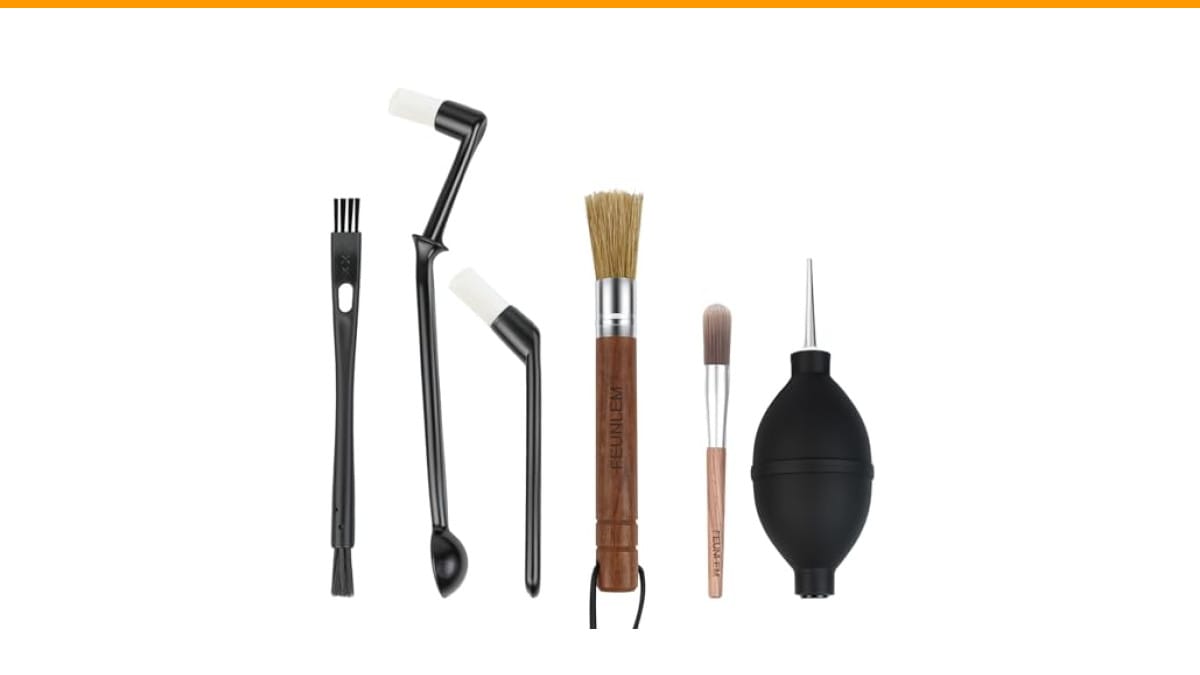
FEUNLEM
FEUNLEM Coffee Grinder Cleaning Kit, Espresso Machine…
- Complete Cleaning Set: This 6-piece kit includes Walnut Wood large soft brush, small hard brush, group head brush, long-reach brus…
- Targeted Cleaning Tools: Large soft bristle brush sweeps loose grounds; small hard bristle brush removes stubborn residue; rocket…
- Multi-Purpose Use: Beyond coffee machines, this cleaning kit works as a camera cleaning kit for lenses and sensors, and as a keybo…
As an Amazon Associate I earn from qualifying purchases.
Before we get into the deep cleaning, you need the right tools. A toothbrush works, but it’s clumsy. The FEUNLEM Coffee Grinder Cleaning Kit includes a long-reach brush and a rocket blower that make short work of the filter basket holes and the plunger seal groove. It’s not a necessity, but it turns a fiddly 15-minute job into a five-minute one.
Why Standard Dish Soap Isn’t Enough
Dish soap removes surface oils, but it doesn’t kill bacteria. For daily cleaning, soap and warm water is fine. For sanitizing, you need something that actually eliminates microorganisms. The difference matters if you leave your AeroPress assembled for days between uses or if you travel with it.
The materials matter here. The chamber and funnel are made from polypropylene (PP), which handles heat up to about 212°F. The plunger seal is thermoplastic rubber (TPR), and that’s the weak point. TPR degrades with prolonged exposure to high heat and harsh chemicals. Keep that in mind for every method below.
Method 1: The Boiling Water Sanitize
Boiling water is the most reliable chemical-free option. It works because sustained heat denatures bacterial proteins. The trick is time and temperature. Water at a rolling boil sits around 212°F at sea level. That’s above the 160°F threshold needed to kill most pathogens, but you still need contact time.
- Disassemble the AeroPress completely. Remove the plunger from the chamber, take out the filter cap, and remove the filter.
- Bring a pot of water to a full, rolling boil.
- Turn off the heat. Dropping plastic into actively boiling water risks warping from the violent agitation.
- Submerge the chamber, funnel, and filter cap for 5 minutes. Do not put the plunger seal in yet.
- After 5 minutes, add the plunger for no more than 2 minutes. The TPR seal gets soft quickly, and prolonged exposure will deform it.
- Remove everything with tongs and let it air dry completely on a clean towel.
The 2-minute rule for the plunger is non-negotiable. I’ve seen seals warp from being left in hot water for 10 minutes while someone got distracted. It doesn’t recover.
Method 2: Chemical Sanitizing (Food-Safe Only)
When boiling isn’t practical, a food-safe sanitizing solution works. The two most common options are white vinegar and hydrogen peroxide. Both are safe on PP and TPR at the right concentrations.
White vinegar: Mix a 1:1 solution of white vinegar and cool water. Soak all parts for 15 minutes. Vinegar is a mild acid, and it breaks down mineral deposits and kills a decent range of bacteria. It won’t kill everything, but it’s fine for home use. Rinse thoroughly afterward, or your next cup will taste like a salad dressing.
Hydrogen peroxide (3% food-grade): This is stronger than vinegar. Soak for 10 minutes, then rinse with cool water. Hydrogen peroxide decomposes into water and oxygen, so it leaves no chemical residue. It’s the better choice if you’ve noticed any mold spots.
Skip bleach entirely. It’s too aggressive for TPR and can leave a residue that’s hard to rinse out of porous rubber. Also avoid any cleaner with citrus oils, as those can break down the rubber over time.
How to Handle Metal and Paper Filters
Paper filters are single-use, so sanitizing them is pointless. Toss them after brewing. If you’re rinsing and reusing paper filters to save money, stop. They harbor bacteria in the fibers, and no amount of rinsing fixes that.
Metal filters are a different story. Stainless steel mesh can handle boiling water and even a dishwasher cycle. The risk is the fine mesh getting clogged with oils. To sanitize a metal filter, boil it for 3 minutes, then use a soft brush to work out any trapped grounds. The brush set included in the FEUNLEM kit has a small hard-bristle brush that’s perfect for this. A standard toothbrush works too, but the bristles are often too soft to clear the mesh.
For the cap itself, the threads collect coffee residue. A cotton swab dipped in vinegar gets into the threads better than any brush. Run the swab around the threads, let it sit for a minute, then rinse.
Drying: The Step Everyone Skips
Sanitizing is pointless if you reassemble wet parts. Moisture is what allows bacteria to regrow. After any cleaning method, you need complete drying before storage.
Air drying on a rack takes 2-4 hours depending on humidity. You can speed this up by patting everything dry with a lint-free cloth first, then leaving it out for 30 minutes. Do not use a dish towel that’s been sitting in the laundry, as that just re-contaminates the surface.
Never store the AeroPress fully assembled. The plunger seal pressed against the chamber traps moisture in the seal’s groove. That’s the exact spot where mold develops. Store the plunger pushed halfway out of the chamber, or keep it fully disassembled.
| Method | Kills Bacteria | Safe for Plunger | Time Needed | Best For |
|---|---|---|---|---|
| Hot soapy water | No | Yes | 2 minutes | Daily cleaning |
| Boiling water (5 min chamber, 2 min plunger) | Yes | Yes, with time limit | 10 minutes | Weekly deep clean |
| White vinegar soak (1:1) | Partial | Yes | 15 minutes | Descaling and odor removal |
| Hydrogen peroxide 3% | Yes | Yes | 10 minutes | Mold or heavy contamination |
| Dishwasher | Yes | No | Cycle time | Avoid entirely |
Common Mistakes That Ruin Accessories
The dishwasher is the biggest offender. The combination of high heat, aggressive detergents, and water pressure warps the chamber and distorts the plunger seal. If you’ve been running your AeroPress through the dishwasher, check the seal for a wavy edge. That’s the damage.
Another mistake is using abrasive scrubbers. Scotch-Brite pads and steel wool scratch the chamber. Those scratches become tiny hiding spots for bacteria, which defeats the purpose of sanitizing. Stick to soft sponges and brushes.
One thing most people forget: the stirring paddle. It’s made of the same PP plastic, so it’s safe for all the methods above. But it also sits in the coffee, so it needs the same treatment as the chamber. Don’t just rinse it and toss it in a drawer.
How Often Should You Sanitize?
Daily users should do a full sanitize once a week. If you only brew on weekends, sanitize after each use before storing. Travelers need to be stricter. The AeroPress is a popular travel brewer, and it often gets packed while still damp. That’s a recipe for mold. If you travel with it, sanitize it the moment you get home.
You’ll know it’s time to sanitize when the plunger seal starts to smell sour or the chamber feels slippery after a rinse. That slipperiness is a biofilm, a thin layer of bacteria and oils. Soap alone won’t remove it. That’s your cue to break out the boiling water.
Frequently Asked Questions
Can I put the AeroPress plunger in the dishwasher?
No. The TPR seal will warp in the heat and get damaged by the detergent. Hand wash it every time. The same logic applies to the chamber, which can deform and stop sealing properly.
Is it safe to use bleach on AeroPress parts?
Technically it will sanitize, but it’s a bad idea. Bleach is hard to rinse completely out of rubber, and the residue can end up in your next cup. Use hydrogen peroxide or boiling water instead. They work just as well without the risk.
How do I get the coffee smell out of the plunger seal?
Soak the plunger in a 1:1 vinegar and water solution for 15 minutes. Rinse it, then let it dry completely. If the smell persists after that, the seal has absorbed too much oil and needs replacing. AeroPress sells replacement plungers separately.
Can I use denture tablets to clean the AeroPress?
Yes. A denture tablet dissolved in warm water is an effective, food-safe cleaner for the chamber and filter cap. It’s not as strong as hydrogen peroxide, but it’s a good option for a quick soak. Just rinse thoroughly afterward.
Does sanitizing affect the flavor of my coffee?
Only if you don’t rinse properly. Vinegar and hydrogen peroxide both leave a taste if left behind. A thorough rinse with cool water eliminates that. Boiling water leaves nothing behind, which is why it’s the preferred method for flavor purity.
What to Remember for Clean Gear
- Boiling water is the gold standard. 5 minutes for the chamber, 2 minutes max for the plunger.
- Never put any AeroPress part in the dishwasher. It warps plastic and ruins the seal.
- Use hydrogen peroxide for mold, vinegar for odors and scale. Skip bleach.
- Dry everything completely before storing. Store disassembled.
- Sanitize weekly if you brew daily, immediately after travel.
- Replace the plunger seal if it smells sour after cleaning or shows any distortion.
- A dedicated brush kit makes the filter mesh and seal grooves much easier to reach, so you’re more likely to do this regularly.
If you’re dealing with a stubborn coffee maker that needs more attention, take a look at our coffee maker cleaning guide for broader advice. And if you’re still wondering about the dishwasher debate, we covered AeroPress dishwasher safety in detail. For those who use a Breville machine alongside their AeroPress, our steam wand cleaning tips will keep that gear in shape too.
Products related to this article
Sponsored / affiliate links. As an Amazon Associate I earn from qualifying purchases. I may earn additional commission from eligible campaigns.
 Stainless Steel Moka Pot Coffee Filter Disc for Espresso Brewing, Coffee Maker Replacement Filter Plate for Home Office Coffee Bar Cafe (FOR 4 Cups)
 Cascade Platinum Plus Dishwasher Detergent Pods Dish Soap Lemon 57 Count
 Coffee Pot Handle Replacement, Black Plastic Parts for Espresso Moka Pot, 1 3 6 9 12 Cup Capacity,Easy Install(3 Cup)