You just pulled a shot that looks like honey dripping from the portafilter. You taste it, and something’s off. It’s sour, maybe a little flat. You blame the beans, the grind, your tamping. But the real culprit might be the water you poured into the reservoir.
Most home baristas obsess over the machine and grinder but treat water like an afterthought. That’s a mistake. Water makes up over 98% of your espresso. If it’s wrong, nothing else matters.

possiave
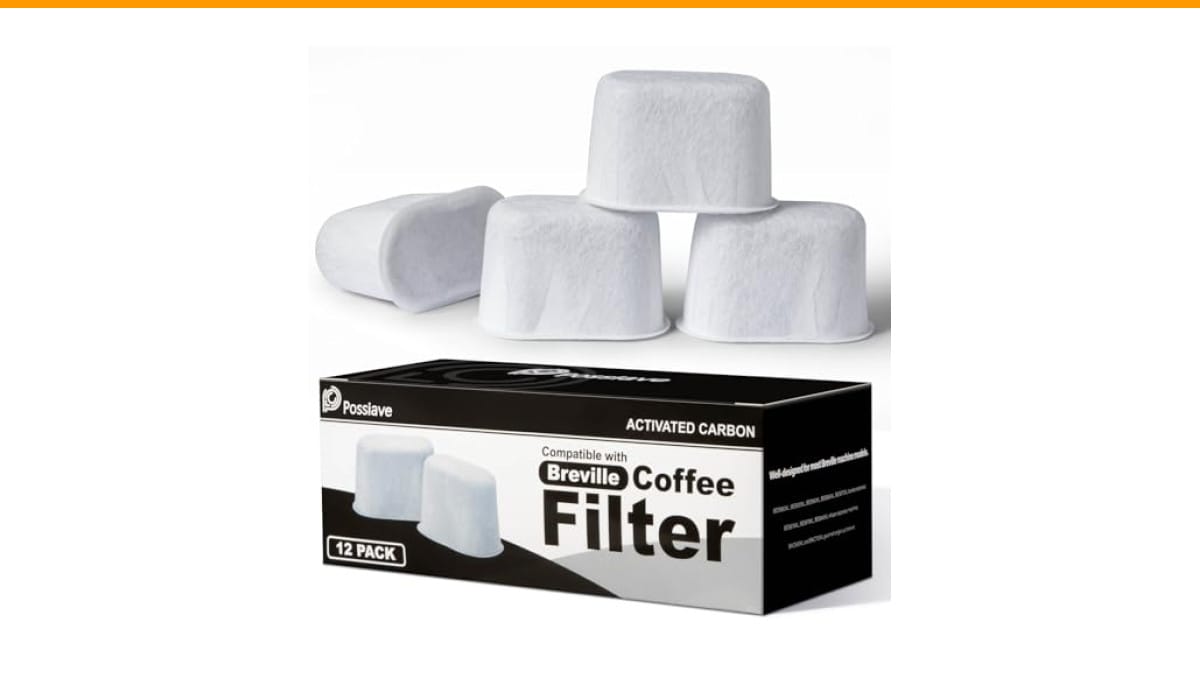
Possiave 12-Pack Water Filters Compatible with Breville…
- SUITABLE FOR MOST OF BREVILLE MACHINES - Well -designed for all Breville machine models: BES980XL, BES920XL, BES900XL, BES860XL, B…
- IMPROVE FLAVOR - Filter out chlorine, calcium, bad odors and impurities with purest coconut shell charcoal. The pore structure and…
- CONVENIENT TO STORAGE - For convenient storage, we provide individual package for each two water filters, which can also keep othe…
As an Amazon Associate I earn from qualifying purchases.
This guide covers whether you can use filtered water in a semi automatic espresso machine, what mineral content your water actually needs, which filters work best, and how to avoid the costly mistakes that send machines to the repair shop early.
If you’re using a Breville machine, a simple swap like the Possiave 12-pack of water filters can handle the chlorine and scale issues before they reach your boiler. It’s a drop-in replacement for the Breville BWF100 and fits most popular models like the Barista Express and the Infuser.
The Short Answer: Yes, But Not All Filters Are Equal
You can absolutely use filtered water in a semi automatic espresso machine. In fact, you should. But the type of filter you use determines whether you’re helping or hurting your machine.
A standard Brita pitcher removes chlorine and some odors. That’s good. But it doesn’t soften the water, which means scale can still build up inside your boiler. On the flip side, a reverse osmosis system strips out everything, leaving water so pure it becomes corrosive to metal parts.
The goal is water that sits in a specific mineral range. Too hard, and you get scale. Too soft, and you get flat-tasting shots and potential corrosion. You want the middle ground.
Why Tap Water is the Enemy of Your Machine
The Scale Problem
Tap water contains dissolved calcium and magnesium. When you heat that water inside the boiler, those minerals precipitate out and form a hard crust called scale. A thin layer acts as insulation, making your machine work harder and use more energy. A thick layer blocks water flow and can permanently damage the heating element.
In hard water areas, a machine can develop significant scale in under six months. Descaling helps, but it’s harsh on seals and gaskets. The best strategy is prevention, not cure.
The Chlorine Taste Problem
Municipal water treatment adds chlorine to kill bacteria. It does its job, but it also makes your espresso taste like a swimming pool. Chlorine masks the delicate flavors in coffee beans, especially the fruity and floral notes from light roasts.
A simple carbon filter removes chlorine almost entirely. You’ll notice the difference in the cup immediately. It’s the cheapest flavor upgrade you can make.
The Goldilocks Zone: Ideal Mineral Content (TDS) for Espresso
TDS stands for Total Dissolved Solids. It measures the mineral content in your water, usually in parts per million (ppm). For espresso, the Specialty Coffee Association recommends a range of 150 to 300 ppm.
Below 150 ppm, water becomes aggressive. It pulls too many solubles from the coffee too quickly, resulting in bitter, over-extracted shots. It also lacks the buffering capacity to protect your boiler from corrosion.
Above 300 ppm, you risk scale buildup and a dull, muddy flavor. The minerals interfere with extraction, leaving your espresso tasting flat.
If you’re using a simple pitcher filter like Brita, your tap water TDS barely changes. Brita removes chlorine and taste, but not hardness. So if your tap water is 250 ppm, it stays around 250 ppm after filtration. That’s fine for your machine, but it doesn’t solve the scale problem.
For the best results, you want water that starts around 100-150 ppm and stays there after filtration.
Your Filter Options Ranked (From Best to Barely Acceptable)
The Best: Remineralized Reverse Osmosis
Reverse osmosis (RO) removes almost everything from water, leaving it at 0-10 ppm. That’s too pure to brew with directly. But if you add a remineralization stage, you can dial in the exact mineral content you want.
These systems cost $200 to $600 and require under-sink installation. They’re overkill for most home users, but if you’re chasing the absolute best shot, this is the way to go. You can control every variable, and your machine will never scale up.
The Practical: Inline Carbon Filters
Inline filters like the ones made by Breville and the Possiave replacement pack attach directly inside your water reservoir. They combine activated carbon with an ion-exchange resin that softens water.
These filters reduce chlorine, heavy metals, and some hardness. They’re not as thorough as RO, but they bring most tap water into an acceptable range. They’re also cheap, easy to replace, and designed specifically for espresso machines.
This is the sweet spot for most home baristas. You get meaningful protection against scale and a noticeable improvement in taste, all for a few dollars per filter.
The Budget: Pitcher Filters (Brita, etc.)
A pitcher filter is better than nothing. It removes chlorine and improves taste. But it does little to soften water. If you have hard tap water, you’ll still need to descale regularly.
Pitchers are fine if your tap water is already soft (under 150 ppm). In that case, they’re a cheap and effective way to improve flavor. If your water is hard, save up for an inline filter instead.
The Hidden Danger: Distilled and Pure Water
Some people think distilled water is the safest option for their machine. It’s not. Distilled water has a TDS of nearly zero, which makes it aggressive and corrosive.
When water has no minerals, it tries to pull them from whatever it touches. That includes the metal boiler and heating elements in your espresso machine. Over time, this leads to pitting and corrosion that no descaling routine can fix.
Distilled water also brews terrible espresso. The extraction is unbalanced, and the shot tastes hollow and sharp. Don’t use it. If you have an RO system, always add remineralization before brewing.
How to Install and Maintain Your Filter (Without Calling a Plumber)
Installing an inline filter is a five-minute job. You don’t need tools. For Breville machines, you lift the water tank off, remove the old filter from its housing, and push the new one in. Then you fill the tank and run the priming cycle.
The First Flush Protocol
This step is critical, and most people skip it. New carbon filters contain fine black dust. If you don’t flush it out, that dust ends up in your boiler and your cup.
After installing a new filter, fill the reservoir with fresh water and run a full tank through the hot water spout or group head without coffee. Discard that water. Then pull a blank shot (no coffee) to clear the system. Your first shot after that will be clean.
Replacement Schedule Cheat Sheet
- Inline carbon filters (like Breville BWF100): Replace every 2-3 months, or every 60-90 gallons of water. If you brew 2-3 shots daily, that’s roughly 8-10 weeks.
- Pitcher filters (Brita): Replace every 2 months, or after 40 gallons. Mark the date on the filter with a marker so you don’t forget.
- RO membranes: Replace every 2-3 years, depending on feed water quality.
- Remineralization cartridges: Replace every 6-12 months, depending on output.
If you live in an area with hard water (over 200 ppm), shorten the interval by a month. Scale buildup is exponential, not linear.
The Cost-Benefit: Filter vs. Descaling vs. New Machine
Let’s talk numbers. A pack of inline filters costs around $20-30 for a 12-pack, which lasts a year. Descaling solution costs about $10-15 per bottle, and you should descale every 3-6 months in hard water areas. That’s $30-60 per year.
But descaling is hard on your machine. It can degrade seals, and if you descale too often, you’ll eventually need to replace gaskets and o-rings. That’s another $20-50 in parts, plus your time.
Now consider the worst case: scale buildup destroys your boiler. A replacement boiler for a semi-automatic machine costs $150-400, plus labor. Or you might just buy a new machine, which sets you back $500-2026.
Using a proper inline filter costs you about $25 per year and eliminates most of that risk. It’s the cheapest insurance you can buy for your espresso setup.
| Water Source | TDS Range | Scale Risk | Flavor Impact | Annual Cost | Best For |
|---|---|---|---|---|---|
| Tap water (unfiltered) | 150-400+ ppm | High | Chlorine taste, flat | Descaling supplies ($30-60) | Nobody, avoid |
| Brita pitcher | Same as tap | High (no softening) | Improved, removes chlorine | $30-50 for filters | Soft water areas |
| Inline carbon filter | Reduced by 20-40% | Moderate | Clean, balanced | $25-40 for filters | Most home users |
| Remineralized RO | Controlled at 150-200 ppm | Very low | Excellent, precise | $50-100 for cartridges | Enthusiasts |
| Distilled water | 0-10 ppm | None (but corrodes) | Terrible, hollow | High, plus machine damage | Never use |
Troubleshooting Bad Filtered Water
So you switched to filtered water, and your espresso tastes worse. What went wrong?
Your water is too soft. If your RO system strips everything out and you didn’t remineralize, your shots will taste bitter and sharp. Fix: add a remineralization cartridge or blend 10% tap water back into your RO water.
You didn’t flush the new filter. Carbon dust in the boiler can cause a gritty, metallic taste. Fix: run two full reservoirs through the machine after installing a new filter, then discard the water.
Your filter is overdue. An exhausted filter stops removing chlorine and starts releasing absorbed contaminants back into the water. Fix: stick to a strict replacement schedule.
Your water is too hard. A Brita pitcher doesn’t soften water. If your tap water is over 200 ppm, you’re still getting scale and a dull flavor. Fix: switch to an inline filter with ion-exchange resin.
Frequently Asked Questions
Can I use Brita filtered water in my espresso machine?
Yes, but understand the limits. Brita removes chlorine and improves taste, but it doesn’t soften water. If your tap water is hard, you’ll still get scale. Check your local water hardness report. If it’s under 150 ppm, a Brita is fine. If it’s over that, get an inline softening filter.
Is bottled spring water safe for espresso machines?
Most spring waters sit in the 150-250 ppm range, which is acceptable. Check the label for mineral content. Avoid brands that list sodium as a major component, since salty water ruins espresso. Also, avoid sparkling water entirely.
How often should I replace the water filter in my Breville machine?
Breville recommends every 2-3 months, but that assumes typical home use of 2-3 shots per day. If you brew more, replace sooner. If you brew less, you can stretch it to 4 months. The filter’s capacity is based on gallons of water, not time.
Will filtered water prevent scale buildup completely?
No filter removes 100% of hardness minerals, except for RO systems. Inline carbon filters reduce hardness but don’t eliminate it. You should still descale your machine once or twice a year as a precaution. Think of it as a safety net, not a substitute.
Can I use softened water from a home water softener?
You can, but be careful. Sodium-based water softeners exchange calcium for sodium. High sodium water tastes salty and can damage your machine’s internals over time. If you have a water softener, run the water through an RO system or use a pitcher filter with a carbon stage before brewing.
What I Actually Do at Home
After testing water setups side by side for months, here’s my honest take. I use a Breville Barista Express with the Possiave replacement filters because they’re cheap, they fit perfectly, and I don’t have to think about it. My tap water runs about 220 ppm, and the filter brings it down to roughly 150 ppm.
I replace the filter every 8 weeks, and I descale every 6 months. My shots taste clean, and I haven’t had a single scale-related issue in two years.
If I had a $3,000 machine, I’d probably invest in a remineralized RO system. But for most home setups, a good inline filter is the smart money move. It’s not perfect, but it’s the best balance of cost, effort, and results.
If you’re still deciding between machine types, check out our comparison of automatic vs. semi-automatic espresso machines to see which fits your workflow. And if your current machine is acting up, our guide on fixing a leaking espresso machine covers the most common culprits.
Bottom Line: The Smart Home Barista’s Water Strategy
- Use filtered water in your semi-automatic espresso machine, but aim for a TDS between 150-300 ppm.
- Inline carbon filters are the best value for most home users. They soften water and remove chlorine for about $25 per year.
- Pitcher filters only work if your tap water is already soft. Check your local water report before relying on one.
- Never use distilled or RO water without remineralization. It corrodes your boiler and ruins your shots.
- Always flush a new filter with two full reservoirs of water before brewing. Carbon dust will ruin your first few shots.
- Replace inline filters every 2-3 months, or sooner if you brew heavily. Mark the date on the filter.
- Keep descaling as a backup, not your primary defense. Prevention is cheaper than repair.
Products related to this article
Sponsored / affiliate links. As an Amazon Associate I earn from qualifying purchases. I may earn additional commission from eligible campaigns.
 Coffee Espresso Machine Handle Replacement Parts, Cafe Bracket Handle for Lidl Silvercrest CM4621 CM4218 KF5002 KF500S Barista (for 51mm Portafilter Basket - Not included)
 SOLUSTRE Electric USB Coffee Cup Warmer with Temperature Settings Portable Milk and Beverage Heating Coaster for Office Desk Small Lightweight Design Easy to Clean Surface Multi Functional
 Linnkyfloa Coffee Espresso Maker Handle Replacement for Stovetop Moka Pot or Percolator, Black Plastic for Spare Part Compatible with Italian(9-12 Cup)