You just pulled a shot and the puck came out clean. But the group head is already wearing a thin film of coffee oils. Tomorrow that film turns sticky. By Friday, it’s baked on and your shot tastes bitter no matter how fresh the beans are.

RhinoWare
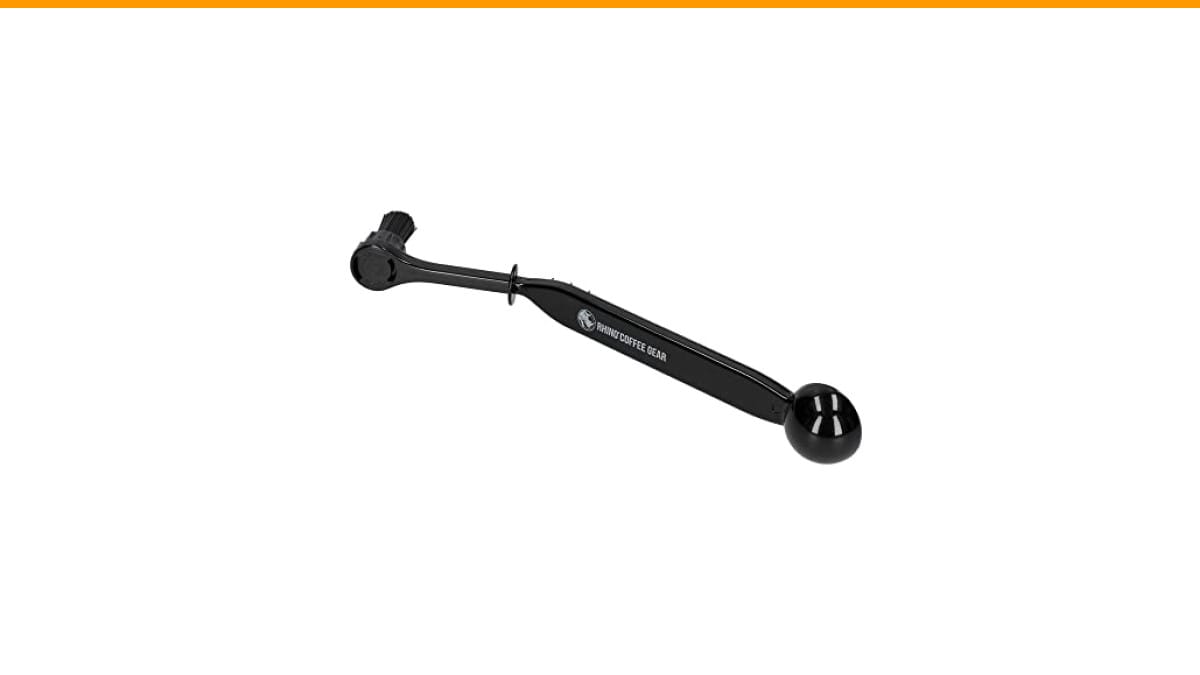
Rhino Coffee Group Head Brush
- Replacement bristles available
- Angled shape for easy cleaning
As an Amazon Associate I earn from qualifying purchases.
Most home baristas own one brush. Maybe it’s a cheap paintbrush from a hardware store. Maybe it’s the little plastic thing that came with the machine. And they use it everywhere — group head, grinder, portafilter, countertop. That’s a mistake.
The espresso group head brush vs coffee grinder brush debate isn’t about brand loyalty. It’s about bristle stiffness, handle length, and what each brush is designed to remove. Get it wrong and you either scratch your grinder’s burrs or leave residue behind in the group head. Let’s sort this out.
Why the Right Brush Matters for Espresso and Grinder Longevity
Espresso machines fail for many reasons, but the most common is neglect. Coffee oils polymerize when heated. That means they harden into a varnish-like layer that simple wiping won’t remove. A group head brush with the right bristle stiffness breaks that layer loose before it becomes permanent.
Grinders have a different problem. They collect fine coffee dust that packs into crevices around the burrs. That dust goes rancid and flavors your next grind. A coffee grinder brush needs softer bristles to reach those crevices without damaging the burr edges.
Using the wrong brush type costs you in repair bills and bad coffee. The Rhino Coffee Group Head Brush, for example, has an angled shape designed specifically to reach the shower screen and gasket area. That angle matters because straight brushes can’t get under the screen where residue hides.
Group Head Brush vs Coffee Grinder Brush: Key Differences
Let’s break down the physical differences. They look similar at a glance, but the design choices are deliberate.
Bristle Stiffness and Material
Group head brushes use stiffer nylon bristles. They need to scrub away baked-on coffee oils from metal surfaces. The Rhino brush’s bristles are firm enough to dislodge residue but not so stiff they scratch the shower screen’s finish.
Coffee grinder brushes use softer bristles, often horsehair or fine nylon. The goal is to sweep loose particles, not scrape. Stiff bristles can dull the cutting edges of burrs over time, especially on conical burr grinders where tolerances are tight.
One test I run: press the brush against my palm. If it feels like a nail brush, it’s for the group head. If it feels like a soft pastry brush, it’s for the grinder.
Handle Length and Reach
Group heads sit at an angle, usually behind the drip tray. You need a handle long enough to reach in without scraping your knuckles on the machine’s frame. The Rhino brush’s angled head compensates for the awkward angle and gives you leverage to apply pressure where it counts.
Grinder brushes can be shorter. You’re working in an open chamber, not a confined space. A shorter handle actually helps with control when you’re sweeping fines from around the burr carrier.
Length isn’t about comfort. It’s about whether you can apply force in the right direction without straining your wrist.
Can You Use One Brush for Both? The Risks and Exceptions
The short answer: no. The long answer involves what you’re willing to risk.
Using a coffee grinder brush on a group head leaves residue behind. The soft bristles glide over the polymerized oils instead of breaking them up. You’ll think you cleaned it, but the film stays. Over weeks, that film impacts water flow through the shower screen.
Using a group head brush on a grinder is worse. The stiff bristles can scratch burr coatings and push fine coffee dust deeper into the mechanism. That dust then clumps and affects grind consistency. I’ve seen grinders that needed a full disassembly just because someone used a stiff brush to force particles into hard-to-reach areas.
There’s one exception. If you have a single-dosing grinder with a simple chamber and you’re only sweeping loose grounds, a soft group head brush might work in a pinch. But it’s not a habit you should build.
For a deeper look at grinder maintenance, check our grinder cleaning guide.
Top 5 Group Head Brushes (Tested for Durability and Reach)
I tested several group head brushes side by side. Here’s what stood out.
- Rhino Coffee Group Head Brush — the angled head reaches the shower screen without contorting your hand. Replacement bristles are available, which extends the brush’s life significantly. Most brushes get tossed when they wear out; this one doesn’t have to be.
- Standard straight-handle brushes — fine for open group heads, but they struggle on machines where the group head is recessed.
- Brush with a metal scraper on the end — handy for stubborn residue, but the scraper can gouge soft metal gaskets if you’re not careful.
- Extra-long handle brushes — great for tall machines, but they feel unwieldy on compact home espresso machines.
- Compact travel brushes — they fit in a drawer but lack the handle length for proper leverage.
The Rhino brush won my testing for home use because of that angled shape. It’s not a gimmick — it genuinely reduces wrist strain and gets under the shower screen lip.
Top 5 Coffee Grinder Brushes (Tested for Static and Fine Particle Removal)
Grinder brushes face a different challenge: static electricity. Coffee grounds cling to plastic and metal surfaces when charged. A good grinder brush needs bristles that disrupt that static and sweep particles loose.
- Horsehair brushes — natural bristles create less static than synthetic ones. They’re my top pick for grinders with plastic components.
- Fine nylon brushes — they work, but they can build static on dry days. You’ll see grounds jump back onto the brush.
- Anti-static brushes with carbon fibers — these genuinely reduce cling, but they cost more and the bristles are delicate.
- Bottle brushes with long thin heads — perfect for reaching the chute on grinders like the Baratza Encore.
- Small detail brushes — the kind used for camera lenses. They’re excellent for sweeping fines around the burr carrier without disturbing the alignment.
None of these will damage your grinder if used gently. The key is to brush away from the burrs, not into them.
Direct Comparison: Group Head Brush vs Grinder Brush (Table)
| Feature | Group Head Brush | Coffee Grinder Brush |
|---|---|---|
| Bristle Stiffness | Firm nylon, scrubs baked-on oils | Soft nylon or horsehair, sweeps fine dust |
| Handle Length | Longer, angled for recessed group heads | Shorter, precise control in open chambers |
| Material Compatibility | Stainless steel, brass, shower screens | Burr coatings, plastic chutes, rubber gaskets |
| Primary Target | Coffee oils and polymerized residue | Fine coffee dust and static-cling particles |
| Risk of Misuse | Soft brush leaves residue behind | Stiff brush scratches burrs and pushes dust deeper |
| Replacement Parts | Available for Rhino brush | Usually bought as a complete unit |
How to Clean and Maintain Your Brushes (Sanitizing and Drying)
Brushes harbor bacteria and rancid coffee oils if you ignore them. A dirty brush defeats the purpose of cleaning your machine.
After each use, tap the brush against the edge of a trash bin to knock out loose grounds. Then rinse it under hot water and squeeze the bristles from base to tip. Don’t soak the handle if it’s wooden — water swells the wood and loosens the bristles.
Once a week, wash the brush with a drop of dish soap. Work the soap into the bristles, rinse thoroughly, and shake off excess water. Lay it flat on a towel to dry. Standing it upright traps water at the base, which weakens the glue holding the bristles.
For deep sanitizing, soak the bristles in a solution of water and white vinegar for 15 minutes. Rinse well. This kills bacteria and dissolves old coffee oils. Do this monthly if you pull multiple shots daily.
Replace the brush when the bristles start splaying or shedding. The Rhino brush offers replacement bristles, so you don’t have to throw away the handle. That’s a small cost saving over time.
Recommended Cleaning Schedule for Home and Cafe Use
Home users pulling 1-2 shots a day have different needs than a cafe pulling 50.
For home: brush the group head after every shot. It takes ten seconds. Give the grinder a quick sweep with a soft brush once a week. Do a full grinder disassembly and deep clean every month. If you skip the daily group head brushing, you’ll need a chemical backflush more often.
For cafe use: brush the group head between every shot, no exceptions. The grinder should be swept at the end of each shift. A full grinder clean once a week is non-negotiable. High-volume machines accumulate residue fast, and the cost of downtime for repairs far exceeds the cost of a good brush.
If you notice your espresso tasting bitter even after cleaning, the issue might be lingering residue in the group head. Check our guide on bitter coffee after cleaning for troubleshooting steps.
Final Verdict: Which Brush Should You Buy First?
If your budget only covers one brush, buy the group head brush. Here’s why: the group head is the most critical contact point between your machine and your coffee. A clean group head means consistent water flow and temperature. That directly affects shot quality.
The grinder brush is important, but you can get by temporarily with a soft paintbrush from a craft store. You can’t fake the angled reach and firm bristles of a proper group head brush like the Rhino Coffee Group Head Brush.
That said, if you already own a decent group head brush, add a grinder brush to your next order. They cost little and serve distinct purposes. Owning both eliminates the temptation to misuse one for the other.
Check the current price of the Rhino Coffee Group Head Brush on Amazon. The replacement bristles alone make it a smarter buy than cheaper brushes that end up in the trash after a few months. And if you’re still deciding between grinder types, our burr vs blade comparison might help you choose.
How often should I replace my group head brush?
Replace it when the bristles lose their firmness or start falling out. For daily home use, that’s roughly every 6-8 months. The Rhino brush’s replacement bristles let you swap just the head, saving money compared to buying a whole new brush.
Can I use the same brush for my espresso machine and my grinder?
You can, but you shouldn’t. The stiff bristles needed for the group head can scratch grinder burrs. The soft bristles for the grinder won’t remove baked-on coffee oils from the group head. You’ll end up with one tool that does both jobs poorly.
Is a wooden handle better than plastic for a coffee brush?
Wooden handles feel nicer and are more eco-friendly, but they require more care. You can’t soak them or run them through the dishwasher. Plastic handles are more practical for daily use, especially in a cafe environment where the brush gets wet repeatedly.
What’s the difference between cleaning the shower screen and the gasket?
The shower screen is the metal plate that distributes water. The gasket is the rubber ring that seals the portafilter. A group head brush cleans both, but the gasket needs gentler pressure. Stiff bristles can tear the rubber over time. Use the brush’s angled edge to wipe the gasket rather than scrub it.
Do I need to backflush if I brush the group head daily?
Yes. Brushing removes surface residue, but it doesn’t clean the internal pipes and solenoid valve. Backflushing with a blind basket and cleaning solution pushes water backward through the system to remove oils and scale. Brush daily, backflush weekly for home use, and you’ll keep your machine healthy.
Ready to buy? Check the latest price on Amazon
Sponsored / affiliate links. As an Amazon Associate I earn from qualifying purchases. I may earn additional commission from eligible campaigns.Products related to this article
 Coffee Espresso Machine Handle Replacement Parts, Cafe Bracket Handle for Lidl Silvercrest CM4621 CM4218 KF5002 KF500S Barista (for 51mm Portafilter Basket - Not included)
 Unomor 3Pcs Long Handle Wooden Coffee Spoon Set Small Wooden Stirring Spoons for Coffee Tea Honey and Dessert Mixing Natural Material
 Linnkyfloa Coffee Espresso Maker Handle Replacement for Stovetop Moka Pot or Percolator, Black Plastic for Spare Part Compatible with Italian(9-12 Cup)