You grab the bag of filters, tear it open, and three days later the whole stack has gone wavy at the edges. Or worse, you left them on the counter near the sink and now they smell faintly of last week’s chili. If you brew pour-over coffee regularly, you know the struggle: paper filters are cheap, but they’re also surprisingly sensitive to moisture, odors, and rough handling.
This guide covers everything about how to store coffee paper filters—why they go stale, what storage conditions actually matter, and which containers work best for different filter shapes and sizes. You’ll also get a comparison table, answers to common questions, and a few opinions based on years of testing coffee gear at home.

Acshio
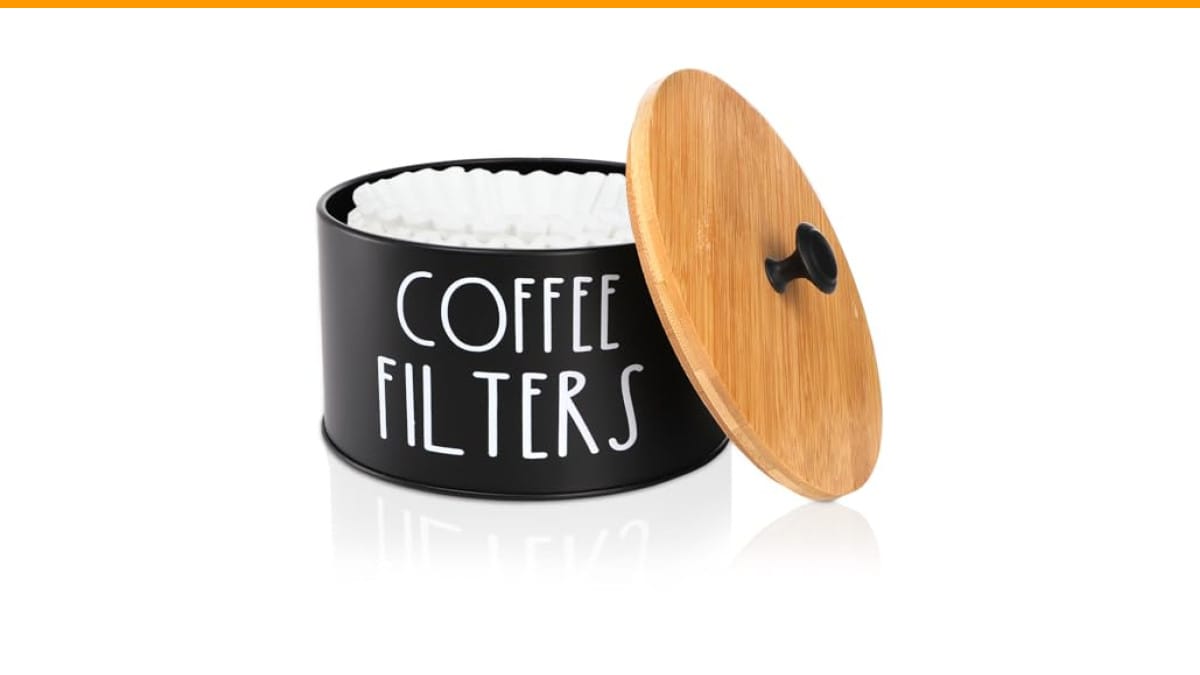
Acshio Coffee Filter Holder with Lid, Metal…
- Attractive Appearance: Our coffee filter holder is made of metal, topped with a bamboo lid. Elegant and practical design, which cr…
- Product Details: The coffee filter storage basket measures 6"D x 3.5"H. This size is perfect for most common size filter papers.Th…
- Easy to Use: The top of the bamboo lid is designed with a metal handle, which adds aesthetic appeal and makes it easy to open, mor…
As an Amazon Associate I earn from qualifying purchases.
By the end, you’ll have a storage setup that keeps filters crisp, odor-free, and ready for your next brew.
Why Filter Storage Matters More Than You Think
Paper filters are made from natural fibers—usually abaca or wood pulp. That means they absorb moisture from the air and pick up odors from whatever sits nearby. A filter that’s absorbed humidity won’t rinse cleanly, and it can impart a papery or musty taste to your coffee. Not ideal when you’re trying to dial in a delicate Ethiopian natural.
Temperature swings matter too. If your filters live in a cabinet above the stove, the heat and steam from cooking will slowly degrade the paper. The fibers weaken, and you’ll start noticing tears or clogs during brewing. Filters stored in a cool, dry place stay structurally sound for months.
There’s also the practical side: a messy drawer full of loose filters is annoying. You fumble around, grab two at once, or drop one on the floor. A dedicated storage spot solves that small daily frustration.
The Rules of Proper Filter Storage
Here are the four conditions every filter storage method should meet:
- Dry: Relative humidity above 60% will start softening the paper. Keep filters away from sinks, kettles, and dishwashers.
- Clean: Filters pick up odors from coffee grounds, spices, and cleaning chemicals. Store them in a sealed container if your kitchen is busy.
- Protected: Crushed or bent filters brew unevenly. A rigid container prevents damage.
- Accessible: If it takes more than five seconds to grab a filter, you’ll end up leaving them on the counter—which defeats the purpose.
A simple rule of thumb: store filters the same way you’d store a bag of fresh coffee beans—sealed, cool, and away from light. You don’t need a vacuum sealer, but a basic airtight container goes a long way.
Container Options: What Actually Works
I’ve tested most of the common storage methods over the years. Here’s the honest breakdown.
Original Paper Bag
The bag your filters come in is fine for short-term storage—say, a few weeks. But the fold-over top doesn’t seal, and the paper itself breathes. In a humid kitchen, filters will absorb moisture through the bag. If you use a bag clip and keep it in a dry cabinet, it’s okay. Just don’t expect miracles.
Glass Jar with Airtight Lid
A wide-mouth mason jar works surprisingly well. It’s airtight, easy to clean, and you can see how many filters remain. The downside: it’s fragile, and if you drop it, you’ll be picking glass shards out of your filters. Also, the opening on some jars is too narrow for large Chemex filters.
Plastic Storage Container
Cheap and effective. A rectangular food-storage container with a snap lid keeps filters dry and protected. The downside is aesthetic—most plastic containers look like they belong in a fridge, not on a coffee bar. If you care about counter appeal, this might not be your first choice.
Metal Canister with Bamboo Lid
This is where the Chemex filter guide comes in handy—large circular filters need a wide-mouth container. The Acshio Coffee Filter Holder fits that bill. It’s a metal canister with a bamboo lid and a metal handle on top. The interior is smooth and wide enough for most standard filters, and the lid seals well enough to keep out dust and humidity. It also looks decent on a counter—the bamboo adds a warm touch that plastic jars lack. I’ve used one for a few months, and the lid still opens smoothly. The only minor gripe: it’s not completely airtight, so it won’t protect filters from extreme humidity for months on end. But for everyday kitchen use, it’s solid.
Drawer Organizer
If you prefer to keep filters out of sight, a drawer organizer works. The issue is that most drawers aren’t climate-controlled, and they can get humid if your kitchen is steamy. Also, loose filters can slide around. A dedicated slot or small box within the drawer helps.
How to Store Different Filter Shapes
Not all filters are the same, and your storage should match the shape.
- V60 and Kalita Wave (cone and flat-bottom): These are small and stack neatly. A round canister or small jar works well. Just make sure the diameter is wide enough to grab one without digging.
- Chemex (large circle): These are big and thin. They need a wide, flat container. A large glass jar or a dedicated filter holder with a wide mouth is best. Avoid stacking heavy items on top of them.
- Aeropress (small circle): These are sturdy and compact. A small jar or even a ziplock bag works fine.
- Basket filters (for drip machines): These are flat and can bend easily. A rigid container with a flat bottom is essential.
One trick: if you use multiple filter types, label the container. I’ve grabbed V60 filters when I needed Kalita ones more times than I’d like to admit.
Common Mistakes to Avoid
I’ve made most of these mistakes myself, so consider this a public service announcement.
- Storing filters next to the coffee grinder: Fine coffee dust gets into the paper and can clog the filter during brewing. Keep them at least a foot away.
- Leaving filters in a damp cabinet: If your cabinet is under the sink or near the dishwasher, move them.
- Using a container that’s too small: Cramming filters in bends the edges. A bent filter doesn’t sit flush in the brewer, which causes channeling and uneven extraction.
- Forgetting to check for mold: In humid climates, paper can grow mold even in a sealed container. If you see dark spots or smell something off, toss the whole stack and start fresh.
Comparing Storage Methods
| Method | Protection from Moisture | Protection from Odors | Ease of Access | Counter Appeal | Cost |
|---|---|---|---|---|---|
| Original paper bag | Low | Low | Medium | Low | Free |
| Glass jar with lid | High | High | Medium | Medium | Low |
| Plastic container | High | High | High | Low | Low |
| Metal canister with bamboo lid | Medium-High | Medium-High | High | High | Medium |
| Drawer organizer | Medium | Medium | Medium | Hidden | Low |
The table shows the trade-offs. If you want the best balance of protection and looks, a metal canister wins. If you’re on a budget, a plastic container does the job. The paper bag is only a temporary solution.
Frequently Asked Questions
Can you store coffee filters in the freezer?
You can, but you shouldn’t. The freezer is dry, so filters won’t absorb moisture there. But the constant opening and closing of the freezer door causes condensation when you take them out. Plus, filters can pick up odors from frozen food. Room temperature storage in a sealed container is better.
Do coffee filters expire?
They don’t have an expiration date, but they do degrade over time. After about a year, the paper can become brittle or develop a stale smell. If your filters are more than a year old, do a quick sniff test. If they smell like old cardboard, replace them.
How long can you keep coffee filters in the original bag?
In a dry, cool cabinet, the original bag with a clip will keep filters usable for about a month. After that, the paper starts absorbing ambient moisture. For long-term storage, transfer them to an airtight container.
Should you store filters with a silica gel packet?
It doesn’t hurt. A small silica gel packet inside the container will absorb excess moisture. Just make sure it’s food-safe and doesn’t touch the filters directly. I’ve used one in a humid summer, and it helped keep the filters crisp.
Can you reuse coffee paper filters if stored properly?
Reusing a paper filter is possible if you rinse and dry it completely, but it’s not recommended. The paper fibers break down after the first use, so the second brew will be slower and weaker. Storage doesn’t change that. Use each filter once.
What I Learned From Testing These Methods
After trying all of these over the past few years, my daily setup is a metal canister on the counter next to the kettle. It’s quick, it looks fine, and I never worry about damp filters. The key is that I keep it away from the sink and the grinder. That’s it.
If you’re just starting out, don’t overthink it. Pick any container that seals, put it in a dry spot, and you’re 90% of the way there. The last 10% is about habit—putting filters back after each use.
And if you’re dealing with a moldy or clogged coffee maker, that’s a separate issue. Check out our guides on cleaning your coffee maker and cleaning your grinder to keep the whole setup fresh.
Quick Storage Checklist
- Keep filters in a sealed container—glass, plastic, or metal.
- Place the container in a dry, cool spot away from the sink, stove, and grinder.
- Match the container size to your filter shape—wide and flat for Chemex, small and round for V60.
- Label the container if you use multiple filter types.
- Check filters monthly for signs of moisture or odor.
- Replace filters after a year of storage, even if they look fine.
- Consider a silica gel packet for humid climates.
That’s the whole picture. Store your filters like you store your beans—protected from the elements—and your coffee will taste better for it.
Products related to this article
Sponsored / affiliate links. As an Amazon Associate I earn from qualifying purchases. I may earn additional commission from eligible campaigns.