You’ve seen the videos. A barista locks in a naked portafilter, and a perfect, honey-colored stream of espresso flows into the cup. No splatter, no hissing, no mess. Then you try it at home, and it looks like a Jackson Pollock painting took place inside your machine. Coffee grinds are everywhere, the counter is wet, and the shot is sour.
That mess isn’t bad luck. It’s information. A bottomless portafilter removes the bottom spout so you can see exactly what’s happening during extraction. The spray and splatter you’re dealing with are symptoms of channeling, which happens when water finds a path through the coffee puck instead of flowing evenly. If you fix the cause, the mess disappears. What you’ll walk away with here is a clear, step-by-step process to get a clean bottomless shot every time, along with the troubleshooting knowledge to fix it when things go sideways.
Normcore
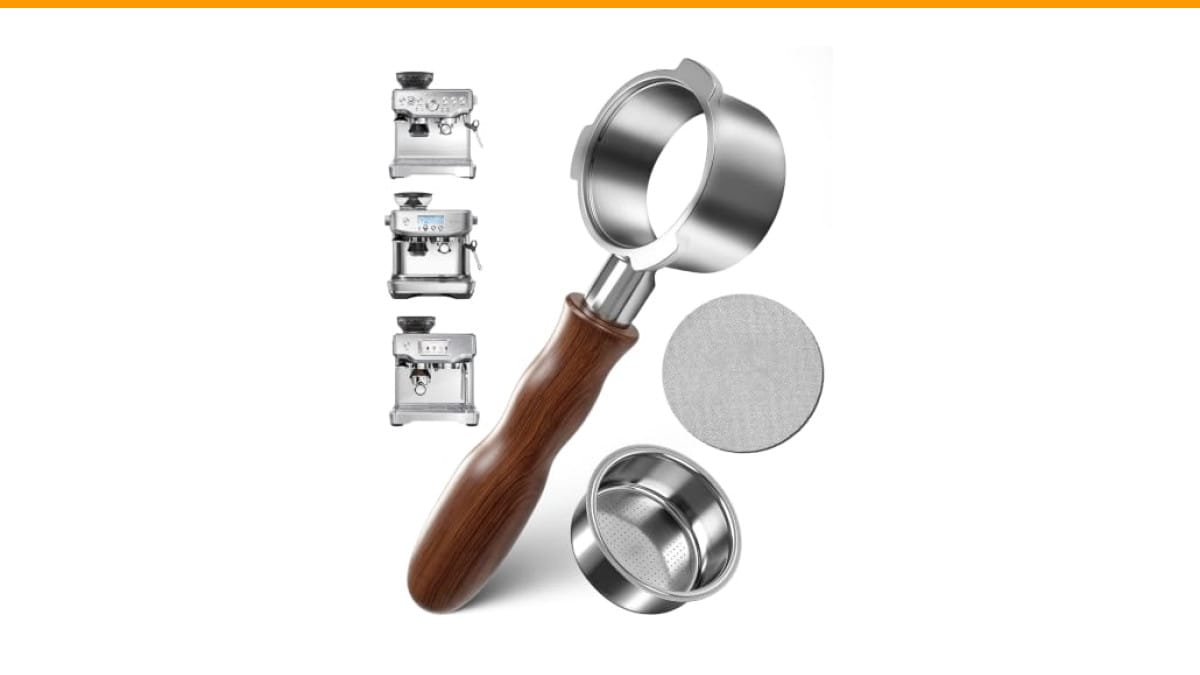
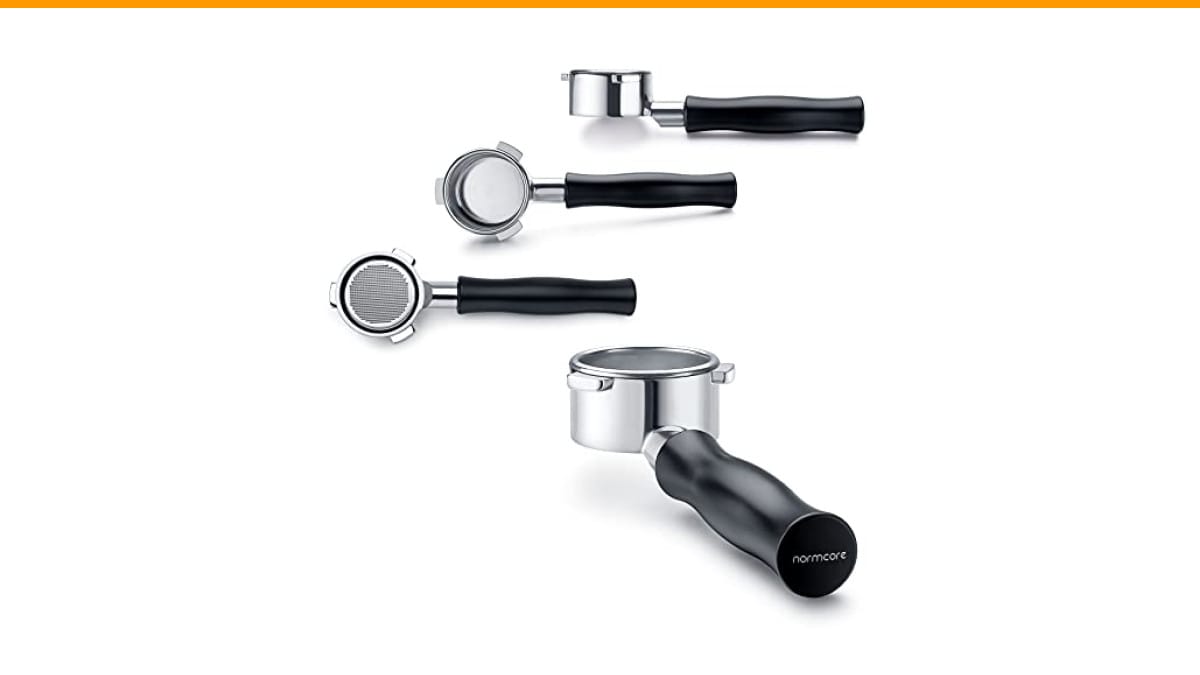
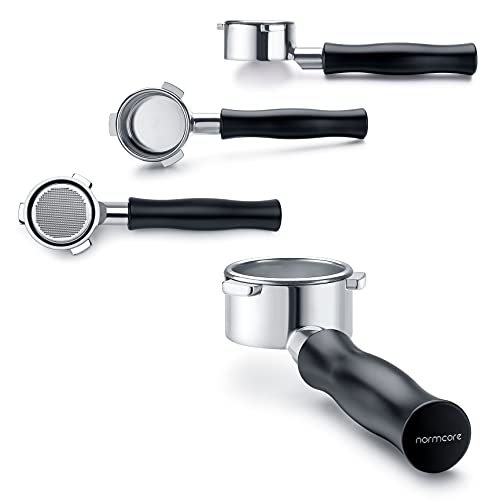
Normcore 54mm Bottomless Portafilter, Naked Portafilter Fits…
- Normcore Bottomless Portafilter
- Precise Pouring – A bottomless portafilter is an important piece of equipment that aids in diagnosing espresso extraction issues.…
- Premium Made – All Anodized Aluminum handles have been manually lathed with expertise and unparalleled quality finish.
As an Amazon Associate I earn from qualifying purchases.
Before we get into the technique, let me be upfront about gear. The Normcore 54mm Bottomless Portafilter is a solid upgrade for Breville machines like the Barista Express or Pro. It comes with an 18g basket included, and the handle is comfortable. It’s not magic, and it won’t fix a bad grind, but it gives you a clear view of the extraction, which is the whole point. Worth checking the current price on Amazon if you’re in the market.
Why Bottomless Portafilters Spray in the First Place
When your portafilter has a spout, you don’t see the extraction. You just see liquid coming out. The spout masks a lot of sins. A bottomless portafilter exposes every flaw in your puck prep because you’re watching the underside of the basket directly.
Channeling is the main culprit. It happens when the water pressure (usually around 9 bars) finds a weak spot in the puck. This usually occurs because the grind is too fine, the dose is too low, or the tamp isn’t level. Water rushes through that weak spot, creating a jet that sprays off the basket edge. The rest of the puck is under-extracted, so your shot tastes sour and thin.
Another common issue is a poor seal between the basket and the group head. If the basket is overfilled, the puck touches the shower screen before you lock it in, which creates a gap. Water hits that gap and sprays sideways. You need to leave a small gap, usually 2-3 millimeters, between the top of the coffee and the shower screen.
So, the mess you’re cleaning up isn’t a failure. It’s feedback. The spray pattern tells you where the channel is. If you see a jet on the left side, the puck is weaker on the left. That’s your clue to adjust your distribution or tamping technique.
Step-by-Step: Getting a Clean Shot
Here’s the process I use in testing, and it works across different machines. The goal is to create a uniform, dense puck that offers even resistance to the water.
- Grind finer than you think. Most people start too coarse. If your shot runs fast (under 20 seconds) and sprays, grind finer. A proper shot should take 25-30 seconds from the moment you hit the brew button. That includes the pre-infusion time on machines like the Breville.
- Weigh your dose. Don’t eyeball it. For a standard 54mm basket, you’re looking at 18-19 grams of coffee. Weigh it every single time. A 0.5-gram difference changes the extraction dynamics significantly.
- Distribute before you tamp. This is the step most home users skip. After you grind into the basket, the coffee is piled up in a cone. If you tamp that cone flat, you create a dense center and loose edges. Water will channel around the edges. Use a distribution tool, or simply tap the side of the portafilter to level the bed, then gently smooth it with your finger. The goal is a flat, even surface before the tamper touches it.
- Tamp level and firm. Your tamp should be level. If it’s tilted even 2 degrees, the water will find the lower side. Press down with about 15-20 pounds of pressure, then give it a slight twist to polish the surface. You don’t need to be a bodybuilder here; consistency matters more than force.
- Lock in and brew immediately. Don’t let the puck sit. The longer it waits, the more the coffee degasses and settles, which can create cracks. Load the portafilter, start the brew, and watch the underside.
In testing, I’ve found that a clean shot starts with a few dark drops that form in the center of the basket. Then, within 3-5 seconds, the stream should become a single, uniform flow that looks like warm honey. It should not spray, spit, or wander around the basket.
If you see the stream start on one side and slowly migrate to the center, that’s a distribution issue. You’ll need to be more aggressive with your leveling before the tamp.
Dose, Grind, and the 54mm Basket
The 54mm basket is smaller than the standard 58mm used in most commercial machines. That smaller diameter means the puck is deeper for the same dose, which changes how you dial in.
With a 54mm basket, the dose range is tighter. You’re usually between 17 and 19 grams. If you under-dose, say 16 grams, the puck is too thin, and the water hits it with too much force relative to its thickness. You’ll get spray. If you over-dose, you’ll hit the shower screen, which also causes spray and makes a mess when you try to lock the portafilter in.
Grind size is the next variable. The right grind for a bottomless portafilter is usually finer than what you’d use with a spouted one. Why? Because the spout adds resistance and hides a slightly coarse grind. With the bottom exposed, you need the puck itself to provide all the resistance. If your shot is gushing out in 15 seconds and spraying, go finer by two or three steps on your grinder. If it’s barely dripping after 40 seconds and you see no flow at all, you’ve gone too fine.
One thing I noticed with the espresso machine making loud noise is that sometimes the pump sounds different with a bottomless portafilter. That’s normal. The pressure is more direct, and there’s less dampening from the spout. A high-pitched whine usually means the pump is struggling against a too-fine grind.
Comparing Fixes for a Messy Shot
When things go wrong, you need a quick reference. Here’s a table I use to diagnose common problems, based on what I see in the cup and on the counter.
| Symptom | Likely Cause | Fix |
|---|---|---|
| Spray from the left side | Uneven tamp, low side on the left | Re-tamp with a leveling tool, focus on even pressure |
| Spray from the edges | Distribution problem, loose edges | Use a WDT tool or tap and level the bed before tamping |
| Shot runs too fast (under 20s) | Grind too coarse | Grind finer by 2-3 steps, re-test |
| Shot drips slowly, then sprays | Dose too high, hitting shower screen | Reduce dose by 0.5-1 gram |
| No flow at all, pressure high | Grind too fine or over-tamped | Grind coarser, reduce tamp pressure |
| Stream wanders across the basket | Channeling from a crack in the puck | Distribute more evenly, ensure fresh beans |
This table isn’t exhaustive, but it covers the main issues I’ve seen in years of testing. The key is to change one variable at a time. If you change the grind and the dose simultaneously, you won’t know which one fixed the problem.
Cleaning Up: Faster Than You Think
Even with perfect technique, you’ll occasionally have a bad shot. The cleanup for a bottomless portafilter is actually easier than a spouted one. There’s no spout to unscrew, no hidden crevices where old coffee hides.
After you knock out the puck, rinse the basket under hot water. That’s it. The basket is exposed, so you can see if it’s clean. If you get coffee oils building up, a quick soak in a vinegar solution works well, just like with your main machine.
The counter mess is a different story. If you get spray, the coffee grounds are hot and wet. Wipe them up immediately, or they’ll cake onto the surface. Keep a damp cloth next to the machine during your first few attempts. You’ll use it.
I also recommend checking your group head gasket. A worn gasket can cause leaks around the portafilter, which looks like a mess but isn’t a puck prep issue. If you see water dripping from the sides of the portafilter, not the bottom of the basket, that’s a gasket problem. Replacing it is a cheap fix and makes a huge difference in cleanliness.
Common Questions About Bottomless Portafilters
Why does my bottomless portafilter spray everywhere?
Spraying is almost always channeling. The water is finding a weak path through the puck. This happens because of uneven distribution, a tilted tamp, or a grind that’s too coarse. Fix the puck prep, and the spray stops. It’s rarely the portafilter itself.
Do I need a special basket for a bottomless portafilter?
Most bottomless portafilters come with a basket, like the Normcore model includes an 18g one. You can use any basket that fits the portafilter, but precision baskets with smaller holes and a flat bottom tend to give cleaner extractions. The included basket is usually fine to start with.
Is a bottomless portafilter only for espresso machines with a 58mm group head?
No. Many home machines, like Breville models, use a 54mm group head. You need a portafilter that matches your machine’s size. Using a 58mm portafilter on a 54mm group head won’t seal properly. Check your machine’s spec before buying.
Will a bottomless portafilter make my espresso taste better?
Not by itself. It won’t improve the taste of bad beans or a bad grind. What it does is force you to improve your technique. Because you can see the extraction, you’ll learn to dial in faster. That better technique leads to better tasting espresso.
Can I use a bottomless portafilter with a pressurized basket?
You can, but it defeats the purpose. Pressurized baskets create resistance with a small hole, not the coffee itself. They’re designed to work with a spout and mask poor grind quality. With a bottomless portafilter, you’ll see a thin, fast stream that looks weak. Use a non-pressurized basket for the full benefit.
What Actually Matters: Final Thoughts
You don’t need a $3,000 grinder to make a bottomless portafilter work. You need consistency and a willingness to watch what’s happening. Here’s the short list of what I’d tell a friend who just bought one:
- Weigh your dose every time. 18 grams is a solid starting point for a 54mm basket.
- Grind finer than you think is necessary. Most spray issues come from a coarse grind.
- Distribute the coffee bed before tamping. A flat bed is non-negotiable.
- Tamp level with consistent pressure. Tilt is your enemy.
- Watch the flow. It should be a single stream, not multiple jets.
- Change one variable at a time when troubleshooting. Don’t guess.
- Keep a cloth nearby. It’s part of the learning curve.
Once you get the hang of it, you’ll wonder why you used a spouted portafilter for so long. The process is more involved, but the payoff is a shot you can actually see and a cleaner counter once you dial in. For a deeper look at maintaining your machine after all that testing, check out our guide on how often to clean your coffee maker. It pairs well with the new skills you’re building.
Products related to this article
Sponsored / affiliate links. As an Amazon Associate I earn from qualifying purchases. I may earn additional commission from eligible campaigns.
 Coffee Espresso Machine Handle Replacement Parts, Cafe Bracket Handle for Lidl Silvercrest CM4621 CM4218 KF5002 KF500S Barista (for 51mm Portafilter Basket - Not included)
 Linnkyfloa Coffee Espresso Maker Handle Replacement for Stovetop Moka Pot or Percolator, Black Plastic for Spare Part Compatible with Italian(9-12 Cup)
 Krylon Glitter Blast 6 Oz. Clear Sealer Spray - 1 Each