You bought a burr grinder because you heard it makes better coffee. Then you got it home, pressed the button, and realized you have no idea what setting to use. The bag of beans says ‘medium grind,’ but the dial has numbers from 1 to 40. What does that even mean?
This is the exact moment most people give up and just pick a random number. That’s a shame, because a burr grinder is the single biggest upgrade you can make to your coffee routine. It gives you uniform particle sizes, which means even extraction. Even extraction means you can actually taste the difference between a good bean and a great one.

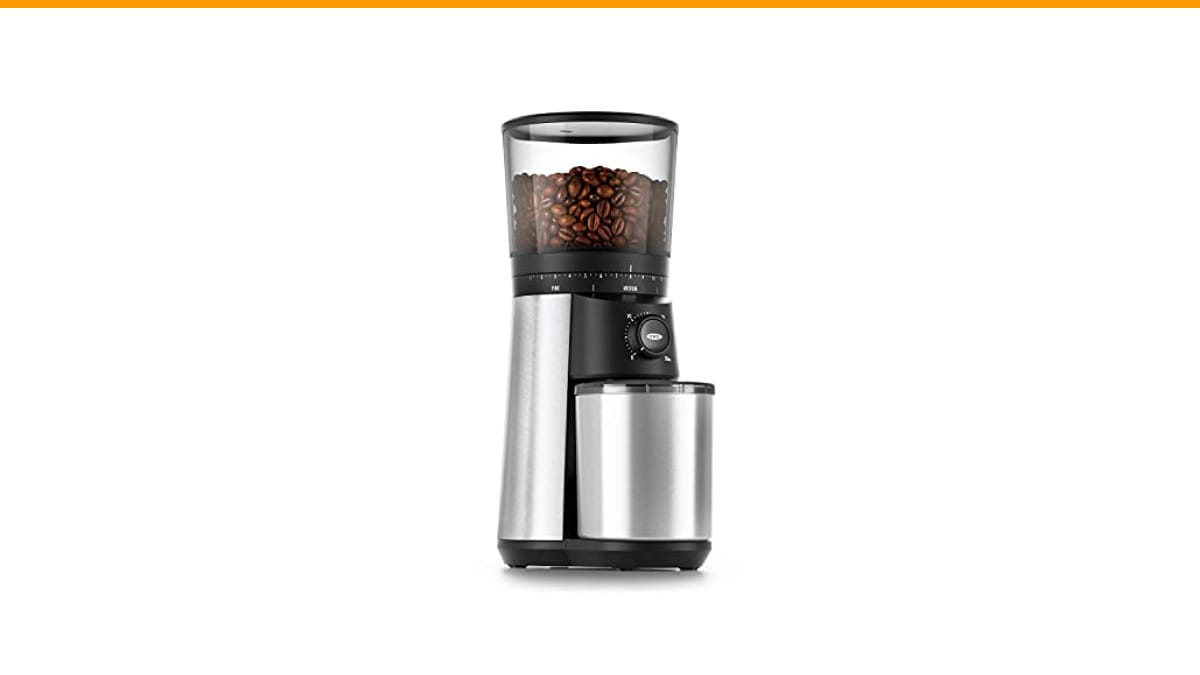
OXO
OXO Brew Conical Burr Electric Coffee Bean…
- 40mm stainless steel conical burrs: Precision grinding system produces uniform coffee grounds to ensure even extraction for rich,…
- 15 grind settings (plus 43 micro-adjustments): Easily customize your coffee grind—from fine for espresso to coarse for French pres…
- One-touch start: The Conical Burr Coffee Grinder remembers your last setting. Just push to grind—no need to reset each time.
As an Amazon Associate I earn from qualifying purchases.
By the end of this guide, you’ll know exactly how to set your grinder for espresso, pour-over, French press, and cold brew. You’ll also learn the technique behind dosing, why you should weigh beans instead of scooping them, and the mistakes that ruin a perfectly good grind.
If you’re shopping for a reliable electric option, the OXO Brew Conical Burr Grinder is a solid pick. It has 15 labeled settings plus 43 micro-adjustments, so you can dial in a specific brew method without guessing. The 40mm stainless steel burrs stay sharp for years, and the 12-ounce hopper means you can grind a full bag of beans without refilling.
Grind Size: The Map, Not the Destination
Think of grind size as a map. It tells you where to start, but you still need to drive the car. Every grinder’s number system is different, so the number ’10’ on one machine might be ’15’ on another. You’re looking for a texture, not a number.
Here are the reference points I use when testing grinders side by side:
- Espresso (200–400 microns): Looks like powdered sugar, feels slightly gritty between your fingers. It should clump slightly when pinched.
- Pour-over / V60 (600–800 microns): Feels like fine sea salt. You can see individual particles but they’re still small.
- Drip / Chemex (800–1000 microns): Like coarse sand. Slightly chunkier than table salt.
- French Press (1200–1500 microns): Looks like kosher salt. You can easily see the shape of each particle.
- Cold Brew (1500+ microns): The coarsest setting. Looks like raw sugar or small gravel.
The trick is to start at the middle of each range, brew a cup, and adjust. If your coffee tastes sour and weak, the grind is too coarse. Go finer. If it tastes bitter and harsh, the grind is too fine. Go coarser. That’s the entire dial-in process in two sentences.
One thing to note: most grinders, including the OXO, have a ‘click’ sound when you turn the hopper. That click is one micro-adjustment. You can make small changes without counting full rotations. This is useful when you’re one or two clicks away from a perfect shot.
Dosing by Weight, Not by Scoop
Volume is a lie. A scoop of light roast beans weighs more than a scoop of dark roast because light roasts are denser. If you measure by volume, you’ll get inconsistent coffee every single day.
Get a scale. A simple 0.1g kitchen scale costs $15 and will improve your coffee more than a $500 grinder. Here’s the dosing formula I use:
- Place your portafilter or brew basket on the scale and zero it.
- Grind directly into the basket.
- Stop when you hit your target weight.
Standard ratios by brew method:
- Espresso: 18g in, 36g out (1:2 ratio)
- Pour-over: 30g coffee to 500g water (1:16.7)
- French Press: 30g coffee to 500g water (1:16.7)
- Cold Brew: 100g coffee to 1000g water (1:10)
Most electric grinders, including the OXO, grind directly into the bin or a portafilter. You’ll grind slightly more than you need, then brush off the excess. That’s normal. Perfectly leveling the basket beats trying to hit an exact weight in one pass.
The OXO’s one-touch start is handy here. It remembers your last grind time, so if you dial in 12 seconds for a 18g dose, you can hit the same button tomorrow and get close. You’ll still want to check the scale, but it’s a good starting point.
Static, Heat, and Retention: The Hidden Grind Killers
Three things mess up a grind that has nothing to do with particle size. Static makes grounds fly everywhere. Heat degrades volatile oils. Retention leaves old grounds in the chute to mix with fresh ones.
Static is the most visible problem. It’s worse in dry climates and with light roasts. A drop of water on the beans before grinding helps. Not a spray bottle, just a wet finger flicked over the beans. This is called the Ross Droplet Technique, and it cuts static by about 80%.
Heat is less obvious. Grinding at high speed generates friction, which heats the burrs. If the burrs get too hot, they start cooking the coffee oils. This is why slow grinders beat fast ones. The OXO runs at a moderate speed, so it doesn’t have this problem. Cheap blade grinders are the worst offenders because they spin at 20,000+ RPM.
Retention is the sneaky one. Every grinder traps some grounds between the burrs and the chute. When you grind the next batch, those old grounds come out first. For a home user, 0.5g to 1g of retention is acceptable. If you’re grinding 18g and getting 17.2g out, that’s a problem. You can fix it by grinding a few grams of beans and discarding them before your actual dose, but that’s wasteful.
Cleaning also plays a role here. Old coffee oils build up and make retention worse. I recommend brushing the burrs and chute every two weeks, and doing a deeper clean with grinder cleaning tablets once a month. If you need a step-by-step, this grinder cleaning guide covers the full process.
Grind Settings by Brew Method: A Practical Table
Here’s the cheat sheet I keep near my grinder. It’s based on the OXO’s 15 settings, but the textures apply to any burr grinder.
| Brew Method | OXO Setting | Texture Reference | Brew Time | Common Mistake |
|---|---|---|---|---|
| Turkish / Ibrik | 1 (finest) | Flour, powdery | 2–3 min | Grinding too coarse, bitter sludge |
| Espresso | 2–4 | Powdered sugar | 25–30 sec | Using pre-ground, wrong dose |
| Moka Pot | 5–6 | Fine table salt | 3–5 min | Grinding too fine, clogging the basket |
| Pour-over (V60) | 7–9 | Fine sea salt | 2:30–3:30 min | Inconsistent pours, grind too fine |
| Drip Machine | 9–11 | Coarse sand | 4–6 min | Grind too fine, over-extraction |
| Chemex | 11–12 | Kosher salt | 4–5 min | Grind too fine, slow drawdown |
| French Press | 13–14 | Coarse kosher salt | 4 min steep | Grind too fine, muddy cup |
| Cold Brew | 15 (coarsest) | Raw sugar / gravel | 12–24 hr steep | Grind too fine, cloudy and bitter |
These are starting points, not gospel. Altitude, bean density, and water temperature all shift the numbers. If your pour-over finishes in 2 minutes instead of 3, go finer. If it’s still dripping at 5 minutes, go coarser. The table gets you in the ballpark; your taste buds do the rest.
If you’re still on a blade grinder and wondering if the upgrade is worth it, this burr vs blade comparison lays out the differences in plain language.
Frequently Asked Questions
How fine should I grind for espresso with a burr grinder?
Start at a fine setting that looks like powdered sugar. If your espresso shot runs in under 20 seconds, grind finer. If it takes over 35 seconds and tastes bitter, grind coarser. The ideal range is 25–30 seconds for a 1:2 ratio. You’ll dial in within three or four shots.
Do I need to clean my burr grinder after every use?
No, but you should brush it out weekly. Run the grinder empty to eject loose grounds, then use a stiff brush on the burrs and chute. Once a month, run a tablet of grinder cleaner through it. Skipping this leads to rancid oil buildup, which makes every cup taste stale.
Why does my coffee taste sour even though I used the right setting?
Sour usually means under-extraction, which means your grind is too coarse. But it can also mean your water is too cool. Check your water temperature (195–205°F is ideal). If that’s fine, go one click finer and taste again. Small changes make big differences.
Can I use a burr grinder for spices or nuts?
You can, but you shouldn’t. Coffee oils cling to everything. If you grind cumin or cinnamon, your coffee will taste like a curry house for weeks. Get a separate cheap grinder for spices, or stick to coffee only.
Why does my grinder produce more fine dust at certain settings?
That’s called ‘fines,’ and every grinder produces some. Cheaper burrs create more because the cutting edges aren’t as precise. The OXO’s 40mm conical burrs are decent, but you’ll still see a little dust at the finest settings. It’s normal. If you’re getting excessive fines, your burrs might be dull or misaligned.
What to Do Next: A Practical Plan
You don’t need to master every brew method at once. Pick one, use the table above to find your starting point, and brew three cups. Adjust one click at a time until it tastes right. Write down the setting that worked. That’s your baseline.
- Start with the grind size that matches your brew method, then adjust by one click per cup.
- Weigh your coffee beans, don’t scoop them. A 0.1g scale is non-negotiable.
- Use the Ross Droplet Technique (one drop of water) to kill static in dry climates.
- Brush out the grinder weekly and deep-clean monthly to avoid stale oil buildup.
- Grind only what you need. Whole beans stay fresh for weeks; ground coffee goes stale in hours.
- If your grinder has micro-adjustments (like the OXO’s 43), use them for espresso. One click can be the difference between a great shot and a bitter one.
- Keep a small notebook or note in your phone with your dialed-in settings per bean and brew method.
Grinding coffee is a skill, not a mystery. The first few cups might be off, but that’s how you learn. Every bag of beans is slightly different, so you’ll always be dialing in. That’s the fun part. If you’re maintaining a drip machine, don’t forget to clean it on a regular schedule too. A clean grinder and a clean brewer are the two things that make consistent coffee possible.
Products related to this article
Sponsored / affiliate links. As an Amazon Associate I earn from qualifying purchases. I may earn additional commission from eligible campaigns.