You bought a gooseneck kettle because you watched a barista pour a perfect spiral over coffee grounds. Then you got it home, boiled some water, and your pour came out looking like a wavy line from a toddler’s drawing. The kettle wasn’t the problem. The technique was.
This guide covers the actual operation of an electric variable-temperature gooseneck kettle, from the control panel to the pour. You’ll learn what those preset buttons mean, why temperature matters more than you think, and how to pour without spilling water across your counter. You’ll also find out which common habits are ruining your brew.
Bonavita
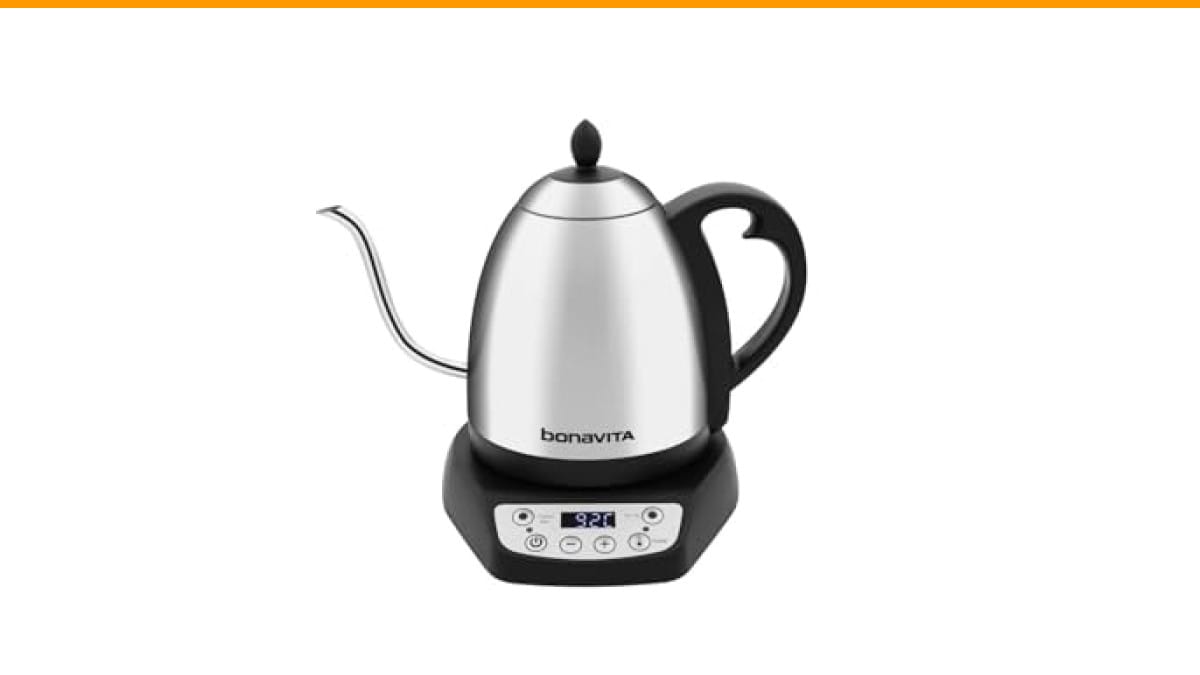
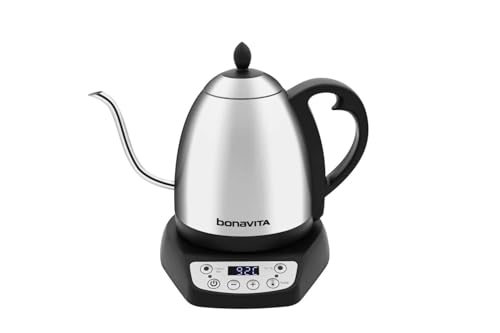
Bonavita 1L Digital Variable Temperature Gooseneck Electric…
- Precision Temperature - Fine-tune your brew with 1-degree accuracy (140˚F–208˚F / 60˚C–98˚C), or simply use the Temp Set Button to…
- Precision Flow - The gooseneck spout delivers a controlled, steady stream, while the ergonomic handle ensures every pour feels bal…
- Precision Quality - Crafted from 304 stainless steel and BPA-free virgin plastics, this kettle is built for safe use and lasting d…
As an Amazon Associate I earn from qualifying purchases.
If you’re using a model like the Bonavita 1L Digital Variable Temperature Gooseneck Kettle, this applies directly. That unit heats 1 liter in about five minutes and holds your chosen temperature for up to an hour, which makes it easy to experiment.
Myth #1: Boiling Water Is Always the Right Move
Most people think hotter water extracts more flavor. That’s true, but only up to a point. Water at a rolling boil sits around 212°F (100°C) at sea level. Pour that over light-roast coffee and you’ll get bitter, harsh notes. The heat scalds the grounds.
Different roasts need different temperatures. Light roasts do well at 205°F (96°C) because they’re denser and need more heat to extract sugars. Dark roasts are more soluble, so they prefer cooler water around 195°F (90°C). Green tea wants even less heat, around 175°F (80°C), or the leaves turn vegetal and astringent.
An electric gooseneck kettle with temperature control solves this. You set the target, and the kettle heats to that exact degree instead of boiling over. The Bonavita model lets you adjust in 1-degree increments from 140°F to 208°F, so you can dial in a specific roast without guessing.
Myth #2: A Faster Boil Means a Better Kettle
Watts matter, but not in the way marketing wants you to believe. A 1500-watt kettle boils faster than a 1000-watt one. But the difference is usually 60 to 90 seconds. That’s not nothing, but it’s not worth obsessing over.
What matters more is temperature stability. A kettle that overshoots your target by 5 degrees ruins a delicate tea. A good unit like the Bonavita keeps water within a degree of your setting. That consistency matters far more than shaving a minute off your morning routine.
Also, consider the pour. A gooseneck spout controls flow rate, which is the whole point of this kettle style. A thin, steady stream lets you saturate coffee grounds evenly without disturbing the bed. That’s what gives you a flat, even extraction instead of channels where water rushes through and leaves dry pockets.
Setting Up the Kettle for the First Time
Read the manual, even if you hate manuals. Most electric kettles ship with a thin film of manufacturing residue inside. Run one full boil of plain water and dump it out before brewing anything you plan to drink.
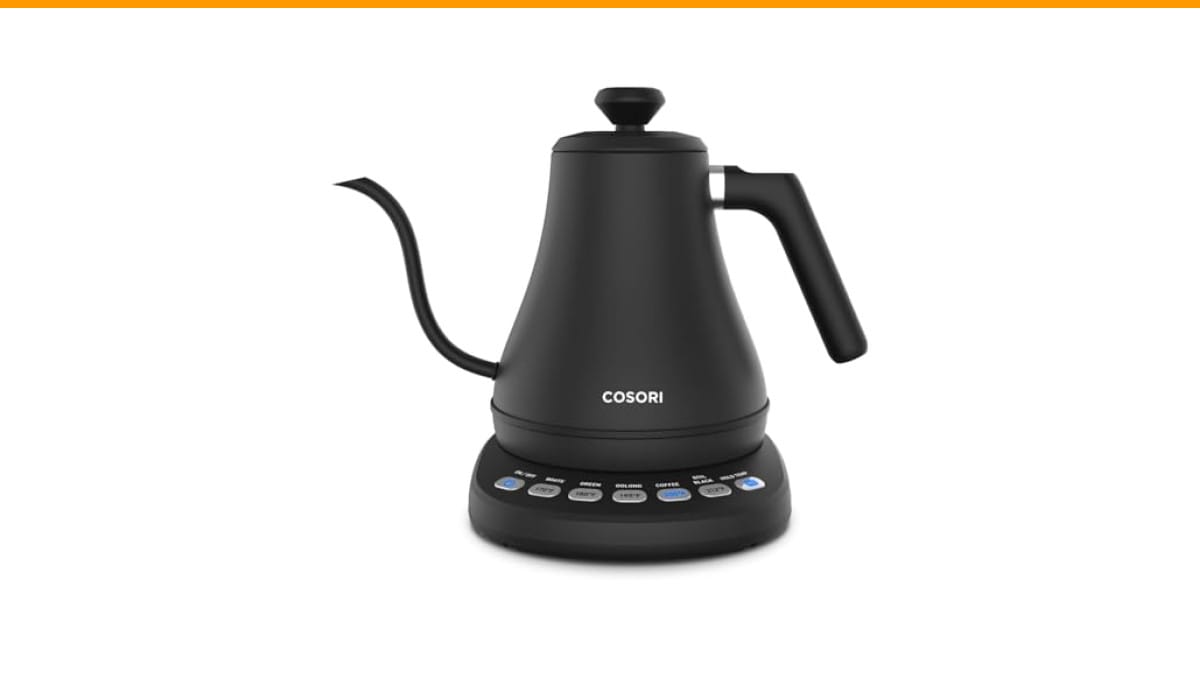
Place the kettle base on a dry, flat surface. Plug it in. The LED panel lights up. On the Bonavita, you’ll see six preset buttons for common temperatures and a plus/minus control for manual adjustment.
Here’s the workflow for coffee:
- Fill the kettle to at least the minimum line (usually 0.5 liters) so the heating element stays submerged.
- Press the Temp Set button and select your target temperature. For most medium roasts, start at 200°F.
- Press Start. The kettle heats and beeps when it reaches the target.
- Wait 30 seconds for the water to settle. The heating element creates micro-bubbles that can disturb your pour if you start immediately.
- Pour in slow, concentric circles starting from the center and moving outward.
For tea, the same steps apply, but pick a lower preset. Green tea around 175°F, black tea around 200°F. The hold function keeps the water warm for up to 60 minutes, so you can brew multiple steeps without reheating.
Pouring Technique That Actually Works
Your grip matters more than you’d expect. Hold the handle near the top, not the base. That gives you more leverage and control over the spout angle. Your wrist should stay straight; the movement comes from your shoulder and elbow.
Start the pour slowly. Tilting the kettle too far forward dumps water in a gush. You want a stream about the thickness of a pencil lead. Once you see a steady flow, you can increase the tilt slightly.
For pour-over coffee, bloom first. Pour just enough water to saturate the grounds — about twice the weight of your coffee dose. Wait 30 to 45 seconds for the coffee to degas and swell. Then continue pouring in stages, keeping the water level below the top edge of the filter.
One common mistake: pouring too high above the brewer. Keep the spout tip within two inches of the coffee bed. A high pour aerates the water and drops its temperature by several degrees before it hits the grounds. That changes your extraction.
Temperature Guide: What to Use for What
Here’s a practical reference table. These are starting points, not laws. Adjust based on your taste and your specific beans or leaves.
| Beverage | Temperature (°F) | Temperature (°C) | Notes |
|---|---|---|---|
| Light roast coffee | 205–208 | 96–98 | Denser beans need more heat |
| Medium roast coffee | 198–202 | 92–94 | Good starting default |
| Dark roast coffee | 190–195 | 88–91 | Cooler water prevents bitterness |
| Black tea | 200–208 | 93–98 | Steep 3–5 minutes |
| Green tea | 170–180 | 77–82 | Hotter water makes it bitter |
| White tea | 160–170 | 71–77 | Delicate leaves, gentle heat |
| Oolong tea | 185–200 | 85–93 | Varies widely by oxidation |
| Herbal tisane | 208 | 98 | Boiling is fine here |
These numbers assume you’re at or near sea level. At higher altitudes, water boils at a lower temperature, so adjust accordingly. A kettle set to 205°F will still hit that temperature, but it takes longer because the water doesn’t boil as readily.
Cleaning and Maintenance: Do This Weekly
Scale builds up fast, especially if you have hard water. White vinegar is your friend. Fill the kettle with a 50/50 mix of water and white vinegar, let it sit for 30 minutes, then boil. Dump it out, rinse thoroughly, and boil one batch of clean water to remove the vinegar smell.
Do this once a month if you use filtered water, every two weeks if you don’t. The gooseneck spout is narrow, so scale can restrict flow over time. A clogged spout ruins your pour control.
Don’t put the kettle in the dishwasher. The base has electronics, and the body is stainless steel that can get scratched or warped in high heat. Wipe the exterior with a damp cloth. Dry the base if any water splashes on it.
If you notice the kettle taking longer to heat, that’s a sign of scale buildup. The heating element has to work through a layer of mineral deposits, which wastes energy and time. The vinegar treatment fixes this.
Frequently Asked Questions
Can I leave water in the kettle between uses?
You can, but you shouldn’t. Stagnant water encourages bacterial growth and mineral buildup. Empty the kettle after each use and let it air dry with the lid open. If you must store water, use filtered water and change it daily.
Why does my coffee taste bitter even at the right temperature?
Check your grind size. If your grind is too fine, water takes longer to pass through, over-extracting bitter compounds. The gooseneck kettle gives you a slow, controlled pour, which actually makes grind issues more obvious. Coarsen your grind slightly and see if that helps. Also check your ratio — using too much coffee per water volume can cause over-extraction.
Is a gooseneck kettle worth it for regular drip coffee?
For a standard automatic drip machine, no. The gooseneck spout matters for manual brewing methods like pour-over, Chemex, or V60, where you control the water flow yourself. If you only use an auto-drip machine, a regular electric kettle is cheaper and gets the job done. But if you’re doing pour-over, the controlled flow is worth the extra cost.
How long does the Bonavita kettle hold temperature?
Up to 60 minutes. The hold function keeps the water at your set temperature for an hour, which is useful if you’re brewing multiple cups or steeping tea in separate rounds. After an hour, it shuts off automatically for safety.
Can I use the kettle for anything besides coffee and tea?
Sure. Some people use it for instant oatmeal, ramen, or warming baby bottles. You can also use it for French press, pour-over, or cold brew concentrate dilution. Just make sure you clean it thoroughly if you’re switching between uses, especially if you’re heating something with flavor or fat.
What to Do Next
You don’t need to master everything at once. Start with one variable — temperature. Set your kettle to 200°F and brew a pour-over. Next week, try 196°F with the same beans. Compare the cups. You’ll taste the difference, and that experience will teach you more than any chart.
- Use preset temperatures for common drinks, manual adjustment for fine-tuning.
- Pour with a pencil-thin stream, keeping the spout close to the coffee bed.
- Bloom your coffee for 30–45 seconds before the main pour.
- Clean with vinegar monthly to prevent scale buildup.
- Empty the kettle after each use to keep it fresh.
- Adjust temperature based on roast level — darker roasts need cooler water.
- Check the current price of the Bonavita variable temperature kettle if you’re shopping around.
If you’re new to manual brewing, you might also want to read up on folding Chemex filters correctly for a proper seal. And if your kettle is already showing scale, a solid coffee maker cleaning routine will keep everything tasting clean.
Products related to this article
Sponsored / affiliate links. As an Amazon Associate I earn from qualifying purchases. I may earn additional commission from eligible campaigns.
 Coffee Mug Warmer & You are Awesome Mug Set, Electric Cup Warmer for Desk
 SOLUSTRE Electric USB Coffee Cup Warmer with Temperature Settings Portable Milk and Beverage Heating Coaster for Office Desk Small Lightweight Design Easy to Clean Surface Multi Functional
 Stainless Steel Moka Pot Pressed Powder Tool for 2 4 6 9 Cup Espresso Coffee Brewer(6 Cups)