You dial in a fresh bag of beans, pull a shot, and it still tastes hollow or bitter. The machine is clean, water temperature is fine, yet something is off. More often than not, the problem lives inside the grinder, not the espresso machine.
This guide covers the practical steps to improve coffee taste from an espresso grinder. You will learn how grind size, burr condition, and routine maintenance affect flavor. You will also get a clear comparison of when to replace parts versus when to adjust your technique. By the end, you will know exactly where to look when your shots taste flat or harsh.

Generic
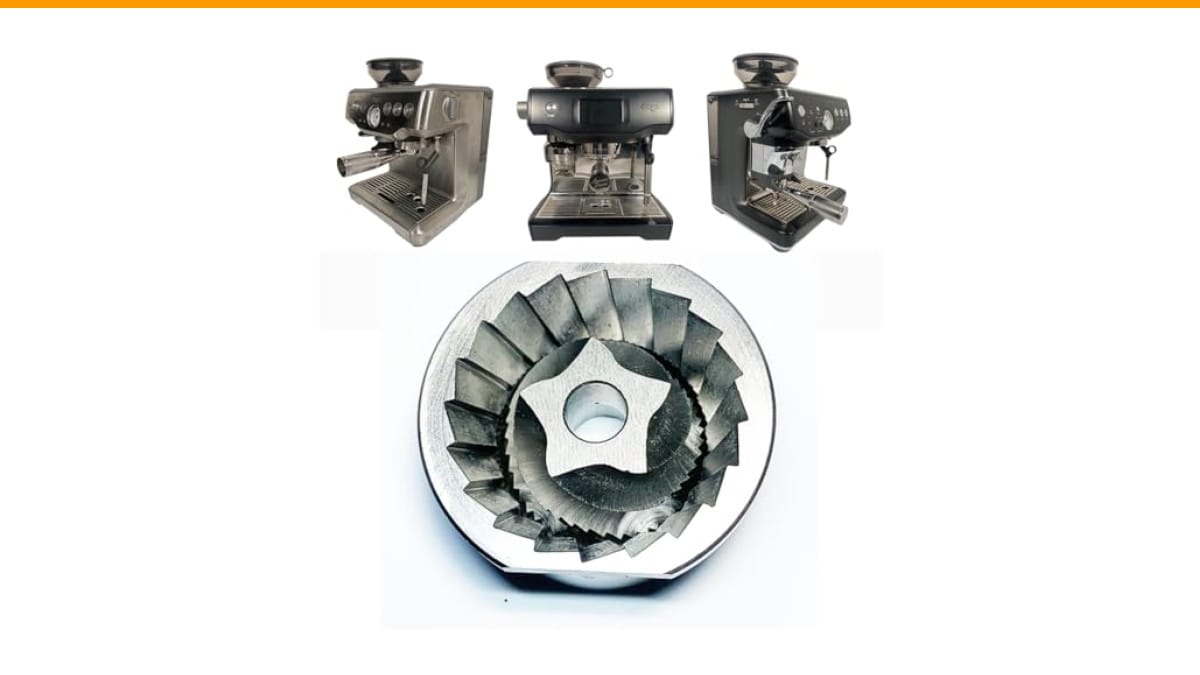
Upper & Lower Precision Fit Conical Burrs…
- ☕ Precise Fit: Specifically designed for Sage/Breville Coffee Machines 870/878/880/860/840/810/450/500, ensuring optimal performan…
- ☕ High quality stainless steel conical burrs designed to minimize heat during grinding, preserving the coffee bean's essential oil…
- ☕ Enhanced Coffee Quality: Replace worn burrs to maintain consistent grind size, improving flavor extraction and coffee quality.
As an Amazon Associate I earn from qualifying purchases.
If your grinder has been running for a couple of years, worn burrs are a likely culprit. A set like the Upper & Lower Precision Fit Conical Burrs for Sage/Breville restores consistent particle size, which directly improves extraction and flavor clarity.
Grind Size: The First Lever to Pull
Grind size controls how fast water moves through the coffee bed. Too fine, and you get over-extraction: bitter, dry, and ashy flavors. Too coarse, and the shot runs fast, producing sour, thin espresso with no body.
For a standard 1:2 ratio (18 grams in, 36 grams out), a good target is 25 to 30 seconds. If your shot finishes in 18 seconds, grind finer. If it takes 45 seconds and drips, grind coarser. Make small adjustments, one step at a time, and taste after each change.
One thing I see often: people chase the perfect dial position without checking their beans first. Light roasts need a finer grind than dark roasts because they are denser. A bean that worked yesterday may not work today if humidity changed. Treat grind size as a daily variable, not a set-and-forget setting.
If you are also dealing with bitter shots after a deep clean, check our guide on bitter coffee causes before you blame the burrs.
Burr Condition: The Hidden Flavor Killer
Burrs wear down over time. A typical home conical burr set lasts about 500 to 800 pounds of coffee, but that number drops if you grind very fine or use dark, oily beans. Worn burrs produce a wider particle distribution, which means some grounds are too fine while others are too coarse. The shot extracts unevenly, and you taste it.
How do you know your burrs are dull? Look at the grind consistency. Spread a small amount on a dark plate. If you see many fines clumped together next to larger chunks, that is a sign of wear. Also, if you need to constantly adjust finer to hit the same shot time, the burrs are losing their edge.
Replacing burrs is not complicated. The Sage/Breville models (870, 878, 880, 860, 840, 810, 450, 500) use a straightforward upper and lower conical set. The replacement burr set includes both pieces, and installation takes about 15 minutes. The stainless steel construction runs cooler than standard burrs, which preserves the bean’s volatile oils during grinding.
One caveat: this set only fits adjustable burr models. Older Breville grinders with fixed burrs need a different part. Check your model before ordering.
If you are unsure whether your grinder needs a deep clean first, read our grinder cleaning guide — a dirty grinder can mimic worn burrs.
Dosing and Distribution: Small Changes, Big Flavor Gains
Even with sharp burrs and the right grind size, poor dosing ruins the shot. You need a consistent weight every time. Use a scale, not the grinder’s timer. Beans change density as they age, so a timer that delivered 18 grams last week might give you 17.2 today.
Distribution matters just as much. If the coffee bed is uneven, water finds the path of least resistance and channeling occurs. That creates a mix of over-extracted and under-extracted coffee in the same cup. Use a distribution tool or simply tap the portafilter and level the grounds with your finger before tamping.
Tamping pressure is less critical than people think. Once the bed is level, a consistent 30 pounds of pressure is enough. The key is tamping flat, not hard. A tilted tamp causes one side of the puck to extract faster than the other.
For those using Breville machines, the built-in grinder often needs a slight adjustment after burr replacement. The new burrs may require a finer setting initially because they are sharper and cut more efficiently. Expect to re-dial your grind after installing a fresh set.
Cleaning and Maintenance: The Routine You Cannot Skip
Burrs alone do not determine flavor. Coffee oils and fines accumulate inside the grinder chute and on the burrs themselves. These old particles go rancid and taint every fresh dose you grind. If your coffee tastes stale or muddy, this is often the reason.
Clean your grinder every two to four weeks if you use it daily. Brush the burrs and the chute with a stiff nylon brush. Run a few grams of grinder cleaner tablets through once a month. Do not use water or wet cloths on the burrs; moisture causes rust.
When you replace burrs, take the opportunity to vacuum out the entire grinding chamber. You will be surprised how much compacted coffee hides in the corners. This also prevents the new burrs from getting contaminated by old residue.
If your machine is due for a descale, do that too. Scale in the boiler affects water temperature stability, which changes extraction. Our descaling guide covers the process step by step.
Comparing Fixes: What Gives You the Most Flavor Improvement
| Fix | Effort | Cost | Flavor Impact | When to Do It |
|---|---|---|---|---|
| Adjust grind size | Low | Free | High | Every new bag of beans |
| Improve distribution | Low | Free | Medium | Every shot |
| Deep clean grinder | Medium | Low | Medium | Every 2–4 weeks |
| Replace worn burrs | Medium | Moderate | Very high | Every 500–800 lbs of coffee |
| Descale machine | Medium | Low | Medium | Every 3–6 months |
Start with the free fixes. If your shots still taste off after grind adjustment and proper distribution, move to cleaning. Burr replacement is the last step, but it is often the one that delivers the biggest jump in clarity and sweetness.
Common Questions About Improving Espresso Grinder Taste
How often should I replace espresso grinder burrs?
For home use, plan on every two to three years, depending on how many shots you pull. If you grind 18 grams daily, that is about 650 pounds over three years. Commercial users replace burrs every six to twelve months. Watch for inconsistent grind size and longer shot times as signs of wear.
Does grind size really change the taste that much?
Yes. A one-step change on a stepless grinder can shift your shot from sour to balanced. On stepped grinders, one click can mean the difference between a 20-second gusher and a 35-second syrupy shot. Grind size is the single most powerful dial you have.
Why does my espresso taste bitter even with fresh beans?
Bitter flavor usually comes from over-extraction. Check your yield first. If you are pulling 45 grams out of 18 grams in, cut the yield back to 36 grams. Also check water temperature. If your machine runs hot, you get bitter notes regardless of grind. Finally, inspect your burrs for wear.
Can I use blade grinders for espresso?
No. Blade grinders chop beans unevenly, producing a mix of powder and chunks. That makes consistent extraction impossible. You need a burr grinder for espresso. If you are curious about the differences, read our burr vs blade comparison.
Is it worth replacing burrs on a budget espresso grinder?
Yes, if the grinder is otherwise functional. A new set of burrs can restore performance and save you from buying a new machine. The Breville-compatible burr set costs a fraction of a new grinder and usually restores grind consistency to near-factory condition.
What to Do Next: A Practical Action Plan
- Dial in your grind size first; it costs nothing and fixes most flavor issues.
- Use a scale for consistent dosing instead of relying on timers.
- Level your coffee bed before tamping to avoid channeling.
- Clean your grinder every two to four weeks with a brush and grinder tablets.
- Replace burrs when you see uneven particle size or need to grind finer to hit the same shot time.
- Descale your espresso machine every few months to keep water temperature stable.
- Check your burr model before buying replacements; adjustable burr machines only.
You do not need a new grinder to get great espresso. Most of the time, a fresh set of burrs, a clean chamber, and careful dosing will get you 90% of the way to cafe-quality shots. Start with the free adjustments, then work your way to parts replacement if needed. Your taste buds will tell you when you have arrived.
Products related to this article
Sponsored / affiliate links. As an Amazon Associate I earn from qualifying purchases. I may earn additional commission from eligible campaigns.
 Coffee Espresso Machine Handle Replacement Parts, Cafe Bracket Handle for Lidl Silvercrest CM4621 CM4218 KF5002 KF500S Barista (for 51mm Portafilter Basket - Not included)
 Linnkyfloa Coffee Espresso Maker Handle Replacement for Stovetop Moka Pot or Percolator, Black Plastic for Spare Part Compatible with Italian(9-12 Cup)
 Wrenmor Replacement Handle For Coffee Espresso Moka Stove Pot, Black Plastic Accessory Compatible With 1/3/6/9/12 Cup Sizes For Easy Installation And Long-Lasting Use(1 Cup)