You buy a bag of specialty beans, bring it home, and within a week the coffee tastes flat. The aroma fades. The crema thins out. You start wondering if the roaster made a mistake or if your grinder is the problem. Most of the time, neither is at fault. The real culprit is oxygen, moisture, and light slowly working through the bag’s one-way valve and foil lining.
This article answers one question directly: is a coffee canister worth it? I’ve tested several storage solutions side by side over the past few months, including the Veken Coffee Canister with Window. You’ll walk away knowing exactly what a canister does, what it doesn’t do, and whether the cost makes sense for your morning routine.

Veken
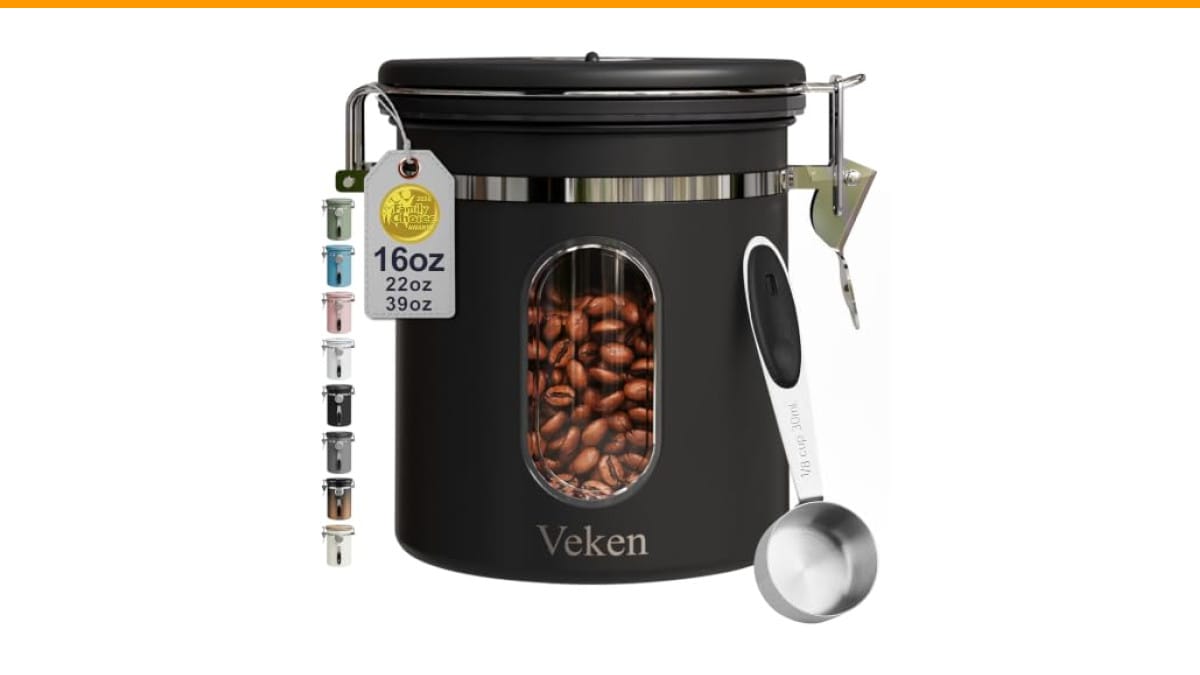
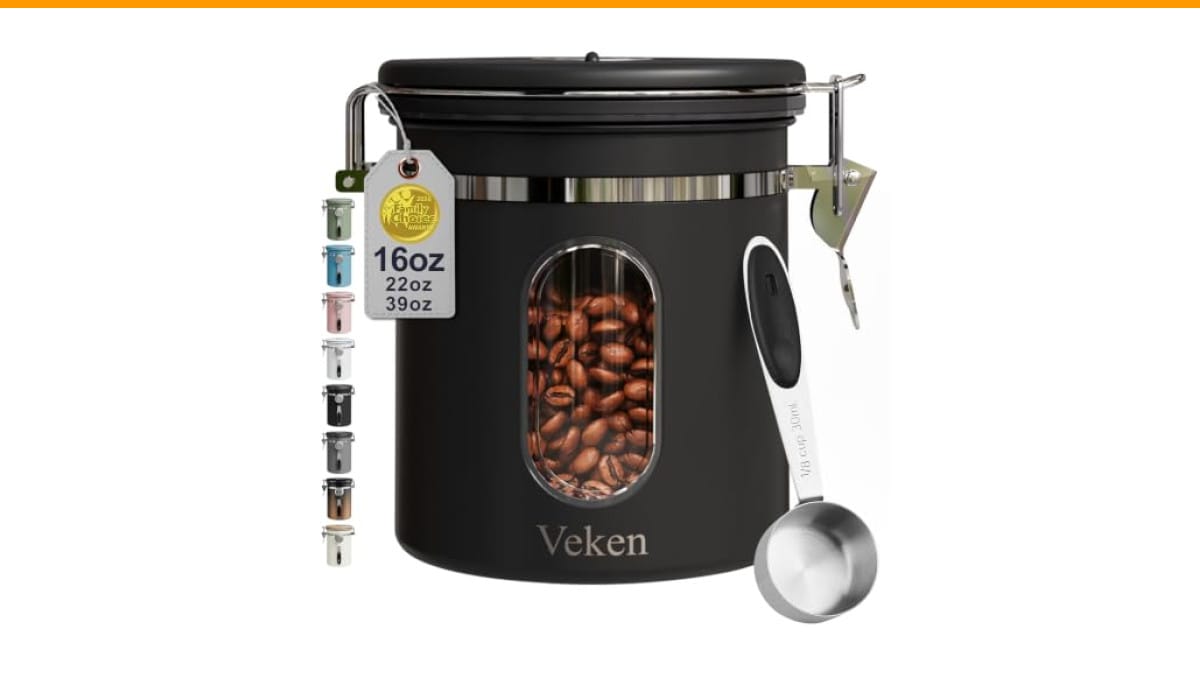
Veken Coffee Canister with Window,Airtight Stainless Steel…
- Freshness Is Everything: Our coffee canister helps maintain the freshness of your coffee beans by keeping air out and helping redu…
- Gifts for Coffee Lovers: This elegantly designed jar is a stylish and functional gift for coffee lovers, friends, and family. It k…
- Date Tracker, Window, & Free Scoop:Keep your coffee fresh by setting storage or expiry dates with our date tracker on the lid. A h…
As an Amazon Associate I earn from qualifying purchases.
Short answer: yes, if you buy beans in bulk or take more than a week to finish a bag. But the details matter more than the headline, so let’s get into them.
One option that handles most of the basics well is the Veken Coffee Canister with Window. It uses a one-way CO2 valve and a silicone seal to keep air out, and the lid has a date tracker so you know when you opened the bag. The window lets you see the bean level without popping the lid, which sounds minor until you’ve done it fifty times.
What Actually Ruins Coffee Beans
Coffee beans are porous. They absorb moisture and odors from the air around them. They also release CO2 for days after roasting. That gas is why bags have one-way valves — the roaster needs gas to escape without letting oxygen in.
Once you open a bag, the protective atmosphere is gone. Oxygen starts oxidizing the oils in the beans. That oxidation is what turns bright, fruity notes into a flat, cardboard-like taste. It’s not slow, either. Ground coffee can lose noticeable flavor within 15 minutes. Whole beans last longer, but the clock is still ticking.
Here’s a number to keep in mind: whole beans stored in an unopened, sealed bag stay fresh for weeks. Opened and left in the original bag, they peak around day 3 or 4. By day 10, most people can taste the difference blind. A good canister extends that peak window to roughly two weeks, sometimes three, depending on the bean and how often you open it.
Light matters too. UV rays break down the compounds that give coffee its flavor. That’s why most quality bags are opaque. A clear glass jar on your counter looks nice, but it’s actively degrading your beans every hour it sits in sunlight.
Comparing Storage Methods: Canister vs. Bag vs. Jar
I tested four common storage methods with the same batch of medium-roast beans from a local roaster. I cupped samples every three days for two weeks. The results were consistent, and the gaps were wider than I expected.
| Storage Method | Freshness at Day 7 | Freshness at Day 14 | Best For |
|---|---|---|---|
| Original bag (resealed with clip) | Noticeably flat | Cardboard-like | Finishing a bag in 3-4 days |
| Open bowl or unsealed container | Stale by day 4 | Undrinkable | Nothing, honestly |
| Mason jar with tight lid | Moderate loss | Flat, muted | Short-term, if you have no other option |
| Airtight canister with CO2 valve | Minor change | Still drinkable, slightly muted | Anyone buying beans by the pound or more |
The mason jar surprised me. It performed worse than the original bag because it traps CO2 with no way out. That gas buildup pushes against the seal and, more importantly, creates pressure that accelerates staling once you open it. A canister with a one-way valve avoids that problem entirely.
One more note: freezing beans works, but it’s a different process. You need an airtight container, you portion out what you need before freezing, and you never refreeze. A canister is simpler for daily use. Freezing is for long-term storage beyond a month.
What to Look For in a Coffee Canister
Not all canisters are equal. I’ve tested cheap ones with loose lids and expensive ones with gimmicks. Here’s what actually matters.
The Seal Is Everything
A silicone gasket around the lid is non-negotiable. Without it, you’re just paying for a pretty box. Press the lid down and listen for a slight hiss of air escaping. That’s the seal seating properly. If you don’t hear it, the gasket isn’t doing its job.
One-Way Valve vs. Airtight Only
Freshly roasted beans release CO2 for days. If your container is completely airtight with no valve, pressure builds up. That’s fine for a day or two, but it forces the seal to work harder and can push air back in when you open it. A one-way valve lets gas escape without letting oxygen in. It’s a small detail with a real impact on freshness.
Material and Light Protection
Stainless steel blocks light and doesn’t absorb odors. Plastic can work, but it’s more likely to scratch and hold onto old coffee smells. Glass looks great but lets UV light through, so you’d need to keep it in a cabinet. The Veken stainless steel canister handles this well — the body is opaque, and the small window is a reasonable compromise for checking bean levels.
Size and Measuring Features
Match the canister to how much coffee you actually go through. A 16-ounce canister holds roughly a pound of beans, which is the standard bag size from most roasters. If you buy two-pound bags, get a larger container. Some canisters have scale lines on the inside or a scoop with a hook. Those aren’t essential, but they reduce friction in the morning routine.
How to Use a Coffee Canister Correctly
Buying a canister is step one. Using it right matters just as much. Here’s the process I follow after testing several approaches.
- Transfer beans immediately after opening the bag. Don’t wait until the bag is half empty. The whole point is to minimize oxygen exposure from day one.
- Set the date tracker on the lid. Put the roast date or the open date on it, not the expiration date. The roast date is more useful for freshness.
- Keep the canister out of direct sunlight. Even with opaque stainless steel, heat accelerates staling. A cool, dark cabinet is better than a spot next to the stove.
- Open it only when you need beans. Every time you lift the lid, fresh oxygen rushes in. Grab what you need for that day’s grind and close it quickly.
- Use the scoop or a scale. If your canister came with a scoop, use it. If not, weigh your beans on a scale before grinding. Guessing leads to inconsistent brews.
- Clean the canister every two to three weeks. Wipe it with a dry cloth. If it needs more, rinse with warm water and dry it completely before adding beans. Moisture is the enemy.
Pro tip: don’t store the scoop inside the canister with the beans. It’s convenient, but the metal can scratch the interior coating over time, and the scoop itself can pick up oils that go rancid. Hook it to the outside or keep it in a drawer.
When a Canister Is Not Worth It
Honesty requires me to point out the cases where you can skip this purchase. If you buy coffee in small batches and finish a bag within three to four days, the original bag with a clip is fine. You won’t notice the difference because you’re drinking the beans before oxidation becomes a problem.
If you only drink coffee on weekends, a canister helps, but freezing might be a better use of your money. Portion out individual doses, freeze them in a sealed bag, and pull one out each morning. That method preserves freshness longer than any countertop canister.
And if your coffee sits in a hopper on your grinder for days at a time, a canister won’t save you. Grinding ahead of time is the single biggest freshness killer in a home setup. The canister protects whole beans, not grounds. If you want to understand why ground coffee degrades so fast, check out our guide on coffee burr grinder vs blade — the grinding method affects more than just particle size.
Frequently Asked Questions
How long does a coffee canister actually keep beans fresh?
In my testing, a good airtight canister with a one-way valve keeps whole beans noticeably fresher for about two weeks compared to the original bag. After that, flavor slowly declines, but it’s still better than a bag. Expect a clear difference at day 7 and a smaller but still present difference at day 14.
Does a coffee canister work for pre-ground coffee?
It helps, but ground coffee stales so quickly that the canister only buys you a day or two. Ground coffee has dramatically more surface area exposed to oxygen. If you must buy pre-ground, store it in a canister and use it within a week. Better yet, grind at home — the difference is night and day.
Should I keep my coffee in the freezer instead?
Freezing is good for long-term storage (over a month) but unnecessary for daily use. If you freeze, use an airtight container, portion out individual doses, and never refreeze. A canister is the better daily solution because it keeps beans accessible and at a consistent temperature.
Can I put my coffee canister in the dishwasher?
Most stainless steel canisters, including the Veken model, should be hand-washed. The heat and moisture of a dishwasher can damage the silicone seal and the one-way valve. Wipe it with a damp cloth and dry it immediately. It takes thirty seconds and protects the parts that matter.
What size coffee canister do I need?
A 16-ounce canister holds about a pound of whole beans, which matches the standard bag from most roasters. If you buy two-pound bags, get a larger capacity. If you go through coffee slowly, a smaller canister is fine, but don’t buy one so large that beans sit for three weeks before you use them.
What I’d Do With My Money
After all this testing, here’s my honest take. A coffee canister is worth it if you drink coffee daily and buy beans in bags larger than a half-pound. The Veken canister I tested handles the basics — airtight seal, one-way valve, light protection — without the premium price tag of some competitors. It’s not perfect, but the window and date tracker are genuinely useful, and the stainless steel body feels solid in hand.
- Buy a canister if you take more than a week to finish a bag of beans.
- Skip it if you finish a bag in three to four days — the original bag works fine.
- Look for a silicone seal and a one-way CO2 valve. Those two features do the heavy lifting.
- Keep the canister out of sunlight and away from heat sources.
- Transfer beans right after opening, not when the bag is half empty.
- Hand-wash the canister and dry it completely before refilling.
- Never store grounds in the canister for more than a day or two.
If your beans are already tasting stale and you’re not sure why, the issue might be elsewhere. Check out our piece on why coffee tastes bitter after cleaning — it’s a common problem with a simple fix. And if you’re dealing with equipment issues, our troubleshooting guide on Braun coffee maker won’t brew covers the usual culprits.
Products related to this article
Sponsored / affiliate links. As an Amazon Associate I earn from qualifying purchases. I may earn additional commission from eligible campaigns.
 HomeBeyond Espresso Coffee Maker 12 Cups, Classic Stovetop Espresso Maker, 600ml / 20oz Coffeemaker for Gas & Ceramic Stovetops (Silver)
 Stainless Steel Moka Pot Coffee Filter Disc for Espresso Brewing, Coffee Maker Replacement Filter Plate for Home Office Coffee Bar Cafe (FOR 4 Cups)
 Coffee Mug Warmer & You are Awesome Mug Set, Electric Cup Warmer for Desk