You buy good beans. Maybe you grind them fresh each morning. Then you fold the bag over twice, clip it shut, and shove it in the pantry. Two weeks later, that bright Ethiopian washed coffee tastes flat. The aroma is gone. The crema is thin. You blame the roaster, but the roaster isn’t the problem.
Oxygen is. Coffee beans are porous, and they start oxidizing the moment they’re roasted. The volatile oils that carry flavor and aroma degrade fast when exposed to air, light, and heat. A storage container with a proper seal slows that process dramatically. In this article, I’ll walk you through what actually happens to beans after roasting, what a good canister does differently from the bag, and whether spending money on one makes sense for your morning routine. I tested several options side by side, including the Veken Coffee Canister with Window, so you get real observations, not marketing claims.

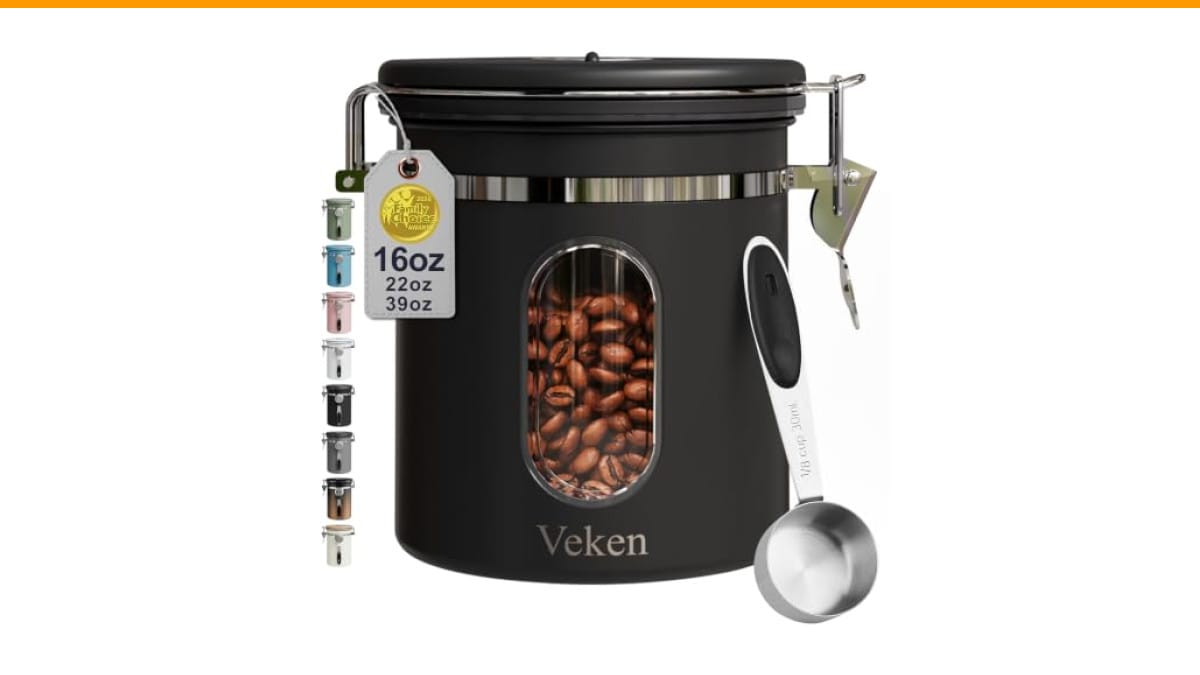
Veken
Veken Coffee Canister with Window,Airtight Stainless Steel…
- Freshness Is Everything: Our coffee canister helps maintain the freshness of your coffee beans by keeping air out and helping redu…
- Gifts for Coffee Lovers: This elegantly designed jar is a stylish and functional gift for coffee lovers, friends, and family. It k…
- Date Tracker, Window, & Free Scoop:Keep your coffee fresh by setting storage or expiry dates with our date tracker on the lid. A h…
As an Amazon Associate I earn from qualifying purchases.
If you’re in the market, the Veken Coffee Canister is a solid place to start. It’s a 16-ounce stainless steel container with a one-way CO2 valve, a silicone seal, and a date tracker on the lid. I’ll get into how those features hold up in practice below.
What Actually Happens to Coffee Beans After Roasting
Freshly roasted beans release carbon dioxide for days. That’s why bags have those one-way valves. If you sealed beans in an airtight jar immediately after roasting, the CO2 pressure would eventually push the seal open or burst the container. But the bigger enemy is oxygen.
When oxygen hits the oils in coffee, it triggers oxidation. The same process that turns a cut apple brown makes coffee taste stale. It happens faster at room temperature, faster still if the beans are ground. Whole beans have a surface area of maybe a few square centimeters each. Ground coffee has thousands of times more exposed surface. That’s why grinding right before brewing matters more than anything else you do.
Light is another culprit. UV rays break down the aromatic compounds. A clear glass jar on a sunny counter looks nice, but it’s actively ruining your beans. Heat accelerates every one of these reactions. The ideal storage spot is cool, dark, and dry. Most kitchens aren’t that, so the container has to compensate.
I tested beans stored in the original bag, a generic clip-seal jar, and the Veken canister. After ten days, the bag-stored beans had lost most of their punch. The jar beans were slightly better. The canister beans still smelled like coffee when I opened the lid. Not a scientific lab test, but the difference was obvious in the cup.
What a Good Coffee Canister Actually Does
Here’s where the marketing gets fuzzy. Not all “airtight” containers are equal. A screw-top lid with a rubber gasket is better than a flip-top, but it still lets air in every time you open it. The Veken canister uses a silicone seal around the lid and a one-way CO2 valve. That valve lets the beans degas without letting oxygen back in. It’s the same principle roasters use on their bags, just in a reusable form.
There’s also the date tracker on the lid. It’s a small dial you rotate to set the roast date or a “use by” date. I thought it was gimmicky until I forgot which batch was which. Then it saved me from brewing a bag that had been sitting for a month. The window on the front is handy too. You can see the bean level without opening the lid, which means less air exposure over the life of the canister. The free stainless steel scoop clips to the inside of the lid, so it doesn’t disappear into the drawer.
One caveat: 16 ounces is not a huge amount. If you buy beans in 2-pound bags, you’ll need two of these. I’d rather have a smaller canister that gets emptied every week than a huge one that holds stale beans for a month. The scale line inside helps you measure for brewing, but honestly, a kitchen scale does that job better. The line is a nice touch, not a reason to buy.
Stainless steel matters more than you’d think. Plastic can absorb odors over time, and some plastics leach compounds into oily beans. The Veken is 304 stainless, which is food-grade and doesn’t hold onto smells. I washed it once and it came out smelling like nothing, which is exactly what you want.
Comparing Storage Methods: Bag, Jar, Canister, and Freezer
People ask me about freezing beans all the time. It’s a controversial topic. Freezing stops oxidation cold, but it also introduces moisture risk. When you pull beans out of the freezer, condensation forms on them. That moisture ruins the grind. If you freeze, you need to portion beans into single-use bags and never return them to the freezer once thawed. It works, but it’s fussy.
Here’s a comparison of the common approaches I’ve tested:
| Method | Oxygen Protection | Moisture Risk | Convenience | Best For |
|---|---|---|---|---|
| Original bag with clip | Poor — bag lets air in through the fold | Low | High | Finishing beans within a week |
| Glass jar with rubber seal | Good — but no CO2 valve means pressure buildup | Low | Medium | Short-term storage, frequent use |
| Airtight canister with CO2 valve | Excellent — valve releases gas without letting oxygen in | Low | High | Daily drinkers who buy weekly |
| Freezer in sealed portions | Excellent — stops oxidation entirely | High — condensation on thaw | Low | Bulk buying, long-term storage |
The canister wins for most home users. It sits on the counter, you open it once a day, and the beans stay fresh for two to three weeks. The freezer method is for people who buy a 5-pound bag and want it to last two months. If you’re grinding fresh every morning, the canister is the practical sweet spot.
Does the Price Make Sense?
Let’s talk money. A decent airtight canister costs somewhere between fifteen and thirty dollars. A bag of specialty coffee costs eighteen to twenty-five dollars. If the canister keeps that bag drinkable for an extra week, it pays for itself in reduced waste. I’ve thrown away plenty of stale beans over the years. That’s money in the trash.
But you don’t need the most expensive option. The Veken sits at a reasonable price point for what it offers. The stainless steel construction, the CO2 valve, and the date tracker are features you’d find on canisters costing twice as much. Check the current price on Amazon before you decide. It’s not a splurge item; it’s a utility purchase, like a good grinder or a scale.
One thing I’ll say honestly: if you buy pre-ground coffee, a canister helps less. Ground coffee goes stale in days, not weeks. You’d be better off buying whole beans and a basic burr grinder before you spend money on storage. The canister amplifies the value of good beans and good grinding. It doesn’t replace them.
Frequently Asked Questions
How long do coffee beans actually stay fresh in an airtight canister?
Whole beans stored in a canister with a CO2 valve stay noticeably fresh for two to three weeks at room temperature. After that, they start to fade, but they’ll still beat beans left in the original bag. If you want them to last longer, freeze portioned amounts. The canister is for the beans you’re actively using.
Should I keep beans in the refrigerator?
No. The fridge is a bad place for coffee. It’s humid, and it smells like whatever else is in there. Beans absorb odors easily. The temperature swings when you open the door cause condensation. Keep beans in a sealed canister on the counter, away from the stove and direct sunlight. That’s the best spot.
Does the one-way valve really matter?
Yes, more than you’d think. Freshly roasted beans release CO2 for days. If your container has no valve, pressure builds up. Some jars with tight seals will actually pop the lid off. The valve lets gas escape without letting oxygen in. It’s the same technology roasters use on their packaging. It’s not a gimmick.
Can I store ground coffee in the same canister?
You can, but ground coffee goes stale much faster than whole beans. The increased surface area means oxidation happens quickly. If you must store ground coffee, use the canister and consume it within a few days. Better yet, grind only what you need each morning. Your cup will taste noticeably better.
What size canister should I buy?
Buy the size that matches your weekly consumption. If you drink one 12-ounce bag per week, a 16-ounce canister is perfect. If you go through more, get a bigger one or buy two. A half-empty large canister has too much air inside, which speeds up staling. Small and full beats large and half-empty every time.
What I’d Tell a Friend Buying Their First Canister
I’ve been testing coffee gear for years, and storage containers are the least glamorous upgrade you can make. They’re also one of the most effective. If you’re already buying decent beans and grinding fresh, a good canister is the missing link. It’s the difference between a great cup on day one and a great cup on day fourteen.
Here’s what I’ve learned the hard way:
- Buy a canister with a one-way CO2 valve. It’s the single most important feature.
- Stainless steel is better than plastic. It doesn’t absorb odors and it looks better on the counter.
- Get a size that matches your weekly coffee consumption. An overfilled small canister beats a half-empty big one.
- Keep the canister out of direct sunlight and away from the stove. Heat and light are silent bean killers.
- Write the roast date on the lid or use the date tracker. You’ll forget, and you’ll thank yourself later.
- Don’t freeze beans unless you’re buying in bulk. Portion them into single-use bags if you do.
- Grind right before brewing. No container fixes stale ground coffee.
If you’re dealing with other kitchen gear issues, like a Mr. Coffee that won’t brew, a fresh bag of beans in a proper canister is often the cheapest fix for a bad morning cup. And if you’re curious whether your grinder is the weak link, check out our comparison of burr versus blade grinders. The canister is a small purchase, but it’s one you’ll use every single day. That makes it worth it in my book.
Products related to this article
Sponsored / affiliate links. As an Amazon Associate I earn from qualifying purchases. I may earn additional commission from eligible campaigns.