You bought good beans. Then you stored them in the bag they came in, clipped shut with a binder clip. Three weeks later, that bright Ethiopian natural tastes flat. Sound familiar?
The problem isn’t your brewing. It’s oxygen, light, and heat working against you every single day. A proper canister fixes that, but most kitchens don’t have room for another bulky appliance. You need something that fits on six inches of counter between the toaster and the spice rack.

Veken
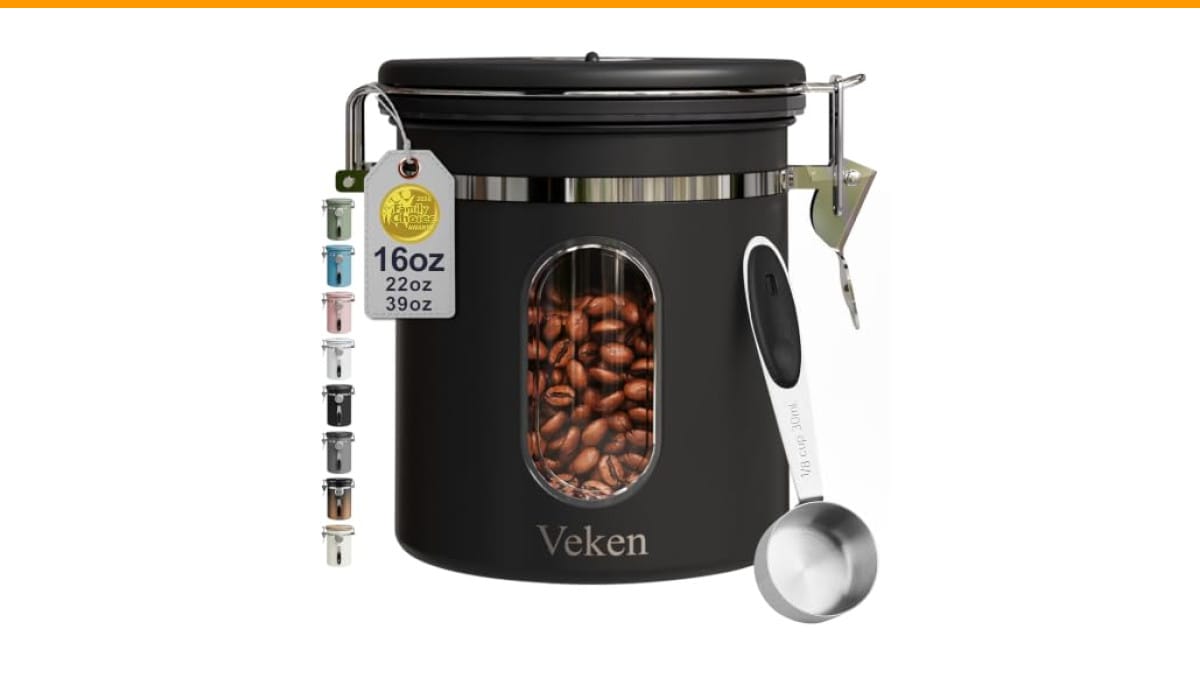
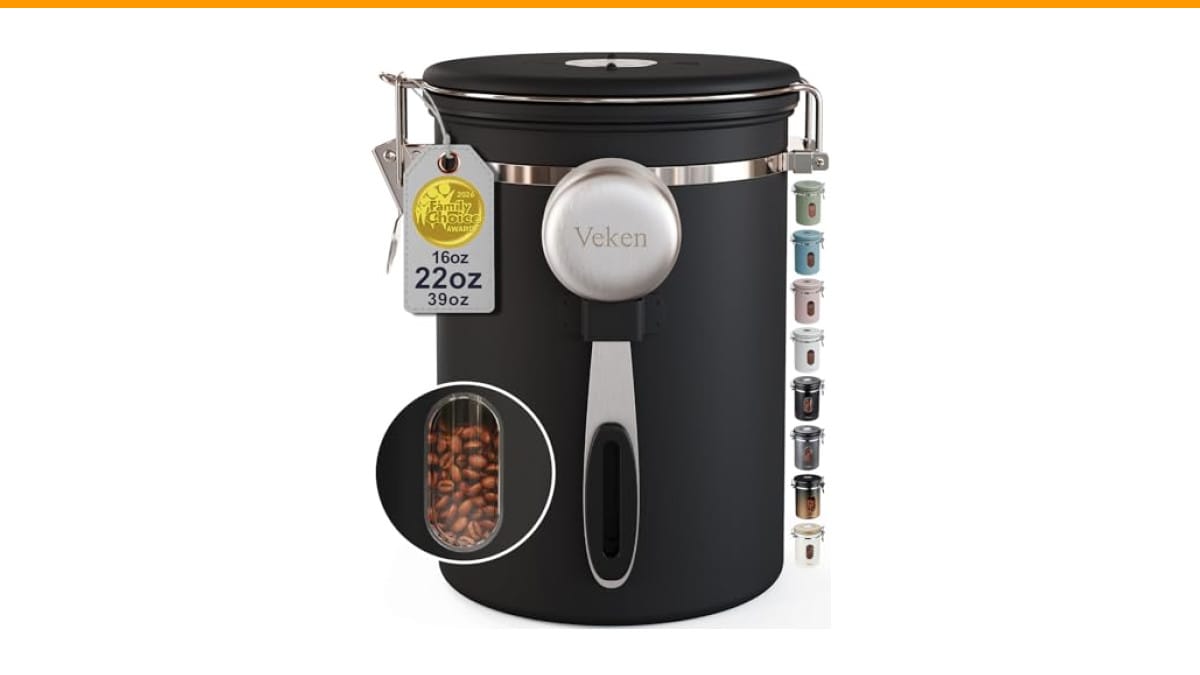
Veken Coffee Canister with Window, Airtight Stainless…
- Freshness Is Everything: Our coffee canister helps maintain the freshness of your coffee beans by keeping air out and helping redu…
- Gifts for Coffee Lovers: This elegantly designed jar is a stylish and functional gift for coffee lovers, friends, and family. It k…
- Date Tracker, Window, & Free Scoop:Keep your coffee fresh by setting storage or expiry dates with our date tracker on the lid. A h…
As an Amazon Associate I earn from qualifying purchases.
This article walks through what actually matters when picking a small coffee canister: real capacity numbers, seal quality, material trade-offs, and how to fit one into a tight space. You’ll also see a direct comparison of the common types so you can decide without buying three different jars first.
One option worth a look if you want a compact stainless steel build is the Veken Coffee Canister with Window. It’s a 22-ounce container with a date tracker on the lid and a clear window so you can see bean levels without opening it. The free stainless scoop hooks onto the side, which keeps it from disappearing into a drawer. It handles roughly a half-pound of beans, a practical size for daily brewers.
Start With the Right Size Math
Most people overbuy. A 64-ounce canister looks great on a shelf, but it holds nearly two pounds of beans. Unless you drink a pot every morning, those beans sit half-empty for weeks. Oxygen in the empty space degrades flavor faster than you think.
For a small kitchen, work backward from your consumption. If you brew one 12-cup pot daily, you use about 60 grams of coffee. That’s roughly 420 grams per week, just under a pound. A 22-ounce canister (about 620 grams) holds a week plus a little buffer. That’s the sweet spot.
If you drink less, a 16-ounce canister works better. If you buy beans in bulk, store the overflow in a sealed bag in the freezer and only keep a week’s worth in the counter canister. This isn’t just about space. It’s about flavor.
Measure your counter before shopping. A standard 16-ounce round canister is about 4.5 inches tall and 4 inches wide. A 22-ounce one runs closer to 7 inches tall. If you have an upper cabinet above your coffee station, measure that clearance too. Nothing worse than a canister that doesn’t fit under the shelf.
Also think about how you scoop. A tall narrow canister forces your hand deep inside, which gets messy with ground coffee. A wider, shorter shape is easier to dip into. If you use a scale, check that your scoop fits inside the opening. Some cheap canisters have neck openings too small for a standard tablespoon.
One thing I learned the hard way: the window on some canisters sounds nice but adds a weak point. The Veken window is fine in daily use, but if you’re clumsy, a solid metal body might survive more drops. Weigh that against the convenience of seeing levels at a glance.
For a deeper look at how grind size interacts with storage, check our burr grinder vs blade guide. The grind affects surface area, which changes how fast beans go stale.
Air, Light, and Heat: The Three Enemies
A canister is only as good as its seal. The gasket is the most important part, not the material or the brand name. Look for a silicone or rubber ring that fully compresses when you close the lid. A lid that simply sits on top, like a decorative jar, does almost nothing.
Test the seal at home. Close the canister, then press down on the lid. If you hear air hiss out, the seal works. If you feel nothing, it’s leaking. A good seal will also make the lid slightly hard to open because of the vacuum created. That pressure difference is exactly what keeps oxygen out.
Light is the second enemy. UV rays break down the oils in coffee beans, which is why the best canisters are opaque. Stainless steel and ceramic block light entirely. Clear glass looks nice, but unless you keep it in a dark cabinet, it’s working against you. If you love the look of glass, choose a dark amber or keep it out of direct sunlight.
Heat comes third. The canister should sit away from the stove, the toaster, and direct afternoon sun. A spot near the window might look pretty, but that warmth speeds up staling. Keep it on the cool side of the counter, ideally near your grinder so the workflow stays short.
If you’ve noticed your coffee tasting bitter even with fresh beans, the problem might be your cleaning routine, not your storage. Our guide on coffee tasting bitter after cleaning covers the common culprits.
One more detail people skip: the scoop. A metal scoop left inside a canister can scratch the interior coating over time. Use the hook attachment if your canister has one, or keep the scoop in a drawer. It’s a small habit that extends the life of the container.
Materials Compared: Steel, Glass, Ceramic, Plastic
Each material has real trade-offs. Stainless steel is the best all-around choice for most homes. It blocks light, doesn’t absorb odors, and survives drops. The downside is you can’t see inside, so you need a window or a date tracker. The Veken model handles this with both.
Glass lets you see bean levels, which is genuinely useful. But it lets light through, and it breaks. If you have kids or a busy counter, glass is a risk. Ceramic looks great and blocks light, but it’s heavy and chips easily. The lid fit on ceramic canisters is often looser too, which hurts the seal.
Plastic is cheap and lightweight, but it’s porous. It absorbs coffee oils and odors over time. You’ll notice a stale, rancid smell even after washing. Avoid plastic for long-term bean storage unless the canister uses a glass or metal inner lining.
Here’s a direct comparison based on what I’ve tested side by side:
| Material | Light Blocking | Seal Quality | Durability | Odor Retention | Best For |
|---|---|---|---|---|---|
| Stainless Steel | Excellent | Very good with gasket | High | Low | Daily use, countertop |
| Glass (dark) | Moderate | Good with rubber seal | Low (breaks) | Low | Visible storage, low traffic |
| Ceramic | Excellent | Fair (often loose) | Medium (chips) | Low | Aesthetic-focused kitchens |
| Plastic | Poor | Varies widely | Medium | High | Short-term, travel |
The seal quality column is the one to pay attention to. A stainless canister with a weak gasket is worse than a glass jar with a strong one. Read reviews for mentions of the lid popping open or not sealing after a few months. That’s a common failure point.
If you’re dealing with a coffee maker that won’t brew properly, that’s a separate issue. Check our troubleshooting guide for a Mr. Coffee not pumping water problem. Storage won’t fix a machine issue.
Small Kitchen Layout Tricks
Counter space is precious. You don’t need a dedicated coffee station to store beans properly. A canister can live on a shelf inside a cabinet, as long as it’s opaque and sealed. That frees up counter space for the grinder and the brewer.
Consider vertical stacking. Some canisters are square or rectangular, which fits better against a wall than round ones. Square canisters waste less space in a row. If you have a narrow gap between the microwave and the sink, measure it and look for a slim rectangular option.
Another trick: mount a small shelf above the coffee maker. A floating shelf at eye level holds the canister and a couple of mugs, keeping the counter clear. Just make sure the shelf is rated for the weight. A full stainless canister weighs around two pounds, which is fine for most floating shelves.
If you store the canister in a cabinet, label the front. Even with a date tracker, you might not remember which blend is inside after a week. A piece of masking tape on the bottom works, but a visible label is faster in the morning.
Don’t forget the sink rule. Never rinse the canister and immediately put beans back in. Moisture is the enemy. Dry it completely with a towel and let it air out for a few minutes. This also applies if you’re considering putting coffee grounds down the sink — that’s a different mistake entirely.
The date tracker on the Veken lid is a small feature that pays off. You twist the dial to the month and day you opened the bag. It’s a reminder that beans peak within two weeks of roasting, not two months. That simple habit changes how you buy coffee.
Frequently Asked Questions
How long do coffee beans stay fresh in an airtight canister?
Whole beans last about two to three weeks past the roast date in a properly sealed canister. Ground coffee goes stale faster, closer to one week. The canister slows the process, but it doesn’t stop it. Buy smaller bags more often if you want peak flavor.
Should I store coffee in the freezer instead of a canister?
Only for long-term storage of beans you won’t use within a month. Freezing stops the staling process, but it also risks moisture condensation when you open the bag. If you freeze, use a vacuum-sealed bag and don’t reopen it. For daily use, a counter canister is better.
Is a clear glass canister okay if I keep it in a cabinet?
Yes. Light is the issue, not the glass itself. If the canister sits in a dark cabinet, clear glass works fine. On an open counter, it’s a compromise. The beans will last a few days less than in an opaque container. If you like the look, just use the beans faster.
How do I clean a coffee canister without leaving residue?
Hand wash with warm soapy water and a soft sponge. Rinse thoroughly and dry completely before adding new beans. Avoid the dishwasher for stainless and ceramic. The heat and detergent can damage the gasket. Once a month, wipe the inside with a dry cloth to remove oil buildup.
Does the size of the canister affect flavor?
Yes, and more than people expect. A large canister with a small amount of beans leaves a lot of air inside. That oxygen degrades the beans faster. Match the canister size to your weekly consumption. A half-full large canister is worse than a full small one.
What to Do Next
- Measure your counter space and weekly coffee consumption before buying. A 22-ounce canister suits most daily brewers.
- Test the seal when the canister arrives. Press the lid and listen for air escaping. A vacuum on opening is a good sign.
- Keep the canister out of direct sunlight and away from the stove. A dark, cool corner preserves flavor longer.
- Dry the canister completely after washing. Moisture ruins beans faster than oxygen.
- Set the date tracker every time you open a new bag. Two weeks is the flavor peak for most roasts.
- Skip plastic unless you’re storing beans for a day or two. Stainless or dark glass is worth the extra few dollars.
Products related to this article
Sponsored / affiliate links. As an Amazon Associate I earn from qualifying purchases. I may earn additional commission from eligible campaigns.