You stand in the aisle of a grocery store, staring at a wall of bags. Each one promises something different: bold, fruity, chocolatey, smooth. You have no idea which to pick. Back home, your drip machine makes coffee that tastes fine, but you know it could taste better. You just don’t know where to start.
| 1st Pick | ||||

|

|

|
|

|
| Mitchell Beazley How To Make The Best Coffee At… | Simon & Schuster Psych 101: Psychology Facts, Basics, Statistics, Tests,… | Abrams Books Live Beautiful | Agate Surrey Craft Coffee: A Manual: Brewing a Better… | Just the Facts - Theory Workbook -… |
| See on Amazon | See on Amazon | See on Amazon | See on Amazon | See on Amazon |
As an Amazon Associate I earn from qualifying purchases.
That’s where the right book changes everything. A good coffee book for beginners doesn’t just list steps. It explains why those steps matter. It connects the bean to the roast to the water temperature, so you stop guessing and start understanding. The best ones read like a conversation with a patient friend, not a textbook.
We sorted through the options and picked five that serve different needs. One focuses on technique, another on the science of psychology behind habit, one on the aesthetic side of coffee culture, and two on practical, hands-on brewing. Our top pick balances clarity and depth better than anything else we found. Let’s dig in.
Here’s a quick look at how these five compare.
| Features | How To Make The Best Coffee | Psych 101 | Live Beautiful | Craft Coffee | Just the Facts |
|---|---|---|---|---|---|
| Primary Focus | Home brewing techniques | Psychology fundamentals | Design & lifestyle | Manual brewing methods | Music theory basics |
| Best For | Absolute beginners | Curious general readers | Aesthetic inspiration | Hands-on tinkerers | Music students |
| Practical Content | Step-by-step guides | Concept summaries | Visual inspiration | Detailed recipes | Workbook exercises |
| Depth Level | Introductory to intermediate | Introductory | Visual, not technical | Intermediate | Beginner |
| Format | Standard book | Standard book | Hardcover, photo-heavy | Standard book | Workbook |
How To Make The Best Coffee
As an Amazon Associate I earn from qualifying purchases.
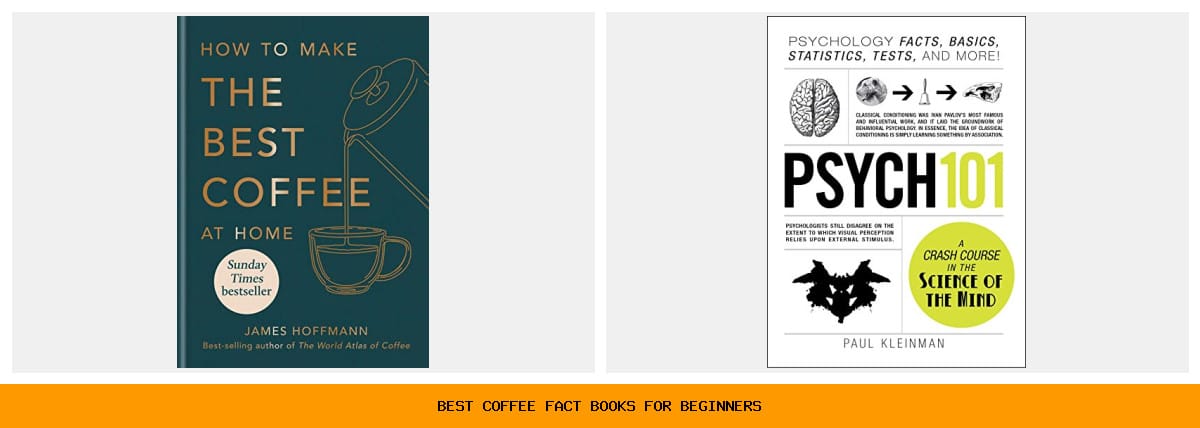
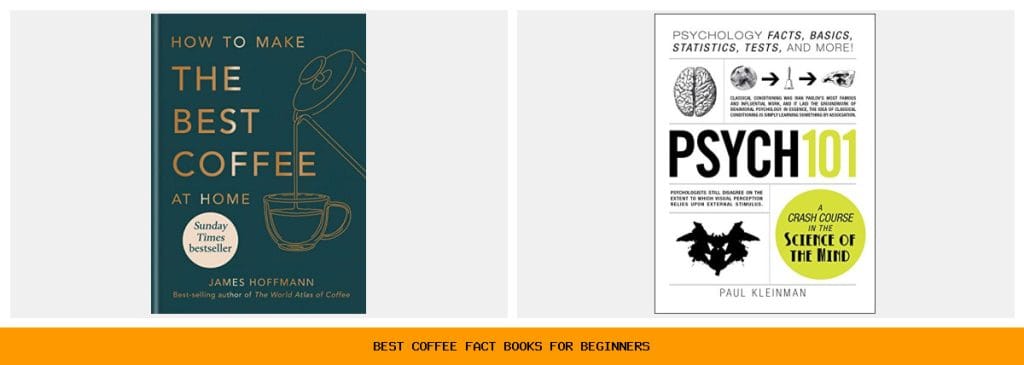
This book from Mitchell Beazley does exactly what the title promises. It walks you through the entire process of making great coffee at home, from choosing beans to dialing in your grind size. If you’ve never owned a scale or a gooseneck kettle, this is the book that gets you there without feeling overwhelmed.
What stands out is the structure. Each chapter builds on the last, so you’re not jumping between advanced topics and basics. The authors assume you know nothing, which is refreshing. They explain why water temperature matters, what extraction means, and how to fix a bitter or sour cup. You’ll finish it and immediately want to brew something.
It’s not perfect. The book assumes you have or will buy some basic equipment, so if you’re strictly using a pre-ground bag and a microwave, parts of it won’t apply yet. But that’s a minor quibble for a book that covers so much ground so clearly.
- Step-by-step brewing guides for multiple methods
- Explanations of bean origins and roast levels
- Troubleshooting section for common brewing problems
- Written for complete beginners, no prior knowledge needed
- Published by Mitchell Beazley, known for quality reference books
Best for: The total novice who wants one reliable guide from first bag of beans to consistent, tasty cup.
Psych 101: Psychology Facts
Simon & Schuster
Psych 101: Psychology Facts, Basics, Statistics, Tests,…
- Used Book in Good Condition
As an Amazon Associate I earn from qualifying purchases.
This one’s a curveball, but hear us out. Psych 101 from Simon & Schuster isn’t a coffee book at all. It’s a psychology primer that explains why you form habits, how taste preferences develop, and why a morning ritual feels so important. Understanding that context makes you a better coffee drinker and a more thoughtful buyer.
The book condenses big ideas into short, readable sections. Each chapter covers a different concept, from classical conditioning to decision fatigue. You’ll learn why you reach for the same roast every time and what it takes to break that pattern. It’s the kind of book you read in small doses, then apply to your daily routine.
The trade-off is obvious. If you want purely practical brewing instructions, this isn’t it. There are no recipes, no grind charts, no water ratios. But as a companion to a hands-on guide, it adds a layer of understanding that makes the whole hobby more interesting.
- Covers major psychological concepts in plain language
- Short chapters that work for quick reading sessions
- Part of the popular Adams 101 series
- Helps explain habit formation and taste preferences
- Good condition used copy, which keeps the cost down
Best for: The curious reader who wants to understand the why behind their coffee habits, not just the how.
Live Beautiful
As an Amazon Associate I earn from qualifying purchases.
Live Beautiful from Abrams Books takes a completely different angle. This is a visual book, full of stunning photography and stories about how people design their homes and lives. It’s not a manual. It’s inspiration. For coffee lovers, it shows how the ritual fits into a larger aesthetic.
The book profiles creative people and their spaces. You see how they display their equipment, arrange their counters, and make coffee a centerpiece of hospitality. If you care about the ceremony as much as the caffeine, this book validates that feeling. It makes you want to upgrade your mug collection and clear off your counter.
Here’s the honest downside. It’s heavy on style and light on substance. You won’t learn a single brewing technique from these pages. And if you’re looking for practical advice, you’ll be disappointed. But as a coffee table book that sparks conversation, it’s hard to beat.
- Beautiful photography from real homes and studios
- Interviews with designers, artists, and creators
- Focuses on lifestyle and ritual, not technique
- Hardcover format that feels substantial and premium
- Great gift for someone who already loves coffee culture
Best for: The coffee enthusiast who sees brewing as a lifestyle statement and wants visual inspiration, not instructions.
Craft Coffee: A Manual
As an Amazon Associate I earn from qualifying purchases.
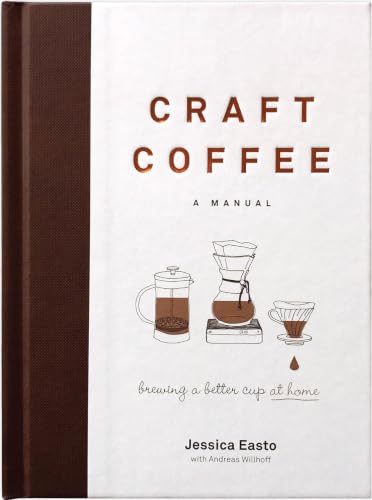
Craft Coffee from Agate B2 is the book we recommend to anyone serious about improving their home setup. It’s a manual in the truest sense. The author walks you through every major brewing method, from pour-over to French press, with specific ratios and step-by-step instructions. This is the book you keep next to your scale.
The strength here is precision. You get exact numbers for coffee-to-water ratios, grind sizes, and brew times. The troubleshooting charts are genuinely useful, helping you diagnose a weak cup or a clogged filter. It assumes you’re willing to weigh your beans and time your pours, which is the fastest path to better coffee.
It’s not for the casual drinker. If you just want a decent cup without measuring anything, this book will feel like homework. But for the tinkerer who enjoys dialing in a recipe, it’s a goldmine. The writing is clear and direct, with no fluff.
- Detailed guides for pour-over, French press, and more
- Exact ratios and temperatures for each method
- Troubleshooting section for common extraction issues
- Assumes basic equipment like a scale and gooseneck kettle
- Practical, no-nonsense tone throughout
Best for: The home brewer ready to move from guessing to measuring, and who enjoys the process of perfecting a cup.
Just the Facts – Theory Workbook
As an Amazon Associate I earn from qualifying purchases.
This workbook takes yet another unexpected turn. It’s a music theory workbook, designed for students learning to read music and understand rhythm. Why include it in a coffee book roundup? Because coffee and music share a common thread: both reward deliberate practice and attention to detail.
The workbook is structured as a series of exercises. Each page covers a small concept, from note values to time signatures, and gives you space to practice. It’s the kind of book that requires a pencil and active engagement. For someone learning to brew coffee, that same mindset applies. You practice, you make mistakes, you improve.
Clearly, this isn’t a coffee book. It won’t help you pull a better shot or choose a bean. But it’s a reminder that mastery in any field comes from focused repetition. And if you happen to be learning an instrument alongside your coffee journey, it’s a solid, affordable resource.
- Exercise-based format that requires active participation
- Covers foundational music theory concepts
- Designed for beginners with no prior knowledge
- Compact and portable for practice anywhere
- Complements the patience and precision needed for good brewing
Best for: The disciplined learner who appreciates structured practice, whether they’re studying music or mastering a pour-over.
How We Chose These Products
We started with a simple question: what does a beginner actually need from a coffee book? The answer isn’t just recipes. It’s context, technique, and the confidence to experiment. We looked for books that explained the why behind the what, not just a list of steps.
We also considered variety. Not everyone learns the same way. Some people want visual inspiration, others want precise measurements, and some want the psychological background. Our picks cover all those angles, so you can choose based on your learning style rather than settling for a one-size-fits-all manual.
Buying Guide: What Really Matters
Before you buy, think about your current setup. If you own a basic drip machine and pre-ground coffee, a manual about pour-over techniques might be premature. Start with a book that covers fundamentals without assuming expensive equipment. You can upgrade your gear later, but the principles stay the same.
Consider how you learn best. Do you like reading dense text, or do you need pictures and diagrams? Do you want to measure everything, or do you prefer a more intuitive approach? Match the book to your personality, not to what’s popular. A book you actually read is worth more than a perfect one you ignore.
Finally, think about your goal. Are you trying to make a better morning cup, or are you interested in the culture and history? Both are valid, but they lead to different books. Knowing your objective makes the choice obvious.
And don’t forget the practical side. Once you’ve got the knowledge, keeping your equipment in good shape matters. Check out our guide on coffee machine maintenance to make sure your gear lasts. Regular coffee maker cleaning is part of the routine too.
Our Top Recommendation
If you’re a true beginner, How To Make The Best Coffee At Home is the clear winner. It covers everything you need, from bean selection to brewing technique, in a way that’s easy to follow. You’ll finish it with the skills to make a noticeably better cup.
For the tinkerer who already has some gear, Craft Coffee is the better pick. It’s more technical and more precise, perfect for someone who enjoys the process as much as the result. And for the person who wants to understand the psychology of their coffee habit, Psych 101 is a fascinating companion read.
Whichever you choose, the goal is the same. Better coffee starts with understanding, and any of these books will get you there.
Frequently Asked Questions
Do I need to buy special equipment to use these books? Not for the beginner guides. How To Make The Best Coffee At Home assumes you have a basic brewer and some beans. Craft Coffee assumes more, like a scale and gooseneck kettle, but you can still learn from it before buying anything.
Can these books help me save money on coffee? Yes. When you understand how to brew well at home, you’re less likely to spend five dollars a day at a café. The knowledge pays for itself quickly.
Are these books suitable for someone who only drinks instant coffee? Some of them. The techniques in Craft Coffee won’t apply to instant, but the principles of water temperature and ratio still matter. How To Make The Best Coffee At Home might convince you to try something better.
How long does it take to see improvement in my coffee? Most people notice a difference on the first cup after reading a good guide. The key is to change one variable at a time, like grind size or water temperature, and taste the result. A few days of practice makes a real difference.
If your machine starts acting up while you’re learning, we’ve got troubleshooting help for common issues like Cuisinart button problems and Ninja brew button failures.
Products related to this article
Sponsored / affiliate links. As an Amazon Associate I earn from qualifying purchases. I may earn additional commission from eligible campaigns.
 HomeBeyond Espresso Coffee Maker 12 Cups, Classic Stovetop Espresso Maker, 600ml / 20oz Coffeemaker for Gas & Ceramic Stovetops (Silver)
 VOBAGA Coffee Mug Warmer with 15oz Mug Set, Electric Coffee Cup Warmer
 Luxylei Coffee Mug Warmer for Desk, Cup Warmer Temperature Settings, Electric Beverage Tea Water Milk Warmer for All Cups Mugs