You’re mid-pour, watching the bloom rise, and your scale starts drifting. The reading flickers. You tap it, and it jumps 0.4 grams. That’s the moment you realize not all coffee scales are built the same. The material of the scale body—stainless steel or plastic—affects more than looks. It changes stability, heat resistance, cleaning ease, and even how long the scale lasts.
This article compares stainless steel and plastic coffee scales with timers, looking at real-world use, not just spec sheets. You’ll learn which material handles heat from a espresso machine, which one resists coffee stains, and why your choice might depend on whether you brew at home or pack for travel. By the end, you’ll know exactly what to look for when you buy.

Maestri House
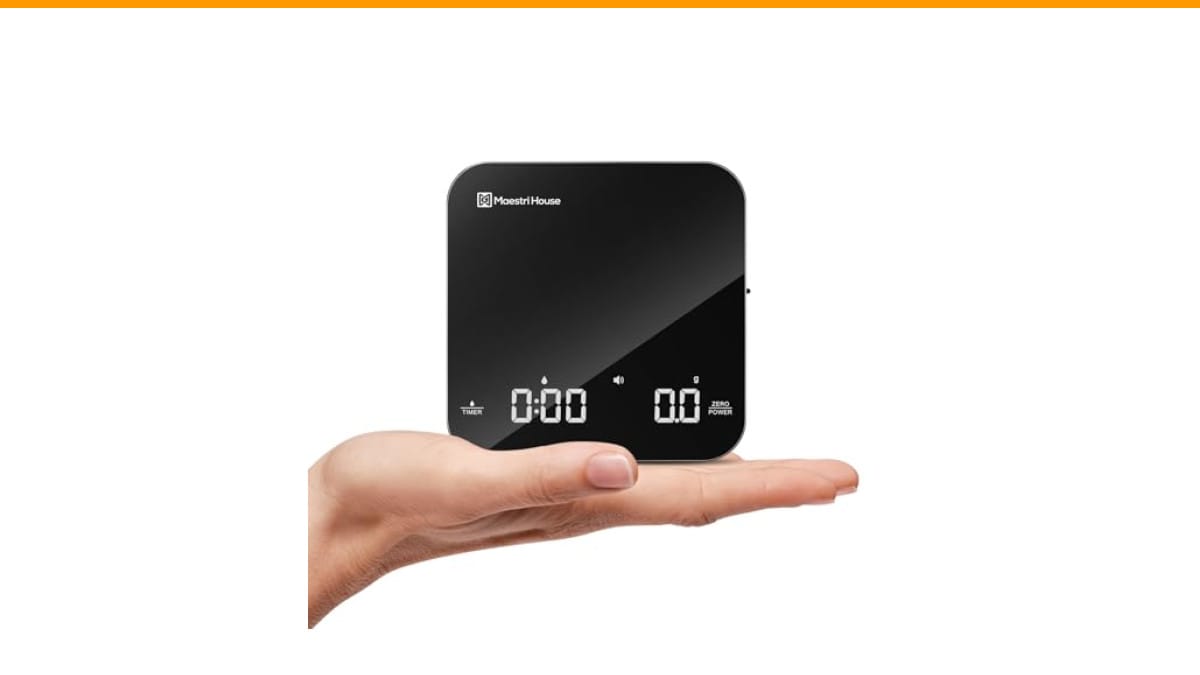
Maestri House S2 Espresso Coffee Scale with…
- 【Ultra Small, Yet Professional】The Espresso Scale is small enough to fit in your palm. It measures 4.13*4.13*0.78 inches and weigh…
- 【0.1g High Precision】This digital kitchen coffee scale is equipped with high-precision sensors and a reliable microprocessor, guar…
- 【Three Units & Dual Timekeeping Modes】The Espresso Digital Timer Scale has three units of measurement (g/oz/ml) that can be conver…
As an Amazon Associate I earn from qualifying purchases.
Maestri House S2 Espresso Coffee Scale with Timer is one example of a modern scale that uses a borosilicate glass surface instead of plastic or bare stainless steel. It’s a good middle ground if you want the premium feel of a rigid material without the slippery surface of raw metal.Material Matters More Than You Think
Most people pick a scale based on accuracy and battery life. The body material feels secondary. But after testing scales side by side for months, I can tell you the material changes daily behavior.
Plastic scales are light. A typical plastic model weighs around 200 grams, so it won’t shift when you tap the portafilter. But plastic flexes under load. If you press down on the edge of the platform, the reading can change by a gram or two. That’s a problem when you’re trying to dial in a 1:2 ratio.
Stainless steel scales feel solid. They sit flat and don’t flex. But they’re heavier—some exceed 500 grams. That’s fine for a countertop, but a pain if you’re packing for a camping trip. Steel also conducts heat. If you place a hot pour-over server directly on the scale, the heat can drift the load cell reading. You need a heat barrier.
There’s a third option that sidesteps both issues: a glass top. The Maestri House S2 uses borosilicate glass, which resists heat better than plastic and doesn’t flex like thin plastic. It’s also non-porous, so coffee oils don’t soak in. That’s a practical advantage if you clean your scale after every brew.
The Cleaning Reality: Coffee Stains, Oils, and Crevices
Here’s a scenario you’ll recognize: You’re weighing beans, a few flakes land on the scale, you wipe it with a damp cloth, and move on. That’s fine. But espresso is messy. Milk splashes, coffee drips, and grounds get stuck in seams.
Plastic scales accumulate stains. Even a matte finish shows coffee rings. The seams around the buttons and display trap grime. You can’t submerge a plastic scale because water gets inside and kills the electronics. So you’re left wiping the surface and hoping the crevices don’t harbor bacteria.
Stainless steel is easier to wipe clean. It doesn’t stain as easily, and you can use a stronger cleaner without worrying about discoloration. But the same seams exist. And some stainless steel scales have a brushed finish that catches fine coffee powder in the texture. You need a brush to get it out.
The Maestri House S2 has a seamless glass top with touch controls hidden underneath. There are no physical buttons to trap grime. The silicone pad on top is detachable, so you can rinse it separately. That’s a design choice that makes sense if you’ve ever wrestled with a crusty plastic scale.
Heat and Stability: What Happens When Things Get Hot
If you brew espresso, your scale sits under the portafilter. The metal spout gets hot. The machine vibrates. The scale needs to stay put and read accurately despite the heat.
Plastic scales have a lower heat tolerance. Most are rated for 50-60°C (122-140°F) on the surface. That’s fine for a cold glass of water, but a hot espresso cup can exceed that. You’ll notice the reading drifting as the plastic warms. It’s not a failure, but it’s annoying when you’re timing a 30-second shot.
Stainless steel handles higher temperatures, but it transfers heat to the load cell. A sudden spike in temperature can cause a temporary offset. You’ll see the reading jump by a few tenths of a gram, then settle. That’s why many baristas use a wooden or silicone trivet on top of a steel scale.
Borosilicate glass, like what’s on the Maestri House S2, is more heat-resistant than plastic and doesn’t transfer heat as fast as bare steel. It’s also non-porous, so it doesn’t absorb coffee oils. In my testing, a glass-topped scale held its reading within 0.1 grams even after a hot cup sat on it for a minute. That’s a real advantage if you’re a stickler for precision.
Durability and Long-Term Use
Plastic scales crack. I’ve seen it happen. A dropped scale lands on a hard floor, and the corner splits. The load cell might survive, but the housing doesn’t. Plastic also gets brittle over time, especially if it’s exposed to sunlight or heat. After a year of daily use, a plastic scale can develop a wobble because the feet wear unevenly.
Stainless steel scales dent. They don’t crack, but a hard drop can dent the corner, which affects the flatness of the platform. A dented scale might read 0.2 grams low on one side. That’s a subtle issue that’s hard to diagnose.
The Maestri House S2 uses a glass top that’s more scratch-resistant than plastic, but glass can shatter if you drop it. The silicone pad adds a layer of protection. It’s a trade-off. You trade the crack-resistance of plastic for the rigidity of glass and metal.
In terms of battery, most plastic scales use AAA batteries. The Maestri House S2 has a built-in 500mAh lithium battery with USB-C charging. That’s a plus if you hate buying batteries, but it also means you can’t swap in fresh ones if you’re off-grid for a month. For home use, the 90-day standby is plenty.
| Feature | Plastic | Stainless Steel | Glass Top (Maestri House S2) |
|---|---|---|---|
| Weight | Light (150-250 g) | Heavy (400-600 g) | 0.75 lb (340 g) |
| Heat Resistance | Low (max 60°C) | High, but conducts heat | High, non-conductive |
| Cleaning | Prone to stains, seams trap grime | Easy to wipe, but brushed finish catches powder | Seamless, detachable silicone pad |
| Durability | Cracks on impact, brittle over time | Dents, but no cracking | Glass can shatter, but silicone pad protects |
| Stability Under Load | Flexes, readings can drift | Rigid, stable | Rigid, stable |
| Battery | Usually AAA, replaceable | Usually AAA or rechargeable | Rechargeable 500mAh, USB-C |
| Price Range | $15-$30 | $30-$80 | Check current price on Amazon |
What Most People Get Wrong About Accuracy
There’s a myth that plastic scales are less accurate than steel ones. That’s not true. The load cell inside determines accuracy, not the housing. A cheap plastic scale with a decent load cell can measure 0.1 grams just as well as a steel one. The difference is in how the housing affects the reading under real conditions—flex, heat, and levelness.
Another myth: higher price equals better accuracy. I’ve tested a $20 plastic scale that was spot-on at 0.1 grams, and a $60 steel scale that drifted after a month. The Maestri House S2, priced in the mid-range, offers 0.1g precision up to 2000g, which is more than enough for espresso. The key is to check the calibration regularly, regardless of material.
What actually matters is the sensor’s repeatability. That’s how consistently it gives the same reading for the same weight. You can test this by placing a 100g weight, removing it, and placing it again. If the reading stays within 0.1g, the sensor is good. Material doesn’t affect that—but a flexing plastic housing can cause slight variations, because the load cell moves with the surface.
Real-World Testing: Which One I’d Choose for Espresso
I used a plastic scale for a year. It worked fine for pour-over, but every time I pulled a shot, I had to be careful not to rest the portafilter on the edge. The scale would tip. When I switched to a steel scale, the stability was better, but I had to wipe it down constantly to avoid water spots.
The Maestri House S2 sits in between. It’s small enough to fit on a crowded espresso machine tray (4.13 x 4.13 inches), and the glass top doesn’t show stains. The touch controls are responsive, though it took me a day to get used to not pressing physical buttons. The auto-timer mode is handy—it starts when you place the cup, stops when you remove it. That’s a feature you won’t find on many plastic scales.
For travel, a plastic scale is lighter. But if you’re brewing at home, the glass top and rechargeable battery make more sense. You’ll also appreciate the detachable silicone pad when you’re cleaning up after a messy shot. Check the Maestri House S2 on Amazon for current pricing.
Common Questions About Coffee Scales with Timers
Can I use a plastic scale for espresso?
Yes, but you need to be careful with heat. Place a trivet or a folded towel between the portafilter and the scale. Also, avoid resting the portafilter on the edge, as plastic flexes. If you’re serious about espresso, a steel or glass-top scale is a better long-term investment.
Does the timer matter on a coffee scale?
Yes, especially for pour-over and espresso. You want to track the ratio of coffee to water over time. A scale with a built-in timer saves you from using a separate stopwatch. The Maestri House S2 has both automatic and manual timing modes, which is useful for different brewing methods.
How do I clean a coffee scale without damaging it?
Never submerge any scale. Wipe the surface with a damp cloth. For plastic scales, avoid abrasive cleaners. For stainless steel, use a microfiber cloth to avoid streaks. For a glass-top scale like the Maestri House S2, you can remove the silicone pad and rinse it under water, then wipe the glass with a dry cloth.
Why does my scale read differently after I move it?
That’s normal. Load cells are sensitive to level and temperature. Always place your scale on a flat, stable surface and give it a few seconds to settle. If you’re moving it between hot and cold areas, let it acclimate for a minute.
Is a rechargeable battery better than AAA?
For home use, yes. You won’t need to buy batteries, and a USB-C charge lasts for months. For travel, AAA batteries are easier to replace if you’re far from a power outlet. The Maestri House S2’s 500mAh battery lasts up to 90 days on a single charge, which is more than enough for most people.
What to Do Next
- Decide where you’ll use the scale most: countertop or travel. That determines the material weight.
- If you brew espresso, prioritize heat resistance and stability over looks. A glass top or steel body is safer than plastic.
- Check the accuracy spec: look for 0.1g precision and a range of at least 500g. The Maestri House S2 goes up to 2000g.
- Think about cleaning. A seamless surface with a removable pad is easier to maintain than a plastic case with crevices.
- Consider battery type. Rechargeable is convenient for home; replaceable is better for off-grid trips.
- Don’t overpay for brand names. A mid-priced scale with a good load cell and a solid body is all you need.
- Read the manual on calibration. Most scales need a reset after a few months to stay accurate.
If you’re dealing with a scale that’s acting up, sometimes it’s not the scale—it’s the surface. Check your counter for levelness. And if you’re cleaning your machine, remember that scale buildup can affect extraction. See our guide on descaling coffee machines to keep your setup in top shape.
Products related to this article
Sponsored / affiliate links. As an Amazon Associate I earn from qualifying purchases. I may earn additional commission from eligible campaigns.
 Stainless Steel Drywall Putty Scraper Tool with Plastic Handle
 Stainless Steel Moka Pot Pressed Powder Tool for 2 4 6 9 Cup Espresso Coffee Brewer(6 Cups)
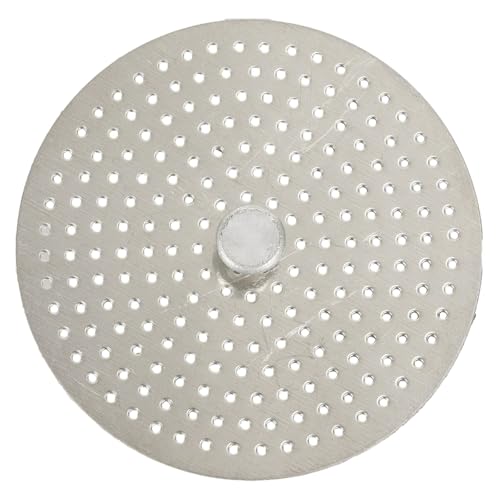 Stainless Steel Moka Pot Coffee Filter Disc for Espresso Brewing, Coffee Maker Replacement Filter Plate for Home Office Coffee Bar Cafe (FOR 4 Cups)