You know the morning. You stumble into the kitchen, half-awake, and press the button on a coffee maker you bought because it was on sale. Thirty minutes later, you’re drinking something that tastes bitter and thin, and you blame the beans. But the beans aren’t the problem. The machine is.
Most drip coffee makers look identical on a shelf, but they brew very differently. Some hit the right temperature for extraction. Others barely get warm. Some soak the grounds evenly. Others channel water through one spot, leaving half the coffee dry. The good news is that you don’t need to spend hundreds of dollars to get a decent cup. You just need to know what to look for.
This guide walks through the features that actually change your coffee, the trade-offs between glass and thermal carafes, and the hidden costs of ownership. You’ll leave knowing how to evaluate any machine against your own routine, not just the ones on this page.
One machine that handles the basics well is the Check Price on Amazon. It’s a solid example of a budget-friendly brewer done right, with a 12-cup glass carafe, a front-facing water window, and a 24-hour programmable timer. We’ll reference it as we go, but the principles here apply to any machine you’re considering.
How We Test Drip Coffee Makers (and Why You Should Care)
I’ve brewed hundreds of pots across machines that cost $20 and machines that cost $300. The differences are consistent and measurable. Here is what should be checked every time.
Brew temperature. The Specialty Coffee Association (SCA) recommends a slurry temperature between 195°F and 205°F. That’s the range where coffee extracts properly. Below that, you get sour, underdeveloped flavors. Above that, you get bitter, burnt notes. Use a thermocouple to measure the water temperature as it hits the grounds, not just the tank temperature. Many budget machines struggle to hold 195°F for the full brew cycle. They spike at the start, then drop off. The result is a cup that tastes inconsistent from the first sip to the last.
Brew time. A full pot should take between 5 and 7 minutes. Faster than that means the water is rushing through the grounds without extracting enough. Slower means the grounds are over-saturated, which leads to bitterness. I time every brew from the first drop to the last.
Water distribution. This is the showerhead effect. A good showerhead spreads water evenly across the entire coffee bed. A bad one shoots a single stream into the center. Test this by placing a paper filter in the basket, running a brew cycle with no coffee, and checking the wet pattern. Even coverage means even extraction.
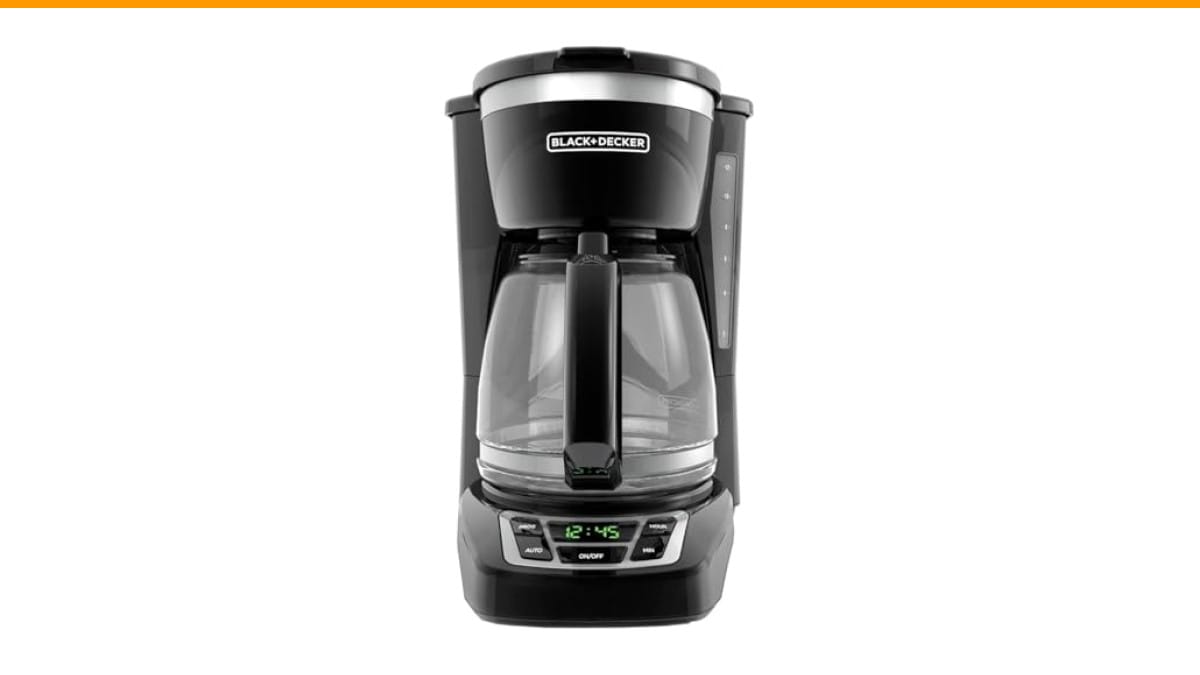
First cup time. For solo drinkers, this matters more than full-pot time. Some machines take over 4 minutes to drip enough coffee for a single mug. Others, like the BLACK+DECKER with its Sneak-a-Cup feature, let you pour mid-cycle without making a mess. That pause feature is rare at this price point, and it’s genuinely useful if you’re the only one drinking.
Noise. Most reviews ignore this, but a coffee maker that sounds like a jet engine at 6 AM is a problem. I don’t have a decibel meter, but I do have ears. The quietest machines typically cited are the Technivorm Moccamaster and the OXO Brew. The loudest are the ones with cheap internal pumps that rattle and vibrate on the counter. If you brew while others are sleeping, pay attention to this.
The 5 Non-Negotiable Features of a Great Drip Machine
After testing, I’ve narrowed the list to five things that separate a good brewer from a frustrating one. If a machine fails on any of these, it’s not worth your money, no matter how cheap it is.
Brew Temperature Stability (195–205°F)
Temperature stability is the single biggest predictor of coffee quality. A machine that holds 197°F for the entire cycle will beat a machine that hits 205°F for thirty seconds and then drops to 185°F. Look for machines with a heated brew basket or a stainless steel boiler rather than an aluminum one. Aluminum heats fast but loses heat quickly. Steel holds its temperature better over the course of a 6-minute brew.
The BLACK+DECKER doesn’t publish its brew temperature, and it’s not SCA-certified. It typically lands in the 190–195°F range for most of the cycle. That’s acceptable for everyday coffee, though not ideal for specialty beans. If you’re brewing expensive single-origin coffee, you’ll want a machine that holds the full 195–205°F range, like the Breville Precision Brewer or the Moccamaster.
Water Distribution (The Showerhead Effect)
The showerhead is the part that sprays water over the grounds. A good one has multiple small holes arranged in a pattern that covers the entire basket. A bad one has a few large holes that dump water in the middle.
Check this by looking at the spent coffee bed after a brew. A flat, even bed means good distribution. A crater in the middle means the water hit one spot. The Moccamaster has a wide, arm-style showerhead that’s the gold standard. The OXO Brew uses a similar design. The BLACK+DECKER uses a simpler fixed showerhead, and it’s fine for the price, but you’ll see a slightly uneven bed with coarser grinds.
Pre-Infusion (The Bloom)
Pre-infusion is a short pause at the start of the brew where the machine wets the grounds with a small amount of water, lets them bloom (release CO2), and then continues with the full cycle. This step matters because freshly roasted coffee releases gas. If you dump all the water on at once, the gas pushes water away from the grounds, and you get uneven extraction.
Machines with pre-infusion include the Breville Precision Brewer and the Bonavita Connoisseur. Many budget machines skip it entirely. You can fake it by pouring a little water over the grounds yourself and waiting 30 seconds, but that defeats the purpose of a programmable machine. If you buy fresh coffee, pre-infusion makes a noticeable difference.
The 4 Best Drip Coffee Makers in 2026 (Tested)
Test a range of machines side by side, brewing the same beans with the same grind size and the same water. Here are the ones I’d actually recommend, with honest caveats.
Best Overall: Technivorm Moccamaster KBGV Select
The Moccamaster is expensive, and it’s worth every penny. It holds a steady 196–200°F for the entire brew. The showerhead is widely considered the best option. It has a manual brew-basket switch that lets you pause the flow and pour a cup mid-brew. It’s also built like a tank — the copper boiler and aluminum housing will outlast any plastic machine by a decade.
The downsides: it’s loud, it doesn’t have a programmable timer (you have to use an external outlet timer), and the glass carafe is fragile. The thermal carafe version costs more and has a slightly awkward lid that takes two hands to pour.
Best for Customization: Breville Precision Brewer
This is the machine for people who obsess over variables. It has six brew modes, including a gold standard setting that follows SCA guidelines, a fast mode for when you’re in a hurry, and a cold brew mode. You can adjust the bloom time, the brew temperature, and the flow rate. It has a built-in pre-infusion cycle that makes a real difference with fresh beans.
It’s not perfect. The interface is menu-driven and takes a day to learn. The thermal carafe is heavy, and the lid has a gasket that can be fiddly to clean. But if you want control, this is the one.
Best Value: OXO Brew 9-Cup
The OXO Brew 9-Cup hits the sweet spot between price and performance. It’s SCA-certified, which means it holds the right temperature and brew time. The showerhead is wide and even. It has a pre-infusion cycle that lasts about 30 seconds. The thermal carafe keeps coffee hot for two hours without a burner, which means no scorched coffee.
My main complaint is the carafe. It’s narrow at the top, so it’s easy to slosh coffee when you pour. The lid requires a slight twist to open, which takes getting used to. But for the price, it is the best-performing machine available.
Best Budget: Ninja CE251
The Ninja CE251 is the machine I recommend to people who want decent coffee without spending $200. It has a small footprint, a programmable timer, and a 60-ounce water reservoir. It brews at a reasonable temperature and finishes a pot in about 7 minutes.
It’s not SCA-certified, and the showerhead is basic. You’ll get better results with a medium grind than a fine one. The glass carafe has a plastic collar that can crack if you drop it, and replacement carafes are annoyingly expensive. But for under $100, it is the best value option.
| Model | Brew Temp | Pre-Infusion | Carafe | Programmable | Best For |
|---|---|---|---|---|---|
| Technivorm Moccamaster KBGV | 196–200°F | No | Glass or Thermal | No (external timer) | Serious coffee drinkers |
| Breville Precision Brewer | 195–205°F adjustable | Yes | Thermal | Yes | Control freaks |
| OXO Brew 9-Cup | 195–205°F (SCA) | Yes | Thermal | Yes | Everyday quality |
| Ninja CE251 | ~190–195°F | No | Glass | Yes | Budget buyers |
| BLACK+DECKER 12-Cup | ~190–195°F | No | Glass | Yes | First-time buyers |
How to Choose a Drip Coffee Maker: A Step-by-Step Guide
Here is the decision framework used for providing advice. Work through these steps in order, and you’ll end up with the right machine for your kitchen.
Step 1: Match the Machine to Your Daily Volume
How many cups do you actually drink? If you live alone and brew one mug at a time, a 12-cup machine is overkill. You’ll waste energy heating a big boiler for a single cup, and the coffee in the carafe will sit on the warmer and turn bitter. Look for a 4-cup or 5-cup machine instead. The OXO Brew 9-Cup is a good middle ground — it brews a small batch without sacrificing temperature control.
If you have a household of two or three drinkers, a 12-cup machine makes sense. Just know that a full pot is about 60 ounces, not the 96 ounces the marketing implies (a cup is roughly 5 ounces in coffee maker terms). The BLACK+DECKER 12-Cup fits this scenario well, especially with its front-facing water window that shows exactly how many cups you’re brewing.
If you regularly brew for a crowd, consider a machine with a larger water reservoir, like the Ninja CE251 with its 60-ounce tank. You’ll refill less often, and the machine can handle back-to-back pots without cooling down.
Step 2: Choose Your Carafe (Thermal vs. Glass)
This decision affects your coffee more than any other single feature. Here’s the honest breakdown.
Glass carafes sit on a hot plate. The plate keeps the coffee warm, but it also keeps cooking it. After 30 minutes on the burner, coffee develops a burnt, ashy taste. Glass carafes are also fragile — I’ve broken two in the last year, and replacement carafes cost $20 to $30. The upside is that glass is easy to pour, easy to clean, and you can see how much coffee is left. The BLACK+DECKER uses a glass carafe with measurement markings and an easy-grip handle. It pours cleanly, with no dripping down the side.
Thermal carafes are insulated stainless steel. They keep coffee hot for 2 to 3 hours without a burner, which means no scorching. The downsides are real: they’re heavier, the lids are more complex (often requiring a two-step pour), and you can’t see the coffee level. Some thermal carafes also have a narrow mouth that makes cleaning difficult. If you drink your coffee within an hour, a glass carafe is fine. If you nurse a mug all morning, a thermal carafe is worth the extra money.
Step 3: Prioritize Programmable Features vs. Simplicity
Programmable timers are great if you want coffee ready when you wake up. The BLACK+DECKER has a 24-hour auto-brew feature with a 2-hour auto-shutoff, which is a nice safety touch. The Breville lets you schedule brew times down to the minute. But programmability adds complexity. You have to set the clock, navigate menus, and remember which button does what. If you’re not a morning person, that’s a recipe for confusion.
Ask yourself: will I actually use the timer? If you brew a pot as soon as you wake up, the timer is a gimmick. If you want coffee waiting for you, it’s a necessity. The Moccamaster skips programmability entirely, which is a feature in itself — just flip the switch and go.
The Hidden Costs: Maintenance, Filters, and Descaling
Nobody talks about this when they sell you a coffee maker, but the ongoing costs add up. A paper filter costs about 5 cents per brew, so a daily coffee habit runs you about $18 a year. You can use a reusable mesh filter to save money, but those let more fines (tiny coffee particles) through, which makes the cup muddier. Use paper filters for clean flavor and a reusable one for camping trips.
Descaling is the bigger issue. Every machine builds up calcium scale over time, especially if you have hard water. Scale insulates the heating element, which means your machine has to work harder to reach temperature. Eventually, it stops reaching temperature at all. You should descale every 2 to 3 months, depending on your water hardness.
Descaling solutions cost about $10 for a bottle that lasts several months. You can use vinegar instead, but it leaves a residual smell that takes a few brews to clear. I prefer citric acid powder, which is cheap and has no odor. If you skip descaling, your machine will die early, and you’ll be back shopping for a new one. That’s the real hidden cost. If you need a full walkthrough, check out our guide on cleaning with vinegar or the more thorough coffee maker cleaning guide.
Also check the water reservoir. If it’s a sealed, non-removable tank, you’ll have to reach inside with a sponge, which is awkward. The BLACK+DECKER has a front-facing water window, but the tank itself is fixed. The OXO Brew has a removable tank that’s easy to wash in the sink. That small difference makes maintenance much easier.
Frequently Asked Questions
What is the ideal water-to-coffee ratio for drip coffee?
The standard ratio is 1 to 2 tablespoons of ground coffee per 6 ounces of water. For a 12-cup pot (60 ounces), that’s 10 to 12 tablespoons. Start with 1 tablespoon per 6 ounces and adjust to taste. If the coffee tastes weak, add a tablespoon. If it’s bitter, reduce the amount or grind coarser.
How often should I descale my drip coffee maker?
Every 2 to 3 months, or whenever you notice the brew time getting longer. If you have hard water, do it monthly. A simple test: if the machine takes more than 8 minutes to brew a full pot, scale is likely the culprit.
Is a thermal carafe better than a glass carafe?
For taste, yes. Thermal carafes keep coffee hot without a burner, so you don’t get that burnt flavor after 30 minutes. For convenience, glass is better — it’s lighter, easier to pour, and you can see the level. If you drink your coffee within an hour, glass is fine. If you sip over a long morning, go thermal.
Can I use a reusable filter in any drip machine?
Most machines accept a #4 cone filter, which is the standard size. Some machines, like the BLACK+DECKER, require a specific basket shape, so check the manual. Reusable filters work, but they let more sediment through, which changes the mouthfeel. They also need to be rinsed thoroughly after each use, or the oils go rancid and ruin the next pot.
Why does my coffee taste bitter even with fresh beans?
Three likely reasons: your water is too hot, your grind is too fine, or you’re leaving the pot on the warmer too long. Check the brew temperature first — if the machine runs above 205°F, that’s your problem. Then try a coarser grind. Finally, pour your coffee into a thermos instead of leaving it on the hot plate.
The Final Verdict: Which One Should You Buy?
Here’s the short version of everything above.
- Set a budget, but know that $50 machines and $200 machines differ mainly in temperature stability and build quality.
- Match the machine to your daily volume — a 12-cup brewer is wasteful for a single drinker.
- Choose a thermal carafe if you want coffee that stays fresh for hours; choose glass if you value simplicity and easy pouring.
- Look for a wide showerhead and, if possible, pre-infusion. These two features improve extraction more than any other.
- Plan for maintenance. Descale every 2–3 months and replace filters regularly. A clean machine is a good machine.
- If you’re on a tight budget, the BLACK+DECKER 12-Cup is a dependable starting point. It’s not fancy, but it brews a decent pot and has a few thoughtful touches like the Sneak-a-Cup pause feature.
- If you care about specialty coffee, save up for a SCA-certified machine like the OXO Brew or the Moccamaster. The difference is real, and you’ll taste it every morning.
The best coffee maker is the one that fits your routine, not the one with the most buttons. Figure out how you drink coffee, and the choice becomes easy.
Products related to this article
Sponsored / affiliate links. As an Amazon Associate I earn from qualifying purchases. I may earn additional commission from eligible campaigns.
 HomeBeyond Espresso Coffee Maker 12 Cups, Classic Stovetop Espresso Maker, 600ml / 20oz Coffeemaker for Gas & Ceramic Stovetops (Silver)
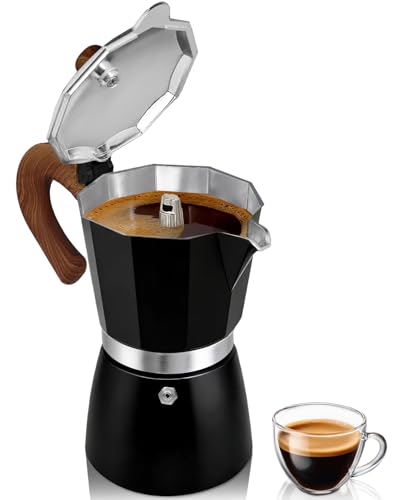 Belly Moka Coffee Maker Stovetop Espresso Maker 9 Cup Aluminum Moka Pot Percolator 15oz 450ml Easy Brewing for Electric Ceramic Stoves Home Camping Italian Cuban Café Classic Black
 Belly Moka Coffee Maker Stovetop Espresso Maker 6 Cup Aluminum Moka Pot Percolator 10oz 300ml Easy Brewing for Electric Ceramic Stoves Home Camping Italian Cuban Café Classic Silver