You pour water into the reservoir, hit brew, and wait. Then you wait longer. The stream coming out of the basket is a pathetic trickle, or worse, water is pooling on top of the coffee grounds and spilling over the edge. Your first instinct is to blame the paper filter. It looks soggy, maybe a bit swollen. But is it actually the culprit?
Most of the time, the paper filter is just the victim. The real problem lives in the basket itself, the shower head, or the internal water lines. This guide walks through how to diagnose the exact blockage point, clean it properly, and prevent it from returning. You’ll learn the difference between an oil clog, a mineral scale clog, and a debris clog—and why treating all three the same way doesn’t work.

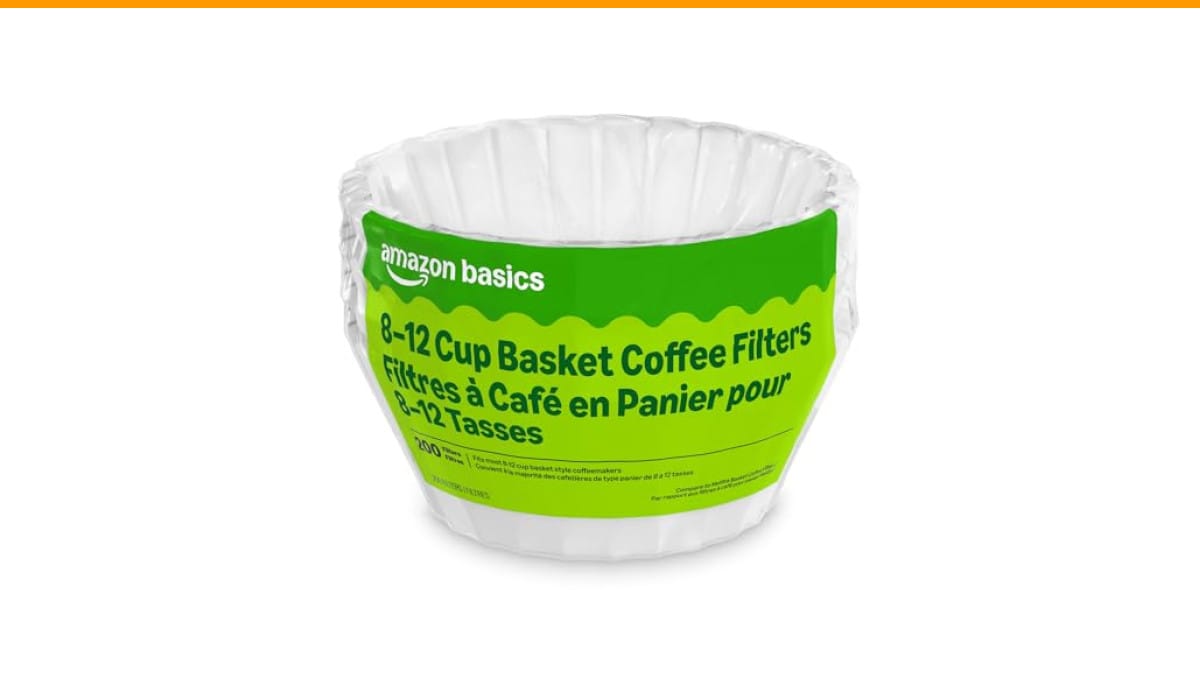
Amazon Basics
Amazon Basics Basket Coffee Filters for 8-12…
- SHIPMENT CONTAINS: 200 white basket coffee filters that fit most 8-12 cup basket coffeemakers
- SUPERIOR FILTRATION: Provides excellent coffee filtration that eliminates gritty sediment while allowing the great coffee taste to…
- INDUSTRIALLY COMPOSTABLE DESIGN: Filter meets ASTM D6868-11 standard and can be composted where municipal or industrial composting…
As an Amazon Associate I earn from qualifying purchases.
If you’re using a standard basket-style machine, a fresh pack of Amazon Basics basket coffee filters (200 count) gives you a clean, sediment-free brew while you troubleshoot the hardware. They’re industrially compostable and SFI-certified, which is a nice bonus, but they won’t fix a clogged machine on their own.
Why Your Coffee Filter Basket Clogs (And Why It’s Not the Paper)
Paper filters are porous. Water passes through them easily unless something blocks the pores. That something is usually one of three things:
- Coffee oils: Dark roasts and flavored beans leave a sticky, oily residue that hardens as it cools. Over time, this film coats the basket and the filter holder, narrowing the holes.
- Hard water scale: Calcium and magnesium deposits build up inside the water lines and the shower head. This restricts flow before the water even reaches the basket.
- Fine coffee grounds: A blade grinder produces dust-like particles that slip past the filter and lodge in the basket’s tiny holes. This is more common than people think.
- Rinse the basket immediately after brewing. Hot water washes away oils before they harden. Letting it sit for hours lets the residue bake on.
- Use a coarser grind. Drip machines need a medium grind, not espresso-fine. Fine grounds create sludge that clogs everything. A burr grinder vs blade grinder matters here—burr grinders produce consistent particle sizes, blades produce dust.
- Don’t overload the basket. Too many grounds expand when wet and block water flow. Use the recommended amount for your machine’s capacity.
- Descale on a schedule. Mark it on your calendar. Every 3 months for soft water, every month for hard water.
- Use filtered water. A simple pitcher filter removes most of the calcium and magnesium that cause scale.
- Blame the basket, not the paper filter. The filter is just the messenger.
- Diagnose first: overflow means basket blockage, slow drip means scale in the lines.
- Clean with vinegar monthly, descale with a commercial solution every 1-3 months depending on water hardness.
- Never use wire brushes or abrasive pads on the basket—scratches cause future clogs.
- Rinse the basket right after brewing to prevent oils from hardening.
- Switch to a coarser grind if you’re using a blade grinder.
- Replace the basket if it’s scratched or has permanently blocked holes. Replace the whole machine if descaling doesn’t fix a slow drip.
The paper filter itself doesn’t clog. It’s a single-use product. The basket underneath it, however, has hundreds of small holes that collect residue over weeks of use. Once those holes narrow, water backs up. The filter just happens to be sitting there when it happens.
Another overlooked factor is the shower head. If it sprays unevenly because its outlets are scaled over, water hits one spot on the grounds. That spot saturates, expands, and blocks the rest of the water from passing through. The filter looks like the problem, but the shower head started it.
Diagnosing the Clog: Slow Drip vs. Overflow
How the clog shows up tells you where it is. Pay attention to the symptoms before you take anything apart.
Overflow (water pooling on top of the grounds) points to a blockage in the basket or the filter itself. The water is flowing down from the shower head fine, but it can’t get through the coffee bed. Check for a swollen filter that’s sealed against the basket walls, or a basket with visibly blocked holes. This is the easiest fix—usually a rinse or a quick soak.
Slow drip (a thin, hesitant stream) suggests a deeper problem. The water is struggling somewhere upstream—in the water line, the heating element, or the shower head. Scale is the prime suspect here. The basket might be perfectly clean, but the machine can’t push water through its own pipes. This is the harder fix and usually requires descaling, not just wiping the basket.
There’s a third scenario: the brew takes twice as long but finishes. That’s a partial blockage. Scale is building up, but there’s still enough gap for water to squeeze through. Deal with it now, before it becomes a full clog.
If you’re dealing with a machine that won’t brew at all, check our guide on Mr. Coffee not pumping water for a different set of troubleshooting steps.
How to Unclog a Coffee Filter Basket (Step-by-Step)
Start with the simplest fix and work your way up. You’ll need a soft sponge, a toothpick or soft brush, white vinegar, and maybe a descaling solution.
The Vinegar and Water Deep Clean
This handles oil residue and light scale. Mix one part white vinegar with two parts water. Fill the reservoir with this solution. Place a fresh paper filter in the basket (yes, even though you’re cleaning—it catches the dislodged gunk). Run a brew cycle halfway, then turn the machine off and let it sit for 30 minutes. Finish the cycle, then run two full cycles with plain water to rinse out the vinegar taste.
While the machine sits, remove the basket and soak it in the same vinegar solution. Use a toothpick to gently poke out any visible debris in the holes. Do not use a wire brush—it scratches the coating, and those scratches become future clog points. Rinse the basket thoroughly before reinstalling.
The Descaling Solution Method
Vinegar works for light buildup, but hard water scale needs a stronger acid. A commercial descaling solution (citric acid-based) breaks down mineral deposits that vinegar can’t touch. Follow the manufacturer’s instructions on the bottle. Most require you to run the solution through a full brew cycle, let it sit for 15-20 minutes, then rinse with two or three fresh water cycles.
This is the root-cause fix. If you live in an area with hard water, descaling every 1-3 months is non-negotiable. Vinegar is a maintenance tool; descaling solution is the deep repair. If the slow drip persists after descaling, the scale might be too thick for a single treatment—run it twice, or consider replacing the machine if it’s older than five years.
If your machine is still underperforming after a deep clean, it might be a different issue entirely. See our write-up on Braun coffee maker not brewing for related problems.
The Critical Difference: Paper Filters vs. Permanent Mesh Filters
People often ask whether switching to a permanent mesh filter solves clogging. It doesn’t. It changes the problem.
Paper filters are disposable. You use one, you throw it away. They catch fine particles and oils, which keeps the basket cleaner. The downside is ongoing cost and the need to keep them in stock.
Permanent mesh filters are reusable. You rinse them after every brew. But they let more oils and fine grounds through into the basket. Those oils harden and clog the mesh itself. You have to scrub them diligently, and even then, the mesh holes are smaller than the basket’s holes, so they clog faster.
Here’s a direct comparison:
| Factor | Paper Filter | Permanent Mesh Filter |
|---|---|---|
| Clog risk in basket | Lower—catches fines and oils | Higher—oils pass through |
| Maintenance | None (dispose after use) | Rinse and scrub after every brew |
| Cleaning frequency | Basket still needs periodic cleaning | Filter itself needs weekly deep cleaning |
| Cost over time | Recurring purchase | One-time fee |
| Best for | Most drip machines, clean flavor | Those who want zero waste |
Neither option prevents scale buildup in the water lines. That’s a separate issue. But if you’re prone to oil clogs, paper filters are the safer bet. If you use a permanent filter, plan to soak it in vinegar weekly.
How to Prevent Future Clogs (Brewing Habits & Maintenance)
A few habits make a bigger difference than any cleaning product.
These habits take about two minutes per day. They save you from a 30-minute unclogging session later.
When to Replace Your Filter Basket vs. The Whole Machine
Baskets are cheap and replaceable. If you’ve cleaned yours thoroughly and it still has blocked holes that you can’t poke through, replace it. A new basket costs a few dollars and takes two seconds to swap.
The machine itself is a different story. If you’ve descaled twice, cleaned the basket, checked the shower head, and the slow drip persists, the internal pump or heating element is likely failing. At that point, replacement is more practical than repair. A machine that’s over five years old with a persistent clog isn’t worth sinking money into.
One more thing: if you notice a metallic taste in your coffee after cleaning, that’s a sign the basket’s coating is worn. Scratched aluminum baskets can leach into your brew. Replace it immediately. This is also why you should never use abrasive scrubbers on the basket.
Frequently Asked Questions
Can I clean and reuse a paper coffee filter?
No. Paper filters are single-use. Rinsing them doesn’t remove the trapped oils and fines from their pores, and the paper structure weakens after one use. Reusing a paper filter risks tearing, which dumps grounds into your cup and can clog the basket with loose sediment. Throw it away after every brew.
Is baking soda safe for cleaning the basket?
Baking soda is fine for the basket itself, but skip it for the internal water lines. It’s abrasive and can leave a residue that’s hard to rinse out. For the basket, make a paste with water and gently scrub with a soft sponge. For the machine’s internals, stick with vinegar or a descaling solution.
How often should I descale my coffee maker?
It depends on your water hardness. With soft water, every 3 months is enough. With hard water, monthly. If you notice the brew time getting longer, descale immediately—that’s the first sign of scale buildup. Don’t wait for the scheduled date.
Why does my coffee taste bitter even after cleaning?
Leftover vinegar from a cleaning cycle will make coffee taste sour or bitter. Run an extra rinse cycle or two. If the taste persists, old coffee oils might be baked onto the shower head. Remove it and soak it in vinegar. For more on this, read about why coffee tastes bitter after cleaning.
Can the paper filter itself cause a clog if it’s the wrong size?
Yes. A filter that’s too large folds over the edges of the basket, which can block the overflow slots. A filter that’s too small lets grounds bypass it entirely. Use the correct size for your machine—#4 cone filters and basket filters are not interchangeable. Measure your basket’s interior before buying.
What to Do With All This
Clogs are annoying, but they’re almost always preventable. A little routine maintenance keeps your coffee maker flowing for years. And when you do need filters, the Amazon Basics basket filters are a solid, reliable choice that won’t add to your problems.
Products related to this article
Sponsored / affiliate links. As an Amazon Associate I earn from qualifying purchases. I may earn additional commission from eligible campaigns.
 HomeBeyond Espresso Coffee Maker 12 Cups, Classic Stovetop Espresso Maker, 600ml / 20oz Coffeemaker for Gas & Ceramic Stovetops (Silver)
 Coffee Espresso Machine Handle Replacement Parts, Cafe Bracket Handle for Lidl Silvercrest CM4621 CM4218 KF5002 KF500S Barista (for 51mm Portafilter Basket - Not included)
 Quick Heating Cup Warmer, Three Temperature Settings, Splashproof and Portable, for Coffee, Milk, Lightweight ABS Material