You just pulled a decent shot, but the steam wand sputters and takes forever to texture milk. You descale every few months, yet the frother still acts up. Sound familiar? Most home baristas focus on beans and grind size, but the water you pour into the tank quietly decides how long your machine — especially the milk frother — will last.
This guide covers what filtered water does and doesn’t do for espresso machines with frothers, which filter types actually protect the steam wand, and why distilled or reverse osmosis water can be the worst thing you can feed your machine. You’ll walk away knowing exactly what to pour into that tank.
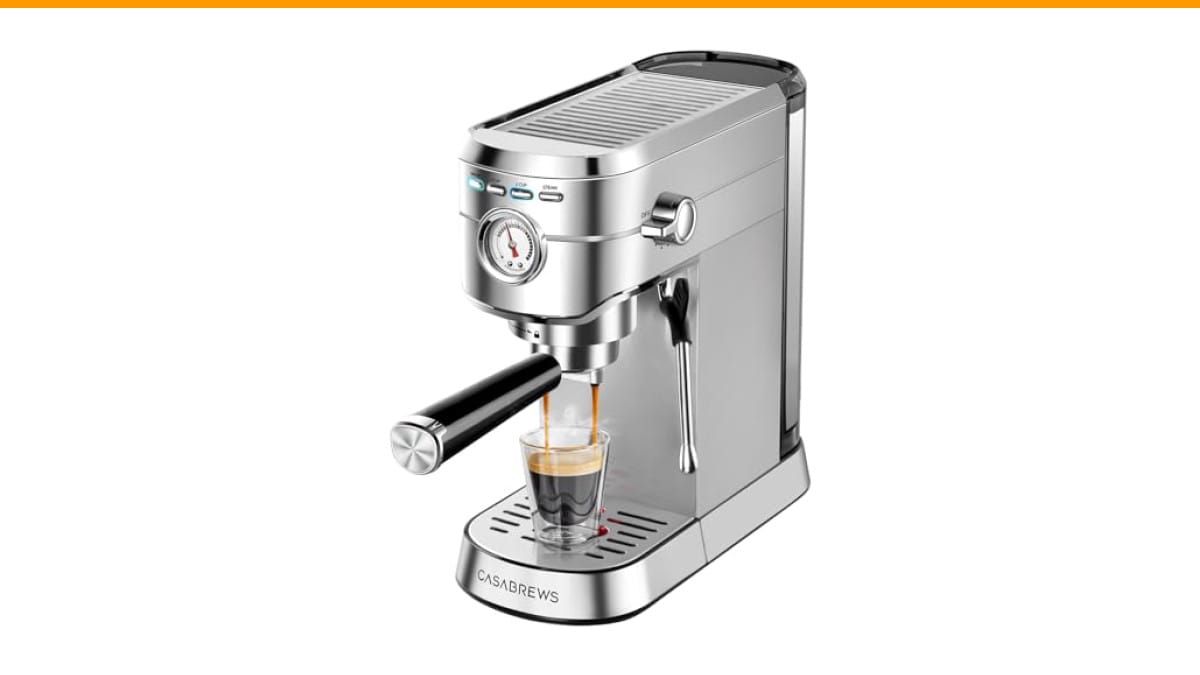
If you’re shopping for a machine that handles both espresso and milk well, the Check Price on Amazon with its 20-bar Italian pump and dedicated milk frothing steam wand is a solid starting point. It’s compact, has a 34 oz detachable tank, and the pressure gauge helps you dial in shots. For this article, think of it as a typical home machine with a frother — the water advice applies to it and nearly every other model in its class.
Why Your Milk Frother Cares About Water Quality
Your espresso boiler heats water to around 200°F. Your steam wand generates steam at over 212°F. Both surfaces touch water constantly, but the wand has a much narrower path. Scale builds up faster in that thin tube than in the boiler, and once it clogs, steam flow drops, milk texture suffers, and you’re left with a weak, bubbly froth instead of silky microfoam.
The milk frother is usually the first component to fail from hard water. It’s the canary in the coal mine. The boiler might survive years of hard water, but the wand’s tiny orifice chokes on calcium deposits in months. So if you care about lattes and cappuccinos, water quality matters more than if you only pulled straight shots.
The Short Answer: Yes, But Not All Filters Are Equal
Filtered water is safe for your espresso machine with a milk frother, provided the filter removes hardness minerals. A basic activated carbon pitcher like a Brita removes chlorine and improves taste, but it does almost nothing to reduce calcium and magnesium. Those minerals are what create scale.
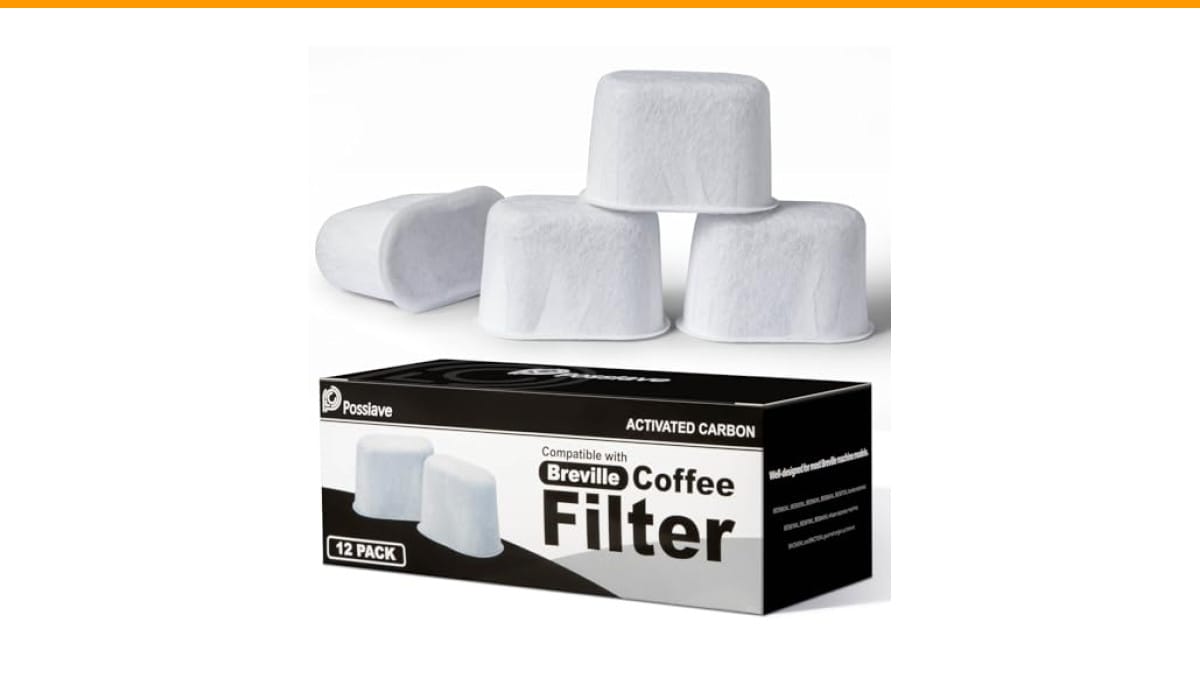
You need a filter that reduces total dissolved solids (TDS), specifically the hardness ions. Look for filters labeled as ion-exchange or softening. Pitcher filters with ion-exchange resin, under-sink systems with a softening stage, or built-in tank filters designed for espresso machines all do the job. A plain carbon filter alone isn’t enough to protect your frother.
What Filtered Water Does (and Doesn’t) Remove
Let’s break down what each filter type actually removes, because the marketing labels don’t tell the whole story.
- Activated carbon: Removes chlorine, chloramine, some organic compounds, and off-tastes. Leaves minerals untouched.
- Ion-exchange resin: Replaces calcium and magnesium ions with sodium or potassium ions. This softens water and prevents scale.
- Reverse osmosis: Removes nearly everything, including beneficial minerals. Leaves water with almost zero TDS.
- Distillation: Boils water and condenses the steam. Result is pure H2O with no minerals at all.
For espresso, the Specialty Coffee Association (SCA) recommends a TDS between 75 and 250 ppm, with total hardness between 50 and 175 ppm as calcium carbonate. Water that’s too hard scales your machine. Water that’s too soft tastes flat and can corrode metal parts over time.
Most tap water in the US falls between 150 and 400 ppm TDS. A good softening filter brings that down into the safe zone. A reverse osmosis system takes it down to near zero, which creates a different set of problems.
The Real Risk: Scale in the Frother vs. the Boiler
Scale in the boiler reduces heating efficiency and can eventually cause overheating. But scale in the steam wand is more immediate and more annoying. The wand’s jet hole is roughly 0.5 to 1.0 mm in diameter. A layer of calcium just 0.2 mm thick cuts steam velocity noticeably, and a full blockage stops frothing entirely.
You’ll notice the difference in milk texture first. Instead of a rolling vortex that stretches and textures milk, you get large bubbles and a wand that spits. The fix is either soaking the wand in descaling solution or replacing the wand assembly — neither is fun on a Sunday morning.
Using properly filtered water reduces scale formation by 80-90% compared to hard tap water. That’s not a small number. It’s the difference between descaling every 3 months and every 12-18 months.
Best Filter Types for Machines with Frothers
Not all filtration methods are equal when you have a steam wand to protect. Here’s how the common options compare in real use.
Pitcher Filters (Brita-style)
Standard Brita pitchers use carbon filtration. They improve taste but leave hardness minerals alone. If your tap water is moderately hard (150-200 ppm), a Brita won’t protect your frother. You’ll still get scale, just maybe slower.
Some pitcher filters, like the Brita Longlast, do include a small amount of ion-exchange resin, but it’s not enough to meaningfully soften water for espresso use. For a machine with a frother, a standard pitcher filter is better than nothing but not sufficient on its own.
In-Line / Under-Sink Filters
Under-sink systems with a dedicated softening cartridge work well. Look for one with a mixed-bed resin that targets hardness specifically. These systems can reduce TDS from 300 ppm down to 80-120 ppm, which sits right in the SCA sweet spot.
They cost more upfront — typically $100-200 for a decent system — and require cartridge changes every 6-12 months. But they protect the entire machine, including the frother, and give you great-tasting water for drinking too.
Built-In Tank Filters
Many espresso machines, especially higher-end ones, come with a small filter that sits inside the water tank. These are usually ion-exchange cartridges designed specifically for espresso. They’re convenient and effective, but you have to replace them regularly, usually every 2-3 months.
The catch is that not all machines have them. The CASABREWS CM5418 doesn’t include a built-in filter, so you’d need an external solution. Check your machine’s manual before assuming it has one.
The Remineralization Rule (Why Distilled/RO is a Trap)
Distilled water and reverse osmosis water have almost zero TDS. That sounds perfect for preventing scale, and it is — but it creates a different problem. Pure water is aggressive. It wants to dissolve minerals, and it will pull them from your machine’s metal components, especially brass and copper fittings.
Over time, RO or distilled water can corrode internal parts, leading to leaks and metallic off-flavors in your espresso. The SCA’s minimum TDS of 75 ppm exists for a reason: water needs some mineral content to extract coffee properly and to protect the machine.
If you already have an RO system at home, don’t feed your espresso machine straight RO water. Add a remineralization cartridge or mix RO water with tap water in a 50/50 ratio to bring TDS back up into the safe range. The same goes for distilled water — it’s fine for steam irons, not for espresso machines.
How Filtered Water Changes Your Descaling Schedule
Most manufacturers recommend descaling every 2-3 months with hard tap water. With properly softened water (TDS 100-150 ppm), you can stretch that to every 6-9 months. With RO or distilled water, you might not need to descale at all, but you risk corrosion instead.
The practical approach: if you use a good ion-exchange filter, descale every 6 months as a baseline. If you notice steam wand performance dropping or milk frothing poorly, descale sooner. If you use a basic carbon filter, keep the 2-3 month schedule because hardness minerals are still present.
Also, remember the frother-specific rule: always purge the steam wand with a quick burst of steam after frothing to clear milk residue. That prevents milk scale, which is a different and smellier problem than mineral scale. And if your machine has an overheat protection mode like the CASABREWS CM5418, always let it cool down after frothing before pulling another shot — the manual warns about this for good reason.
Quick Water Selection Checklist for Espresso + Frother
Here’s a practical checklist to run through before you fill that tank.
- Test your tap water TDS. A cheap TDS meter costs $10-15 and gives you a baseline.
- If TDS is under 75 ppm, you need to add minerals back. Don’t use RO or distilled directly.
- If TDS is 75-175 ppm, your tap water is likely fine as-is. Skip filtering for hardness, but consider carbon filtration for taste.
- If TDS is 175-300 ppm, use an ion-exchange pitcher or under-sink filter to bring it down.
- If TDS is over 300 ppm, you have hard water. Invest in a softening filter or use bottled spring water with a known TDS in the safe range.
- Check your machine’s manual for any specific water recommendations. Some manufacturers void warranties on scale damage from hard water.
- Replace your filter on schedule. A spent filter does nothing.
Final Verdict: Is Filtered Water Good Enough?
Yes, filtered water is not only good enough — it’s the right choice for an espresso machine with a milk frother, as long as you filter for hardness, not just taste. The frother is the first thing to fail from scale, and soft water protects it directly.
Here are the takeaways you can act on today:
- Use water with a TDS between 75 and 175 ppm for both espresso quality and machine longevity.
- Choose an ion-exchange filter for hardness reduction, not just a carbon pitcher.
- Avoid distilled and RO water unless you remineralize it first.
- If you have hard tap water, a softening filter is the single best investment for your machine.
- Descale every 6 months with softened water instead of every 2-3 months with hard water.
- Always purge the steam wand after frothing to prevent milk scale buildup.
- Test your water TDS before deciding on a filter — it’s a $10 meter that saves you hundreds in repairs.
Your milk frother is the weakest link in your espresso setup. Feed it good water and it’ll keep producing silky microfoam for years. Feed it hard water and you’ll be shopping for a new wand or a new machine much sooner than you’d like. The choice is simple, and it starts at the tap.
If you’re dealing with other machine quirks, check our guide on espresso machine leaks or troubleshooting loud noises — both are common issues that water quality can influence.
Products related to this article
Sponsored / affiliate links. As an Amazon Associate I earn from qualifying purchases. I may earn additional commission from eligible campaigns.
 Coffee Espresso Machine Handle Replacement Parts, Cafe Bracket Handle for Lidl Silvercrest CM4621 CM4218 KF5002 KF500S Barista (for 51mm Portafilter Basket - Not included)
 SOLUSTRE Electric USB Coffee Cup Warmer with Temperature Settings Portable Milk and Beverage Heating Coaster for Office Desk Small Lightweight Design Easy to Clean Surface Multi Functional
 Linnkyfloa Coffee Espresso Maker Handle Replacement for Stovetop Moka Pot or Percolator, Black Plastic for Spare Part Compatible with Italian(9-12 Cup)