You’re standing in the kitchen at 6:45 AM, bleary-eyed, staring at a drawer full of paper filters that you forgot to restock. Again. The alternative basket sits right there, but you’ve heard it makes muddy coffee. So you skip the cup and grab an overpriced drive-thru latte instead. Sound familiar?
This guide breaks down the real differences between paper and reusable filters. You’ll learn how each affects flavor, what it actually costs over a year, and how to adjust your grind so you don’t ruin your first cup with a metal basket. No marketing fluff, just the practical trade-offs.
MJULY
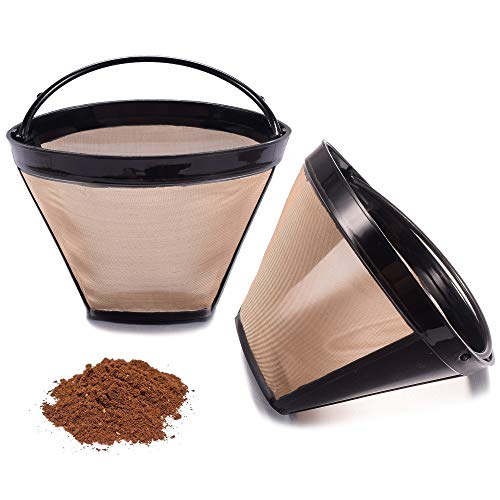
Reusable No.4 Cone Coffee Maker Filters for…
- Package come with 2 PCS #4 Cone Permanent Coffee Filters,easy to clean, repeated use,Save more money than disposable filters paper
- Using food grade stainless-steel woven mesh,the fine mesh makes the filtered coffee taste better.
- #4 cone coffee filter for Ninja coffee bar brewer.8-12 cups.As a replacement coffee filter for your coffee makers.
As an Amazon Associate I earn from qualifying purchases.
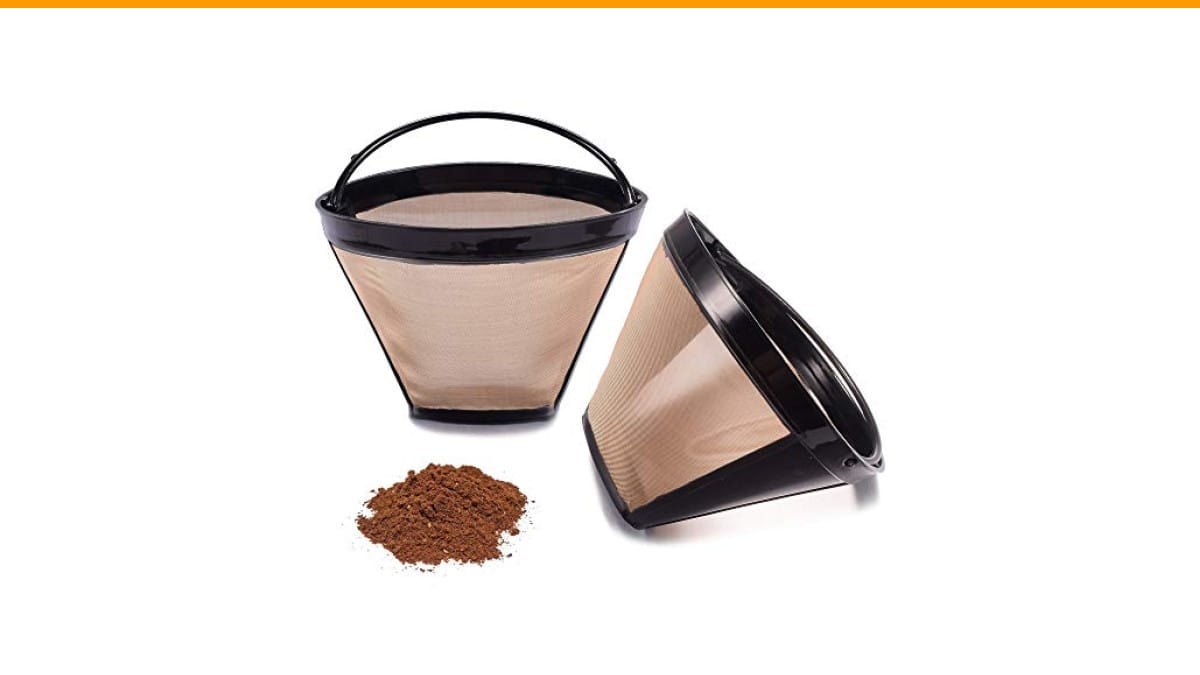
If you’re using a Ninja Coffee Bar or any No. 4 cone brewer, the Check Price on Amazon are a solid place to start. They come in a two-pack, which means you can rotate them while one soaks. We’ll reference them throughout this comparison because they represent the typical stainless steel mesh option most people buy.
The Core Difference: Filtration vs. Extraction
Most people think the filter just strains coffee. It does more than that. The filter controls what ends up in your cup, which directly changes how your taste buds perceive the brew.
Paper is a depth filter. It traps not just grounds but also the microscopic fines and the fatty oils called lipids. What passes through is a bright, clean liquid that lets the bean’s origin flavors shine. Think of it like a crisp white wine.
Metal mesh is a surface filter. It catches the big chunks but lets fines and oils flow right through. Those oils coat your tongue and carry heavier flavors. The result is a syrupy, full-bodied cup closer to what a French Press delivers.
This isn’t a good vs. bad scenario. It’s a flavor profile choice. You’re picking between clarity and body.
Taste and Mouthfeel: Oils, Sediment, and Clarity
Let’s get specific about what you’re actually tasting, because the difference is dramatic when you do a side-by-side test.
Why Paper Filters Produce a ‘Cleaner’ Cup
Paper absorbs about 95% of the coffee oils. Those oils contain cafestol, a compound linked to raising LDL cholesterol. If you have cholesterol concerns, that’s a health reason to stick with paper.
Taste-wise, removing oils means you taste the high notes. Floral notes, citrus, berry acidity—they all pop. The cup is also sediment-free. You get zero grit at the bottom, which is why paper is the standard for pour-over methods like the V60 and Chemex. The clarity is unmatched.
There’s a hidden flaw, though. Cheap paper filters can impart a papery taste. You must rinse the filter with hot water before adding grounds. That isn’t optional. A proper rinse takes 15 seconds and eliminates the cardboard flavor completely. Skip this step and you’re sabotaging the brew.
Why Metal Filters Produce a ‘Richer’ Cup
Metal filters let the oils and fine particles pass through. You get a heavier mouthfeel that coats your palate. The body feels thicker, almost velvety. This is what most people mean when they say a cup tastes ‘stronger’—it’s not more caffeine, it’s more texture.
The trade-off is sediment. Even with a fine 200-mesh screen, you’ll get a thin layer of sludge at the bottom of your mug. Some people hate that. Others, like me, actually don’t mind it. It adds a rustic quality that pairs well with darker roasts.
Bitterness is the real risk here. Because metal doesn’t absorb anything, over-extracted bitter compounds make it straight into the cup. You’ll need to dial back your extraction time or grind coarser.
The Full Environmental Lifecycle: Beyond the Landfill
The eco-argument isn’t as simple as ‘paper is trash, metal is green.’ Let’s look at the full picture.
The Hidden Cost of Paper Production
Most paper filters are bleached white. That bleaching process uses chlorine dioxide, which creates dioxins as a byproduct. Even oxygen-bleached filters require significant energy and water to process the wood pulp. You’re also generating solid waste every single day—about 2.5 pounds of used filters per year for a daily brewer.
On the flip side, paper filters are compostable. If you’re composting at home, they break down in about 4-6 weeks. That’s a genuine plus that metal can’t match.
The Energy and Mining Cost of Metal
Stainless steel mesh requires mining nickel and chromium, then an energy-intensive smelting and weaving process. That’s a heavy upfront carbon debt. The MJULY filter, for example, is made from food-grade stainless steel woven mesh. Manufacturing that single filter likely has a higher carbon footprint than 100 paper filters.
But you’ll use that metal filter for years. After roughly 300 brews, the metal filter’s lifecycle impact drops below the paper’s ongoing impact. It’s a long-term win, but only if you actually keep using it. If it sits in a drawer, the paper filter wins the environmental argument.
Cost Analysis: The 12-Month Break-Even Point
Let’s talk money. A box of 100 paper filters for a No. 4 cone costs around $10. That’s $0.10 per brew. If you brew one pot daily, that’s $36.50 per year.
The MJULY two-pack costs roughly $15-20. Since you’re getting two filters, you can rotate them. One filter lasts 6-12 months if you clean it properly. Your break-even point hits at about 150-200 brews, which is roughly 5-7 months of daily use. After that, you’re saving money.
Here’s the catch: you must factor in cleaning time. Metal filters need a rinse immediately after use. If you let coffee oils dry on the mesh, they clog and turn rancid. That adds 30 seconds to your cleanup routine. Paper filters just get thrown away. Time is a cost too, even if it’s small.
| Factor | Paper Filter | Reusable Metal Filter |
|---|---|---|
| Upfront Cost | Low ($5-10) | Moderate ($15-20) |
| Annual Cost (1 pot/day) | $36.50 | $0 (after purchase) |
| Mouthfeel | Clean, light, tea-like | Heavy, syrupy, oily |
| Sediment | None | Thin layer at bottom |
| Cholesterol Impact | Filters out cafestol | Retains cafestol |
| Cleanup Time | Throw away (5 sec) | Rinse and scrub (30-60 sec) |
| Environmental Waste | Daily solid waste | One-time manufacturing debt |
| Flavor Profile | Bright, acidic, clear | Rich, bitter, full-bodied |
Brewing Adjustments: Dialing in Your Recipe
Switching filters without changing your recipe is a guaranteed bad cup. Here’s how to adjust.
Grind Size and Dose Changes for Metal Filters
When you move from paper to metal, you need to grind coarser. The metal screen has larger openings than paper, so water flows faster. If you keep your fine paper grind, the water rushes through too quickly, causing under-extraction and sourness.
Start by moving your grinder two clicks coarser. If you’re using a blade grinder, pulse for 2 fewer seconds. The goal is a texture similar to kosher salt rather than table salt. This slows the flow rate and gives the water more contact time with the grounds.
Your dose can stay the same, but you might want to reduce it by 5%. Metal filters don’t absorb water like paper does. A paper filter holds about 10-15 grams of water. That water is now going into your cup, which slightly dilutes the strength. Reduce your dose slightly to compensate.
Check your extraction time. A standard drip brewer should take 4-6 minutes. If your brew finishes in under 3 minutes, your grind is too coarse. If it takes over 7 minutes, the mesh is clogged or your grind is too fine.
Cleaning and Maintenance: The Daily Habit
Metal filters are not ‘set and forget.’ They require a routine.
Rinse the filter immediately after brewing. Hot water and a soft brush will remove most oils. Once a week, soak it in a solution of one part white vinegar to three parts water for 15 minutes. This dissolves the oily residue that brushing misses.
Do not put the filter in the dishwasher. The high heat and harsh detergents can warp the mesh. Hand washing is the only safe method.
The MJULY filters are dishwasher safe according to the listing, but I’d still recommend hand washing. It preserves the mesh integrity longer. A warped mesh creates channels that let grounds through, ruining your cup.
If you notice your coffee tasting bitter or metallic, that’s a sign of built-up oil. Soak it immediately. A clean metal filter produces a clean cup. A dirty one produces a rancid, harsh brew. This is a common reason people give up on reusable filters, and it’s entirely avoidable.
The Verdict: A Decision Matrix for Your Coffee Style
Still torn? Here’s a practical breakdown.
Stick with paper if you prefer light roasts, want zero sediment, or have high cholesterol. Paper is also the better choice for pour-over methods where clarity is the whole point. The ritual of rinsing a filter and tossing it is meditative for some.
Switch to metal if you drink dark roasts, want a heavier body, or hate buying consumables. The MJULY filter works great in a Ninja Coffee Bar and similar brewers. It’s also the better pick for camping or travel where you can’t easily buy paper.
There’s a middle path. Use paper for your daily bright, clean brew, and keep a metal filter for weekends when you want a syrupy, French Press-style cup. You get the best of both worlds without committing to one.
If you’re dealing with bitterness issues, check our guide on bitter coffee causes before blaming the filter. Often, the problem is your grinder consistency, not the mesh. A burr grinder beats a blade for exactly this reason—uniform particles extract evenly.
Frequently Asked Questions
Why does my metal filter coffee taste bitter?
You’re over-extracting. Metal filters don’t absorb bitter compounds, so they all land in your cup. Grind coarser and shorten your brew time. If it’s still bitter, your filter is dirty—soak it in vinegar solution to remove rancid oils.
How do I stop sediment in my cup with a metal filter?
You can’t eliminate it completely, but you can reduce it. Grind coarser to produce fewer fines. Also, pour your coffee slowly and stop before the last ounce in the carafe—that’s where the sediment settles.
Are paper filters bleached with chlorine?
Some are. Look for ‘unbleached’ or ‘oxygen-bleached’ labels. Oxygen-bleached filters use hydrogen peroxide instead of chlorine, which is safer for the environment and doesn’t leave chemical residues.
Can I use a metal filter in a pour-over cone like a V60?
Yes, but the flavor changes drastically. A V60 is designed for fast flow and paper filters. Metal mesh slows the flow and adds body, turning your V60 into something closer to a French Press. It works, but you lose the clarity that makes V60 special.
How long does a reusable metal filter actually last?
With daily use and proper hand washing, expect 6-12 months. The mesh will eventually stretch or develop micro-tears. If you see grounds passing through, it’s time to replace it. The MJULY two-pack gives you a backup, so you can keep one in rotation while the other is being deep-cleaned.
What You Should Do Next
- Decide your flavor priority: bright and clean (paper) or heavy and rich (metal).
- If switching to metal, grind two clicks coarser on your burr grinder.
- Rinse paper filters for 15 seconds to remove papery off-tastes.
- Clean metal filters immediately after each use to prevent oil buildup.
- Track your weekly coffee spend—you’ll hit the break-even point on a reusable filter in about 5 months.
- Keep a backup of both types; you’ll inevitably run out of one at the worst moment.
- Check the current price of the MJULY two-pack on Amazon if you want to test the metal route without a big commitment.
Products related to this article
Sponsored / affiliate links. As an Amazon Associate I earn from qualifying purchases. I may earn additional commission from eligible campaigns.
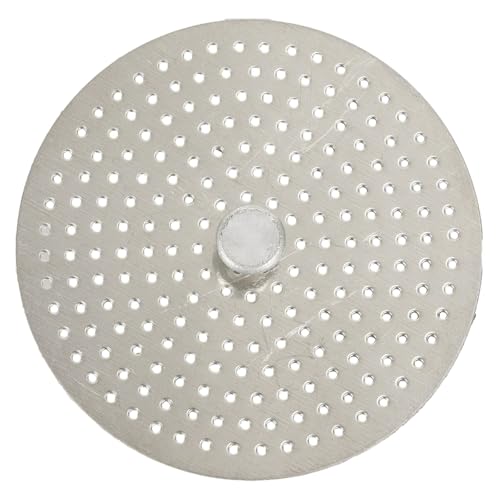 Stainless Steel Moka Pot Coffee Filter Disc for Espresso Brewing, Coffee Maker Replacement Filter Plate for Home Office Coffee Bar Cafe (FOR 4 Cups)
 Stainless Steel Moka Pot Pressed Powder Tool for 2 4 6 9 Cup Espresso Coffee Brewer(6 Cups)
 SOLUSTRE Electric USB Coffee Cup Warmer with Temperature Settings Portable Milk and Beverage Heating Coaster for Office Desk Small Lightweight Design Easy to Clean Surface Multi Functional