It’s 6:30 AM. You press the button for your first shot, and instead of a quiet hum, you get a screech that sounds like a dying power tool. The machine shakes. The neighbors might hear it. You stand there wondering if you just broke a thousand-dollar appliance.
I’ve tested dozens of super automatic machines over the years, and I can tell you this: most loud noises are not fatal. They’re your machine telling you something specific. A grinding noise means something different than a high-pitched whine, and a knocking sound means something else entirely. Once you learn to identify the sound, you can usually fix it in under an hour without a service call.

Tillbrook
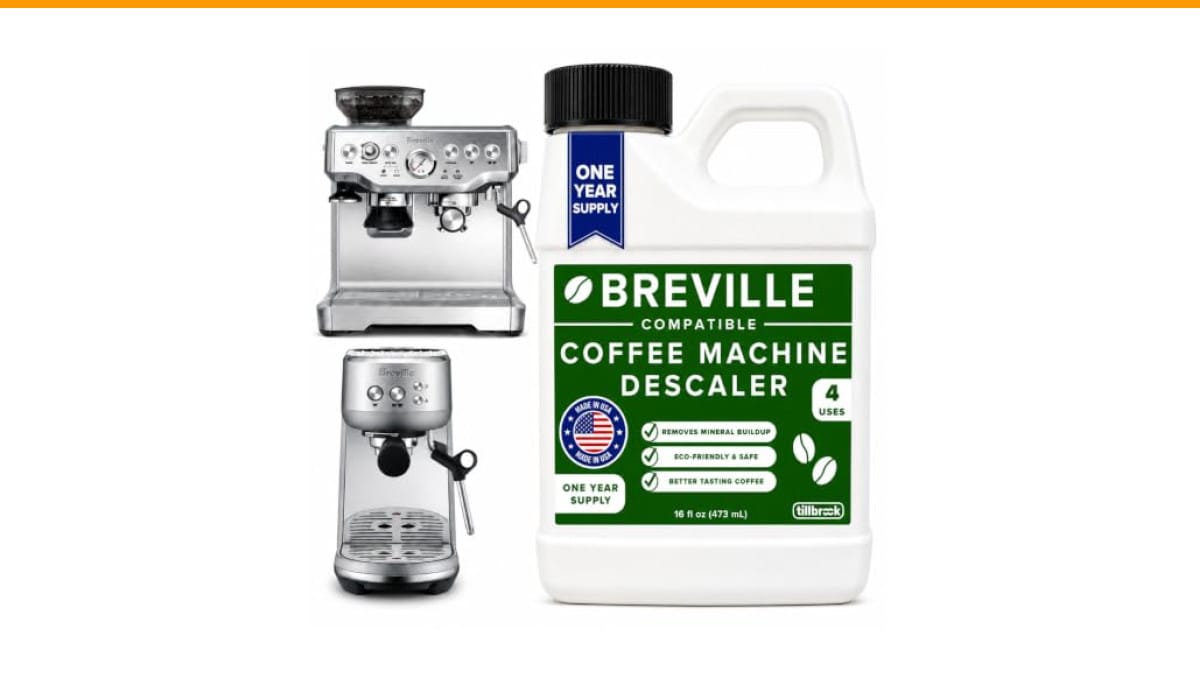
Breville Espresso Machine Compatible Descaler, 4 Uses,…
- EXCEPTIONAL RESULTS: Introducing Tillbrook Coffee Machine Descaler specifically formulated for Breville—the best choice for removi…
- 1 YEAR SUPPLY: Our concentrated formula is easy to use and provides remarkable value with 4 cleanings per bottle. Simply add 1/2 c…
- SCIENTIFICALLY ENGINEERED: Our advanced descaling solution is carefully crafted with powerful, all-natural ingredients that remove…
As an Amazon Associate I earn from qualifying purchases.
This guide walks through the most common noise sources, what each one means, and the exact steps to silence your machine. You’ll also learn which noises are normal (yes, some are) and when it’s time to call a professional.
If you’ve been putting off maintenance, a good descaling session fixes a surprising number of noise issues. The Tillbrook Breville-compatible descaler is a solid choice for this — it’s a concentrated formula that handles four cleanings per bottle, and it’s tested on most major brands, not just Breville. I keep a bottle around because hard water buildup is the #1 cause of weird noises I see in home machines.
The Grinder Is the Usual Suspect
Super automatic machines grind beans right before brewing. That’s the most mechanical noise you’ll hear, and it’s also the most common source of trouble.
If your machine makes a loud, rattling grind that sounds like rocks in a blender, the burrs are likely dull or dirty. Coffee beans leave behind oils that cake onto the burrs over time. That buildup makes the motor work harder, which produces a deeper, labored sound. You might also notice your shots pulling slower than they used to.
Check the burr chamber first. Most machines let you access it by removing the bean hopper. Look for caked-on coffee dust and oily residue. A stiff brush and a vacuum usually clear it out. If the burrs look worn — chipped edges or shiny spots — they need replacing. Most manufacturers recommend new burrs every 500 to 800 pounds of coffee, but heavy home use can wear them faster.
Another grinder issue: foreign objects. I once found a small pebble in a friend’s machine that sounded like a jackhammer. If you buy beans from a local roaster, they sometimes carry tiny stones. Pick through your beans if the noise started suddenly.
One thing that surprises people: the grinder should be loud. It’s crushing hard beans at high speed. A moderate grinding noise is normal. The problem is when it gets dramatically louder or changes pitch mid-grind.
If the grinder sounds fine but the noise happens during brewing, read on — the pump is the next suspect.
The Pump: Normal Hum vs. Angry Hammering
Super automatic machines use a vibration pump to push water through the coffee at 9 bars of pressure. These pumps are inherently noisy. A steady, rhythmic hum is completely normal.
What’s not normal is a loud, metallic hammering sound during extraction. That’s called cavitation, and it means the pump is struggling to pull water. The most common cause? An empty water tank or a clogged inlet filter. The pump sucks air instead of water, and the air bubbles collapse violently inside the pump head. That’s the hammering you hear.
Check the water tank first. Remove it, empty it, and inspect the little filter on the suction tube. Scale and debris collect there. Rinse it under warm water and scrub gently with a soft brush. If the filter looks discolored or brittle, replace it.
If the tank and filter are clean, the problem might be air locked in the pump. Run a blank shot (no coffee) a few times. That usually purges the air and restores normal pressure. Some machines have a dedicated hot water spout — running that for 30 seconds clears air locks too.
The third possibility is scale buildup inside the pump itself. Hard water leaves calcium deposits that restrict water flow. The pump works harder, and you hear it. This is where regular descaling becomes non-negotiable. I descale every three months with hard tap water, every six if I’m using filtered water.
If the pump still hammers after all that, the pump may be failing. Replacement pumps cost between $40 and $80 for most home machines, and they’re not too hard to swap if you’re handy. But try the cheap fixes first — most pump noise is just air or scale.
Steam Wand and Internal Components
Steam wand noise is easy to diagnose. If it sputters, hisses violently, or makes a gurgling sound, you’ve got a milk residue blockage. Milk proteins bake onto the inside of the wand when it’s not purged after steaming. That narrows the passage and creates erratic steam flow.
Soak the wand tip in hot water with a little dish soap. If your machine has a removable tip, take it off and soak it separately. A thin pin or paperclip clears the tiny hole. Always purge the wand for two seconds after steaming — that one habit prevents most steam wand noise.
Less obvious are noises from the brew group. Some machines make a clicking or ratcheting sound during the brewing cycle. That’s often the brew group motor cycling through its positions. A little grease on the moving parts quiets it down. Check your manual for the recommended food-grade lubricant. Don’t use WD-40 or any petroleum-based product — it’ll contaminate your coffee.
Another internal noise source: the bypass chute or solenoid valve. A sharp click when the machine finishes brewing is the solenoid releasing pressure. That’s normal. A repeated clicking during extraction is not — it usually means the valve is sticking. Scale is the culprit again. A descaling cycle often frees it up.
If you hear a whining sound that rises in pitch, that’s often the internal water pump struggling against a clogged filter or a kinked hose. Some machines have a small inline filter inside the case. It’s worth checking if you’ve ruled out everything else.
When Silence Isn’t the Goal: Normal Operating Sounds
Not every noise is a problem. I’ve had people panic over sounds that were perfectly normal. Here’s what a healthy machine sounds like:
- A moderate grind noise for 5-10 seconds before brewing
- A steady hum during extraction (the vibration pump)
- A soft gurgle when the machine purges water after brewing
- A single click when the brew group resets
- A gentle hiss from the steam wand
Compare that to these warning sounds: high-pitched screeching (bearing or burr issue), loud hammering (pump cavitation), repeated clicking (sticking solenoid), or a grinding that suddenly gets much deeper (dull burrs).
One more thing: vibration. A machine that shakes across the counter isn’t necessarily broken — it might just be on an uneven surface. Check the rubber feet. If they’re worn or missing, the machine vibrates against the counter, which amplifies every internal sound. A silicone mat or even a folded kitchen towel underneath absorbs most of that.
I’ve also seen machines that rattle because of loose screws on the outer casing. Give the panels a gentle press while it runs. If the noise stops when you touch a specific spot, tighten that screw. It’s a five-minute fix that makes a huge difference.
Comparing the Fixes: What to Try First
Here’s a quick reference table for the most common noise scenarios. I’ve ordered these by how often I see them in real machines.
| Symptom | Most Likely Cause | Fix | Difficulty | Time |
|---|---|---|---|---|
| Screeching during grind | Dull or dirty burrs | Clean burr chamber; replace burrs if worn | Moderate | 30-60 min |
| Hammering during brew | Air in pump or clogged inlet filter | Run blank shots; clean tank filter | Easy | 5-10 min |
| Whining that rises in pitch | Scale buildup in pump | Descale with a quality solution | Easy | 30-45 min |
| Sputtering steam wand | Milk residue blockage | Soak tip; purge after each use | Easy | 10-15 min |
| Rattling from the casing | Loose screws or worn feet | Tighten screws; replace rubber feet | Easy | 5 min |
| Repeated clicking during extraction | Sticking solenoid valve | Descale; replace valve if persistent | Hard | 1-2 hrs |
Start with the easy fixes. Most noise problems are caused by buildup or air, not mechanical failure. If you’ve cleaned, descaled, and still hear the noise, then start looking at replacement parts.
If you’re dealing with a leak along with the noise, check out our guide on automatic espresso machine leaking water — the two issues often share a root cause like scale or a failing seal.
Why Descaling Fixes So Many Noise Problems
Scale is the silent killer of espresso machines. It builds up on heating elements, inside pumps, and along water lines. It acts as an insulator, so the machine works harder to heat water. It narrows passages, so the pump strains to move water. Both of those create extra noise.
A good descaling solution dissolves that buildup. The Tillbrook descaler I mentioned earlier uses all-natural ingredients, which matters if you’re sensitive to chemical smells. It’s formulated for Breville machines but works across most brands. I’ve used it on a Jura and a DeLonghi without issues.
The process is straightforward: mix the concentrate with water, run it through the machine, then run two more cycles with clean water to rinse. That’s it. Most people skip descaling because it feels like a chore, but it’s the single most effective maintenance task for keeping a machine quiet and reliable.
How often should you descale? Every 3-4 months with hard water, every 6 months with soft or filtered water. If you notice the noise creeping back around that timeline, you’ve found your schedule.
For the full routine, check our guide on deep cleaning your coffee machine — it covers the parts descaling doesn’t reach, like the brew group and drip tray.
Five Questions People Actually Ask About Noisy Machines
Is it normal for my super automatic espresso machine to be loud?
Yes, to a point. The grinder and vibration pump are inherently noisy components. A moderate hum and grind noise is expected. What’s not normal is a sudden change in volume or pitch, or a new sound like hammering or screeching. If the machine sounded fine last week and doesn’t now, something changed.
Why does my machine make a loud noise when the water tank is full?
A full tank doesn’t guarantee water flow. The inlet filter on the suction tube can clog with scale or debris even when the tank is full. Pull the filter out and clean it. Also check that the tube isn’t kinked or folded. Air can get sucked in through a loose connection even with water present.
Can I use vinegar to descale my super automatic machine?
You can, but I wouldn’t. Vinegar is acidic enough to dissolve scale, but it’s also harsh on internal seals and gaskets. It leaves a smell that lingers for weeks. A purpose-built descaler is formulated to dissolve scale without damaging machine components. It costs a few dollars per cleaning — cheap insurance for a machine that costs hundreds.
Why does my machine make a noise but no coffee comes out?
This usually points to a blockage or a pump problem. If the pump is running but no water flows, check the water tank filter and the brew group for clogs. If the machine makes a clicking sound but nothing happens, the brew group might be jammed. Turn the machine off, remove the brew group, and clean it thoroughly. If that doesn’t help, the pump or a valve may need professional attention.
How do I know if my grinder burrs need replacing?
Listen for a change in pitch — a deeper, rougher sound means the burrs are losing their edge. You’ll also notice your shots pulling faster or tasting weaker because the grind is inconsistent. Most home users get 2-3 years from a set of burrs with daily use. If you buy pre-ground coffee, you’ll never need to replace them, but you’ll also sacrifice flavor.
What to Do Next: A Practical Checklist
You don’t need to be a technician to fix most noise problems. Here’s the order I work through when a machine comes into my kitchen making a racket:
- Clean the water tank filter and check the suction tube for kinks
- Run two or three blank shots to purge air from the pump
- Inspect the burr chamber for caked-on coffee dust and debris
- Descale the machine if it’s been more than three months
- Soak and clean the steam wand tip
- Tighten any loose casing screws and check the rubber feet
- If the noise persists after all that, search for the specific sound online — a video of your exact machine model making the same noise is worth more than a generic guide
One last thing: don’t ignore a loud machine. A small issue like a clogged filter turns into a dead pump if you let it run. Fixing it early costs an hour of your time. Fixing it late costs a repair bill or a new machine.
If your machine is also brewing weak or watery shots, that’s often related to the same underlying issues. Take a look at our guide on automatic vs semi-automatic machines to understand how your machine’s internal systems work together — it helps with troubleshooting.
And if you’re in the market for a quieter machine, some models are genuinely better than others at dampening noise. Our roundup of the best automatic espresso machines under $1000 covers models I’ve tested side by side, including how loud each one runs during a full cycle.
Products related to this article
Sponsored / affiliate links. As an Amazon Associate I earn from qualifying purchases. I may earn additional commission from eligible campaigns.
 Coffee Espresso Machine Handle Replacement Parts, Cafe Bracket Handle for Lidl Silvercrest CM4621 CM4218 KF5002 KF500S Barista (for 51mm Portafilter Basket - Not included)
 MIBOTE Silicone Cooking Kitchen Utensils Set, Wooden Handle, Coffee
 Linnkyfloa Coffee Espresso Maker Handle Replacement for Stovetop Moka Pot or Percolator, Black Plastic for Spare Part Compatible with Italian(9-12 Cup)