You pull the portafilter, lock it in, and press the steam button. The pump hums, the wand sputters, but the milk stays cold. Or worse, the frother heats for ten seconds then dies with a blinking red light. It’s a frustrating moment, and most people assume the machine is dead.
That’s rarely the case. In my years testing espresso machines, I’ve found that a frother that won’t heat is usually a simple fix: a tripped safety switch, a dirty contact point, or a burned-out fuse. This guide walks you through each cause, from the most common to the most serious, with the exact steps to test and repair. You’ll know whether to fix it yourself or call it quits.

CASABREWS
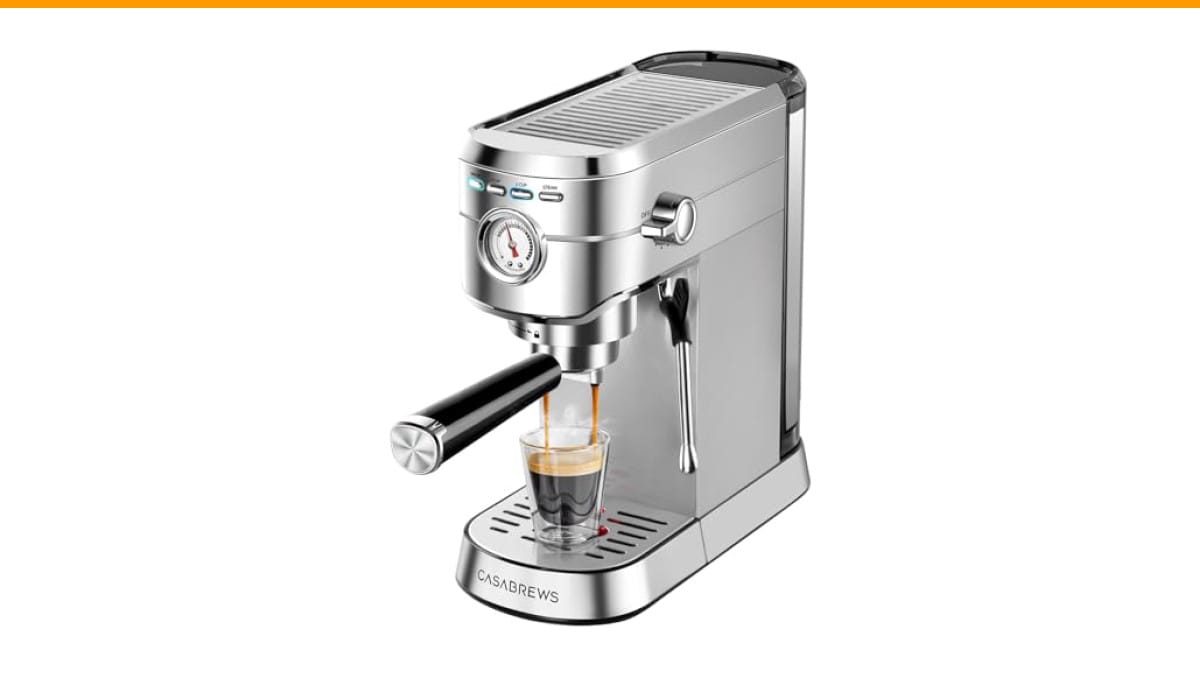
CASABREWS CM5418 Compact Espresso Machine with Milk…
- Make Your Favorite Espresso Coffee At Home: The CASABREWS coffee machine with milk frother allows you to prepare all your favorite…
- Professional 20 Bar Pressure System: Semi-Automatic 2-in-1 Espresso Maker, with 20 bar professional Italian pump and 1350 W powerf…
- Milk Frothing System: Our espresso machine with milk frother has a powerful steam wand, so you can texture creamy, rich microfoam…
As an Amazon Associate I earn from qualifying purchases.
If you’re using a compact machine like the CASABREWS CM5418, the same logic applies. Its 1350 W boiler and steam wand are protected by a thermal cutoff that trips if you brew coffee and froth milk back-to-back. That’s not a defect—it’s a safety feature. Understanding it saves you a service call.
Quick Symptom Check: Why Isn’t My Frother Heating?
Before you take anything apart, look at what the machine is telling you. Three symptoms cover 90% of cases:
- No heat at all, but the pump runs: The heating element or its power supply is the problem.
- Heat for a few seconds, then stops: Overheating protection kicked in, or the thermostat is faulty.
- Warm but not steaming: The heating element works, but it’s scaled up or the steam wand is blocked.
Each symptom points to a different fix. Don’t skip ahead—start with the simplest and cheapest.
Safety First: Unplug and Prepare for Troubleshooting
Unplug the machine. Wait ten minutes for the boiler to cool. Even after the light goes off, the metal parts stay hot enough to burn skin.
Gather a multimeter, a Phillips screwdriver, and a clean cloth. You’ll also need white vinegar or citric acid for descaling. If you don’t own a multimeter, you can still complete Fixes 1, 2, and 6—those don’t require electrical testing.
Work on a dry, flat surface. Keep water away from the electrical components you’re about to expose.
Fix 1: Reset the Overheating Protection (Most Common Fix)
Most modern espresso machines have a thermal switch that trips when the boiler exceeds a safe temperature. This usually happens when you brew coffee and immediately switch to steam mode. The machine’s internal temperature is still high, and the frother won’t heat until it cools down.
On the CASABREWS CM5418, the 1-cup and 2-cup lights flash repeatedly when this protection engages. That’s your cue. Wait 15–20 minutes, then press the power button to reset. If the lights stop flashing, you’re back in business.
How to reset an Aeroccino vs. a built-in frother
Nespresso’s Aeroccino works differently. It has a magnetic base that connects to the whisk, and it shuts off automatically after each cycle. If it stops heating mid-cycle, unplug the base, wait 30 seconds, and plug it back in. That resets the internal controller.
Built-in frothers on machines like the Breville Barista Express don’t have a separate reset. They rely on the same boiler as the espresso. If the steam wand won’t heat, you must cool the entire machine down. That means running water through the group head for 10 seconds, then waiting 10 minutes.
If the reset doesn’t work, move to the next fix.
Fix 2: Deep Clean the Heating Plate and Jug Base
Milk residue builds up on the heating plate and the bottom of the frothing jug. That residue acts as an insulator, so the heat doesn’t transfer to the milk. You’ll notice the jug gets warm but the milk stays cold.
For a standalone frother like the Aeroccino, clean the base with a damp cloth and the jug with warm soapy water. Pay special attention to the metal contact points on the bottom of the jug—they corrode if milk sits on them.
The vinegar vs. citric acid debate
White vinegar works, but it leaves a smell that lingers. Citric acid is better. It dissolves milk scale without the odor, and it’s cheaper per use.
Mix one tablespoon of citric acid with 500 ml of water. Pour it into the frothing jug, run a full cycle, then rinse thoroughly. Do this monthly if you use the frother daily. If you use plant-based milks, clean it weekly—those milks leave a film that’s harder to remove.
Fix 3: Test the Heating Element with a Multimeter
If cleaning and resetting don’t work, the heating element itself may be dead. You can test it with a multimeter. This is the mechanic’s move—it tells you exactly what’s broken instead of guessing.
Unplug the machine and remove the base plate. Locate the heating element—it’s a metal cylinder or block with two wires connected to it. Set your multimeter to ohms (Ω). Touch one probe to each terminal.
How to check for continuity and what the readings mean
A healthy element reads between 10 and 50 ohms. If you see a reading near zero, the element is shorted. If the display shows OL (open loop), the element is burned out—it needs replacement.
On a built-in machine, the heating element is part of the boiler assembly. Replacing it requires disassembling the boiler, which is risky. Unless you’re comfortable with plumbing, this is where you call a repair shop. On a standalone frother, the element sits in the base and costs $15–$20 to replace.
If the element tests fine, move on to the thermal fuse.
Fix 4: Inspect the Thermal Fuse and Thermostat
Two components protect your machine from overheating: a thermal fuse and a thermostat. They fail differently.
A thermal fuse is a one-time device. It blows when the temperature exceeds a set limit (usually 240°F/115°C). Once blown, it’s dead. The machine won’t heat at all. To test it, set your multimeter to continuity. Touch the probes to the fuse’s two terminals. If there’s no beep, the fuse is blown and must be replaced.
A thermostat is resettable. It trips at a lower temperature and reconnects when the machine cools. If your frother heats for a minute then stops, then starts again after cooling, the thermostat is likely stuck open. You can test it the same way—no continuity means it’s faulty.
Both parts cost under $10 and are available online. Replace them with the same rating—don’t swap in a higher-temperature fuse, or you’ll risk a fire.
Fix 5: Check the Power Base and Electrical Connections
Loose wires are common after years of vibration. Inspect the connections from the power cord to the heating element. A corroded or loose connection creates resistance, which means less power reaches the element.
Look for burn marks or discoloration on the terminals. If you see any, clean them with a wire brush and reseat the connectors. Tighten any screws that hold the wires in place.
If the power cord itself is damaged—kinked, frayed, or melted—stop. That’s a fire hazard. Replace the cord or the entire machine. Don’t risk it.
Fix 6: Adjust Milk Type and Temperature to Prevent Scorching
Low-fat and plant-based milks scorch faster than whole milk. They contain less fat, which acts as a buffer against heat. When they scorch, they leave a burnt residue that triggers the overheating sensor.
If you use almond or oat milk, stop frothing at 130°F (55°C), not 150°F. The texture will still be creamy, but you’ll avoid the burnt film. Also, don’t let the frother run for more than 60 seconds at a time. Most machines have a duty cycle—check your manual.
This isn’t a fix for a broken machine, but it prevents future trips to the repair bench.
When to Stop: Repair vs. Replace Your Frother
Here’s a simple cost matrix. If the repair costs more than half the price of a new machine, replace it. A new standalone frother costs $50–$100. A new built-in steam wand assembly costs $150–$300 plus labor.
If you’ve tested the heating element and it’s fine, and the thermal fuse and thermostat are fine, the problem might be the control board. That’s a $100 part on a $200 machine. Not worth it.
But if the fix is a $10 fuse and an hour of your time, absolutely repair it. You’ll learn something and save money.
| Symptom | Likely Cause | Fix | Cost |
|---|---|---|---|
| No heat, pump runs | Heating element burned out | Replace element | $15–$50 |
| Heat for 10 sec, then stops | Overheating protection tripped | Wait 15 min, reset | $0 |
| Warm but not steaming | Milk residue or scale | Deep clean with citric acid | $2 |
| Blinking lights, no heat | Thermal fuse blown | Replace fuse | $10 |
| Intermittent heat | Thermostat stuck open | Replace thermostat | $10 |
| No power at all | Loose wire or cord damage | Tighten or replace cord | $0–$20 |
Preventative Maintenance Schedule for Longevity
You can avoid 80% of these issues with a simple routine.
- After each use: Wipe the frothing wand and heating plate with a damp cloth. Don’t let milk dry on.
- Weekly: Run a cycle with warm soapy water, then a rinse cycle.
- Monthly: Descale with citric acid or a commercial descaler.
- Every 3 months: Inspect the power cord and connections for wear.
- Annually: Test the thermal fuse and thermostat with a multimeter.
This schedule takes 10 minutes a week. It’s worth it when you compare it to the cost of a new machine.
FAQ: Why is my frother warm but not hot?
Why does my frother stop heating after a few seconds?
That’s the overheating protection. The machine detects a rapid temperature rise, often from residual heat after brewing, and cuts power to the element. Wait 15–20 minutes, then reset. If it keeps happening, clean the heating plate—milk residue makes the element overheat faster.
Can I use a multimeter to test the frother?
Yes, but only on the heating element and thermal fuse, not on the control board. Set the multimeter to ohms and test continuity. A healthy element reads 10–50 ohms. No reading means it’s dead.
Why does my frother work with whole milk but not almond milk?
Almond milk has less fat and more water. It heats unevenly and scorches easily, leaving residue that trips the sensor. Froth plant-based milks at a lower temperature and clean the jug immediately after.
Is it safe to bypass the thermal fuse?
No. The thermal fuse prevents fires. If it blows, replace it with the same rating. Never jump it out, even temporarily. You’ll void the warranty and risk burning down your kitchen.
How long should a milk frother last?
With regular cleaning, a standalone frother lasts 3–5 years. A built-in steam wand on a pump machine lasts 5–7 years if you descale every 3 months. If yours dies sooner, it’s usually from neglect, not manufacturing defects.
What I’d Do Next (and What You Should)
Here’s the short version of everything above:
- Start with the reset—wait 15 minutes and try again.
- Clean the heating plate and jug base with citric acid.
- Test the heating element with a multimeter.
- Replace the thermal fuse if it’s blown.
- Tighten any loose electrical connections.
- For plant-based milk, froth at 130°F and clean immediately.
- If the repair costs more than half the machine’s price, replace it.
You don’t need to be an engineer to fix this. You need a multimeter, a screwdriver, and the patience to go through the steps in order. Most of the time, it’s the reset. When it’s not, it’s a $10 fuse. And if you’re still stuck, check your machine’s manual or a dedicated frother troubleshooting guide for your specific model.
If you’re shopping for a new machine, the CASABREWS CM5418 is a solid pick—the steam wand is powerful, and the overheating protection works as designed. Just remember to let it cool before frothing. That’s not a flaw; it’s physics.
For more on keeping your espresso gear running, see our noise troubleshooting guide and leak repair tips. Both cover issues that pop up after years of daily use.
Products related to this article
Sponsored / affiliate links. As an Amazon Associate I earn from qualifying purchases. I may earn additional commission from eligible campaigns.
 Coffee Espresso Machine Handle Replacement Parts, Cafe Bracket Handle for Lidl Silvercrest CM4621 CM4218 KF5002 KF500S Barista (for 51mm Portafilter Basket - Not included)
 Quick Heating Cup Warmer, Three Temperature Settings, Splashproof and Portable, for Coffee, Milk, Lightweight ABS Material
 Linnkyfloa Coffee Espresso Maker Handle Replacement for Stovetop Moka Pot or Percolator, Black Plastic for Spare Part Compatible with Italian(9-12 Cup)